Project
BAJAJ ATV-
In the model, there are three main parts: the engine, transmission, and Vehicle body.
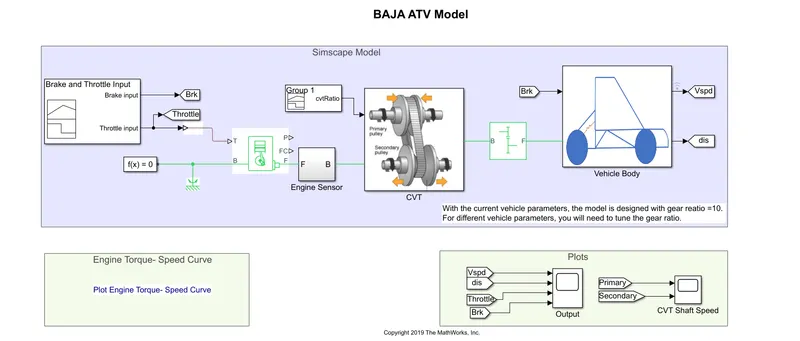
- Engine
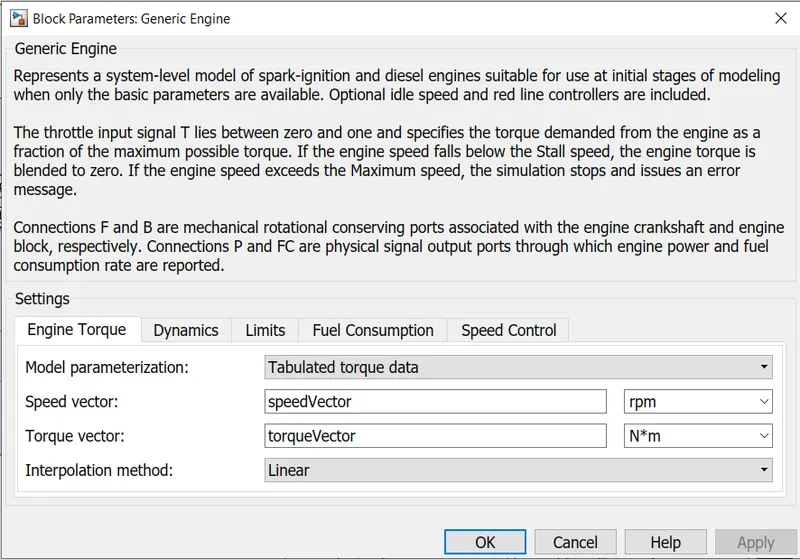
The engine is modelled using the Simscape generic engine block.
We have selected Tabulated Torque from the drop down menu to parameterize the model, and the Speed vector and Torque vector are provided from Base Workspace.
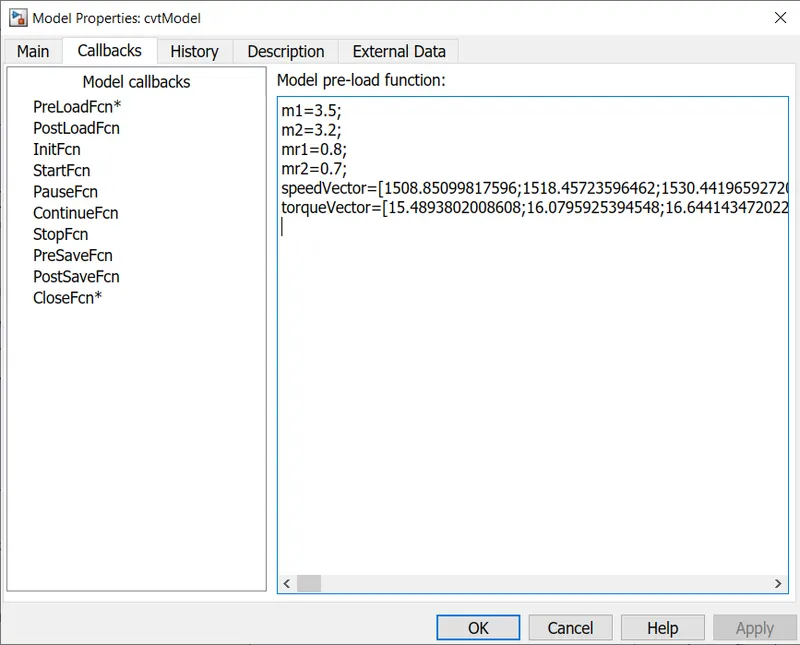
The generic block is part of the Simscape library, which means the variable can only be passed with the Base workspace, and the Model workspace cannot be used.
Therefore we have used the PreLoadFcn from the Model callbacks to initialize the speedVector and torqueVector variables to the Base workspace.
The engine dynamics as described in the following figure.
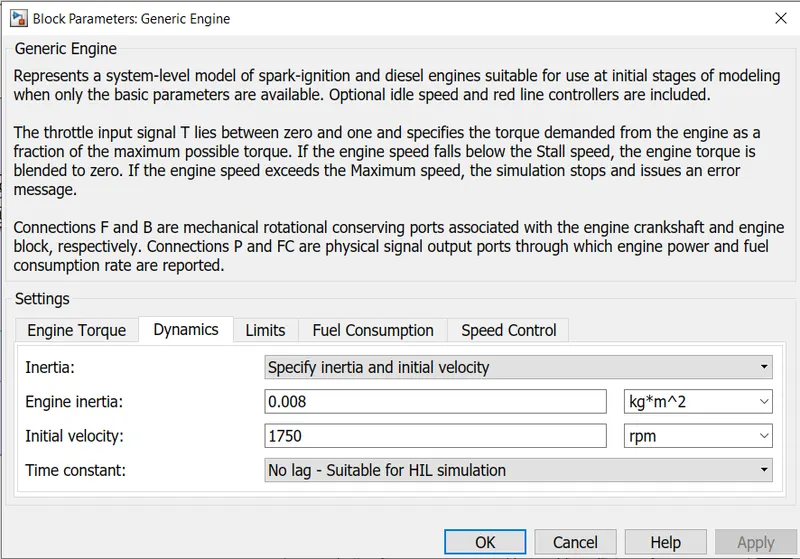
Input signal T is a fractional torque demanded by the engine and is between zero and one.
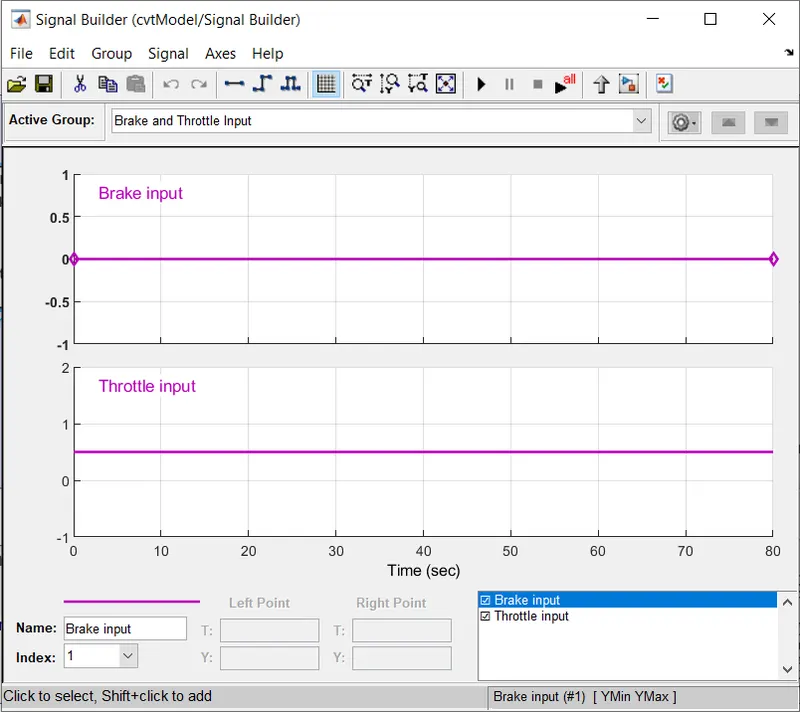
To provide the throttle signal T to the generic engine block, we used the Signal builder block with Simulink to PS converter.
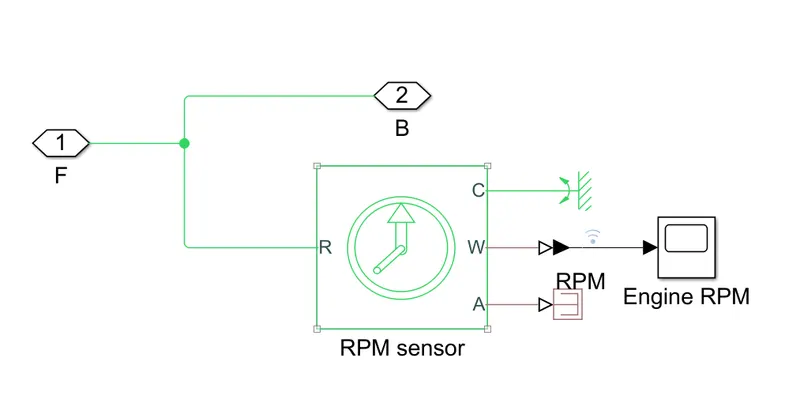
In the Engine Sensor subsystem, we use ideal rotational motion sensors to view the engine speed using scope. In order to prevent simulation errors, we use PS termination blocks at all unused physical signal output ports.
- Transmission
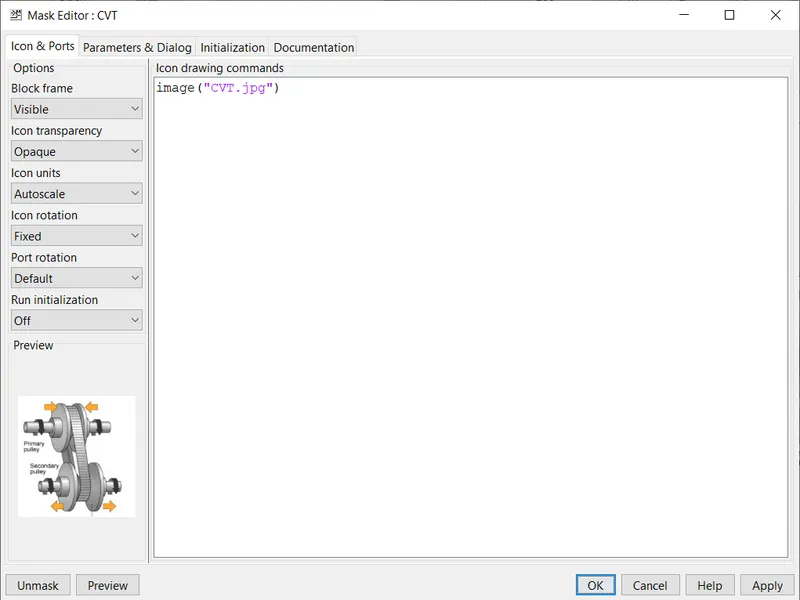
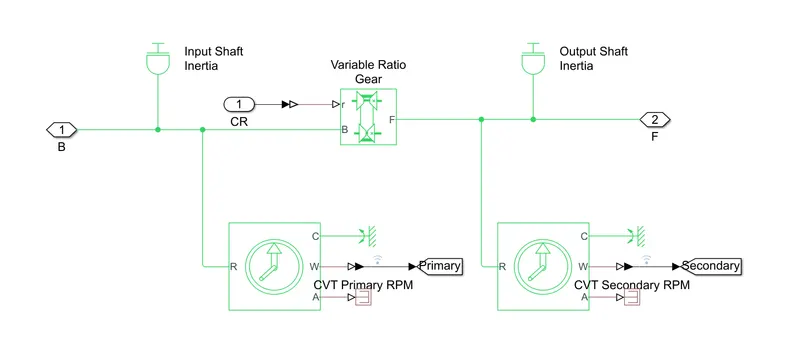
Here, the CVT subsystem represents transmission. To mask the subsystem, we used the 'CVT.jpg' image.
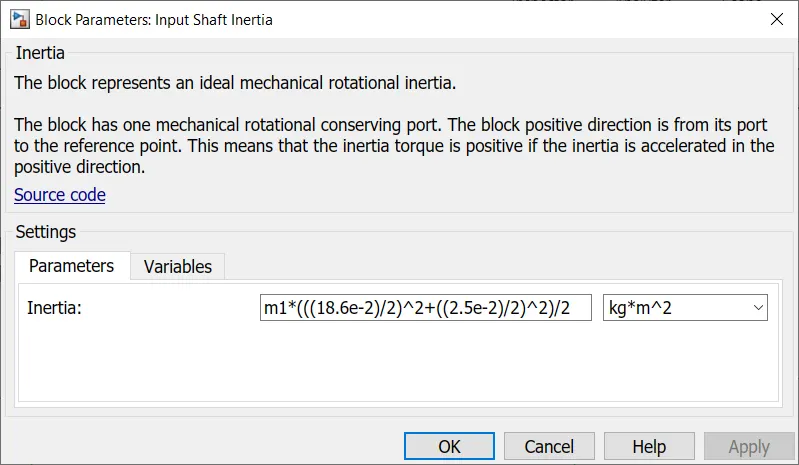
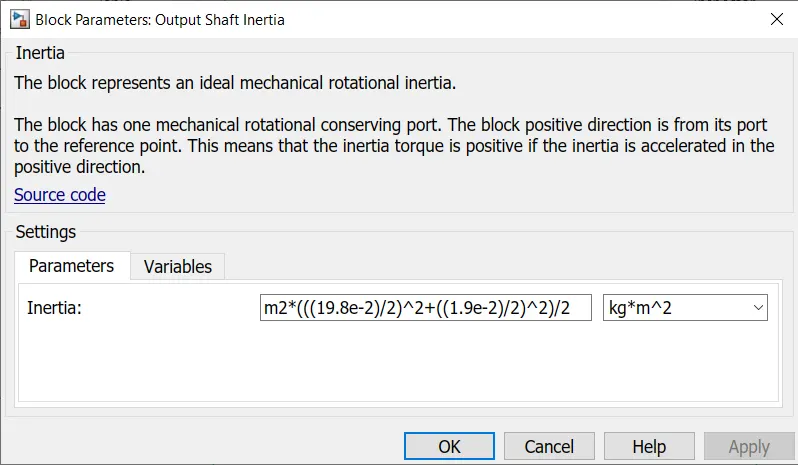
The CVT subsystem is composed of input shaft and output shaft inertia which represent the primary and secondary pulleys.
Input shaft and output shaft inertia are calculated based on m1 and m2, which are variables in the base workspace.
The variable transmission ratio is used to specify the gear ratio, and it inputs the physical signal r, which is provided from a signal builder block.
Two ideal rotational motion sensors at the base and follower port of the variable transmission block are used to display the speed.
We are also using simple gear ratios to reduce the speed.
- Vehicle Body
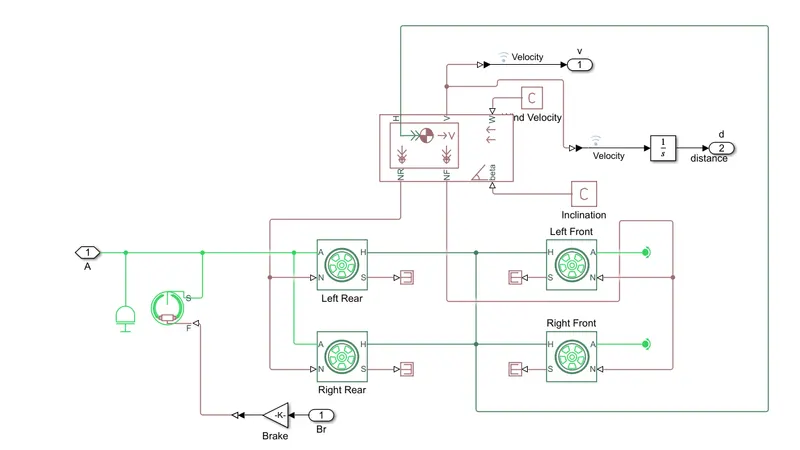
A vehicle body block is used here to represent a two-axle vehicle body in longitudinal motion and is not suitable for lateral motion.
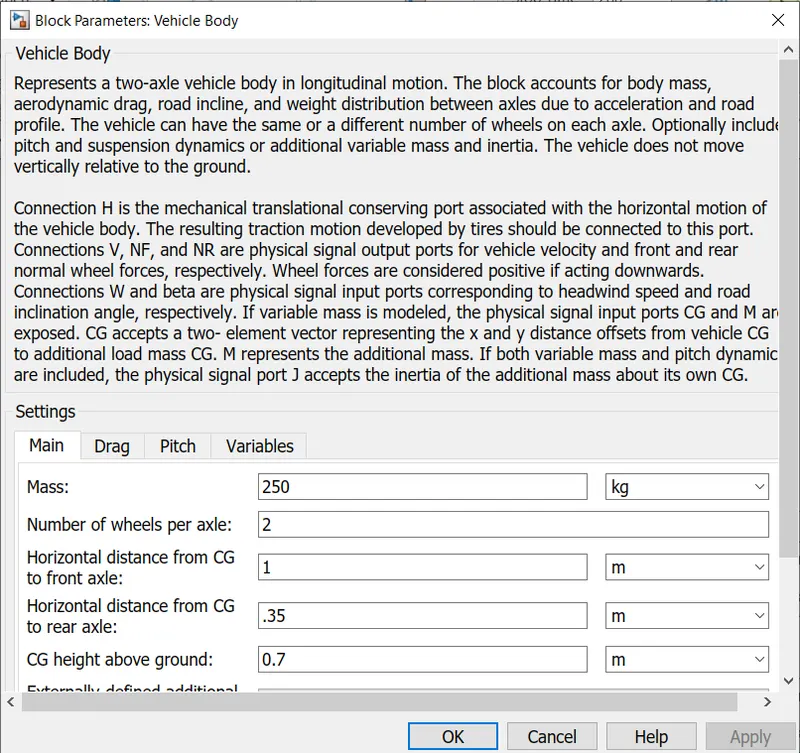
There are a total of 4 wheels on the vehicle, with a mass of 250 kilo, and two wheels per axle.Tire blocks represent the wheels and they are Left Rear, Right Rear, and Left Front, Right Front.
Vehicle body outputs the vehicle velocity with the output port V which is integrated with the integrator block to calculate the distance of the vehicle.
The NR and NF ports of the vehicle body, which represent the normal force acting on the tire, are connected to the front and the rear, respectively.
Physical Constant block can be used to input inclination and wind velocity acting on the vehicle.
The H port of the Vehicle body is connected to the tires to provide translational motion.
This vehicle represents rear-wheel drive and the A port of the rear wheels are connected to the engine via the cvt and gears, while the front wheel port A is connected to a rotational free end, which allows it to rotate freely without torque.
The Double Shoe Brake block is used here to apply brakes using a signal from the Signal builder.
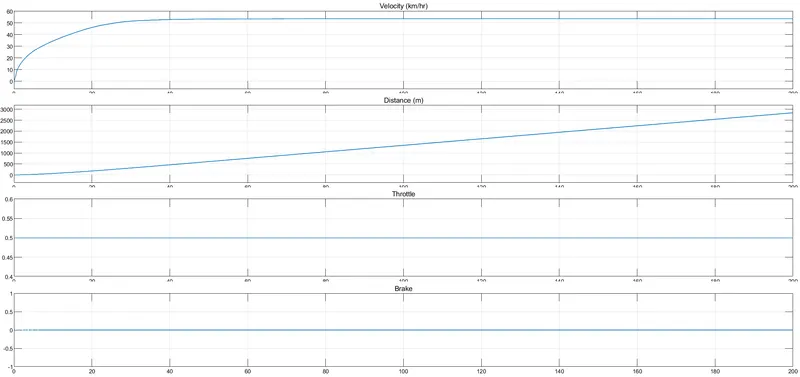
2 Results