Project 2 - V&V SW Analysis II
QUESTION:
- Perform Static Code Review Analysis for “C:\**\LDRA_workarea\Examples\C_Testbed_examples\Testrain\Testrain.c” Generate Code review report and upload them.
SOLUTION:
---> STATIC CODE ANALYSIS:
Static analysis is a method of debugging that is done by automatically examining the source code without having to execute the program. This provides developers with an understanding of their code base and helps ensure that it is compliant, safe, and secure.
- The static analysis identifies defects before you run a program.
- Dynamic code analysis identifies defects after you run a program.
---> REPORTS:
3 HTML files.:TBrun
1. Test coverage report.
2. pass/fail report.
3. Regression report.
In the reports its mentioned there are few standard violations.
To view code review report:
We should open TBVision and select the coding standards MISRA C or CERT C....
We checked for both MISRA C and CERT C and took
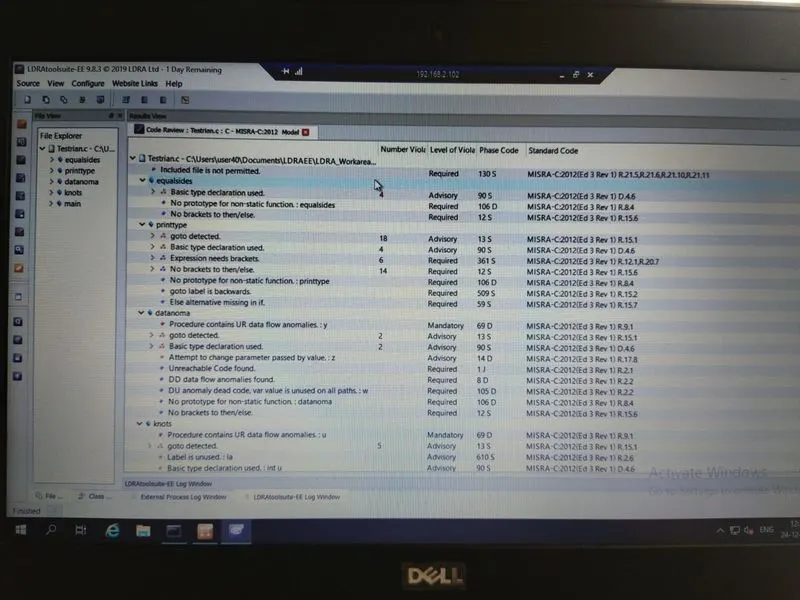
snapshots of code review reports and summary reports.
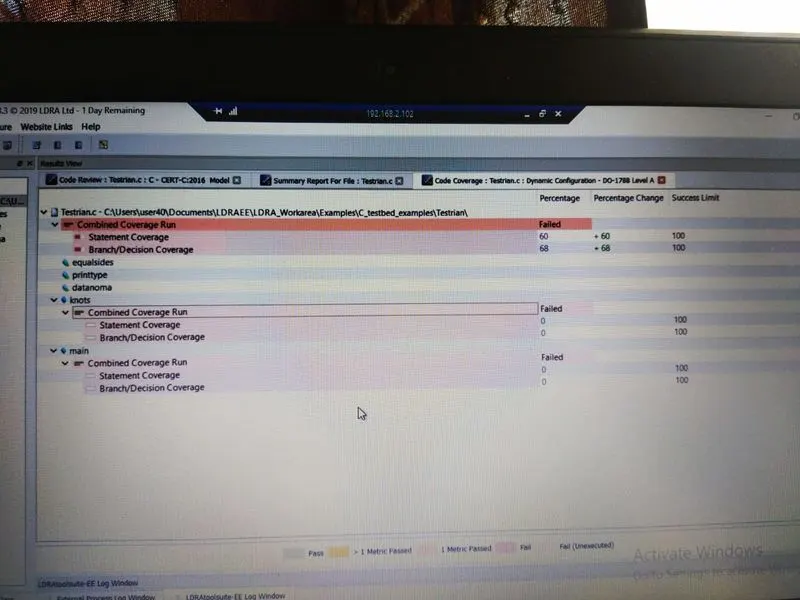
CODE COVERAGE REPORT: CERT C
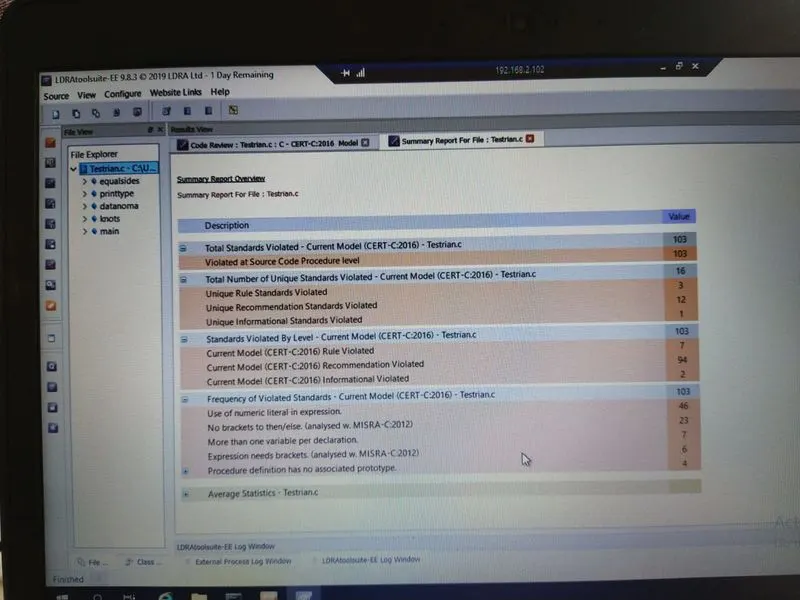
SUMMARY REPORT: CERT C
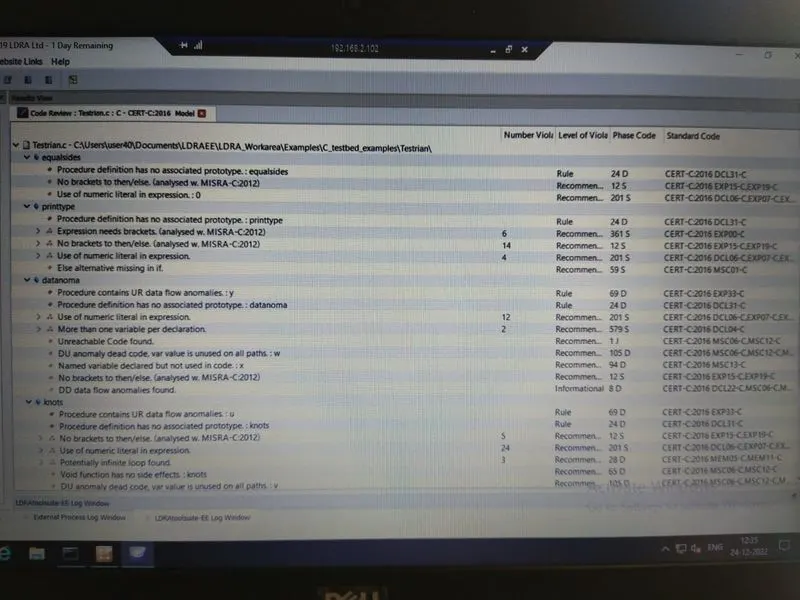
CODE REVIEW REPORT: CERT C
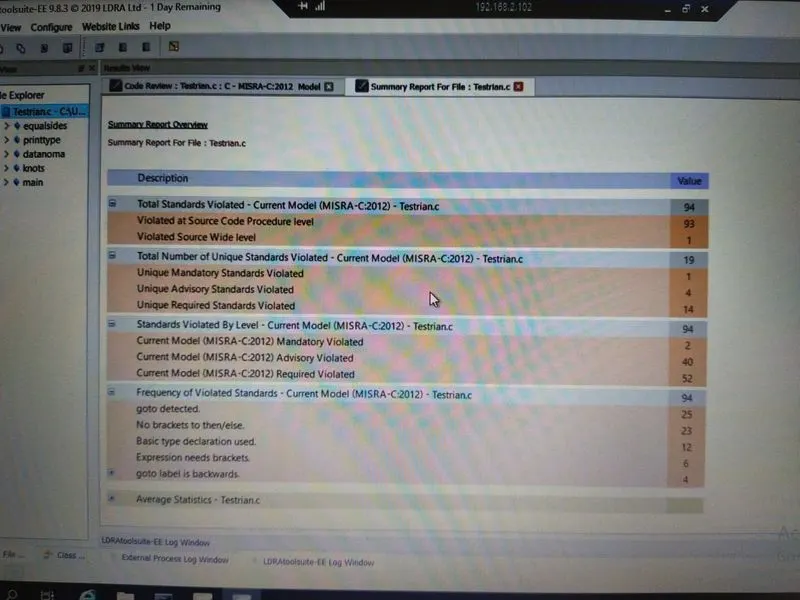
SUMMARY REPORT: MISRA C
CODE REVIEW REPORT: MISRA C
___________________________________________________________________________________________________________________________________________________
QUESTION:
- Perform Integration testing by including all the .C files available in the folder location C:\**\LDRA_workarea\Examples\Toolsuite\Cashregister_6.0\ ** A)Create the test cases manually as well as automatically using TBExtreme and upload the reports. B)store the test cases as .tcf file. Upload the location image where the .tcf file is stored.
SOLUTION:
---> INTEGRATION TESTING:
Integration Testing is defined as a type of testing where software modules are integrated logically and tested as a group. A typical software project consists of multiple software modules, coded by different programmers. The purpose of this level of testing is to expose defects in the interaction between these software modules when they are integrated.
Although each software module is unit tested, defects still exist for various reasons like
- A Module, in general, is designed by an individual software developer whose understanding and programming logic may differ from other programmers. Integration Testing becomes necessary to verify the software modules work in unity
- At the time of module development, there are wide chances of change in requirements by the clients. These new requirements may not be unit tested and hence system integration Testing becomes necessary.
- Interfaces of the software modules with the database could be erroneous
- External Hardware interfaces, if any, could be erroneous
- Inadequate exception handling could cause issues.
Steps:
- Prepare the Integration Tests Plan
- Design the Test Scenarios, Cases, and Scripts.
- Executing the test Cases followed by reporting the defects.
- Tracking & re-testing the defects.
- Steps 3 and 4 are repeated until the completion of Integration is successful.
Test case files: TCFs are standard-alone files that can be easily distributed and accessed by TBrun users across the world. They can be grouped with the reports generated when they were first executed and conveniently stored for future regression verification use, perhaps using a software configuration management (SCM) system. Requirements-based testing documentation complete with requirement management system “tags” can also be stored, enabling the SCM system to record whether modified code has been tested when it is checked in.
These test cases can created both manually and automated, these test cases are then stored in .tcf format to reuse those teat cases.
---> REPORTS:
.tcf Files for Cashregister_6.0
Location: SearchPath = C:\LDRA_Workarea_C_CPP_10.0.2\Examples\Toolsuite\Cashregister_6.0\Source