Project 2 Thermal modeling of battery pack
Here we are trying to simulate the effects of temperature on the performance of a battery pack.
in this simulation, 10 cells are connected in series.
By adding the cells in series we get the sum of the individual cell voltages.
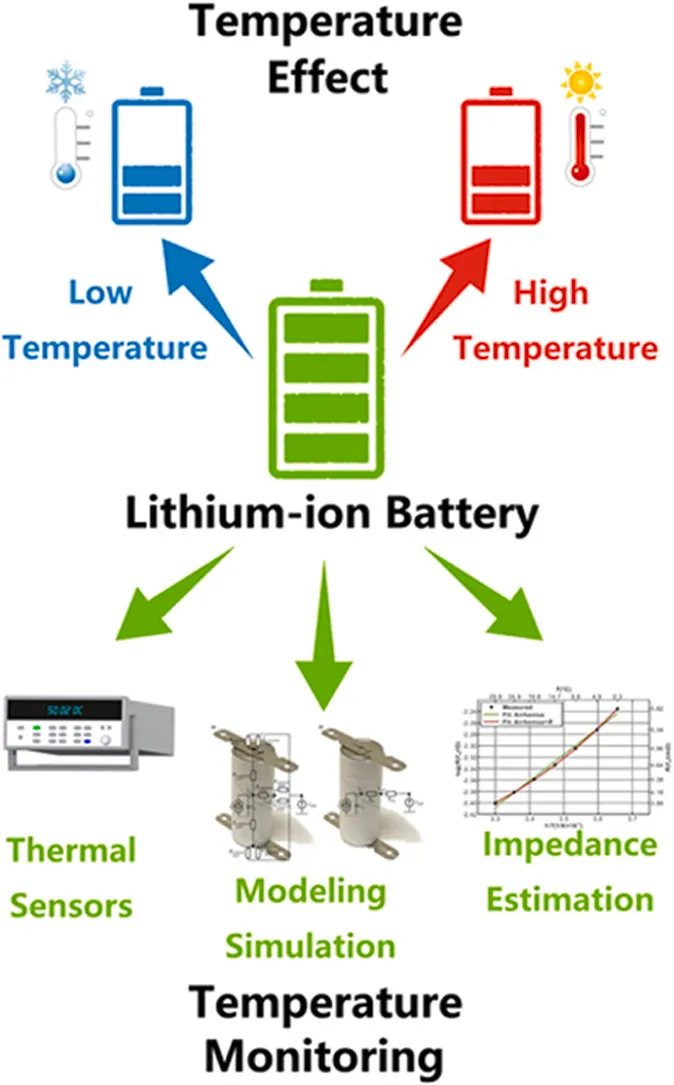
Why do we need to consider the effects of temperature on the performance of the battery pack?
At higher temperatures, the battery's cyclic life would significantly reduce. If, for example, A battery operates at 30 °C (86 °F) rather than a more moderate lower temperature, the cycle life is reduced by 20 percent. At 40 °C (104 °F), the loss jumps to a whopping 40 percent, and if charged and discharged at 45 °C (113 °F), the cycle life is merely 50 % of what is often expected if used at 20 °C (68 °F).
An increment in the environmental temperatures will corrode the battery's internal components leading to performance degradation and even weakening its power and capacity. The heat might not cause outright failure, but it will set the battery up for failure later. With the lead-acid battery, there's the danger of electrolyte freezing, which may crack the enclosure. Lead-acid freezes quicker with a coffee charge when the precise gravity is more like water than when fully charged.
High-temperature conditions accelerate thermal aging and may shorten the lifetime of batteries. Most of the time, high-temperature effects are attributed to batteries' high internal temperature during operation rather than the environmental temperature.
At low temperatures, batteries will show slow chemical-reaction activity and charge-transfer velocity at these low operating temperatures, which leads to a decrease of ionic conductivity in the electrolytes and electrode-ion diffusivity. Such a decrease will result in the reduction of energy and power capability and sometimes even performance failure. At –20 °C (–4 °F), most batteries are at about 50 percent performance level. Although the NiCd battery can go all the way down to –40 °C (–40 °F), the permissible discharge is merely 0.2C (5-hour rate). Specialty Li-ion can operate to a temperature of –40 °C but only at a reduced discharge rate; charging at this temperature is out of the question.
Lithium-ion batteries can safely operate between -20 and +60 Celsius, but the optimal temperature range to maximize the battery life is between 10 and 30 Celsius
Battery Life Cycle:
As we charge the battery and recharge it, it slowly loses the ability to return to its original capacity. The life cycle of a battery is the number of charges and discharge cycles that it can complete before losing performance. State of Health decreases.
Simulink Model:
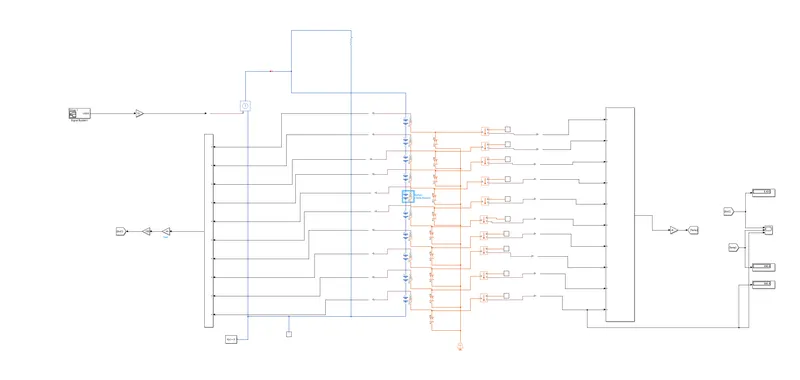
In this simulation, we are using Convection as the mode of heat transfer.
Convection: Convection is the process of thermal energy exchange in fluids via the motion of matter within them. A bulk transfer of molecules within the fluid occurs. It occurs in both gases and liquids and leads to a cyclical effect. Both natural and forced convective heat transfer exists.
Steps :
1. 10 Battery (table-based) blocks were taken and arranged in a column.
And we select Instrumented|Show Thermal Port from the block choices. This was done for measuring the temperature
Now the negative terminal of the top cell is connected to the positive terminal of the bottom block and this is repeated til we get to the bottom cell.
This is how the 10s battery pack was constructed.
2. Now for the charging and discharging input, we use a signal builder block. Inside the signal builder block, we import a UDDS plot.
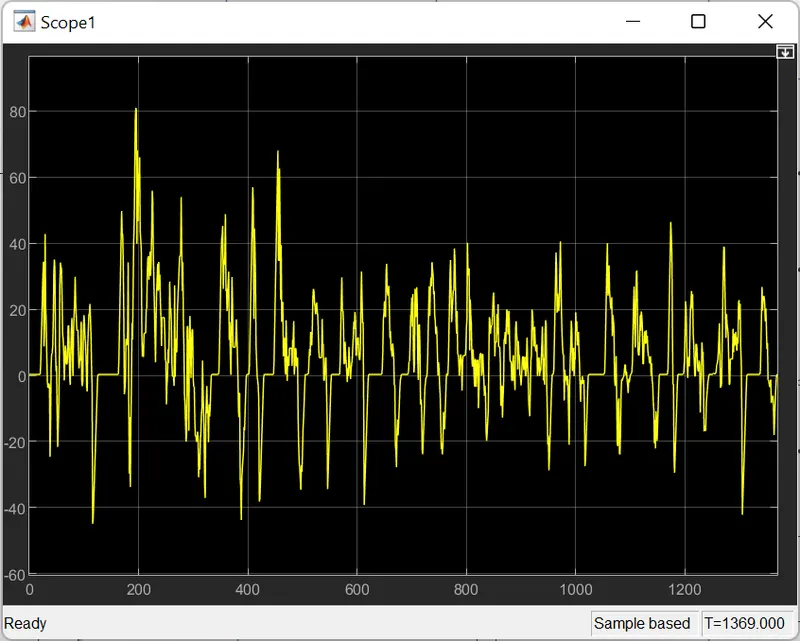
The positive values give the discharging current and the negative current gives the charging. Now, this signal is passed through a gain block to amplify the signal. This amplified signal was given to a Controlled current source.
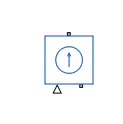
The positive terminal of the battery was connected to the LConn1 port and the negative terminal was connected to RConn2.
3. Now we connect the Convective Heat Transfer block and Temperature Sensor to each block
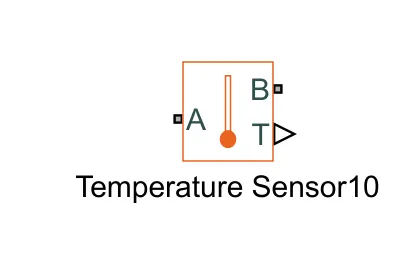
The A port of the Temperature sensor is connected to the H port of the battery, the B port is connected to a thermal reference block. And the T port is for measuring the temperature via a scope or display block.
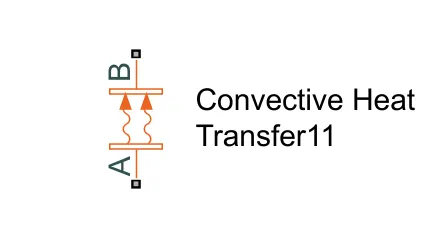
This block models heat transfer in a thermal network by convection due to fluid motion. The rate of heat transfer is proportional to the temperature difference, heat transfer coefficient, and surface area in contact with the fluid.
A port of the Convective heat transfer block is connected to the Temperature source block. And the B port is connected to the SOC port of the corresponding cell.

This block represents an ideal energy source in a thermal network that can maintain a constant absolute temperature at the port regardless of the heat flow rate.
4. Finally the SOC values of each cell were added and then divided by 10 i.e. number of cells to get the average SoC of the battery pack.
The same was done for the temperature values.
5. The outputs were observed via display scope and display block
6. The results were observed for various ambient temperatures and contact areas and different ambient temperatures
Results:
The battery temperature is 298 K i.e. standard room temperature
Case I:
The contact area is 0.001 m^2 and the ambient temperature is 263 K
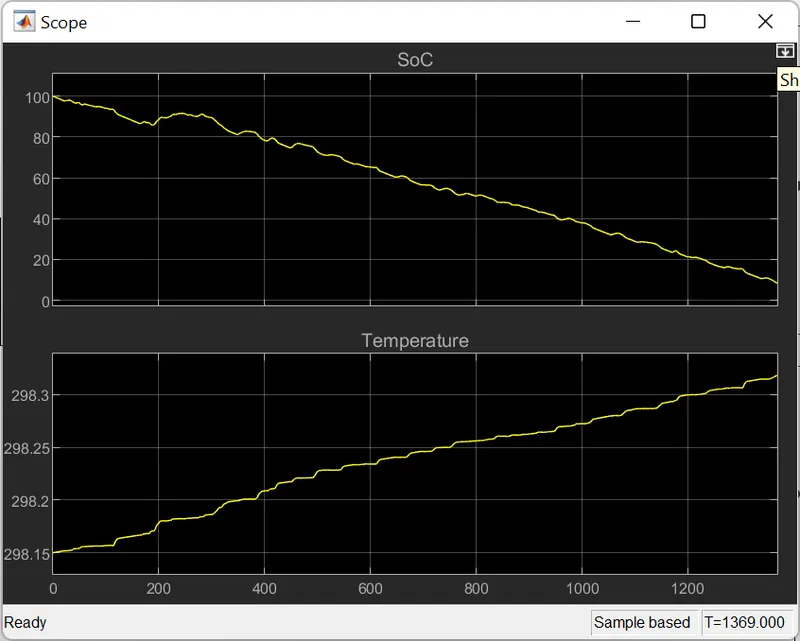
Scope result for battery pack temperature
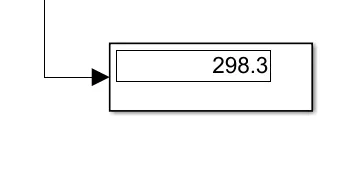
Remaining SoC = 8.497%
Case II:
When the contact area is 0.001 m^2 and the ambient temperature is 350K
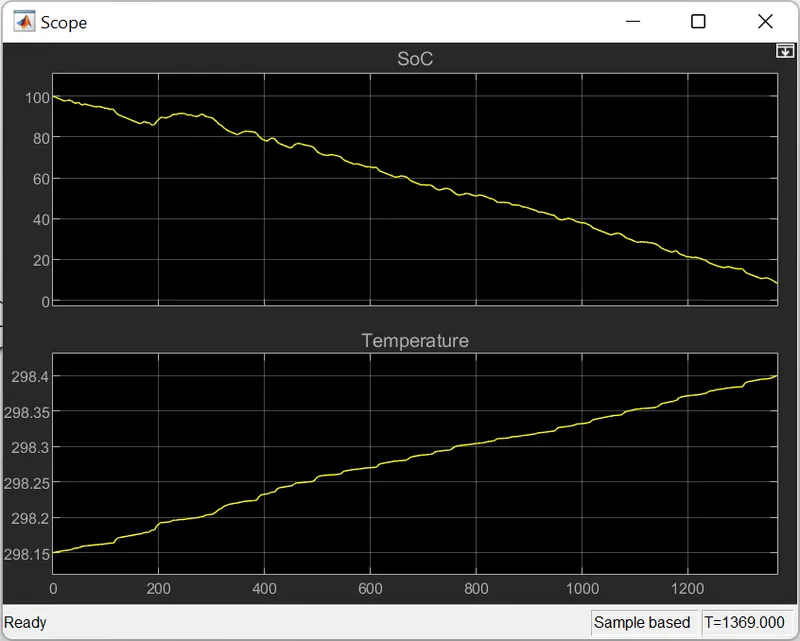
remaining SoC = 8.477%
Battery temperature = 298.4
Case III :
When the contact area is 1 m^2 and the ambient temperature is 260K
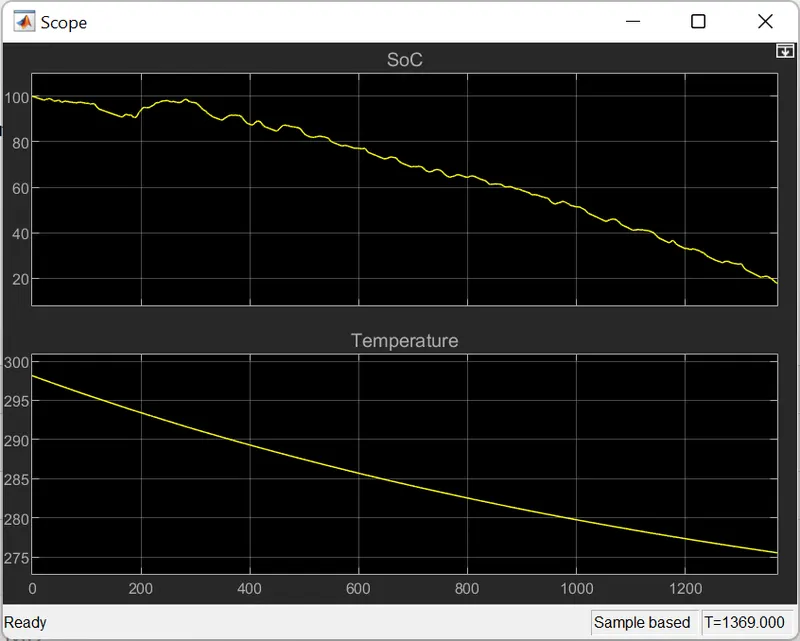
remaining SoC = 17.82%
Battery temperature = 275.5K
Case IV:
When the contact area is 1 m^2 and the ambient temperature is 350K
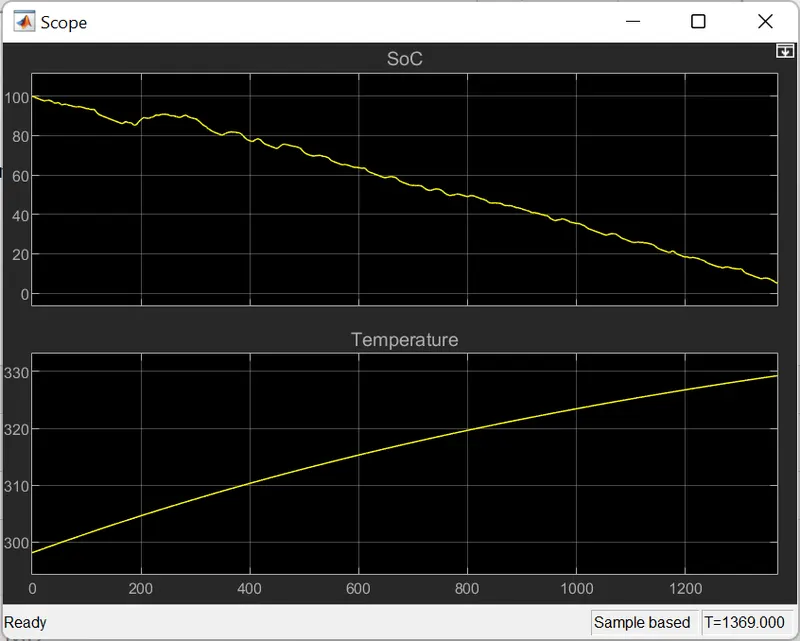
remaining SoC = 5.102%
Battery temperature = 329.3K
Case V:
When the contact area is 1 m^2 and the ambient temperature is 298 which is the same as the battery temperature.
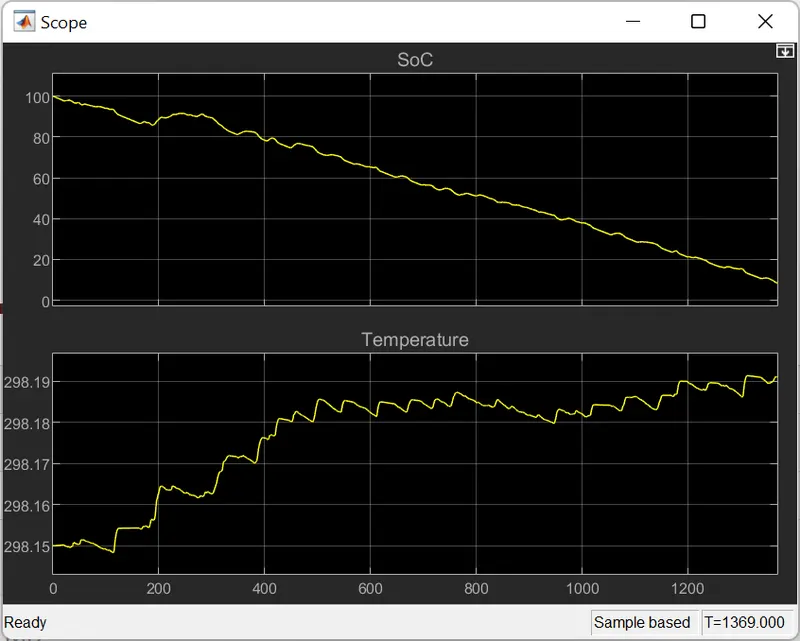
remaining SoC = 8.47%
Battery temperature = 329.3K
Observations :
The charging and discharging phenomena are being taken care of by the amplified UDDS signal.
Here we are taking four extreme cases.
In the first one, the contact area is 0.001 m^2 and the ambient temperature is 263 K.
Due to the less contact area, the heat transfer is less and therefore the temperature change is also low.
Hence the SoC isn't much different from the 5th case when the ambient temperature is equal to the battery temperature.
As we keep on increasing the temperature and the contact area we can observe that the remaining SOC is also decreasing.
When the contact area is 1 m^2 and the ambient temperature is 260K it is observed that the remaining SoC is very high among all the cases.
Hence it can be said that as we charge and discharge the battery in high ambient temperatures the SoC decreases quickly. As the battery completes cycles more and more at higher ambient temperatures the life cycle of the battery gets reduced compared to what it would have been at normal temperatures. Hence the performance gets reduced.