Project 2 Thermal modeling of battery pack
Q)
Ans:-
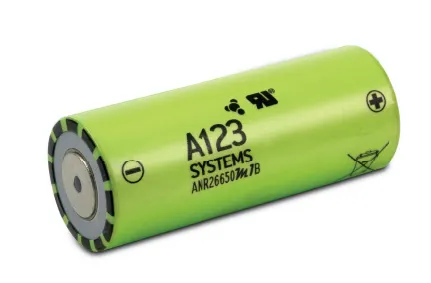
A123’s high-performance Nanophosphate® lithium iron phosphate (LiFePO4) battery technology delivers high power and energy density combined with excellent safety performance and extensive life cycling in a lighter weight, more compact package. Our cells have low capacity loss and impedance growth over time as well as high usable energy over a wide state of charge (SOC) range, allowing our systems to meet end-of-life power and energy requirements with minimal pack oversizing.
Commercial Solutions:
Advanced lead acid replacement batteries for:
- Datacenter UPS
- Telecom backup
- IT backup
- Autonomously guided vehicle (AGV's)
- Industrial robotics and material handling equipment
- Medical devices
Government Solutions:
- Military vehicles
- Military power grids
- Soldier power
- Directed energy
Grid Solutions:
- Frequency regulation
- Renewables integration
- Reserve capacity
- Transmission and Distribution
Transportaion Solutions:
- Commercial vehicles
- Off-highway vehicles
- Passenger vehicles
|
Cell Dimensions |
26*65 mm |
|
Cell Weight |
76g |
|
Cell Capacity (nominal/minimum) (0.5C Rate) |
2.5/2.4 Ah |
|
Voltage (nominal) |
3.3 V |
|
Internal Impedance (1kHz AC typical) |
6 mohm |
|
Power |
2600 W/ kg |
|
Recommended Standard Charge Method |
2.5A to 3.6V, 60 mi |
|
Recommended Fast Charge Method to 80% SOC |
10A to 3.6V CC, 12 min |
|
Maximum Continuous Discharge |
50A |
|
Maximum Pulse Discharge (10 seconds) |
120A |
|
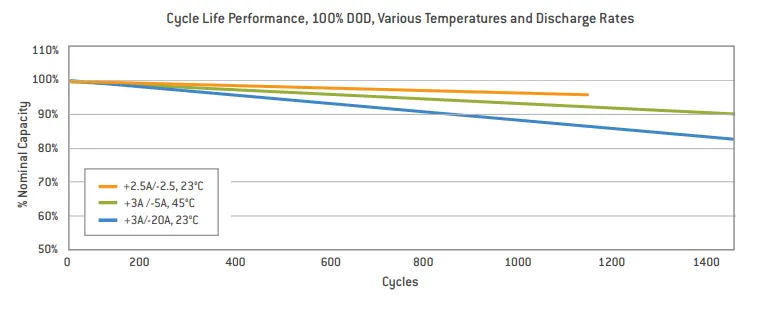
Cycle Life at 20A Discharge, 100% DOD |
>1,000 cycles |
|
Operating Temperature |
-30 degree celcius to 55 degree celcius |
|
Storage Temperature |
-40 degree celcius to 60 degree celcius |
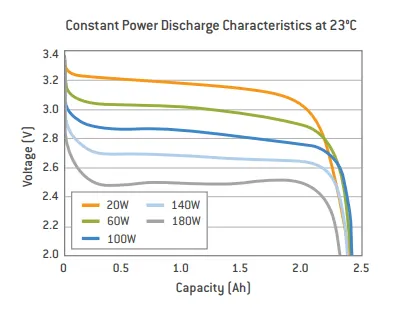
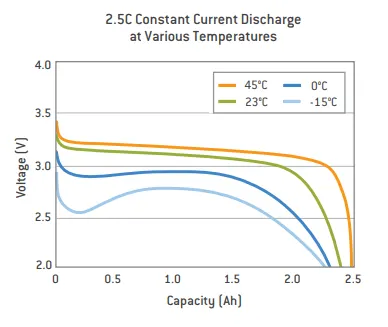
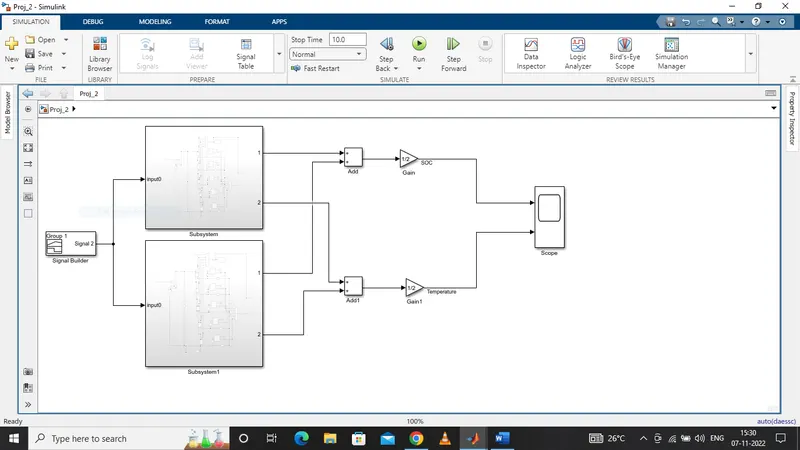
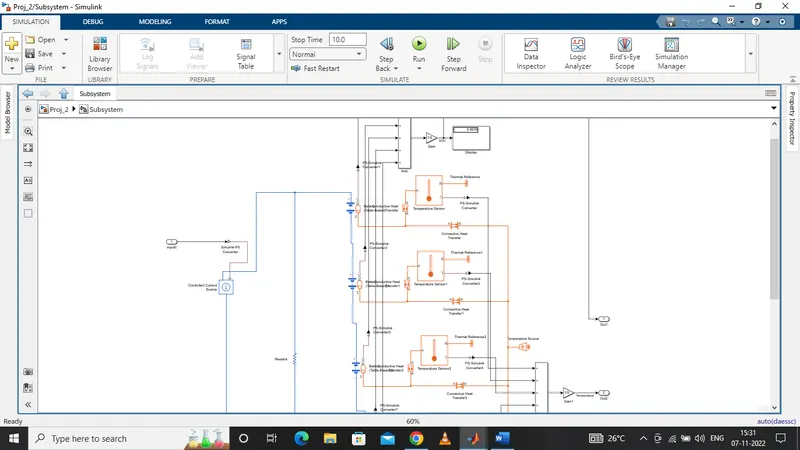
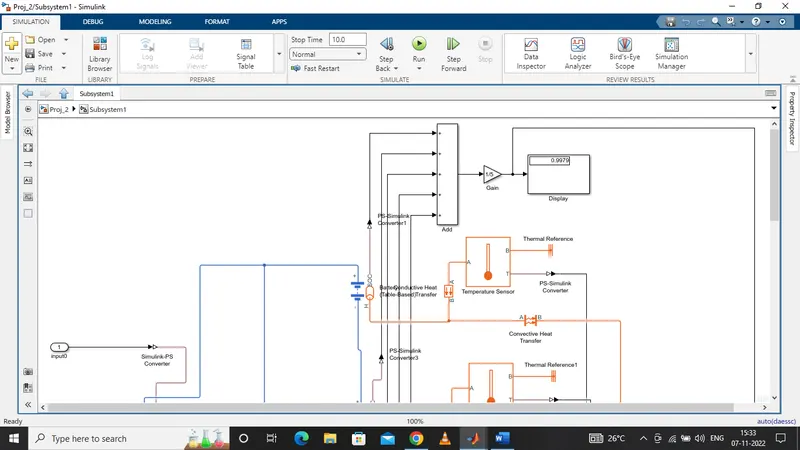
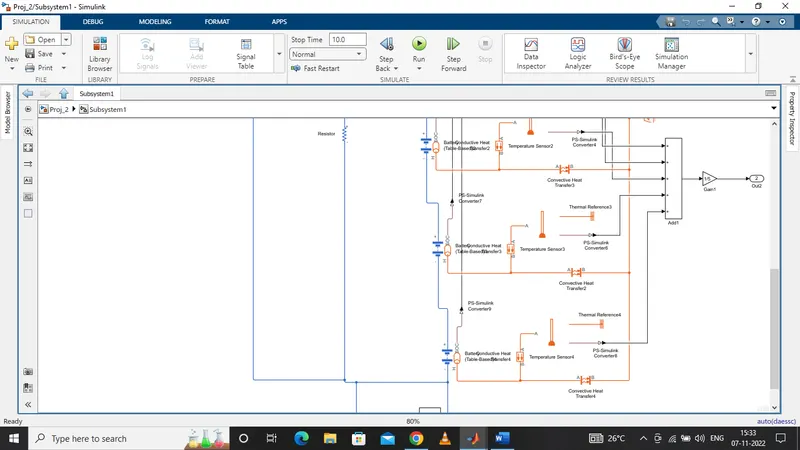
- In this module we used the 5 table based battery block in 2 subsystem in which we put the datasheet value on it.here i put the battery specification like, 2.5Ah capacity,initial temp.value is 298K etc.and this 5 cell are connected in series.
- also here we use the conductive heat transfer block in which we put the thermal conductivity is 401 W/(K*m),area is 10 m^2,and thickness is 0.1m.
- here we use the convective heat transfer block in which we put the heat transfer co-efficients is 20 W/(K*m^2),area is 10 m^2.and one end of this block is connected to thermal source and other is connected to perticular cell.
- here we use perfect insulator also.
- here we use temperature sensor to sense the temperature of cell and display the value in scope and dashboard.also it one end connected to thermal referance.
- and SOC of every cell is also calculate by using add and gain block,and display the soc value in % in display block.
- We have connected a signal buider as the input to the circuit in which the time range and the value is been inserted by referring the week 4 challenge values.
- gain block is been connected to get the value of the whole input into single output.
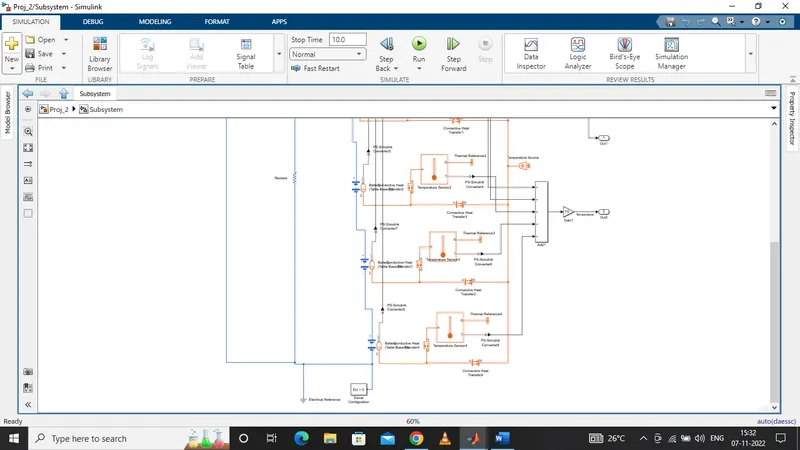
For subsystem 2:-
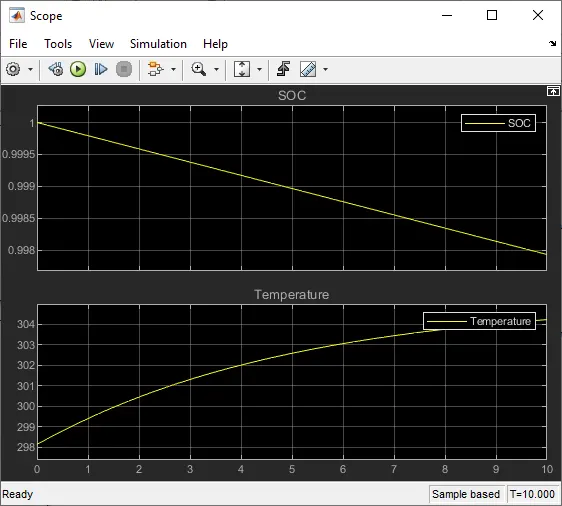
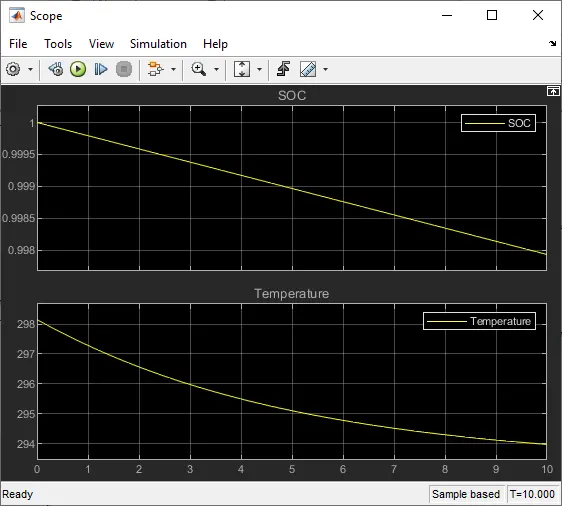
Result :- At temperature 298 degree K we get the output with SOC 1 to 0.998
At temperature 305 degree K we get