Project 2 Thermal modeling of battery pack
project 2
aim::
For a 10 cell series lithium ion battery model, simulate the thermal effects and compare life cycle performance at various temperatures, charge & discharge rates using MATLAB.
software used::
matlab R2020a
thermal effect::
Thermal effects refer to the substantial loss of thermal energy from spent waters to the environment primarily due to the low efficiency of geothermal power plants. Excess heat emitted in the form of steam may affect cloud formation and change the weather locally.
when the temperature changes from t1 to t2. we need to balance and reduce the temperature.
the outside cells has less temperature because it decipet its temperature to the atmosphere . but the cell which is surrounded by the cells gets heated more because due to heating effects of conduction and convection.
thermal issues associated with electric vehicle battery packs can significantly affect the performance and life cycle. fundamental heat transfer principles and performance characteristics of commercial lithium ion battery are used to predict the temperature distributions in a typical battery pack.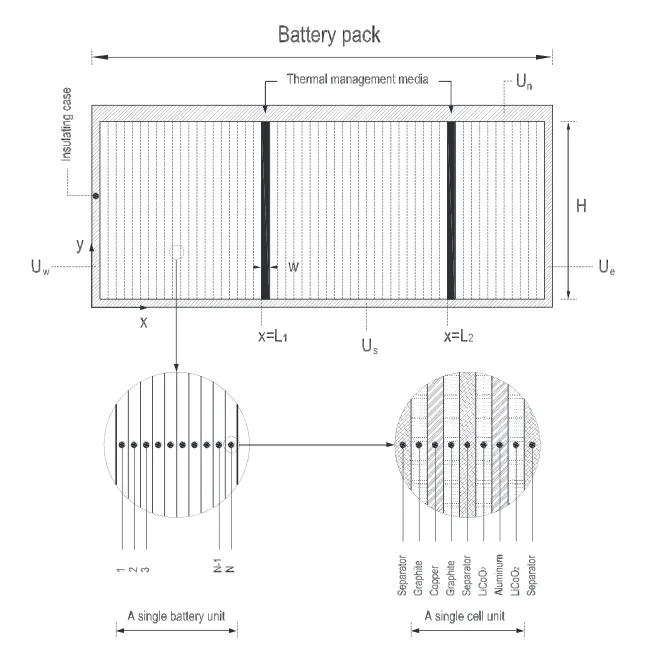
life cycle performance::
The cycle life of batteries is the number of charge and discharge cycles that a battery can complete before losing performance. The cycle life of Li-ion batteries is affected significantly by the depth of discharge. The depth of discharge is the amount of a battery's storage capacity that is utilized.
c rate::
Charge and discharge rates of a battery are governed by C-rates. The capacity of a battery is commonly rated at 1C, meaning that a fully charged battery rated at 1Ah should provide 1A for one hour. The same battery discharging at 0.5C should provide 500mA for two hours, and at 2C it delivers 2A for 30 minutes.
from the above question it is said that thermal, state of charge and c rate are the important parameter by varying these paramater and simulate the batery model.
battery model for 10 series cell::
theory-
now a days lithium ion battery are mostly used in electric vehicles we must know its charge and discharge rates to operate this batterys in efficient manner and with out damage when this batterys in operation this temperature of it must be kept in limit we simulate the thermal effect of this cell , by knowing the how much temp rise take place we can provide efficient cooling to the batterys so that the life cycle of the battery increases we will see a model on this issue below and explaination as follows
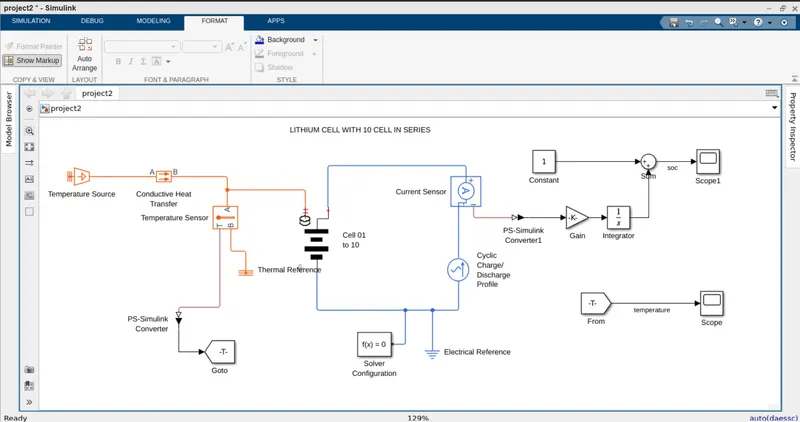
the simulink file was attached.
procedure::
first we have get the required block from the library browser
the required blocks are battery, temperature source, thermal referance, temperature sensor, conductive heat transfer,electrical referance, solver onfiguration, control current source,ps constant, goto , from, gain, ps simulink converter and scope.
connect them according to the above diagram.
from the matlab model of lithium ion battery pack with fault. we have taken the battery and dicharge / charge profile.
then configure the the blocks. such as battery,temperature source, temperature sensor and conductiveheat transfer as below
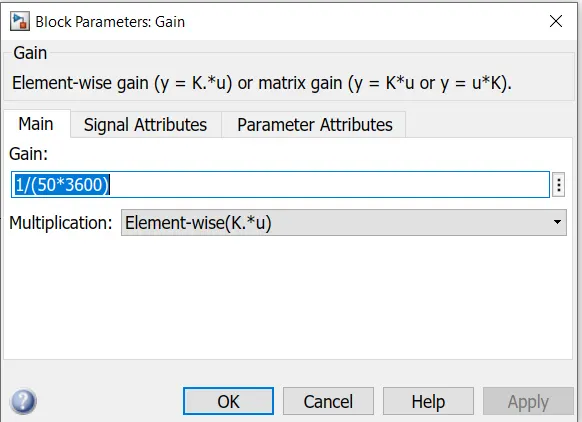
in gain give the value as 1/(3600*50) where 50 is the current.
then run the simulation for 1 hour ie, 3600 sec.
battery.:
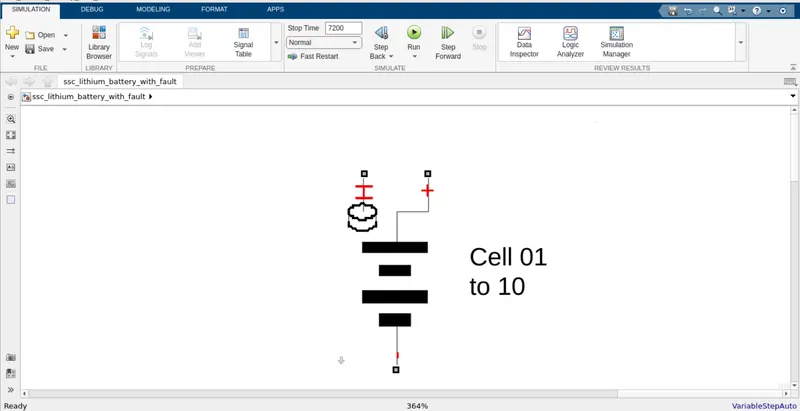
Cell 01 to 10 Subsystem
Lithium Cell 1RC Subsystem
battery parameter::
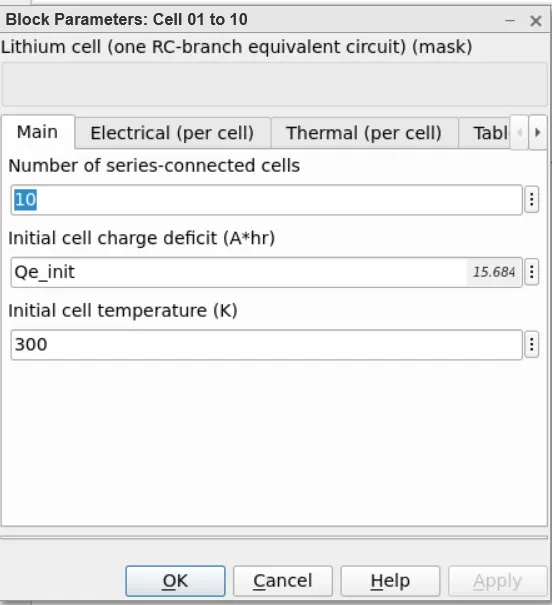
here the number of series connected cells are 10 it means it has 10 cells which is connected in the series connection.
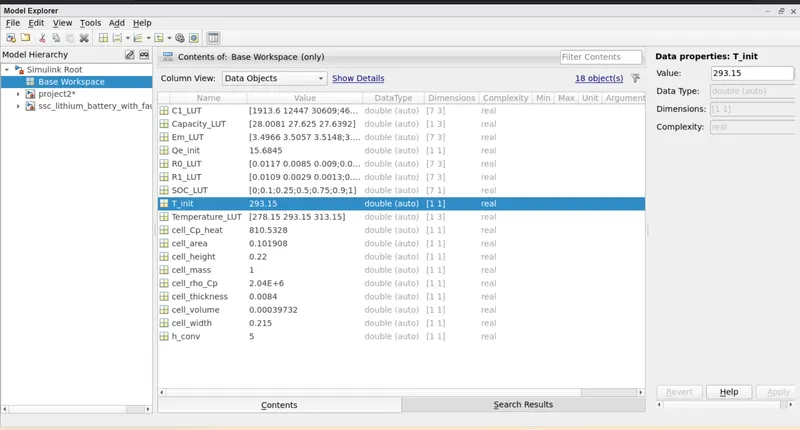
intial cell charge and initial cell temperature are on the model explorer.
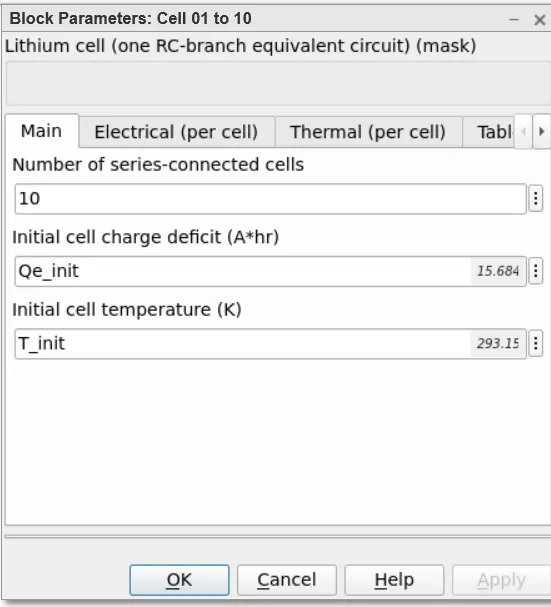
from the model explorer, we have the data of the all parameter.
cyclic charge/discharge profile::
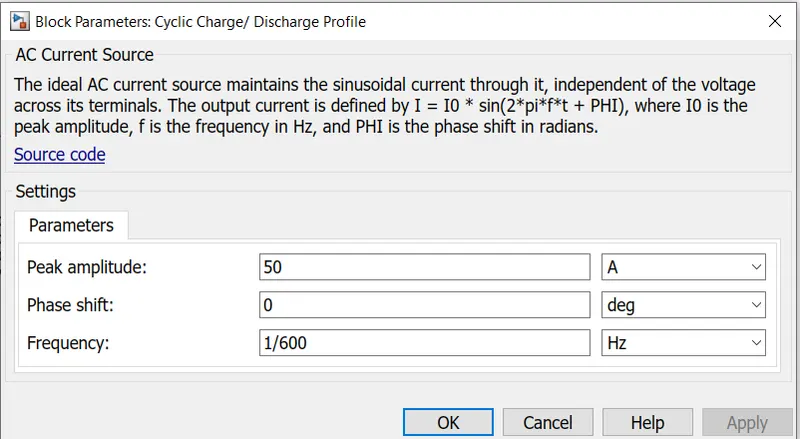
The AC Current Source block represents an ideal current source that maintains sinusoidal current through it, independent of the voltage across its terminals.
The output current is defined by the following equation:
I=I0⋅sin(2π⋅f⋅t+φ)
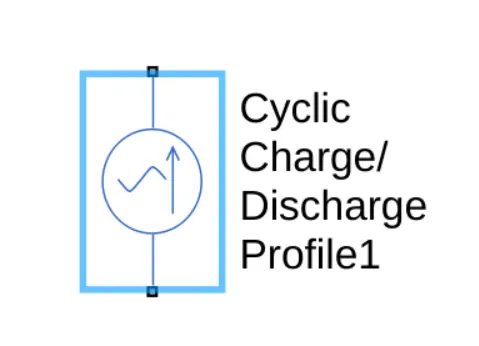
output of one cell is connected with the SOC estimation whereas other output is connected with AC current source for cyclic charge/discharge profile.
The peak amplitudes set to 50 A for cyclic charge and discharge. A basic parameter of AC current source is as
other block which are used in lithium ion battery pack are as:
Temperature Source:
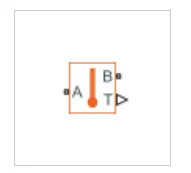
The Temperature Sensor block represents an ideal temperature sensor, that is, a device that determines the temperature differential measured between two points without drawing any heat.
Connections A and B are thermal conserving ports that connect to the two points where temperature is being monitored. Port T is a physical signal port that outputs the temperature differential value.
The block positive direction is from port A to port B. The measured temperature is determined as T = TA – TB.
This block represents an ideal energy source in a thermal network that can maintain a constant absolute temperature at the port regardless of the heat flow rate.
This block is used for ambient temperature which we can set and check results .
Convective Heat Transfer:
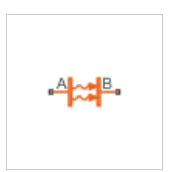
This block models heat transfer in a thermal network by convection due to fluid motion. The rate of heat transfer is proportional to the temperature difference, heat transfer coefficient, and surface area in contact with the fluid.
this used for 1-4 cells and 6-10 cell
from and goto blocks
The Goto block passes its input to its corresponding From blocks. The input can be a real- or complex-valued signal or vector of any data type. From and Goto blocks allow you to pass a signal from one block to another without actually connecting them.
The From block accepts a signal from a corresponding Goto block, then passes it as output. The data type of the output is the same as that of the input from the Goto block. From and Goto blocks allow you to pass a signal from one block to another without actually connecting them.
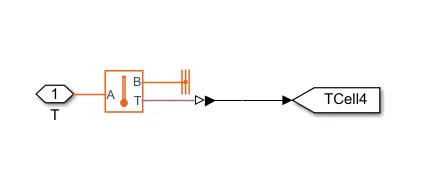
state of charge estimation
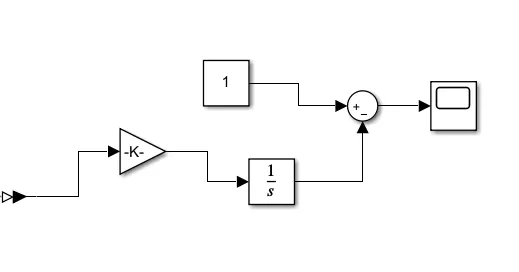
The Coulomb counting method measures the discharging current of a battery and integrates the discharging current over time in order to estimate SOC
This subsystem takes current as input and gives the battery SOC % as output. A current sensor block is used and connected for soc estimation
This ckt estimates the battery SOC % using coulomb counting method. It takes current as the input and gives SOC% as output. Initial SOC of the battery is assumed to be 100% (1)
example shows how to simulate a battery pack consisting of multiple series-connected cells in an efficient manner. It also shows how a fault can be introduced into one of the cells to see the impact on battery performance and cell temperatures
CONDUCTIVE HEAT SENSOR TABLE BASED::
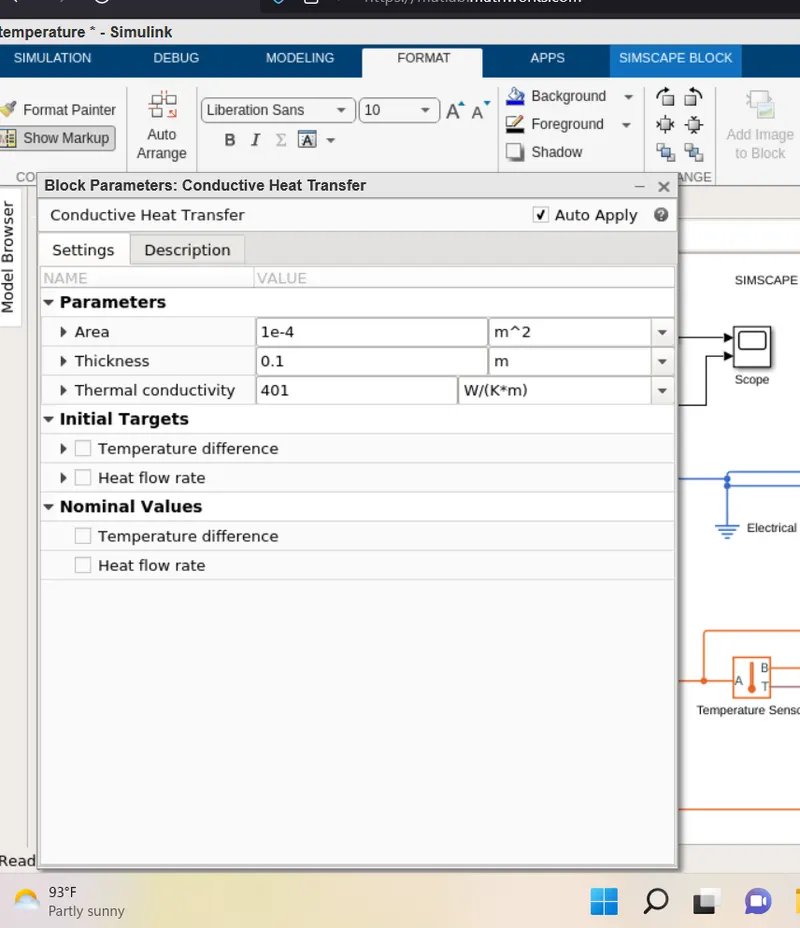
here the area of the conductive heat transfer is 1e-4 m ^2
----------------------------------------------------------------------------------------------------------
case 1::
TEMPERATURE SOURCE::
the temperature of the battery is set to 293.15 k
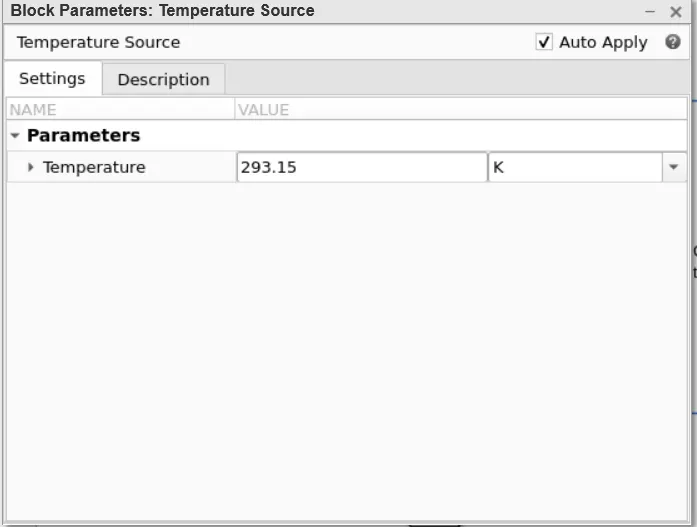
here we set the temperature as 293.15k for case 1.
result::
the state of charge of the battery is shown below:
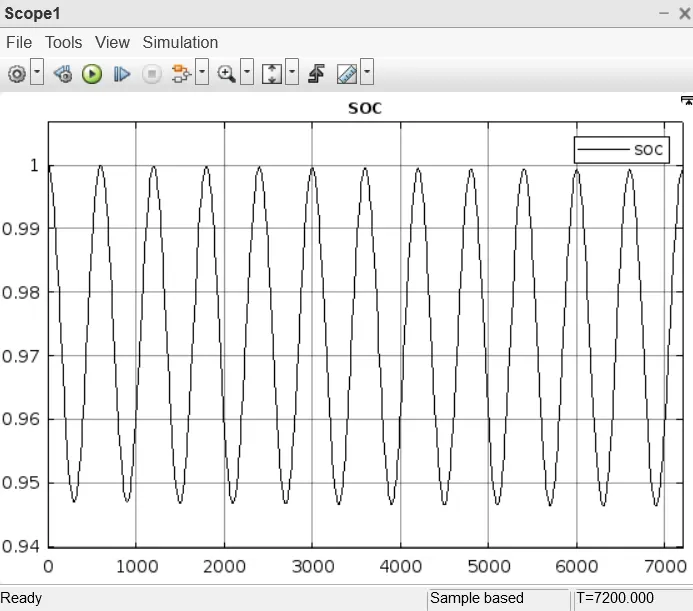
State of charge is the level of charge of an electric battery relative to its capacity. The units of SoC are percentage points. An alternative form of the same measure is the depth of discharge, the inverse of SoC.
here we see a number of discharge and charge of the battery.
scope of test 1:
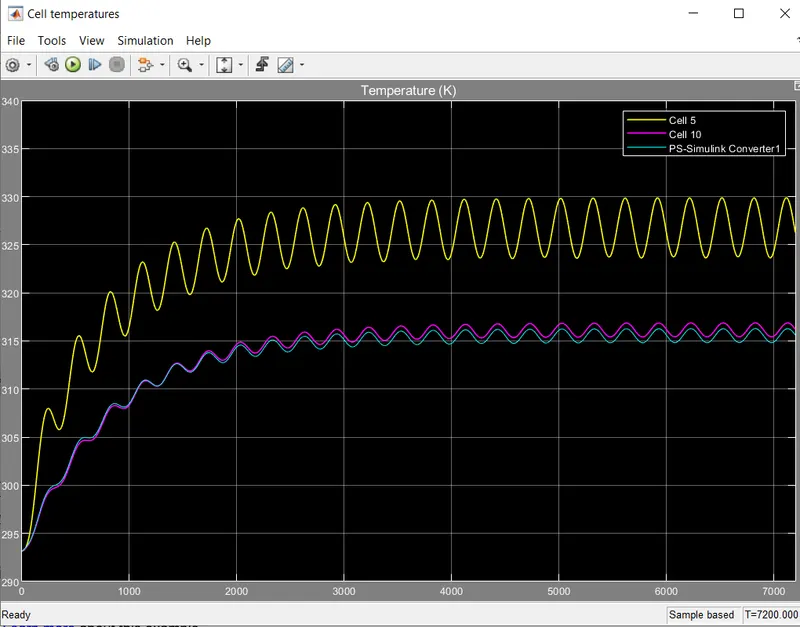
from the above graph we see the temperature rises from 293.14k to 380.3k for discharging the temperature of the battery rises and for charging the temperature of the battery decrease.
---------------------------------------------------------------------------------------------
test case 2::
now change the temperature of the temperature source to 300k
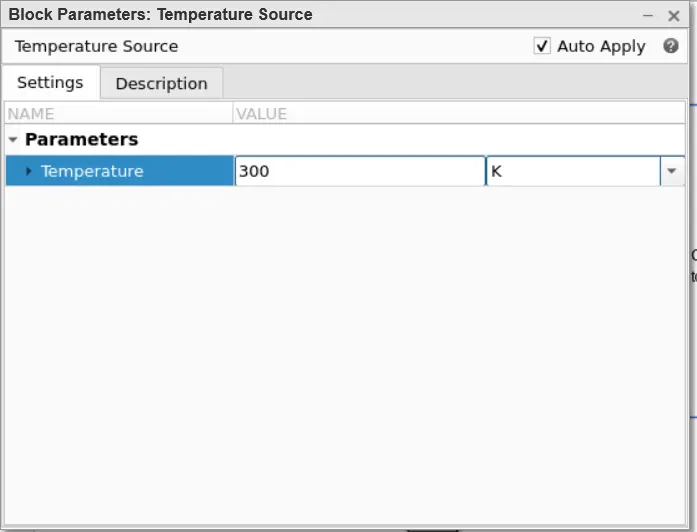
then run the simulation for 7200 second and the results are::
the state of charge is same for all the condition.
this is the temperature of the test2.
------------------------------------------------------------------------------------------------------------
.Conclusion
MATLAB library model parameters were evaluated for its life cycle and thermal effects parameters. A battery pack with 10 cells connected in series also made with a source of charging and discharging cycle.
The thermal effects of battery pack at different ambient temperatures for cycling charging/discharging has been analysed and plotted. The life cycle performance also evaluated for individual cells and overall battery pack.
Maintain battery temperature between 20–30 °C during discharge cycles in order to maximise performance and range. Maintain battery temperature between 15–25 °C during charging. Cool other powertrain components to allow them to operate without derating if possible.
we simulated the thermal effect and compared at various temperature ,faulty cell temp rise more than normal cell charge and discharge cycle given and due to temp rise it can damage the cell and reduce the performance of the battery.
---------------------------------------------------------------------------------------
to reduce the temperature of the battery:
we use several thermal management system.
techniques of thermal management system::
from the journal of
A Detailed Review on Electric Vehicles Battery
Thermal Management System
we have conclude that the BTMS several technique. they are
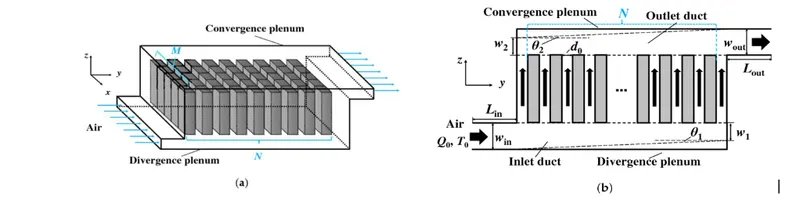
1.Air cooling:
air system uses air as the thermal medium. the intake air could be direct either from the atmosphere or from the cabin and could also be conditioned air after a heater or evaporator of an air conditioner.
2. liquid cooling::
it is a cooling systwm in which water is used as the coolant for the purpose of cooling the battery. liquid cooling is the most commonly used cooling system due to its convenient design and cooling performance. dielectric coling or direct cooling which can contact the battery cells directly, such as mineral oil.
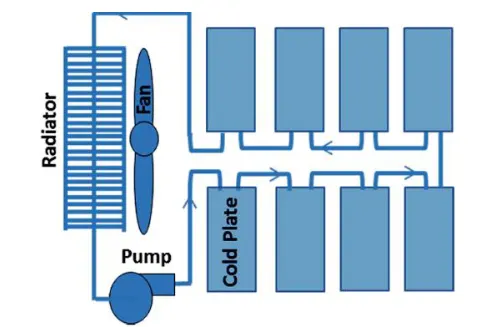
liquid cooling.
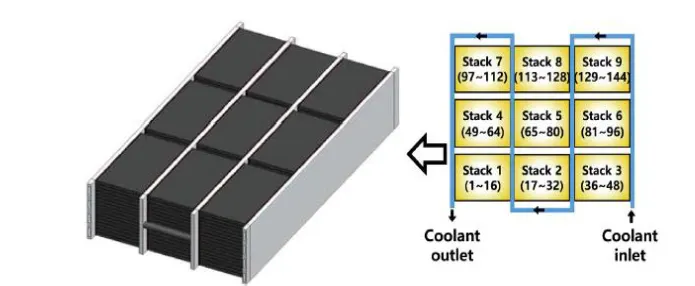
flow of liquid.
---------------------------------------------------------------------------------------------------------------------------------
Future Scope
In this model, individual cells were connected in series to make the battery pack. The thermal and life cycle performance of individual cells are different from battery pack.
In future we can consider the battery pack parameters to analyse the performance.
Also there are different associated components that contribute the temperature increase such as charger, connectors, wire resistances etc. In future, all these parameters have to be considered while analysing thermal behaviour.
------------------------------------------------------------------------------------------------------------------------------------
referance::
- ‘High Fidelity Electrical Model with Thermal Dependence for Characterization and Simulation of High Power Lithium Battery Cells’, Tarun Huria, Massimo Ceraolo, Javier Gazzarri, Robyn Jackey
- ‘Mathematical modeling of the capacity fade of Li-ion cells’, P. Ramadass, Bala Haran, Ralph White, Branko N. Popov
- Capacity fade study of lithium-ion batteries cycled at high discharge rates, Gang Ning, Bala Haran, Branko N. Popov
- MATLAB help-> Battery (Table-based)
- https://www.mathworks.com/help/physmod/simscape/ug/lithium-ion-battery-pack-with-fault.html
- https://www.sciencedirect.com/topics/engineering/cycle-life
--------------------------------thank you-----------------------------------------------------------------------------------------