Project 2 Thermal modeling of battery pack
Project 2 Thermal modeling of battery pack
QUESTION:
For a 10 cell series lithium ion battery model, simulate the thermal effects and compare life cycle performance at various temperatures, charge & discharge rates using MATLAB.
ANSWER:
Introduction:
The performance and life-cycle costs of electric vehicles (EV) and hybrid electric vehicles (HEV) depend inherently on energy storage systems such as batteries. Battery pack performance directly affects the all electric range, power for acceleration, fuel economy, and charge acceptance during energy recovery from regenerative braking. Because the battery pack cost, durability, and life also affect the cost and reliability of the vehicle, any parameter that affects the battery pack must be optimized.
Temperature uniformity have a strong influence on battery pack performance and consequently, that of HEVs and EVs. All the modules in the pack should be operated within the optimum temperature range suitable for the particular electrochemical couple used. In addition, uneven temperature distribution in a pack leads to different charge/discharge behaviour that results in unbalanced modules and reduced pack performance . Because HEV batteries have high specific power and undergo aggressive HEV charging/discharging profiles, thermal issues in an HEV pack are of more concern than in EV packs.
Simulink Model:
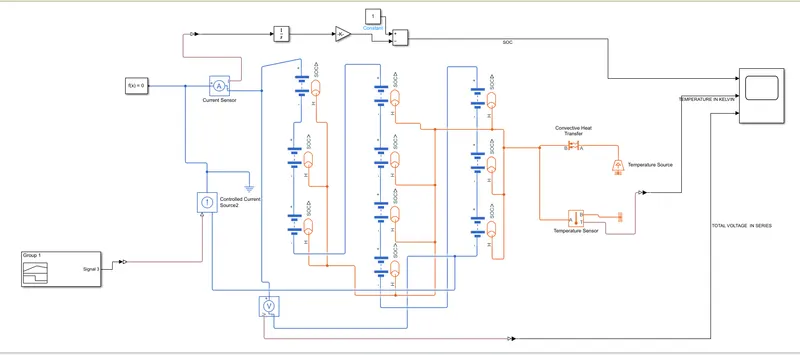
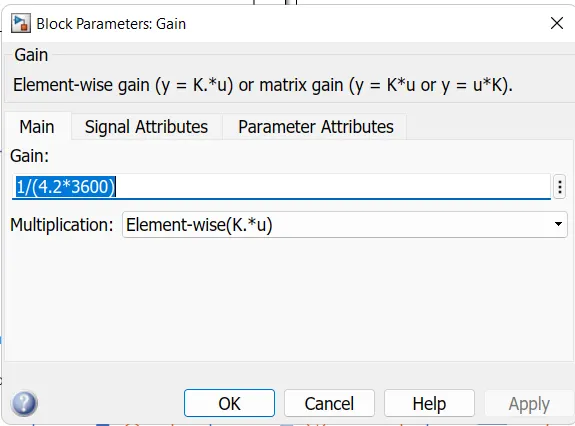
the 10 number of table battery used in series with enabling the thermal port with maximum capacity 4.2AH
the voltage source is connected across the extreme terminal of the battery
external convective heat transfer required thermal effect and temperature sensor is connected to the B terminal of the convective heat transfer to measure the temperature
and at various temperature we will note the parameter.
controlled current source is used to controlled the current of the battery and cuurent sensor help in measuring the cuurent through the battery
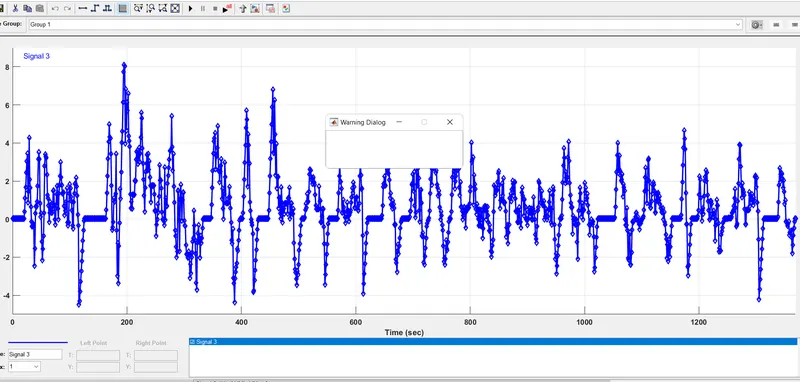
the UDDS drive cycle is provided to the system through signal builder block and simulation is run time is 1369sec.
SIMUALATION BLOCKS :
- GAIN
- CONSTANT
- SUBTRACT
- INTEGRATOR
- SCOPE
- CURRENT SENSOR
- TEMPERATURE SENSOR
- VOLTAGE SENSOR
- SOLVER CONFIGURATION
- CONVECTION AMBIENT
- AMBIENT
- SIGNAL BUILDER
- THERMAL PORT
- ELECTRIC REFERENCE
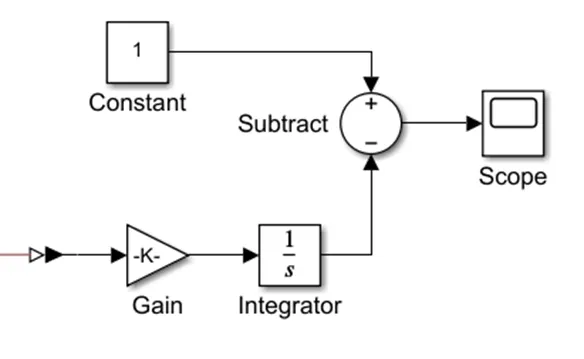
CHARGE ESTIMATION BLOCK :
SOC = 1-integration of ampere (I) divided by maximum capacity (ah)
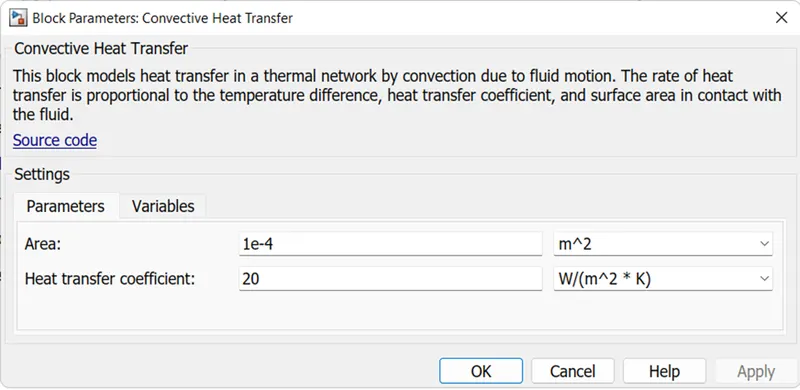
convective heat transfer:
the point of contact shown below in the block parameter 1e-4
battery table based:
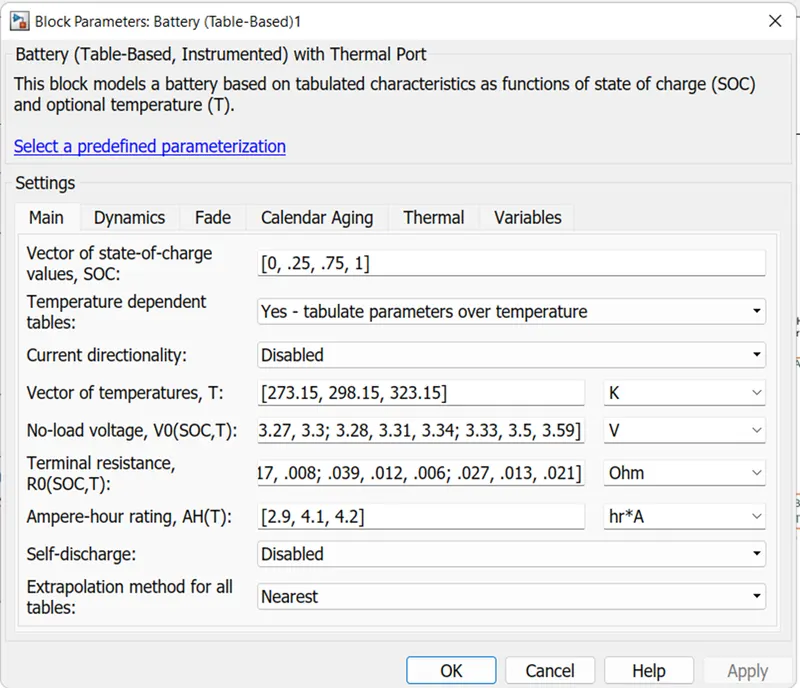
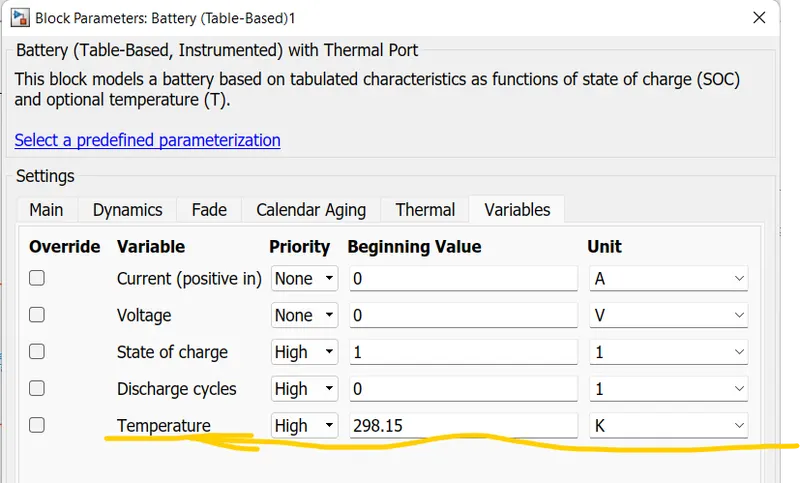
the battery has an optional temperature of 298.15K
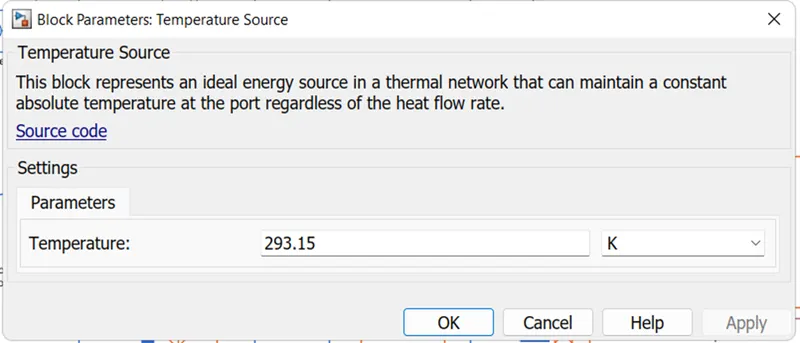
temperature source :
signal builder
scope :
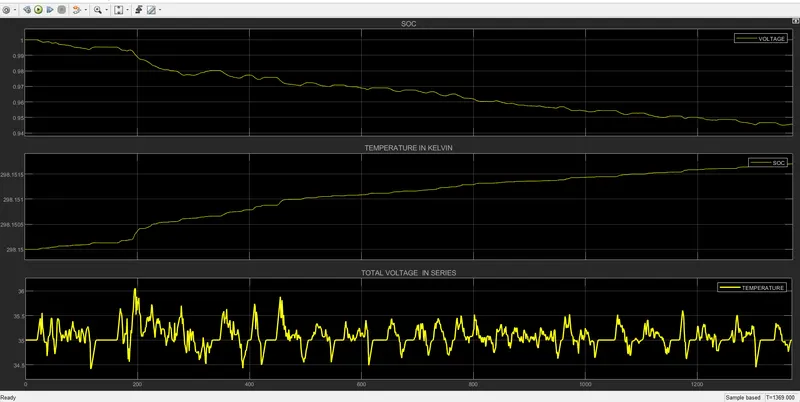
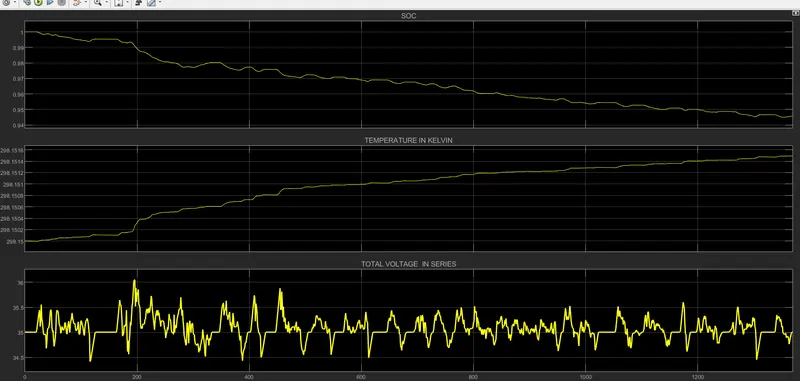
in the above graph the point of contact is much less so that battery heating temperature is less
the soc get decreases from 1 to 0.94 for the given thermal effect
the voltage gets vary from 34.5 to 36.1 measure by the voltage sensor for the given drive cycle
the area of contact changed from 1e-4 to 0.6 m^2 from convective heat transfer we get the follwing graph by keeping temperature constant.
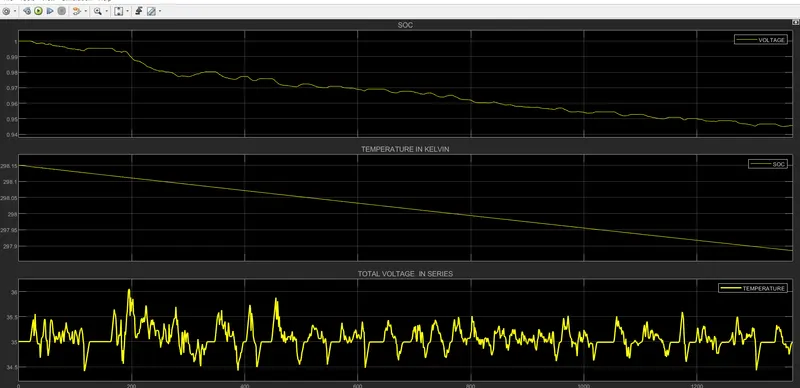
from the above graph we can say that by increasing tne point of contact the temperature linearly decreases
the not much difference we find out in soc and voltage
NOW we had changed the temperature 293.15k to 315.15 approx. 40 degree we get the graph shown below.
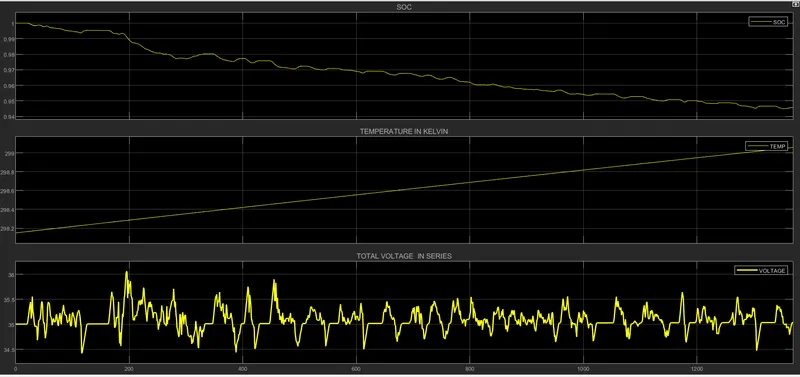
the temperature source has been changed to 280.15k i.e 7 degree.
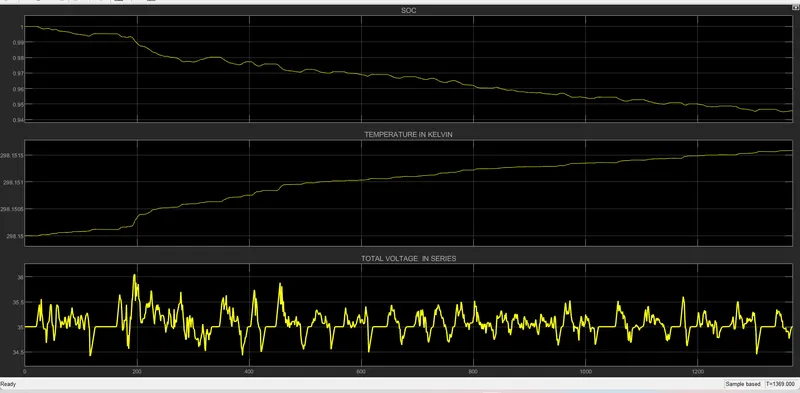
the above variation in the soc do not much create any major effect on the battery
at last we changed the temperature to 270.15k i.e -3degree
the SOC has negligible changed with the temperature source of 273.15k
CONCLUSION:-
- we applied different temperatures of 293K and 315K and 270K .
- As charging and discharging going on the temperature of the overall battery pack is increasing over the time.
- if we increase the temperature source value the rate of increase of temperature is also raises.