Project 2 Thermal modeling of battery pack
AIM
To simulate the thermal effects and compare life cycle performance at various temperatures, charge & discharge rates for a 10 cell series lithium ion battery model, using MATLAB.
Simulink Modelling of Battery pack
Battery Modelling
An accurate forecast of the remaining driving range of an electric vehicle (EV) is crucial to avoid range anxiety. Drivers need to know how much further they would travel before their vehicle batteries require a recharge. In addition, the battery management system should predict when batteries need replacement. The remaining charge calculation must be precise to utilize the battery’s full capability. The state of charge (SOC) of a battery or pack of batteries is analogous to a fuel gauge of a conventional vehicle.
Battery Table Based
Description
The Battery (Table-Based) block represents a high-fidelity battery model. The block calculates no-load voltage as a function of charge level and optional temperature using lookup tables and includes several modelling options
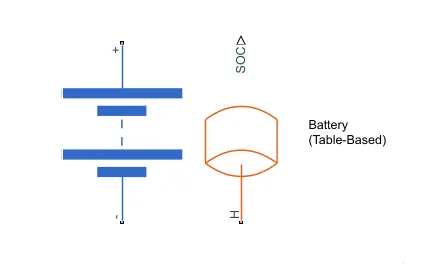
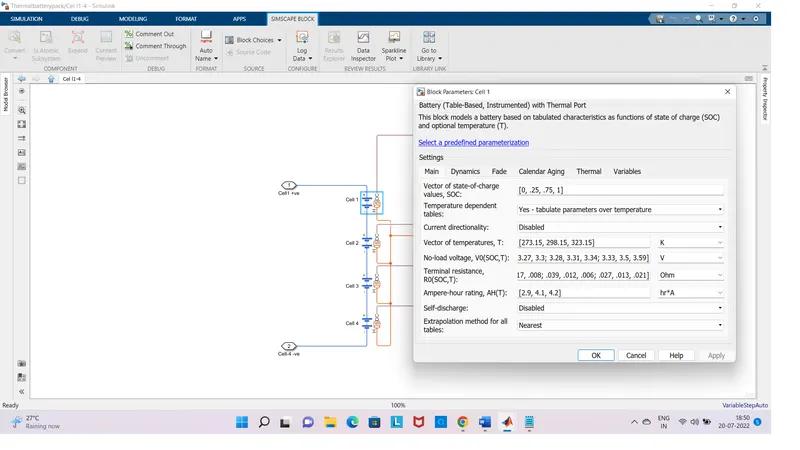
A battery is discharging a fixed amount of current , being heated by a temperature source.No Load Voltage is Minimum 3.2V and Maximum 3.59V and Max battery capacity is 4.2A and Min battery Capacity 2.9A of current is being discharged for 1 hour. The battery is at 298.185K the surface area of the battery. no change in battery temperature or SOC
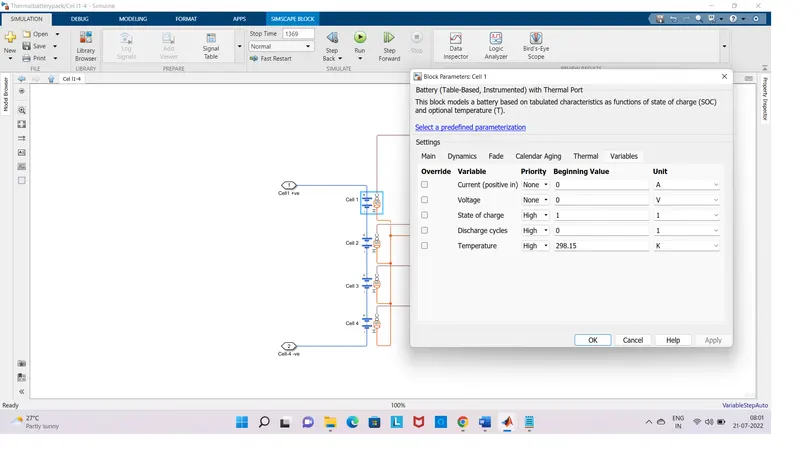
Self-discharge
Battery fade
Charge dynamics
Note
The block can use linear or nearest interpolation and extrapolation for all the table based parameters. For rows and columns, it follows the row-column convention, whereas rows are indexed first and, subsequently, columns.
The plot shows a battery whose performance varies with temperature and state of charge changes, as typically found on a datasheet.
Use this block to parameterize batteries with complex no-load voltage behaviour from datasheets or experimental results. For a simpler representation of a battery, see the Battery block.
The Battery (Table-Based) block has four modelling variants, accessible by right-clicking the block in your block diagram and then selecting the appropriate option from the context menu, under Simscape > Block choices:
Un-instrumented | No thermal port — Basic model that does not output battery charge level and simulates at a fixed temperature. This modelling variant is the default.
Un-instrumented | Show thermal port — Model with exposed thermal port. This model does not output internal charge level of the battery.
Instrumented | No thermal port — Model with exposed charge output port. This model uses a fixed temperature throughout the simulation.
Instrumented | Show thermal port — Model that lets you output internal charge level of the battery. Both the thermal port and the charge output port are exposed.
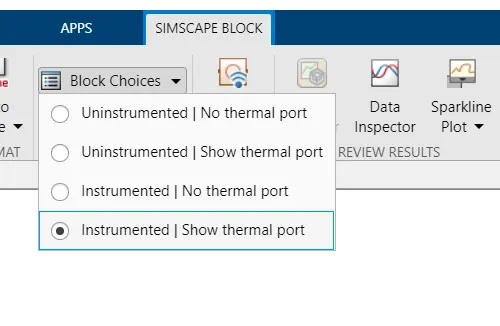
The instrumented variants have an extra physical signal port that outputs the internal state of charge. Use this functionality to change load behaviour as a function of state of charge, without the complexity of building a charge state estimator.
The thermal port variants expose a thermal port, which represents the battery thermal mass.
Convective Heat Transfer
Description
The Convective Heat Transfer block represents a heat transfer by convection between two bodies by means of fluid motion. The transfer is governed by the Newton law of cooling and is described with the following equation:
Q=k·A·(TA−TB)
where
Q Heat flow
k Convection heat transfer coefficient
A Surface area
TA,TB Temperatures of the bodies
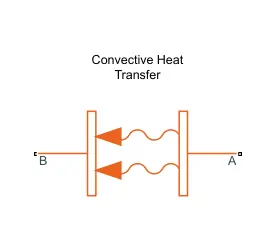
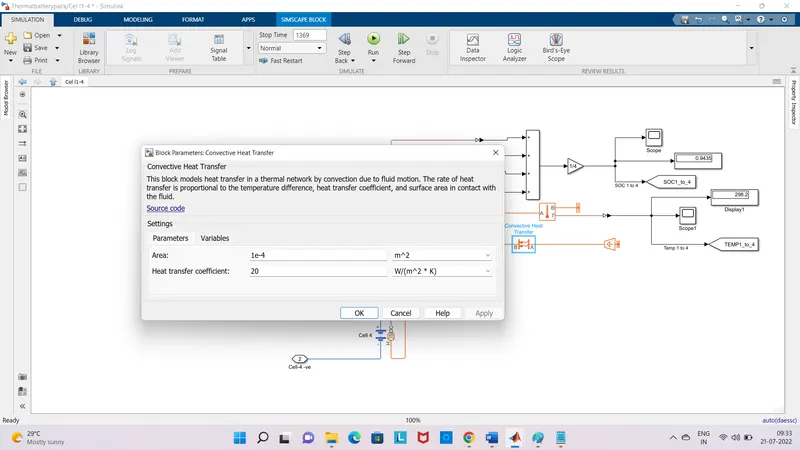
As the convective heat transfer area is 1e-4 m^2 increase the temperature of the battery also increase to 298.1517k Connections A and B are thermal conserving ports associated with the points between which the heat transfer by convection takes place. The block positive direction is from port A to port B. This means that the heat flow is positive if it flows from A to B.
Temperature Source:-
Description
The Temperature Source block represents an ideal source of thermal energy that is powerful enough to maintain specified temperature at its outlet regardless of the heat flow consumed by the system. The source generates constant absolute temperature, defined by the Temperature parameter value.
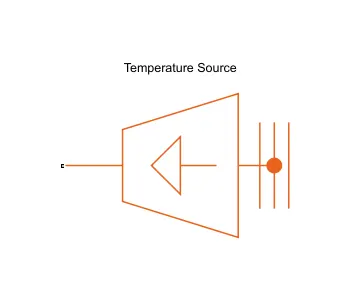
Its Value is 293.15K
Temperature Sensor:-
Description
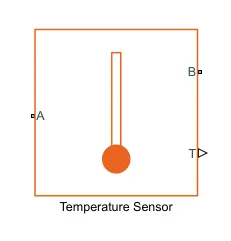
The Temperature Sensor block represents an ideal temperature sensor, that is, a device that determines the temperature differential measured between two points without drawing any heat.
Connections A and B are thermal conserving ports that connect to the two points where temperature is being monitored. Port T is a physical signal port that outputs the temperature differential value.The block positive direction is from port A to port B. The measured temperature is determined as T = TA – TB.
Ports
The block has the following ports:
A-Thermal conserving port associated with the sensor positive probe.
B-Thermal conserving port associated with the sensor negative probe.
T-Physical signal output port for temperature.
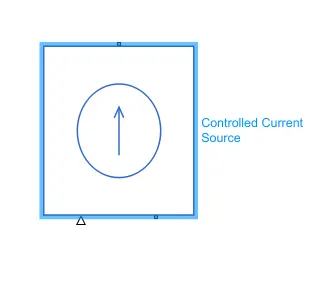
Controlled Current Source
Description
The Controlled Current Source block represents an ideal current source that is powerful enough to maintain the specified current through it regardless of the voltage across the source.
The output current is I = Is, where Is the numerical value presented at the physical signal port.
The positive direction of the current flow is indicated by the arrow.
Signal Builder:
The signal builder is connected to the Controlled Current Source and Controlled Current Source is connected to a battery connected
signal builder input signal to import to files given UDDS.xlxs files
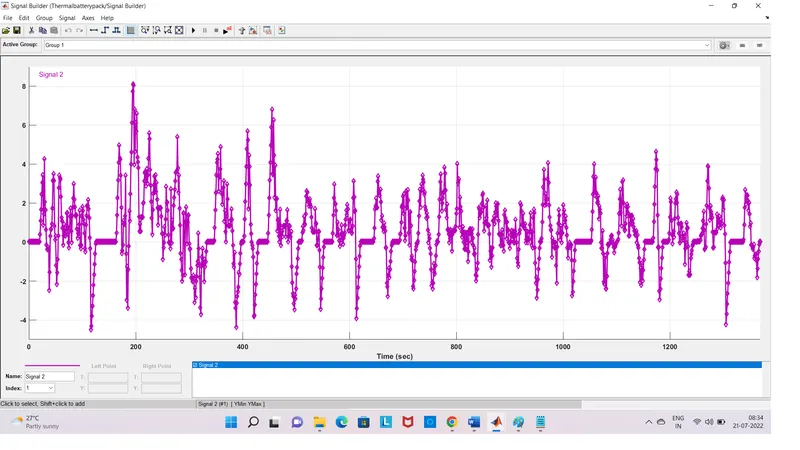
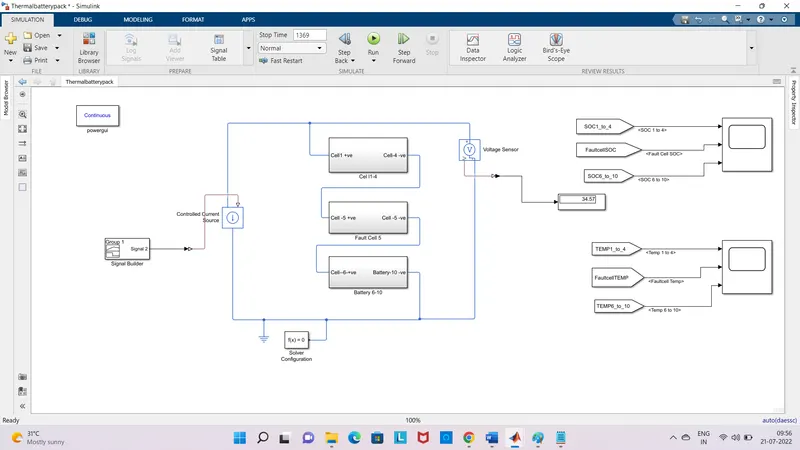
Table-Based Battery:-
Three subsystems are connected in series and First subsystem has four Batteries and another subsystem Fault cell subsytem and another subsystem for 5 cell connected to the controlled current source and the controlled current source is connected to the signal builder
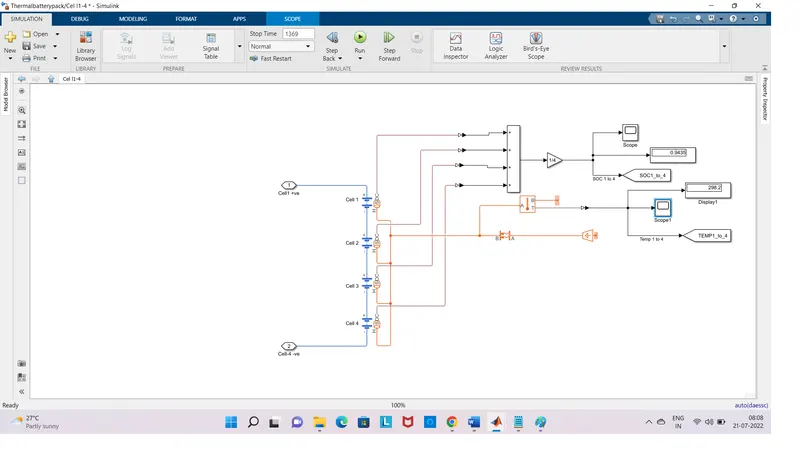
SubSytem-1(Cell-1 to Cell-4):-
Cell-1 is connected in +ve Terminal connected in controlled current source and another cells are connected in series 4th Cell -ve Terminal connected in Fault cell +ve and Thermal Port is connected in Temperature source and Convective Heat Transfer and its measure the temperature is connected in temperature sensor and connected in Display and Scope & goto is connected.
Four Cell SOC terminal is connected in Adder block its also connected in gain block the gain value is 1/4 its also connected in Display and Scope & goto is connected
Fault Cell Subsytem(Cell-5):-
Cell-5 is connected in -ve Terminal connected in Cell-4 Positive Terminal Cell-5 -ve Terminal connected in cell-6 +ve and Thermal Port is connected in Temperature source and Convective Heat Transfer and its measure the temperature is connected in temperature sensor and connected in Display and Scope & goto is connected.
Cell SOC terminal is connected in Display and Scope & goto is connected
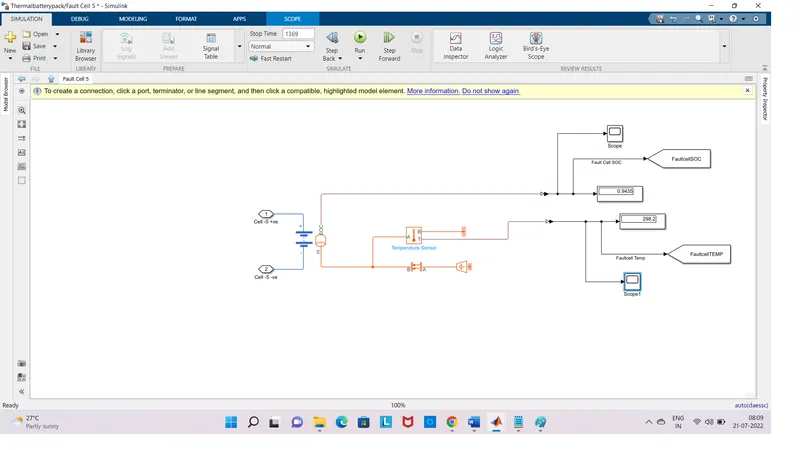
Subsytem-3(Cell-6 to Cell-10):-
Cell-6 is connected in +ve Terminal connected in Fault Cell -Ve Terminal and another cells are connected in series 10th Cell -ve Terminal connected in Controlled Current Source and Thermal Port is connected in Temperature source and Convective Heat Transfer and its measure the temperature is connected in temperature sensor and connected in Display and Scope & goto is connected.
Five Cell SOC terminal is connected in Adder block its also connected in gain block the gain value is 1/5 its also connected in Display and Scope & goto is connected.
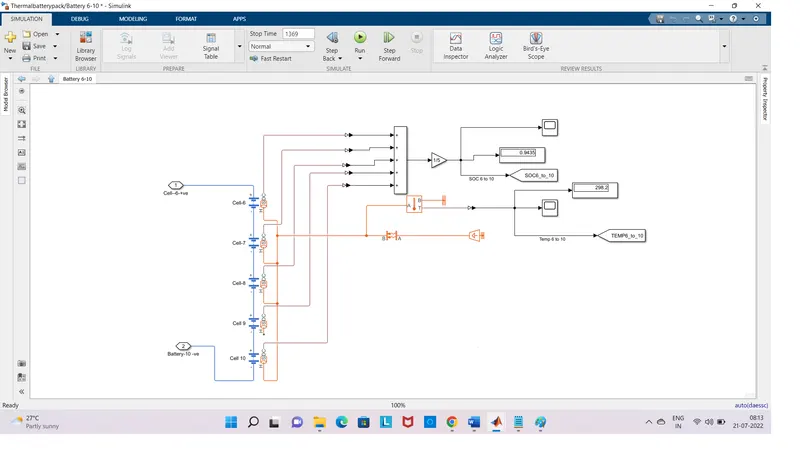
It's all Subsytem Goto and From Block is connected Scope in Front side connected and measure the voltage measurement block is connected
OutPut Analysis:-
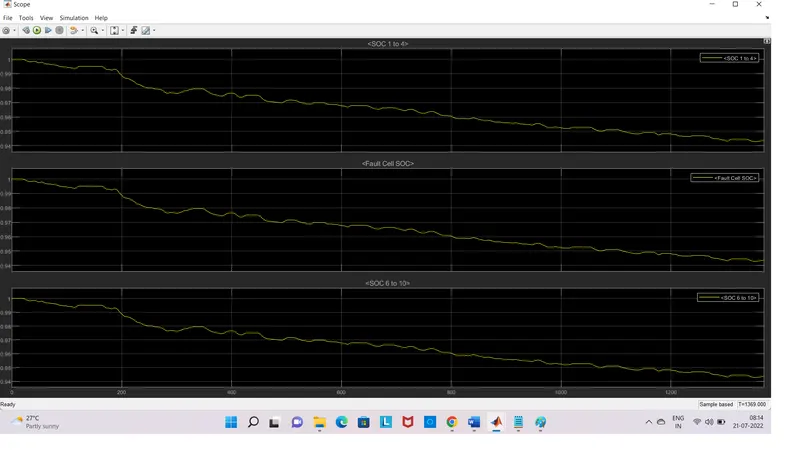
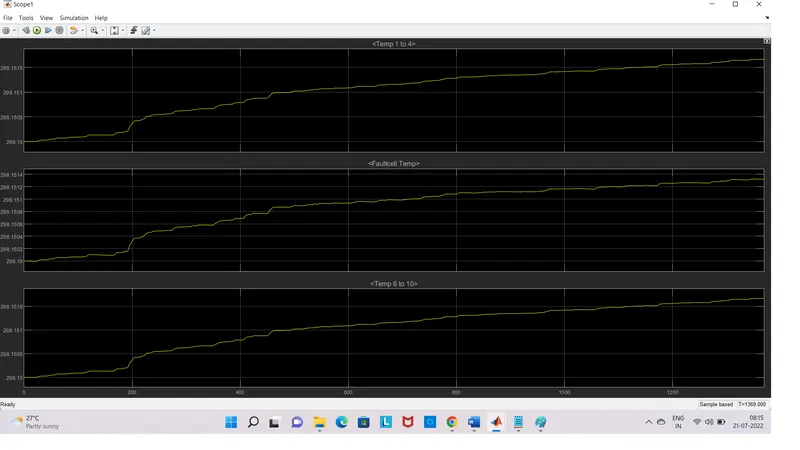
simulation time 1369 sec for output are the Voltage and SOC and temperature
Voltage is increasing and decreasing as per the input of the signal builder it's connected to the controlled current source
SOC is a state of charge of all the batteries When voltage is changed according to the signal builder SOC is also changes to charging and discharging states