Project 2 Thermal modeling of battery pack
For a 10-cell series lithium-ion battery model, simulate the thermal effects and compare life cycle performance at various temperatures, and charge & discharge rates using MATLAB.
AIM:
For a 10-cell series lithium-ion battery model, simulate the thermal effects and compare life cycle performance at various temperatures, and charge & discharge rates using a generic battery model
Generic battery model:
Implements a generic battery model for most popular battery types. Temperature and aging (due to cycling) effects can be specified for Lithium-Ion battery type.
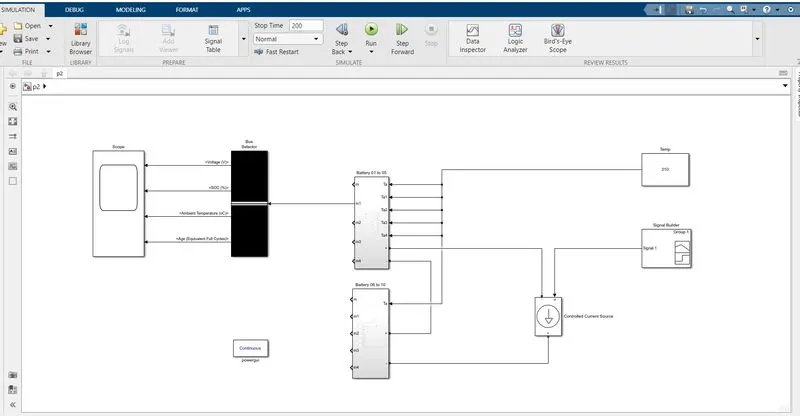
Two subsystems are connected in series and each subsystem has five Batteries all ten batteries are connected to the controlled current source and the controlled current source is connected to the signal builder and Genice battery M is connected to the bus selected and connected scope
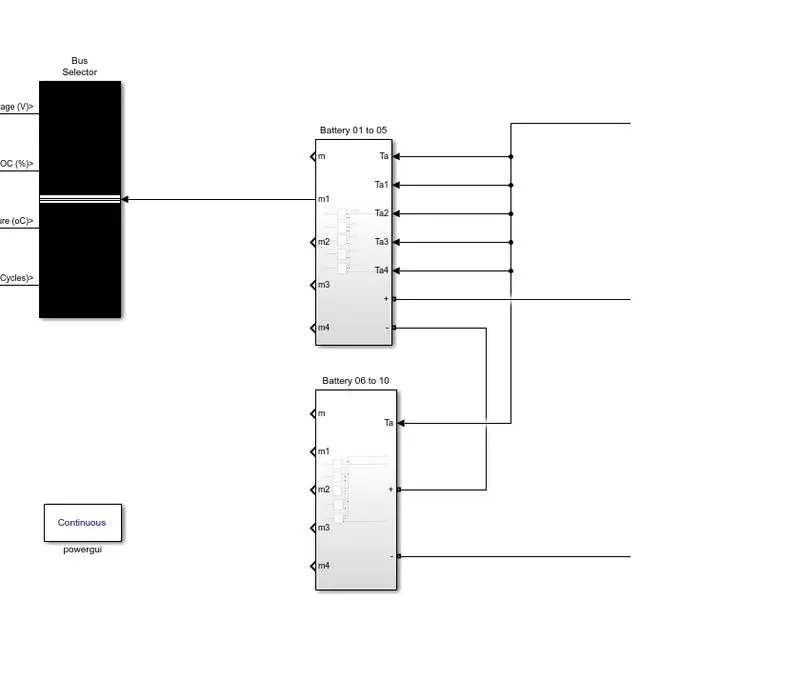
Two subsystems are connected in series to the bus selector
Generic battery model:
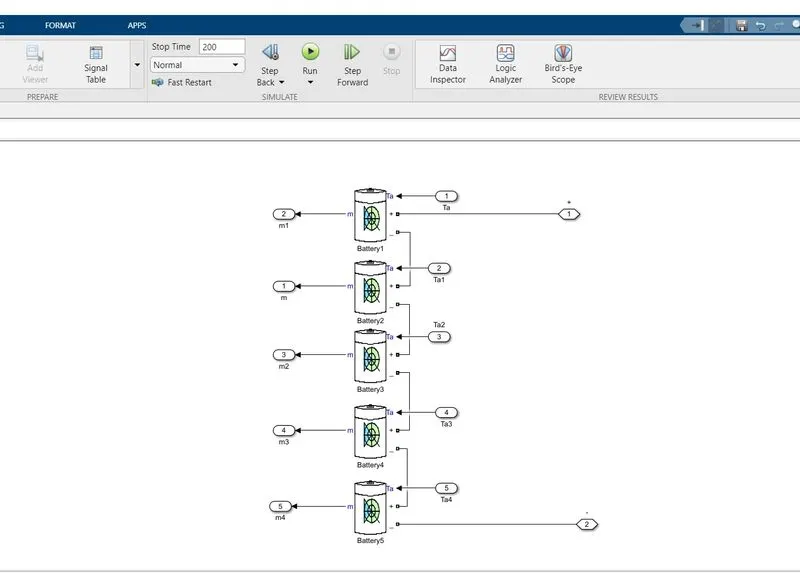
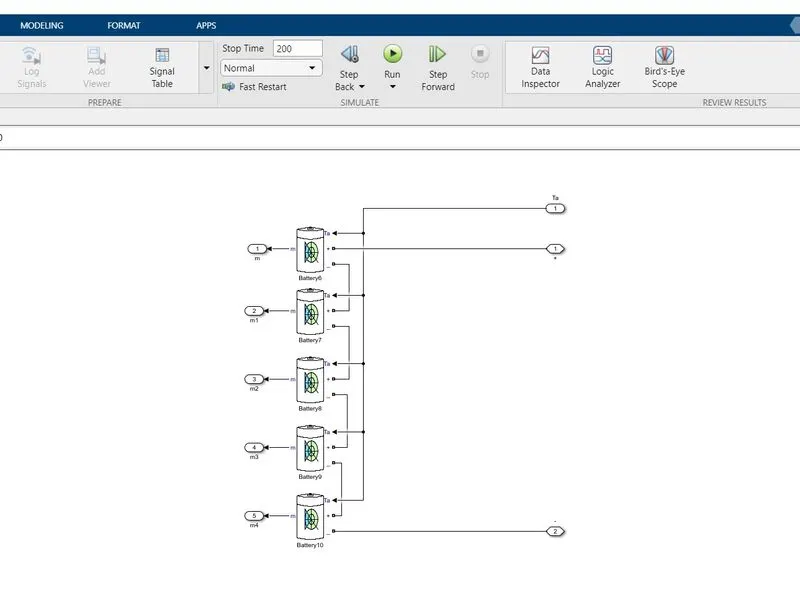
Two subsystems are connected in series One subsystem is 01 to 05 Batteries connected in series and another subsystem is 06 to 10 Batteries connected in series and all battery
Generic battery model:
The Battery block implements a generic dynamic model that represents the most popular types of rechargeable batteries.
Implements a generic battery model for most popular battery types. Temperature and aging (due to cycling) effects can be specified for Lithium-Ion battery type.
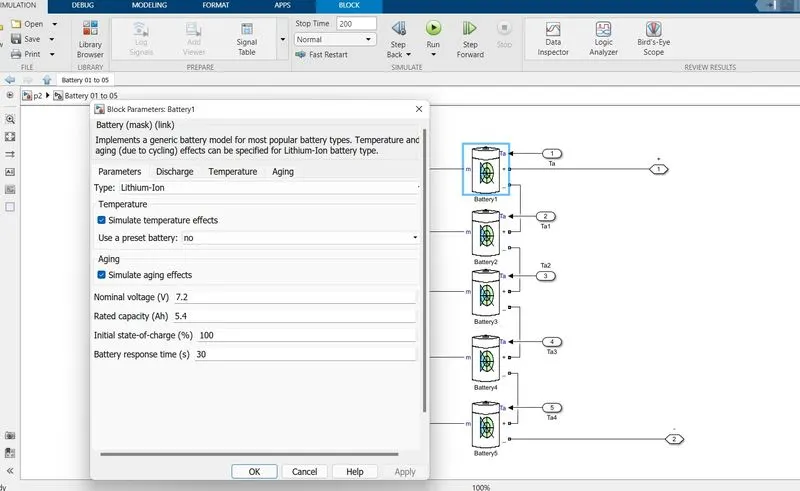
For generic batteries, we can select the Temperature and aging effect and also Like simulate the aging effect and simulate temperature
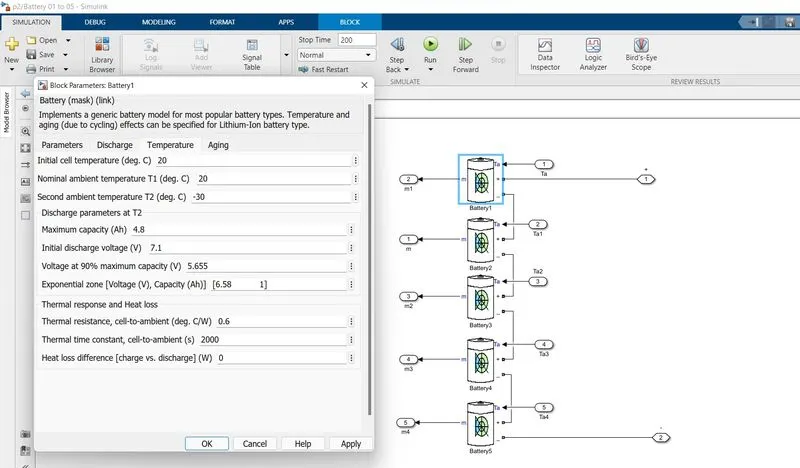
The temperature of all the Battery is connected in series to the constant block and we can varies the initial cell temperature and nominal ambient temperature and second ambient temperature
10cells connected in series so 7.2*10= 72V and Capacity(AH)=4.8AH
Fully charged voltage (V) = 8.307V
Cut-off Voltage (V) = 5.4V
Cut-off Voltage (V) = 2.347
Initial state-of-charge (%) = 100%
Battery response time (s) = 30S
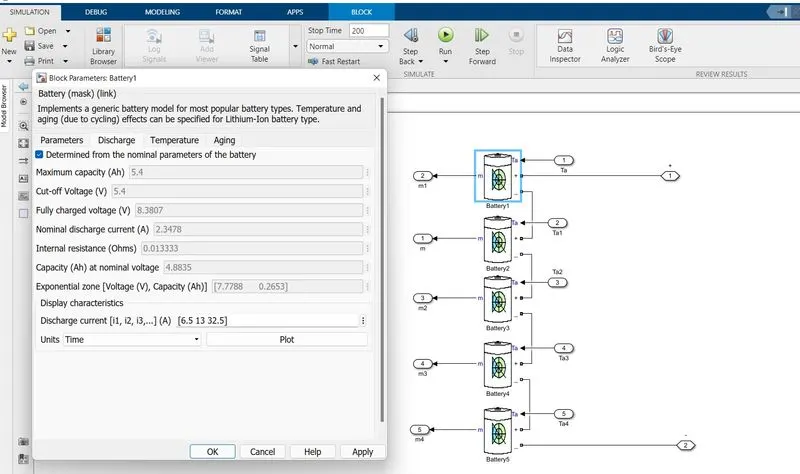
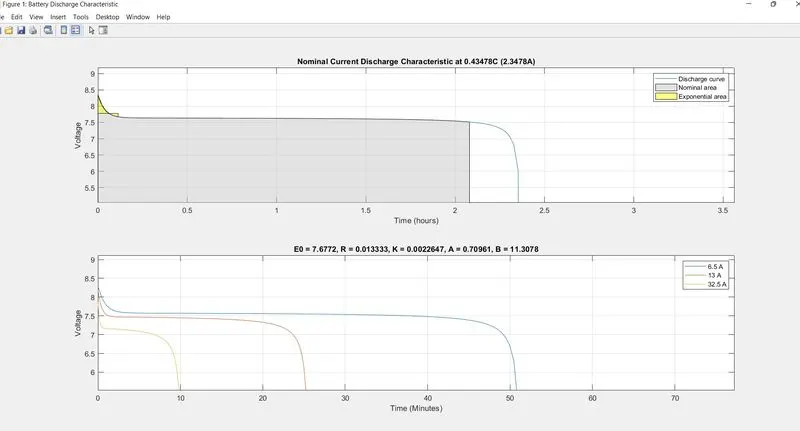
Charge and Discharge Characteristics:
The circuit parameters can be modified to represent a specific battery type and its discharge characteristics. A typical discharge curve consists of three sections.
The first section represents the exponential voltage drop when the battery is charged. The width of the drop depends on the battery type. The second section represents the charge that can be extracted from the battery until the voltage drops below the battery's nominal voltage. Finally, the third section represents the total discharge of the battery, when the voltage drops rapidly.
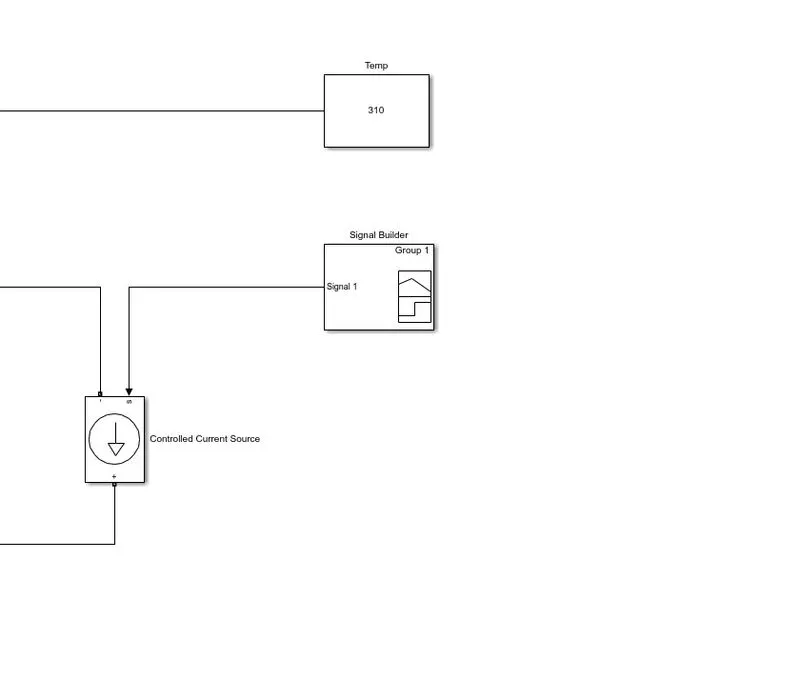
Temperature is constant block as 310 and all the ten batteries in series
signal Builder:
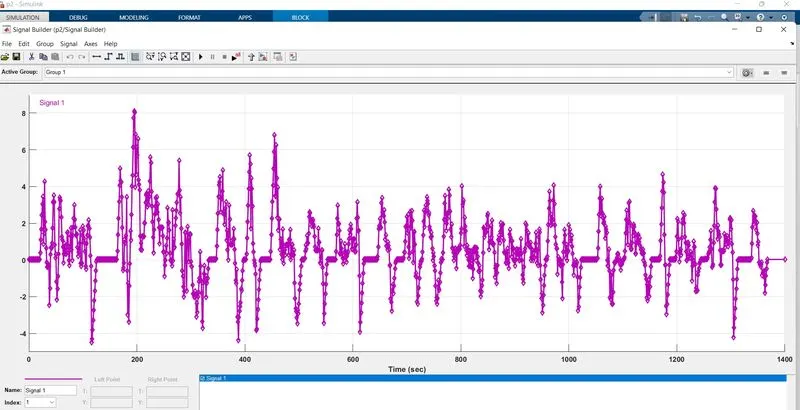
signal Builder:
The signal builder is connected to the Controlled Current Source and Controlled Current Source is connected to a battery connected to Bus Selector to separate the three signals to the output
signal builder input signal to import to files given UDDS.xlxs files
Result to scope :
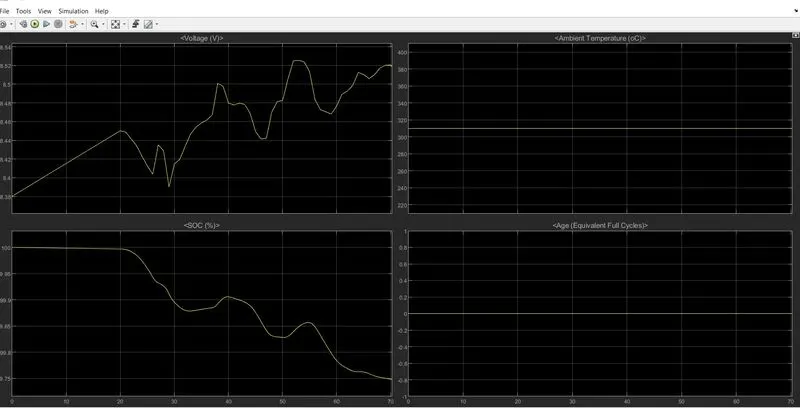
simulation time 1400 sec for output and output are the Voltage and SOC ( Charging and discharging rates ) and aging effect and Ambient temperature
The ambient temperature is the 310T set by the constant block and Initial state-of-charge (%) = 100% and Battery response time (s) = 30S and Aging model sampling time (s) = 0.1S
Voltage is increasing and decreasing as per the input of the signal builder it's connected to the controlled current source
SOC is a state of charge of all the batteries When voltage is changed according to the signal builder SOC is also changes to charging and discharging states