Project 2 Thermal modeling of battery pack
For a 10 cell series lithium ion battery model, simulate the thermal effects and compare life cycle performance at various temperatures, charge & discharge rates using MATLAB.
Aim: To create a 10 cells series Lithium ion battery model in simulink and simscape
Objectives:
- To simulate the thermal effects of the battery
- To compare life cycle performance at various temperatures,charge and discharge rates
Simulink Model:
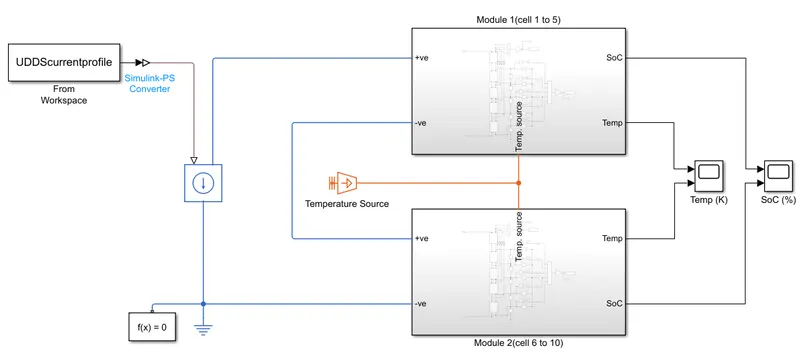
Module 1:
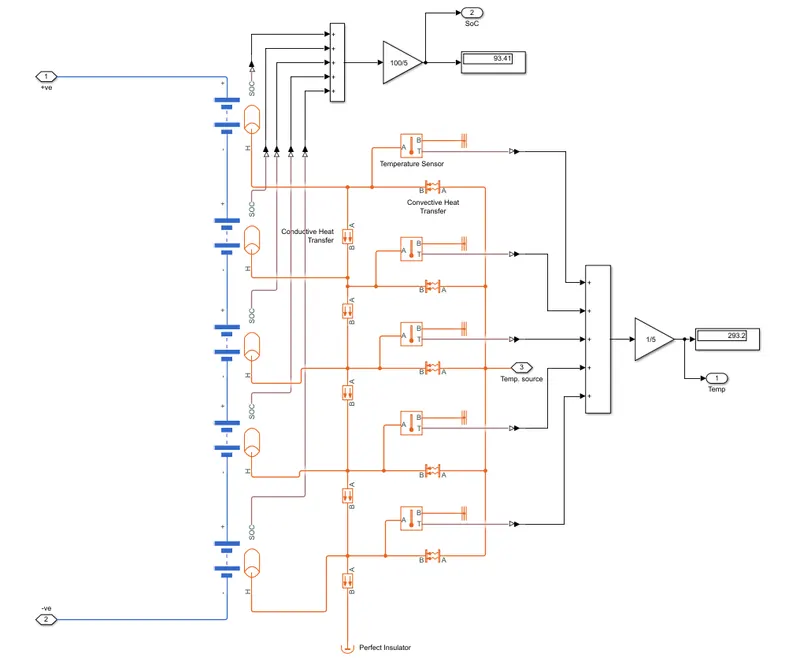
This subsystem is a module that contains 5 cells connected in series .
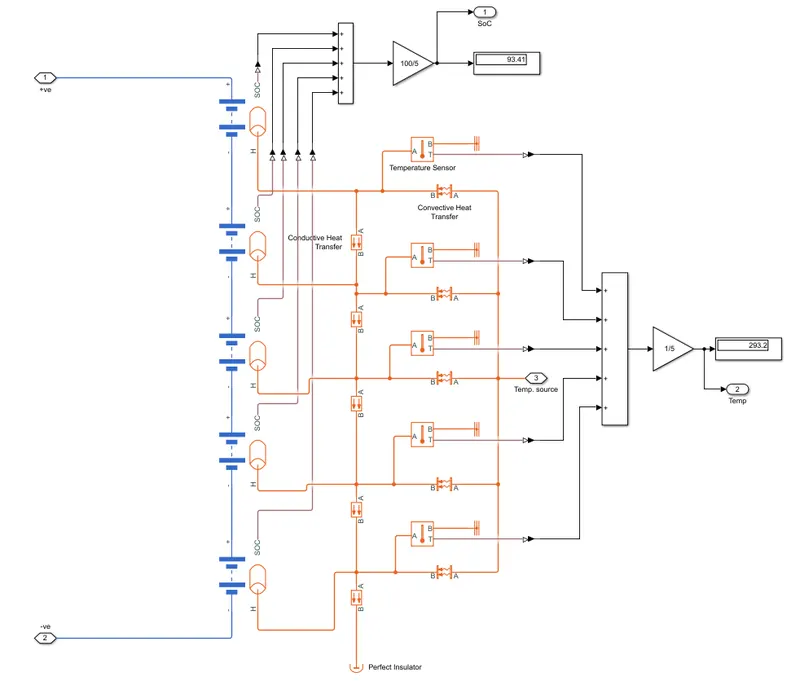
Module 2:
This subsystem consists of a module containing 5 cells connected in series .
Main blocks used in this model:
- From workspace
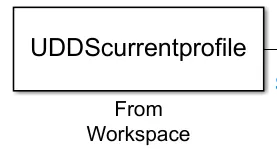
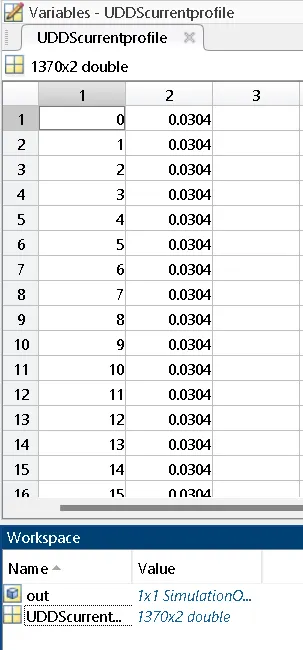
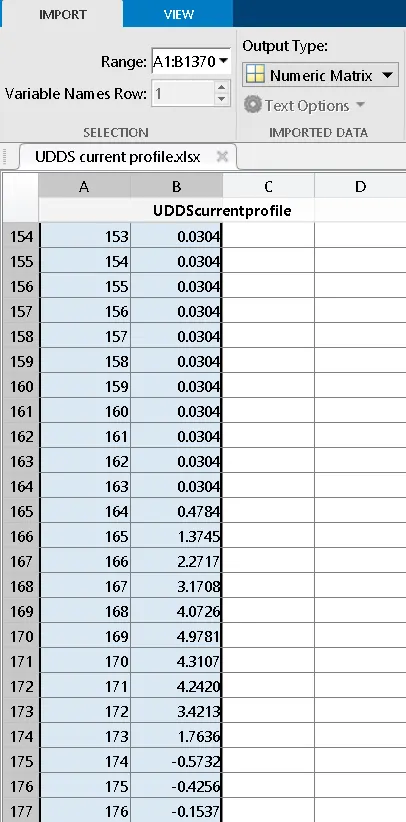
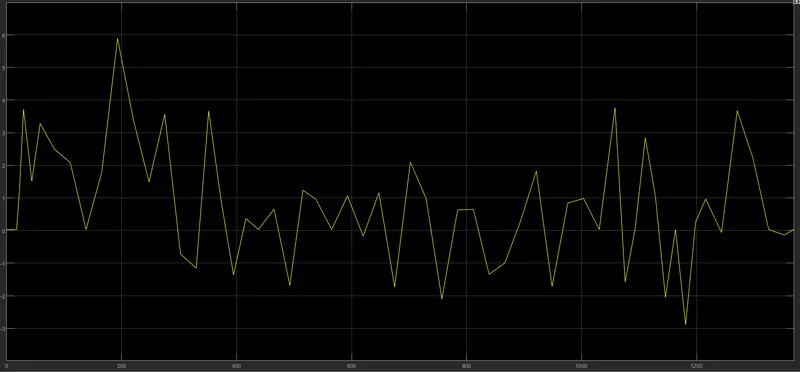
In the from workspace block I have imported the UDDS current profile from the workspace.UDDS current profile is graph plotted between current in y axis and time in x axis.
UDDS plot:
- Battery (Table based):
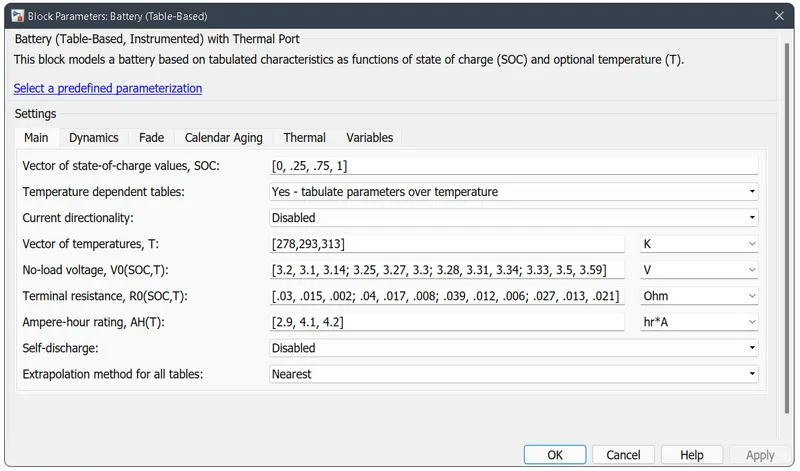
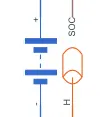 In the table based battery here we chose Instrumented,Show thermal port from the block choices option.The SoC port gives the SOC of the battery and H port gives the amount of heat.
The Battery (Table-Based) block represents a high-fidelity battery model. The block calculates no-load voltage as a function of charge level and optional temperature using lookup tables and includes several modeling options:
- Self-discharge
- Battery fade
- Charge dynamics
- Calendar aging
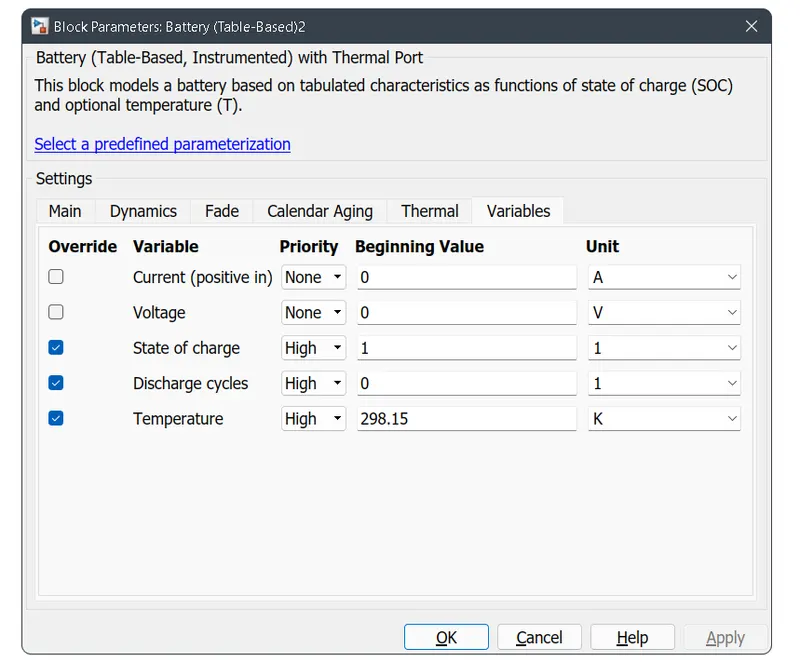
These are the battery parameters:
- Conductive heat transfer:

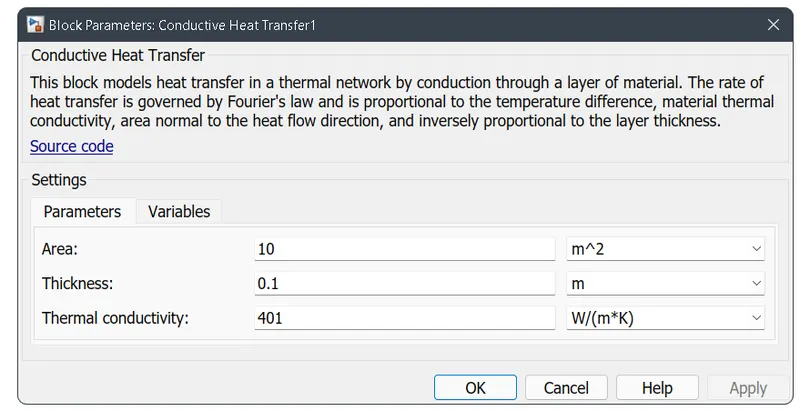
This block models heat transfer in a thermal network by conduction through a layer of material. The rate of heat transfer is governed by Fourier's law and is proportional to the temperature difference, material thermal conductivity, area normal to the heat flow direction, and inversely proportional to the layer thickness.
- Convective heat transfer:
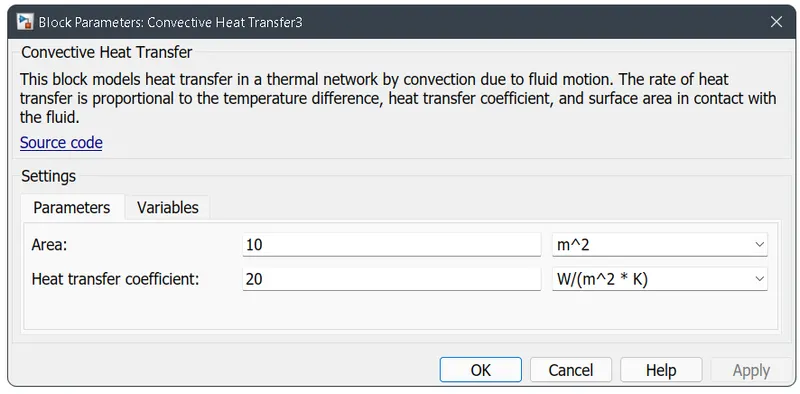
 This block models heat transfer in a thermal network by convection due to fluid motion. The rate of heat transfer is proportional to the temperature difference, heat transfer coefficient, and surface area in contact with the fluid.
- Temperature sensor:
 This block measures temperature in a thermal network. There is no heat flow through the sensor. The physical signal port T reports the temperature difference across the sensor. The measurement is positive when the temperature at port A is greater than the temperature at port B.
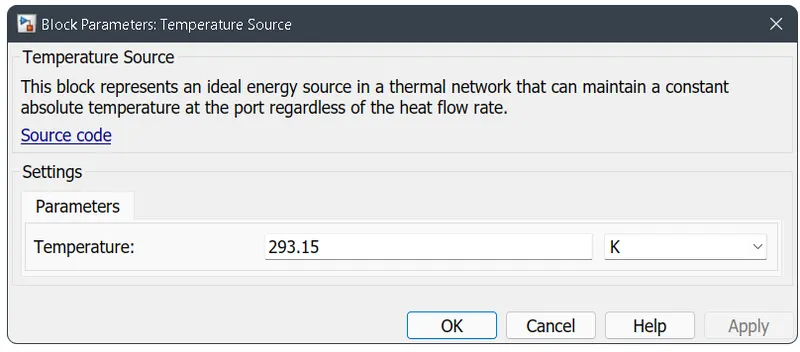
- Temperature source:
 This block represents an ideal energy source in a thermal network that can maintain a constant absolute temperature at the port regardless of the heat flow rate.
Temperature plot:
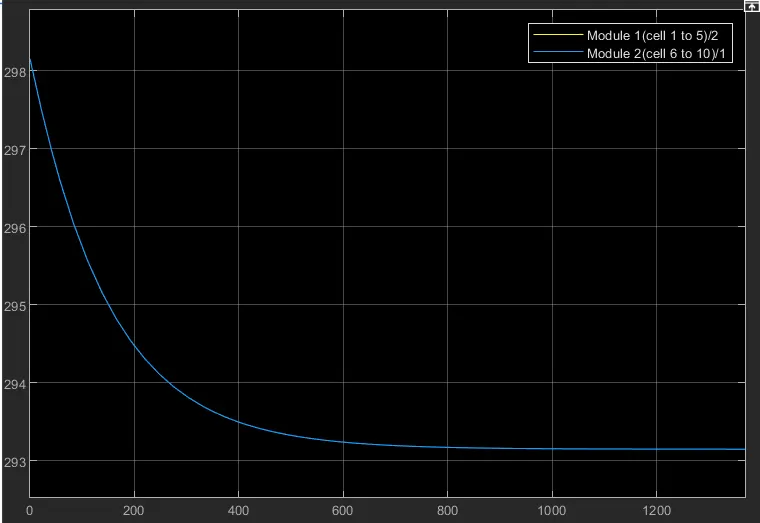
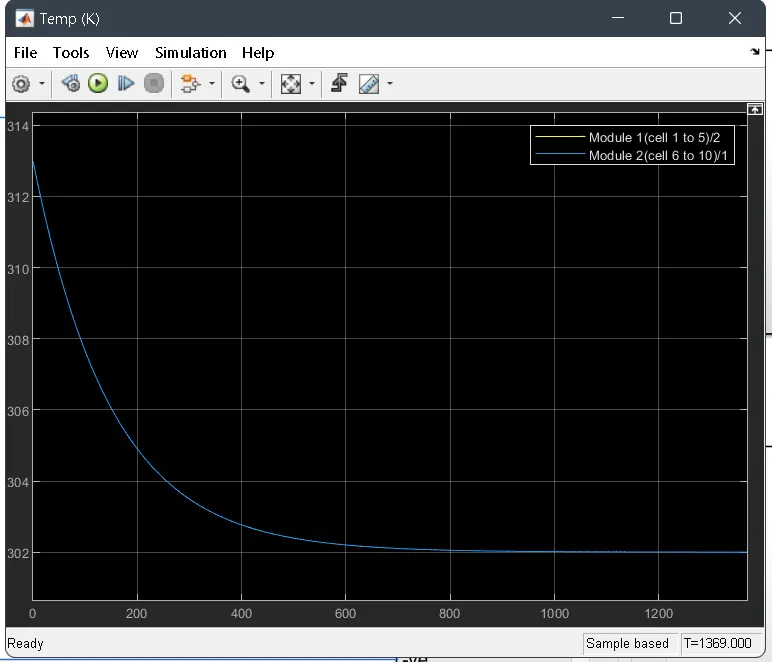
The temperature of the source is given as 293.15K. Also the battery temperature is given as 298.15K .For both the modules the temperature curve is same.Starting from 298.15K it gradually decreases and when 293.15K reaches it becomes steady .
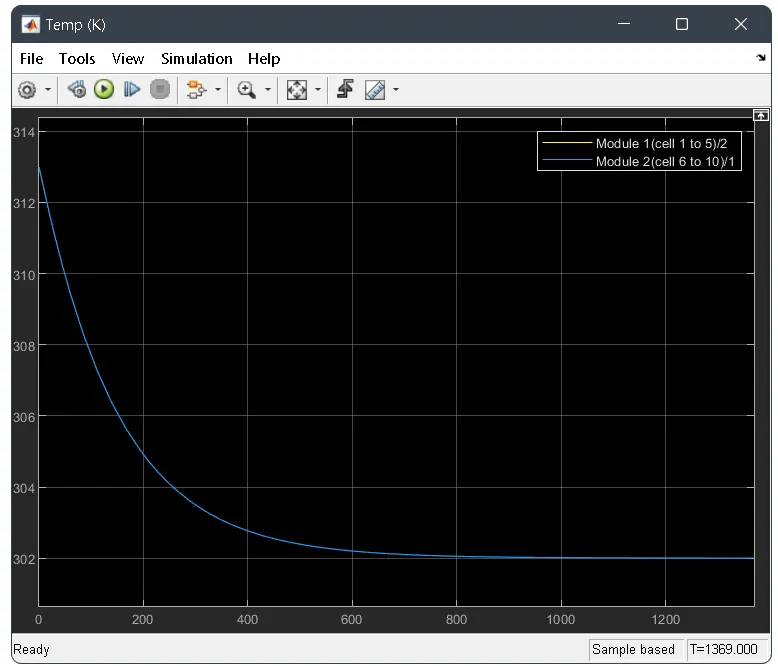
Now changing the battery temperature to 313K and the source temperature as 303K,following changes are observed:
Changing the charge and discharge rates in the dynamics section:
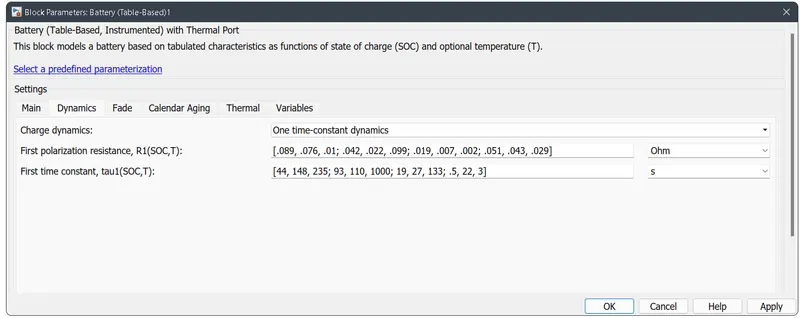
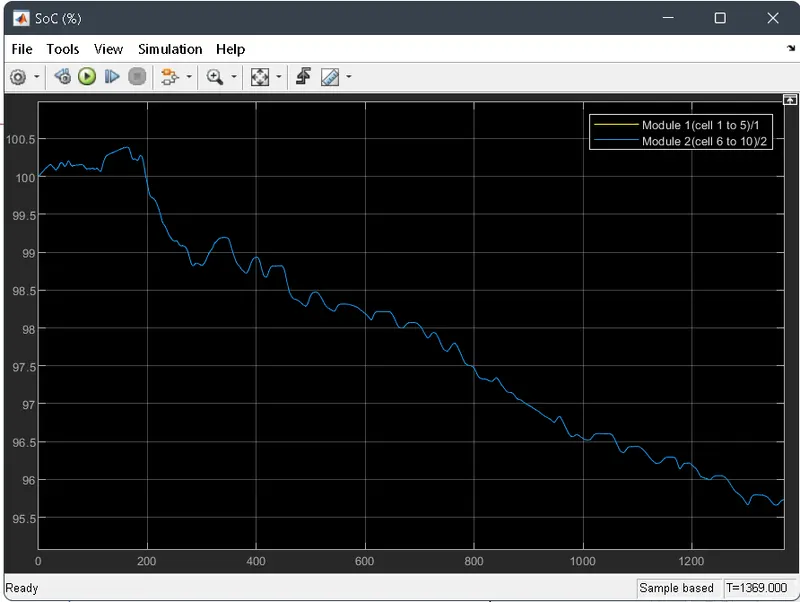
Changing charge dynamics to One time-constant dynamics.
SoC plot:
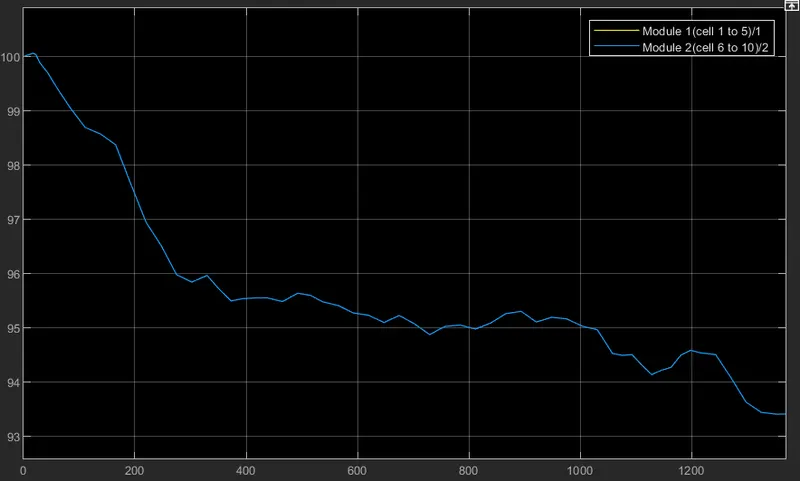
The temperature of the source is given as 293.15K. Also the battery temperature is given as 298.15K .For both the modules the temperature curve is same.For the above default condition the SoC plot is like this.Starting from the 100% it decreases and reaches about 93%. The SoC depends on the current profile.As the current drawn increases the SoC decreases and as current decreases the SoC increases.
Now changing the battery temperature to 313K and the source temperature as 303K,following changes are observed:
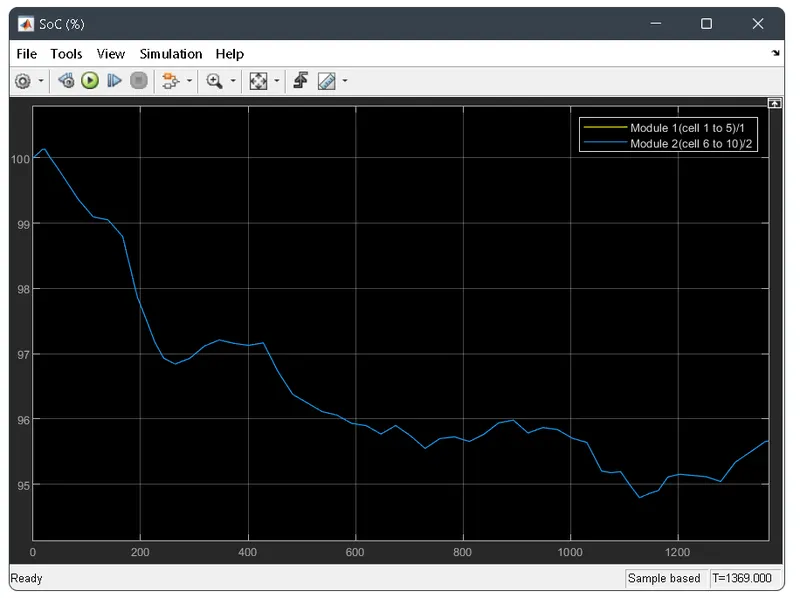
As we can see here the as the source temperature and battery temperature increased the SoC increased to around 95.5%.
Changing the charge and discharge rates in the dynamics section:
Conclusion:
Simulated the Matlab model of 10 series lithium ion cells and simulated the thermal effects of the battery and also compared life cycle performance at various temperatures,charge and discharge rates.The variations in differnet conditions are also studied.