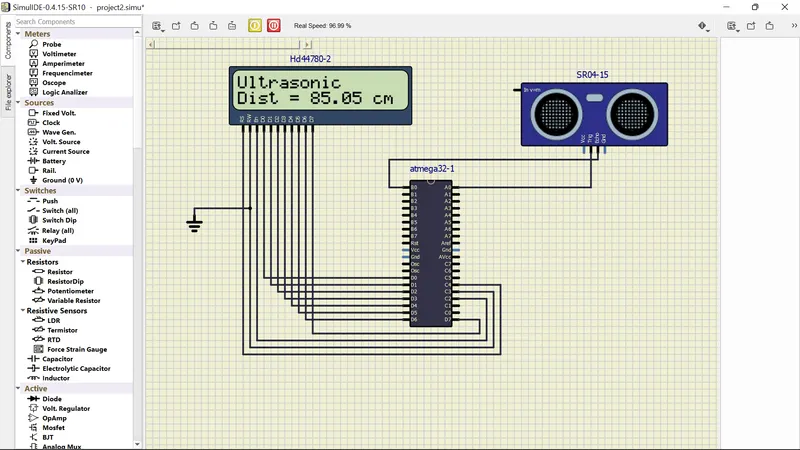
Project 2 - Measuring distance of an object using ultrasonic sensor (HC-SR04)
Problem Statement......
Project 2 - Measuring distance of an object using ultrasonic sensor (HC-SR04)
Solution......
Aim
To design and implement code for the measuring distance of an object using ultrasonic sensor (HC-SR04)
Theory
Ultrasonic Sensor
An ultrasonic sensor is an electronic device that measures the distance of a target object by emitting ultrasonic sound waves, and converts the reflected sound into an electrical signal. Ultrasonic waves travel faster than the speed of audible sound (i.e. the sound that humans can hear). Ultrasonic sensors have two main components: the transmitter (which emits the sound using piezoelectric crystals) and the receiver (which encounters the sound after it has travelled to and from the target).
In order to calculate the distance between the sensor and the object, the sensor measures the time it takes between the emission of the sound by the transmitter to its contact with the receiver. The formula for this calculation is D = ½ T x C (where D is the distance, T is the time, and C is the speed of sound ~ 343 meters/second). For example, if a scientist set up an ultrasonic sensor aimed at a box and it took 0.025 seconds for the sound to bounce back, the distance between the ultrasonic sensor and the box would be:
D = 0.5 x 0.025 x 343
or about 4.2875 meters.
Ultrasonic sensors are used primarily as proximity sensors. They can be found in automobile self-parking technology and anti-collision safety systems. Ultrasonic sensors are also used in robotic obstacle detection systems, as well as manufacturing technology. In comparison to infrared (IR) sensors in proximity sensing applications, ultrasonic sensors are not as susceptible to interference of smoke, gas, and other airborne particles (though the physical components are still affected by variables such as heat).
Ultrasonic sensors are also used as level sensors to detect, monitor, and regulate liquid levels in closed containers (such as vats in chemical factories). Most notably, ultrasonic technology has enabled the medical industry to produce images of internal organs, identify tumors, and ensure the health of babies in the womb.
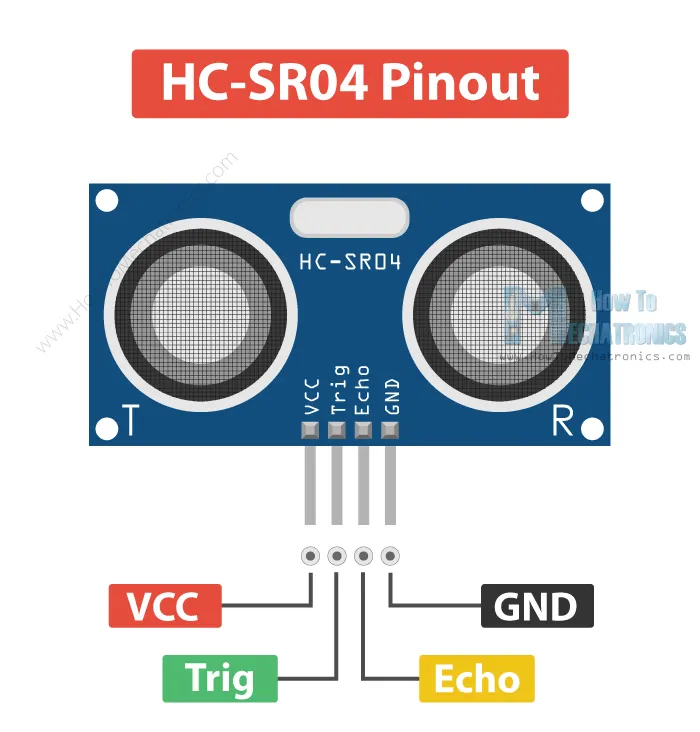
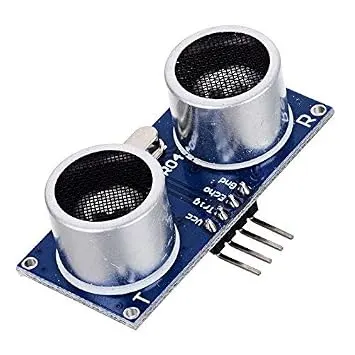
Fig.1. Ultrasonic Sensor
Code for the program
#include <avr/io.h>
#define F_CPU 8000000UL
#include <avr/interrupt.h>
#include <util/delay.h>
#include <string.h>
#include <stdlib.h>
#define LCD_Data_Dir DDRD // Define LCD data port direction
#define LCD_Command_Dir DDRC // Define LCD command port direction register
#define LCD_Data_Port PORTD // Define LCD data port
#define LCD_Command_Port PORTC // Define LCD data port
#define EN PC2 // Define Enable signal pin
#define RW PC3 // Define Read/Write signal pin
#define RS PC4 // Define Register Select signal pin
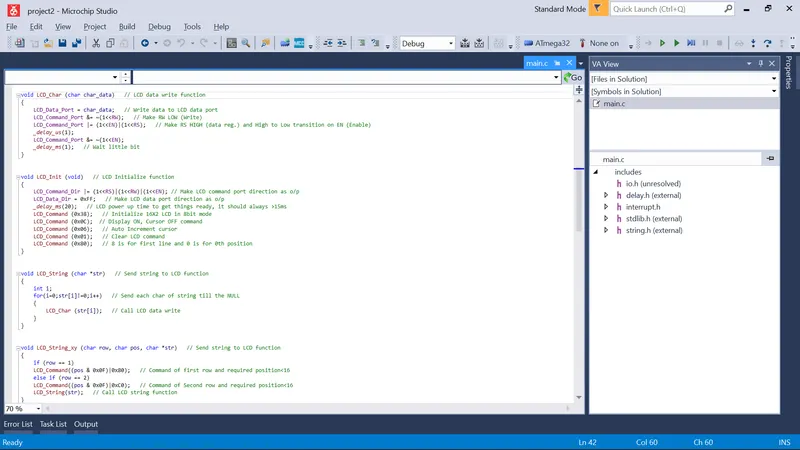
void LCD_Command (char); // LCD command write function
void LCD_Char (char); // LCD data write function
void LCD_Init (void); // LCD Initialize function
void LCD_String (char*); // Send string to LCD function
void LCD_String_xy (char,char,char*); // Send row, position and string to LCD function
void LCD_Command (char cmd) // LCD command write function
{
LCD_Data_Port = cmd; // Write command data to LCD data port
LCD_Command_Port &= ~((1<<RS)|(1<<RW)); // Make RS LOW (command reg.), RW LOW (Write)
LCD_Command_Port |= (1<<EN); // High to Low transition on EN (Enable)
_delay_us(1);
LCD_Command_Port &= ~(1<<EN);
_delay_ms(3); // Wait some time
}
void LCD_Char (char char_data) // LCD data write function
{
LCD_Data_Port = char_data; // Write data to LCD data port
LCD_Command_Port &= ~(1<<RW); // Make RW LOW (Write)
LCD_Command_Port |= (1<<EN)|(1<<RS); // Make RS HIGH (data reg.) and High to Low transition on EN (Enable)
_delay_us(1);
LCD_Command_Port &= ~(1<<EN);
_delay_ms(1); // Wait little bit
}
void LCD_Init (void) // LCD Initialize function
{
LCD_Command_Dir |= (1<<RS)|(1<<RW)|(1<<EN); // Make LCD command port direction as o/p
LCD_Data_Dir = 0xFF; // Make LCD data port direction as o/p
_delay_ms(20); // LCD power up time to get things ready, it should always >15ms
LCD_Command (0x38); // Initialize 16X2 LCD in 8bit mode
LCD_Command (0x0C); // Display ON, Cursor OFF command
LCD_Command (0x06); // Auto Increment cursor
LCD_Command (0x01); // Clear LCD command
LCD_Command (0x80); // 8 is for first line and 0 is for 0th position
}
void LCD_String (char *str) // Send string to LCD function
{
int i;
for(i=0;str[i]!=0;i++) // Send each char of string till the NULL
{
LCD_Char (str[i]); // Call LCD data write
}
}
void LCD_String_xy (char row, char pos, char *str) // Send string to LCD function
{
if (row == 1)
LCD_Command((pos & 0x0F)|0x80); // Command of first row and required position<16
else if (row == 2)
LCD_Command((pos & 0x0F)|0xC0); // Command of Second row and required position<16
LCD_String(str); // Call LCD string function
}
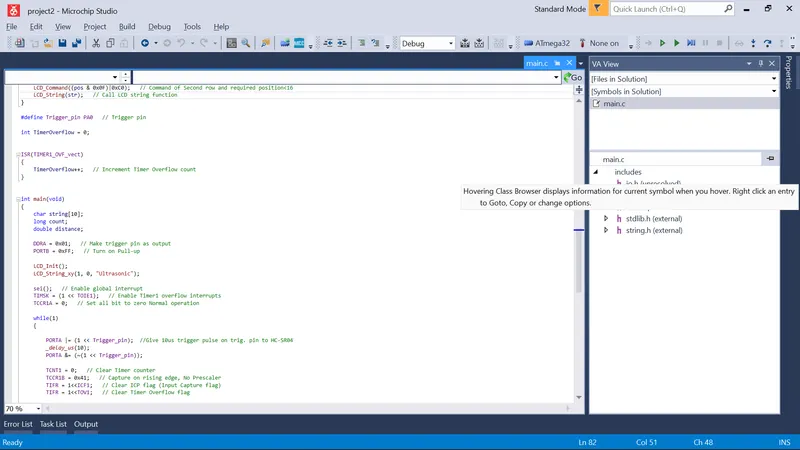
#define Trigger_pin PA0 // Trigger pin
int TimerOverflow = 0;
ISR(TIMER1_OVF_vect)
{
TimerOverflow++; // Increment Timer Overflow count
}
int main(void)
{
char string[10];
long count;
double distance;
DDRA = 0x01; // Make trigger pin as output
PORTB = 0xFF; // Turn on Pull-up
LCD_Init();
LCD_String_xy(1, 0, "Ultrasonic");
sei(); // Enable global interrupt
TIMSK = (1 << TOIE1); // Enable Timer1 overflow interrupts
TCCR1A = 0; // Set all bit to zero Normal operation
while(1)
{
PORTA |= (1 << Trigger_pin); //Give 10us trigger pulse on trig. pin to HC-SR04
_delay_us(10);
PORTA &= (~(1 << Trigger_pin));
TCNT1 = 0; // Clear Timer counter
TCCR1B = 0x41; // Capture on rising edge, No Prescaler
TIFR = 1<<ICF1; // Clear ICP flag (Input Capture flag)
TIFR = 1<<TOV1; // Clear Timer Overflow flag
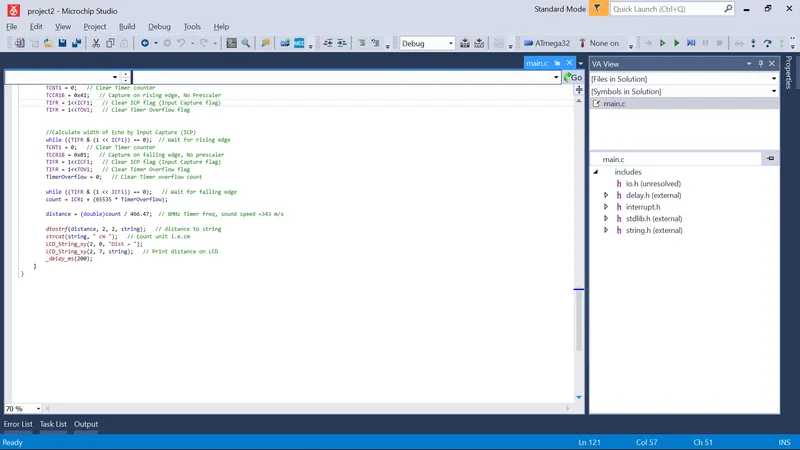
//Calculate width of Echo by Input Capture (ICP)
while ((TIFR & (1 << ICF1)) == 0); // Wait for rising edge
TCNT1 = 0; // Clear Timer counter
TCCR1B = 0x01; // Capture on falling edge, No prescaler
TIFR = 1<<ICF1; // Clear ICP flag (Input Capture flag)
TIFR = 1<<TOV1; // Clear Timer Overflow flag
TimerOverflow = 0; // Clear Timer overflow count
while ((TIFR & (1 << ICF1)) == 0); // Wait for falling edge
count = ICR1 + (65535 * TimerOverflow);
distance = (double)count / 466.47; // 8MHz Timer freq, sound speed =343 m/s
dtostrf(distance, 2, 2, string); // distance to string
strcat(string, " cm "); // Count unit i.e.cm
LCD_String_xy(2, 0, "Dist = ");
LCD_String_xy(2, 7, string); // Print distance on LCD
_delay_ms(200);
}
}
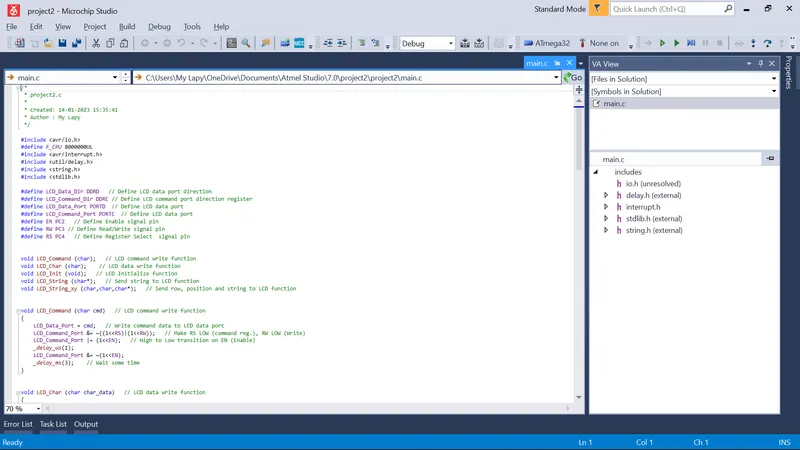
Coding Environment (microchip)
Simulation(Simul IDE)
(output)