Project 2
Design a robotic surgery procedure to remove a healthy kidney from the donor using an AI guided robot.
The idea of robotic kidney transplantation surgery is that a healthy kidney is removed from a donor using a surgical robot.
1. Perform a detailed analysis of the methods used for the surgery.
2. Conduct independent research, through articles, research papers and journals, document findings and company white papers.
3. The analysis must include the following
- What are the specific requirements where kidney transplantation employs surgical robots? Include requirements other than ease of procedure and reduction in procedure time.
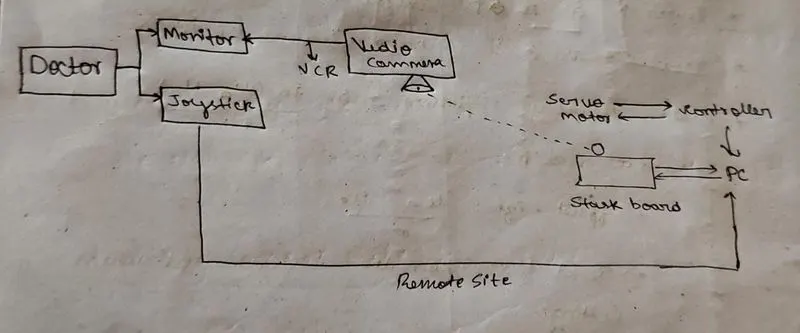
- Describe the surgical robot used for the procedure and its features. Draw a block diagram.
- Draw a detailed flow chart of the entire procedure labelling all the steps in as much detail as possible.
- What are the tasks performed by the AI used in robotic kidney transplantation?
- What are the preoperative, perioperative, and postoperative steps taken to ensure a successful surgery? Include the steps taken for the care of the patient as well as the equipment.
- Describe the ethical concerns and regulations of a kidney transplantation procedure. Find out and list the machine classifications and IEC 60601 standards applied to the equipment.
Key Highlights
- This project covers parts from modules 7, 11 and 12, such as Kidney transplantation, Robotic Surgery and Medical AI which are covered in the course.
- Student must perform their independent research to include all the information asked.
- This project familiarizes the students with the design process of developing a biomedical procedure.
Deliverables
- Analysis document
- Cite all the references and resources from where the information has been gathered
Design a robotic surgery procedure to remove a healthy kidney from the donor using an Al guided robot. The idea of robotic kidney transplantation surgery is that a healthy kidney is removed from a donor using a surgical robot.
Robotic Surgery in a method to perform surgery using very small tools attached to a robotic arm. The surgeon controls the robotic arm with a computer. The surgeon sits at a computer station and directs the movements of a robot Small surgical tools are attached to the robot's arms About robotic surgery. The most widely used clinical robotic surgical system includes a camera arm and mechanical arms with surgical instruments attached to them. The surgeon controls the arms while seated at a computer console near the operating table. The console gives the surgeon a high-definition, magnified, 3-D view of the surgical site.
Surgical Robotic Systems
>ZEUS Robotic Surgical System
>The Da Vinci Surgical System
1.ZEUS Robotic Surgical System
The ZEUS Robotic Surgical Systern (ZRSS) was a medical robot designed to assist in surgery, originally produced by the American robotics company Computer Motion. Its predecessor, AESOP was cleared by the Food and Drug Administration in 1994 to assist surgeons in minimally invasive surgery. The ZRSS Itself was cleared by the FDA seven years later, in 2001 ZEUS had three robotic drms, which were remotely controlled by the surgeon. The first arm AESOP (Automated Endoscopic System for Optimal Positioning), was a voice-activated endoscope, allowing the surgeon to see inside the patient's body. The other two robotic arms mimicked the surgeon's movements to make precise incisions and extractions ZEUS was discontinued in 2003, following the merger of Computer Motion with its Tival Intuitive Surgical; the merged company instead developed the Da Vinci Surgical Systerm.
Features:
>The ZEUS was designed for minimally invasive microsurgery procedures, such as beating heart surgery and endoscopic coronary artery bypass grafting (E-CABGTM) The system was also used to initiate more complex procedures, like a mitral valve surgery IDE study, The ZEUS robotic arms not only mimic the surgeon's hand movements, but also scale down the movement. allowing the surgeon to easily make precise and small cuts,
>The arms also correct for tremors in a surgeon's hands, which are normal even without fatigue, though a highly trained surgeon will be able to lessen the negative effects. However, some surgeries can last for hours, in which case the surgeon's arms will get tired, and the resulting tremors from fatigue can make the surgeon create false cuts which can be devastating during a delicate operation. To handle this, the ZEUS is designed to track and nullify these tremors while still responding to the movements/commands of the surgeon's hands.
>During the surgery, the surgeon sits at the ZEUS console to control the arms. This can also lessen fatigue, because the surgeon is sitting down during the long operation rather than leaning over the patient. The ZEUS is also able to perform remote surgery. Because the surgeon is simply controlling the robotic arms, the surgeon can sit at a ZEUS console remote from where the surgery is actually taking place, and still be able to perform the surgery.
The Da Vinci Surgical System:
The da Vinci surgical system gives your surgeon an advanced set of instruments to use in performing robotic-assisted minimally invasive surgery. The term "robotic" often misleads people Robots don't perform surgery. Your surgeon performs surgery with da Vinci by using instruments that he or she guides vina console. The da Vinci system translates your surgeon's hand movements at the console in real time, bending and rotating the instruments while performing the procedure. The tiny wristed instruments move like a human hand, but with a greater range of motion. The da Vinci vision system also delivers highly magnified, 3D nigh-definition views of the surgical area. The Instrument size makes it possible for surgeons to operate through one or a few small incisions.
A dedicated care team:
The da Vinci system is one part of a much bigger picture. As the company that makes da Vinci, intuitive's services extend far beyond the surgical system. These include comprehensive and ongoing education, training, and support for surgeons, operating room statt, and hospital care teams As a patient you are at the center of a network of dedicated professionals working together to help you get back to what matters most.
Important safety information
Patients should talk to their doctor to decide it da Vinci surgery is right for them Patients and doctors should review all available information on non-surgical and surgical options and associated risks in order to make an informed decision Serious complications may occur in any surgery, including da Vinci surgery, up to and including death. Serious risks include but are not limited to, injury to tissues and organs and conversion to other surgical techniques which could result in a longer operative time and/or increased complications. For important Safety information, including surgical risks, indications, and considerations and contraindications for use, please also refer to www.intuitive.com/safety Individuals outcomes may depend on a number of factors, including but not limited to patient characteristics, disease characteristics and/or surgeon experience
Medical advice and locating a doctor
Patients should talk to their doctor to decide if da Vinci surgery is right for them. Other options may be avaliable and appropriate. Only a doctor con determine whether da Vinci surgery is appropriate for a patient's situation Patients and doctor should review all cvailable Information on both non-surgical and surgical options in order to make an informed decision.
Surgeons who perform surgery using the da Vinci system can be found using the Surgeon Locator, Intuitive Surgical provides surgeons With training on the use of the da Vinci systern but does not certify, credential or quality the surgeons listed in the Surgeon Locator.
Robot-assisted laparoscopic surgery
Robot-assisted laparoscopic surgery to remove a patient's entire kidney requires slightly longer operating times and results in Increased costs compared with the use of traditional laparoscopic surgery, according to a large, multiyear analysis conducted by researchers at the Stanford University School of Medicine.
However, the two approaches have comparable patient outcomes and lengths of hospital stay, the study showed Laparoscopic surgery is a minimally invasive procedure in which surgical operations are done through small incisions. The removal of the entire kidney is called a radical nephrectomy.
Although the laparoscopic procedure has been standard of care for a radical nephrectomy for many years, we saw an increase in the use of robotic-assisted approaches, and by 2015 these had surpassed the number of conventional laparoscopic procedures" said Benjamin Chung MD, associate professor of urology, "We found that, although there was no statistical difference in outcome or length of hospital stay, the robotic-assisted surgeries cost more and had a higher probability of prolonged operative time.
The discrepancy may be due to the time needed for robotic operating room setup or due to a surgeon being in the earlier part of his or her learning curve, resulting in a subsequent increase in operating room and Instrumentation costs, the researchers speculated. Chung is the senior author of the study, which was published Oct. 24 In JAMA The lead author is former Stanford visiting scholar in Gab Jeong, MD, PhD.
The dexterity of robots
Surgical robots are helpful because they offer more dexterity than traditional laparoscopic instrumentation and use a three- dimensional, high resolution camera to visualize and magnify the operating field. Some procedures, such as the removal of the prostato or the removal of just a portion of the kidney, require a high degree of delicate maneuvering and extensive internal suturing that render the robot's assistance invaluable. But Chung and his colleagues wondered whether less technically challenging surgeries, such as the removal of a whole kidney, may not benefit as significantly from a robot's help.
kidney transplant
A kidney transplant is a surgery to place a healthy kidney from a living or deceased donor into a person whose kidneys no longer function properly. The kidneys are two bean-shaped organs located on each side of the spine just below the rib cage. Each is about the size of a fist. Their main function is to filter and remove waste, minerals and fluid from the blood by producing urine.
When kidneys lose this filtering ability, harmful levels of fluid and waste accumulate in the body, which can raise blood pressure and result in kidney fallure (end-stage renal disease). End-stage renal disease occurs when the kidneys have lost about 90% of their ability to function normally. End-stage renal disease occurs when the kidneys have lost about 90% of their ability to function normally.
Common causes of end-stage kidney disease include:
> Diabetes
> Chronic, uncontrolled high blood pressure
> Chronic glomerulonephritis-an inflammation and eventual scarring of the tiny filters within the kidneys
> Polycystic kidney disease
Robotic Surgery
> Surgical procedures performed by robots
> Robot is usually controlled by
> Telemanipulator
> Computer Controller
> Robotic arms allow
> Minimally-invasive surgery
> Unmanned surgery
> Remote surgery
What is robot assisted kidney transplantation?
Kidney Transplantation is the most preferred standard care of treatment for patients with end stage renal disease. Traditionally, kidney transplantation has been carried out by open surgery Le by making large incisions. However, in the recent times, the procedure is being done with minimally invasive surgical procedures.
Robot Assisted Kidney Transplantation (RAKT) is a minimally invasive technique that uses a robotic support to perform the KT. As a high level of expertise is required in KT and robotic surgery, RAKT is performed by transplant surgeons with extensive training and experience in robotics and transplant surgery.
How does robot assisted kidney transplant surgery work?
Compared to conventional open kidney transplant surgery, a much smaller incision (about 7cm) is made in RAKT to remove the diseased kidney and insert the donor iddney into the abdomen, and then to stitch the blood vessels and the ureter. Another four or five small (0.5 to lem) Incisions are used to insert the instruments into the abdomen.
One of the arms holds a high magnification 3D camera which is inserted into the abdomen through one of the key holes and provides a high-definition, magnified (12), 3-D view of the surgical site. The other mechanical arms have surgical instruments attached to it that are designed to mimic the movement of the human hands and wrists. The surgeon uses the console of the computer to manipulate the small surgical instruments that are more flexible and manoeuvrable as compared to the human hand.
What are the advantages of robotic kidney transplant surgery over open kidney transplant surgery?
The technical advantage of robotic kidney transplant surgery over open kidney transplant surgery
> The robot replicates the surgeon's hand movements while minimizing hand tremors. The surgeon thus can not only make use of his/her experience and sidils, but also operate with precision, dexterity and control in complex procedures.
> Especially useful when the operative field is deep and narrow, and requires fine dissection and micro suturing.
Improved patient outcomes:
Robotic surgery in KT offers many benefits like
> Decreased chances of complications as compared to open surgery, especially in immunocompromised and end-stage renal disease patients undergoing KT
> Safer and more efficacious for obese patients who are otherwise not recommended for transplants.
> Minimal invasive surgery helps in reduced
-blood loss
-hospital stays
-pain
-postoperative complication rate
-recovery time -surgical scars
What is robot assisted surgery?
Robotic surgery, or robot-assisted surgery, is an advanced surgical procedure where small surgical tools are attached to a robotic arm that is controlled by a surgeon through a computer.
What are the risks of kidney transplant using robot assisted surgery?
Risks related to kidney transplants are drastically minimized with the robotic assistance Still, possible risks that are specific to kidney transplant procedure Include:
> Damage to surrounding structures
> Development of a hemia due to the small incisions made for the instruments, known as 'port site homia'
> Twisting of the kidney (torsion) after the transplant Scarring affecting the bowel in the long term (adhesive obstruction)
> Trapping of carbon dioxide used during surgery in the abdomen
> Nerve compression
> Life threatening risks are miniscule.
What preparations are required before robotic kidney transplant surgery?
Before transplant instructions include:
• Stop smoking or drinking
• Lose any excess weight
• Regular exercise
• Vaccinations as advised
• Dialysis before transplant
• Necessary lab tests
Advantages
> Higner precision
> Miniaturization
> Smaller incisions
> Reduced blood loss
> Minimised pain
> Shorter healing time
> Reduced hospital stay duration
What is the success rate of kidney transplant using robot assisted surgery?
The graft survival rate Le the survival rate of the donor kidney is dependent on the inherent characteristics of the recipient's body. hence there are no significant differences between the open surgery and robot assisted lodney transplant surgery. However, the robotic kidney transplant surgery offers significant benefits in terms of
>Low surgical site infection (range 0-8%)
>Incisional hemia rates (range 0-8%)
> Improved aesthetic outcomes
Many transplant recipients require ongoing Oral replacement of potassium, magnesium and occasionally phosphate in the first few weeks post-transplant, although this may be limited by gastrointestinal adverse effects. Myelosuppression is commonly observed in post-transplant patients receiving immunosuppressive therapy.
What factors should be considered while choosing a hospital for robotic kidney transplant?
Since kidney transplant is a major surgery. It is important to ensure that the hospital has the infrastructure and trained team to support the pre-operative and post-operative needs. Certain factors to be considered are:
> State-of-the-art robotic surgery, latest and organ preservation facilities: transplant technology
> Expertise of the kidney transplant surgeons and his team. Specialized training in robotics, number of surgeries performed and success rate Indicate the expertise of your surgeon
> Number and type of robotic kidney and other organ transplants that the center performs every year
> Transplant center's organ donor and recipient survival rates
> Support services such as diagnostics, pharmacy, modular Of ICU etc
What factors govern the cost of robotic kidney transplant?
The cast of surgery usually depends on a multitude of factors, the primary ones being
>Experience and expertise of the kidney transplant surgeon and team
>Length of surgery and post surgical complications
>Underlying co-morbidities and age of the patient which may affect the additional tests and medicine requirement.
> Hospital stays - Room category availed: depending on the hospital's billing policy.