Project 2
Project A System Selected: Pathology selected is "ULCERATIVE COLITIS"
Ans1: Normal functioning:
- The colon is normally known as the large inestine.
- The colon's job is to dehydrate what's left of the food and form it into stool.
- Bacteria living inside colon feed on the waste and break it down further, completing the chemical part of the digestive process.
- Pathology Condition:
- The pathological condition is ulcerative colitis it is inflammation in the inner lining of the colon.
- It causes severe bail and bowel obstruction.
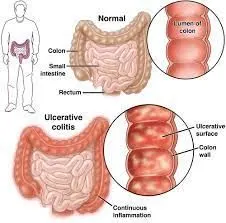
- Image credits:https://patient.gastro.org/ulcerative-colitis/
- Reasons for Ulcerative colitis:
- The reason for ulcerative colitis is mostly unknown.
- The doctors and scientists susect that it may be due to an auto immune disease I.e, our own immune system cannot differentiate the antigens or virus from outside enter and attack our own immune system considering it foreign.
- Homeostasis Imbalance:
- The gut line and large intestine will have a large number of good bacteria as It is an auto immune disease the immune system destroys the good bacteria and it reduces in dehydration of water from the food and disrupts the chemical processing of the gastroitestinal tract.
Ans2: Diagnostic Procedure: There are diagnostic proceduures such as Blood tests, stool tests, and endoscopies.
- Data Acquisition: From the diagnostic procedures data can be taken and also family history and personal history can also plays a major role.
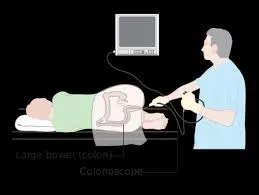
- Image credits:https://www.dldsa.com/blog/colonoscopy-how-often-and-why
- How does the procedure helps the doctor:
- This helps the doctors to identify the level of inflammation and obstruction present in the colon.
- The endoscope can also help in taking a tissue sample and check it in lab. This is called as biopsy.
- Results:
- The level of inflammation can be known and the patient can be notified.
- presence of polyps can be seen.
Ans3: Clinical Solutions:
- Clinical solutions are the treatment procedres.
- There is no permanent cure for the colitis as of now.
- Based on the severity of the condition treatment can be provided.
- For Minor and moderate severities medications can be given to reduce the symptoms and keep as low as possible.
- Corticosteroids and immunosuppresents can be provided.
- For high severity conditions surgery can be done - Proctocolectomy, Restorative Proctocolectmy.
Ans4: Surgery procedure:
- Name of the procedure: Proctocolectomy.
- Position of the patient on the OT:Trendelenburg with low lithotomy, I.e: patient is lied in supine position with an inclination and then with arms on the back side of the body.
- Procedure: Proctocolectomy is the surgical removal of the rectum and all or part of the colon. Using the aid of a tiny camera called a laparoscope. A suprapubic incision to enable major parts of the operation to be done openly. Then an ileostomy is attached for the removal of fecal matter.
- Instruments Used in the surgery: External power supply, laproscopy, a computer system to see the image.
- Youtube videos on proctocolectomy: https://www.youtube.com/watch?v=bDXsdaZl9hQ
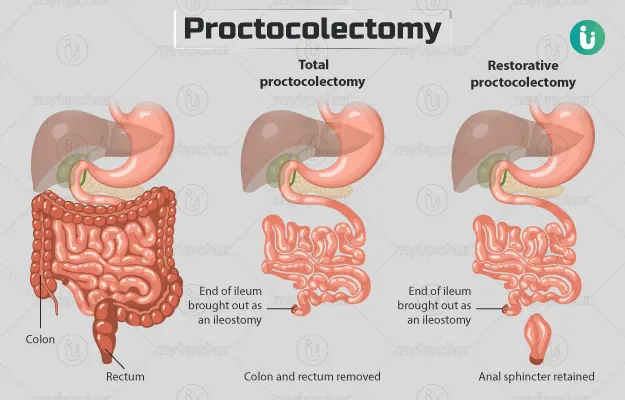
- Image credits:https://www.myupchar.com/en/surgery/proctocolectomy
Ans5: Postoperative care:
- One should take care of the diet as to eat little amount of foods with intervals in between.
- Avoid foods that cause any problems such as gas.
- It may take weeks to gwt back to normal.
- One should not over exercise and should takecare of self.
Ans6: Instruments and their use:
- Colonoscopy and sigmoidoscopy: For the diagnostic purpose of the condition.
- Laparoscopy: It is used to do the access the site of the surgery.
- Surgery blades: To make the intervention in more invasive procedures.
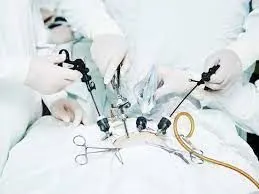
- Laparoscopy
- Image credits:https://www.healthline.com/health/pelvic-laparoscopy
Project A: Second System: Pathology of the urinary system:
- The pathology selected is the chronic Kidney disease.
Ans1:Normal functioning:
- The kidneys are used to purify blood by extracting urine from the body.
- Remove acid that is produced by the cells of the body and maintain a healthy balance of water and salts.
- It control PH levels.
- Pathology Condition:
- The pathology condition is Chronic Kidney disease.
- Chronic kidney disease, also called chronic kidney failure, involves a gradual loss of kidney function.
- It fails to filter the blood and remove waste.
- Image credits:https://www.karmaayurveda.in/ayurvedic-kidney-treatment/
- Reasons for CKD:
- As CKD is a gradual decrease in the kidney function and eventually leads to failure, A lot of factors can cause CKD.
- The CKD can be caused by uncontolled Diabetes and hypertension.
- It can be caused due to calculi and tumors that affect and damage the kidney function.
- Homeostasis Imbalance:
- Kidneys help in maintaining balance of water and salts and any damage to these will increase fluid retention and K+ ions in the body. and it affects the heart and vascular system in various ways causing heart attack and failure of heart.
- As they are damaged the erythropoitin production is also reduced affecting the production of rbc and oxygen supply to the body organs.
Ans2: Diagnostic Procedure: There are procedures that can help in identify the reduced fuction of kidneys such as urine creatinine test, blood test and other radiological tests.
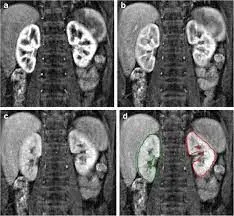
- Data Aquisition: The data from the urine creatinine values and GFR values help to determine the level of ckd.
- How does the procedure helps the doctor:
- From the the above Image of MRI the size and shape of kidney and stones or tumors can be seen from thr contrast that is induced with the help of GFR Values help in Identifying the stage and severity.
- Results:
- If the kidney is normal and no abnormalities patient is notified of that.
- If there are any issues or malfunction of kidney is present the level is identified.
Ans3: Clinical Solutions:
- Clinical solutions that help in the progression of ckd are Life style changes.
- Keeping in check of the conditions that complicate the CKD like Hypertension and diabetes.
- For minimal stages of CKD medications can be used such as diuretics.
- For an advanced stage we can use dialysis and surgical procedure such as transplant can also be done.
Ans4: Surgery procedure:
- Name of the surgery: Kidney Transplant
- Position of patient on the OT: Patient is lied on the OT table on Supine position, I.e; lied on the back on the bed, with arms and legs on either side.
- Procedure: The kidney transplant is a surgical procedure, in which the kidney is completly damaged and cannot function properly and the donor kidney is placed on the lower abdomen on the frontside of our body, An incision is made and the donor renal arteries and veins are connected to iliac arteries of the patient
- Instruments used in Surgery: Forceps, Clamp Tubes, Dilators and respiratory tubs in time of surgery connected to ventilators.
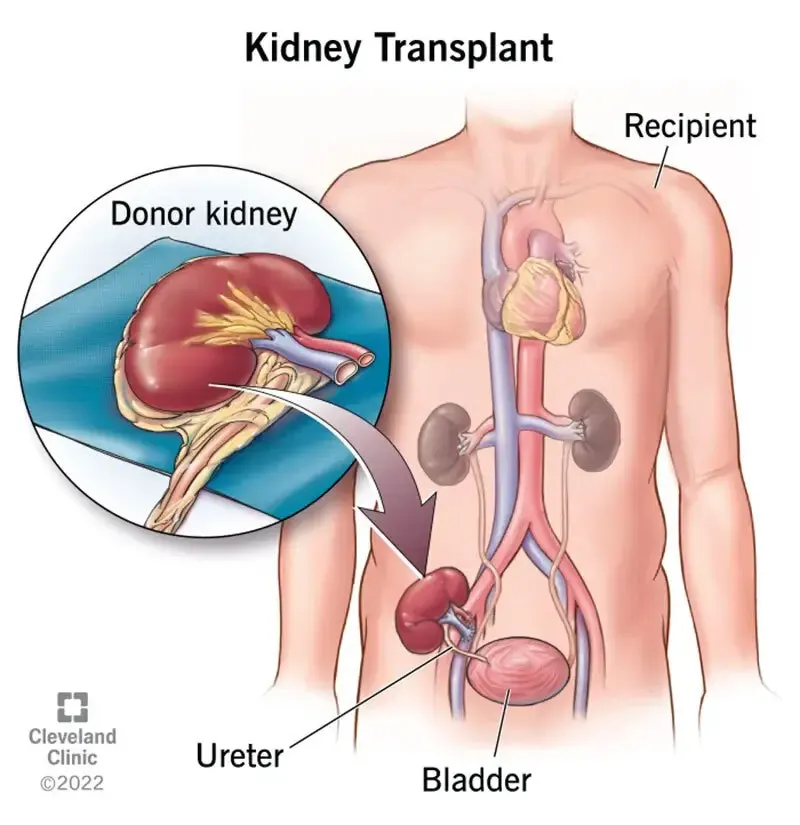
- Image credits: https://my.clevelandclinic.org/health/treatments/22537-kidney-transplant
- Youtube videolink: https://www.youtube.com/watch?v=iWSewFlU6o8
Ans5: Postoperative Care:
- One should eat have a healthy diet.
- Immunosuppressive medications will be given lifelong as not to reject the transplanted organ.
- Should exercise
- Avoid people who had live vaccine.
Ans6: Instruments and their use:
- CT AND MRI: To diagnose the medical condition.
- Forceps And Clamps and Surgery Blabes: To make an incision and place the transplanted organ during the surgery.
- Image Credits: https://cstsetup.com/kidney-transplant/
Project2:System One: Organ system Selected: Respiratory System.
The pathology of the system seected is "Pneumonia"
Ans1: Normal functioning:
- Lungs are used for the purpose of respiration.
- It is the place where gaseous exchange takes place.
- It protects from harmful bacteria in the respiratory tract.
- Pathology Condition:
- The pathology condition selected is "Pneumonia".
- Pneumonia is an infection that inflames the air sacs in lungs.
- A variety of organisms, including bacteria, viruses and fungi, can cause pneumonia.
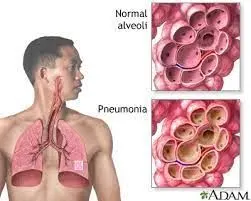
- Image credits:https://medlineplus.gov/ency/article/000145.htm
- Reasons for Pneumonia:
- Pneumonia is caused due to germs that enter the body while breathing.
- Pneumonia is a Air borne disease.
- It is caused by bacterias.
- Homeostasis Imbalance:
- Lungs help in the gaseous exchange as the air sacs get inflammed It is hard to breath in breath out causing the gaseous exchange difficult to cary on and CO2 levels increase in the body causing fatal conditions to the Patient.
Ans2: Diagnostic procedure: The diagnostic procedures are used to diagnose the condition, such as X-ray, sputum Test, Pulse oxymetry.
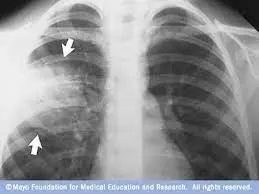
- Image credits:https://www.mayoclinic.org/diseases-conditions/pneumonia/multimedia/chest-x-ray-showing-pneumonia/img-20005827
- Data Aquisition: From the above chest x-ray the required amount of information about lungs can be known to the doctor.
- How does the procedure helps the doctor:
- This helps your doctor diagnose pneumonia and determine the extent and location of the infection.
- Resullts:
- If there is no inflammation then the pneumonia can be ruled out and the same can be informed to the patient.
- If there is some pathological condition, the extent of damage can be known and treatment can be started.
Ans3: Clinical Solutions:
- Clinical solutions include wearing masks while going out.
- For mild and moderate stage Antibiotic treatments
- Getting vaccinated priorly can also prevent from geeting pneumonia.
- In some cases Oxygen theraphy can be given.
- In severe cases surgery can be done like thoracotomy, lobectomy.
Ans4: Surgery procedure:
- Name of the surgery: Lobectomy.
- Position of patient on the OT: Lateral decubitus position and the padded arms are placed unsupported in the “prayer” position in front of the face. Both legs are positioned together flexed like in a sitting position and padded with pillows
- Procedure: The word ectomy refers to the removal, Lungs have lobes, so lobectomy is the removal of the lobe with surgical intervention I.e, the damaged part of the lung due to pneumonia will be removed. It can be carried out as open or video assisted thoracoscopic surgery.
- Instruments used in the surgery: Thoracoscope and surgical blades, forceps.
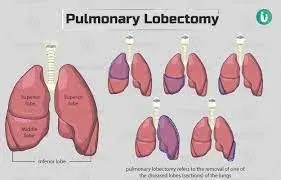
- Image credits: https://my.clevelandclinic.org/health/treatments/21868-lung-resection
- Youtube Videolink: https://www.youtube.com/watch?v=LURMgIv5sM4
Ans5: Postoperative Care:
- Based on the surgery provided the recovery can happen from 3 weeks to a month.
- One should take plenty of fluids
- Exercise regularly.
Ans6: Instruments And their Use:
- X-ray:For diagnostic purposes.
- Thoracoscope: For the surgery with video assistance.
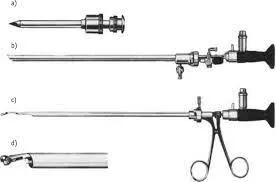
- Image credits:https://breathe.ersjournals.com/content/8/2/156
Project B: Second Answer: The organ system selected is the "Nervous System".
The Pathology of the system selected is "Hydrocephals".
Ans1: Normal Function: Brain is the control system of the whole body and commands like a CpU of a system.
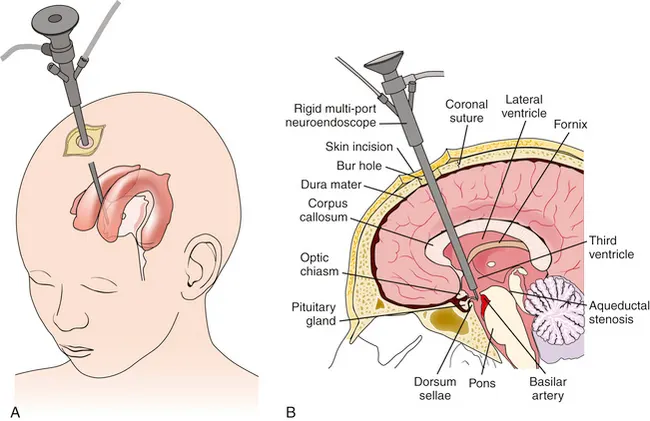
- Pathology: The Hydrocephalus. It is caused by the presence of fluid in the cavities of the ventricles of the brain.
- Reasons: The hydrocephalus can be congenitak or can be aquired, if it is acquired It can be due to any inury or trauma.
- Homeostasis Imbalance: There will be ait abnormality leading to frequent falls for the patient. It mainly affects the functions of Brain and Spinal Cord.
- Image credits: https://www.google.com/search?q=hydrocephalus&sxsrf=ALiCzsZASzPyzsIduZ1IkjDgHgwKWJA6nw:1666807877192&source=lnms&tbm=isch&sa=X&ved=2ahUKEwjI37abv_76AhWX0HMBHXcrBzoQ_AUoAXoECAIQAw&biw=1517&bih=730&dpr=0.9#imgrc=QMSjQAywjKdikM
Ans2: Diagnostic Procedures: CT, MRI and Lumbar Puntrure.
- Data Aquisition: The data that provided from the MRI can show the fluid accumulation in the cavities.
- How It helps the doctors: The Info from the Radiology helps the doctors to identify the treatment and reduce the condition as possible.
- Results: These results helps to decide whether it can be reduced with medications or any surgery required.
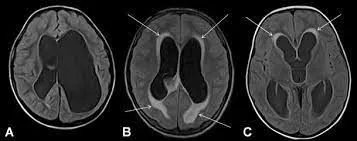
- Image Credits: https://insightsimaging.springeropen.com/articles/10.1007/s13244-014-0333-5
Ans3: Clinical Solutions:
- The clinical solutions in this case is majorly a surgical procedure to place a shunt.
- In normal cases which are not so serious medications known as diutics will be given.
Ans4: Surgery Procedure:
- Name of the surgery:
Position of patient: Supine position with an incination angle at the head.Ventriculostomy
- Procedure: During the procedure a hole is made in the venntricles of brain to drain out the liquid from the brain.It creates the conversion for the CSF Fluid.