Mild Hybrid Electric Vehicle
Automotive industry is very dynamic, with innovative technologies coming in at a very fast pace. There are several reasons for which the technology inside a vehicle is changing continuously, with every new model launched into market.
The development of the MHEVs is mainly driven by two factors:
- Efficiency: CO2 (carbon dioxide) fleet emission targets
- Fun to Drive: increasing demand of the vehicle’s dynamic performance
Regarding CO2 emissions limits and targets, in many countries around the globe, there are regulations in place for the amount of CO2 produced by road vehicles.
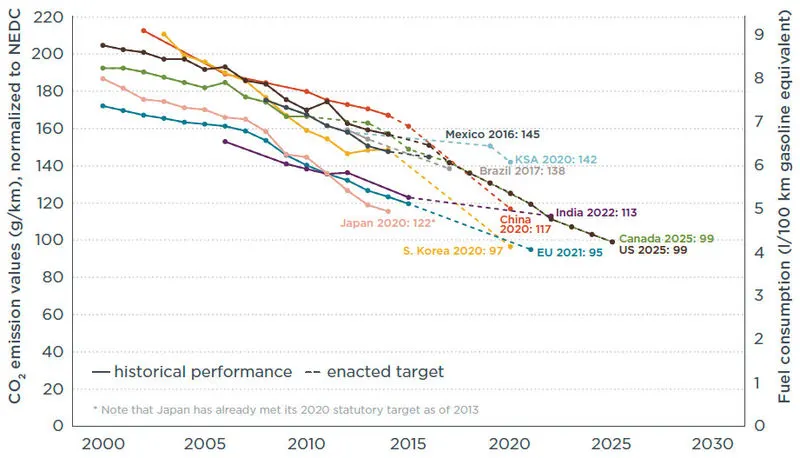
Carbon dioxide (CO2) emissions are gaining importance because they contribute to the greenhouse effect of the planet and impact the air quality. The International Council on Clean Transportation (ICCT) has published the current and future standards for fleet CO2 emissions (see image above).
From 2021 onward, the average fleet CO2 emissions, in European Union, will be limited to 95 g of CO2 per km. Since CO2 emission are directly related to fuel consumption, this translates in an average fuel consumption rate of about 58.8 mpg (gasoline engines) or 65.3 mpg (diesel).
Vehicle manufacturers (OEMs) have to ensure that the CO2 emission average of their new vehicle sales will meet these levels. Individual vehicles can be above or below the limit, but the fleet average must be below or equal to the limit. If the car manufacturers exceed the fleet (average) limits, they’ll have to pay fines.
The conclusion is that, in order to reduce CO2 emissions, the engine should have lower fuel consumption. Aftertreatmet systems will not help this time, because they only transform the nature of chemical components in the exhaust gas while maintaining the total mass of molecules.
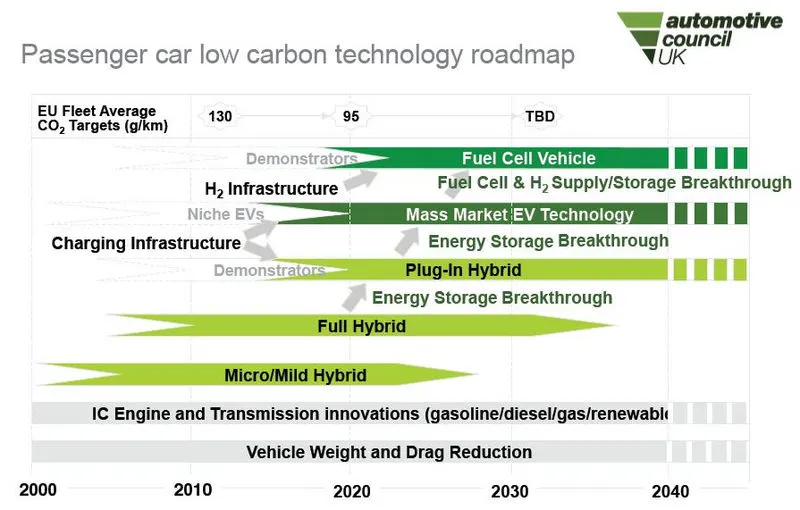
The only way towards meeting the CO2 limits for 2020 onward is to be more energy efficient. Therefore, there are three main directions for fuel economy improvements:
- reduction of weight and losses (drag)
- increase of powertrain efficiency
- electrical hybridization of the powertrain
The Automotive Council from UK has come up with a roadmap of the present and future automotive technologies, which have the final purpose of CO2 emissions reduction. As you can see, the improvements on the vehicle and internal combustion engine efficiency are performed in parallel with the electrical hybridization of the powertrain.
For the vehicle manufacturers there is a certainty that, by 2020, a significant share of their vehicles models will be equipped with hybrid or pure electric powertrains. This is the only feasible way to achieve the average CO2 emissions limits.
Another significant major trend in the automotive industry is the fun to drive. This translates into higher expectations of the customers with regards to the dynamic performance of the new vehicle models.
According to Getrag (owned by Magna), the ratio between the energy density of the powertrain and the average acceleration of the vehicle has risen constantly over the years. Customers expect from their new vehicles:
- increased launch performance
- boosting
- immediate reaction
Due to its fast torque response, an electric motor is the perfect candidate for these requirements. Coupled with an internal combustion engine, the electric motor can provide torque assistance and torque boosting to enhance the overall dynamic performance of the powertrain.
MHEV definition
The general definition of a hybrid electric vehicle is the following: a hybrid electric vehicle is a vehicle with at least two sources of energy, one of each is electrical and reversible.
Apparently it’s easy to define a Mild Hybrid Electric Vehicle (MHEV), but most of the sources give an incomplete definition. When looking into the types of hybrid electric vehicles, we need to consider the following key aspects:
- the electrical power available (e. g. 15 kW)
- the voltage of the high voltage battery (e.g. 48 V)
- the fuel consumption / CO2 reduction potential (e.g. 15 %)
- the functions performed by the electric machine (e.g. torque boost)
A Mild Hybrid Electric Vehicle (MHEV) is defined by a combination of the key aspects defined above.
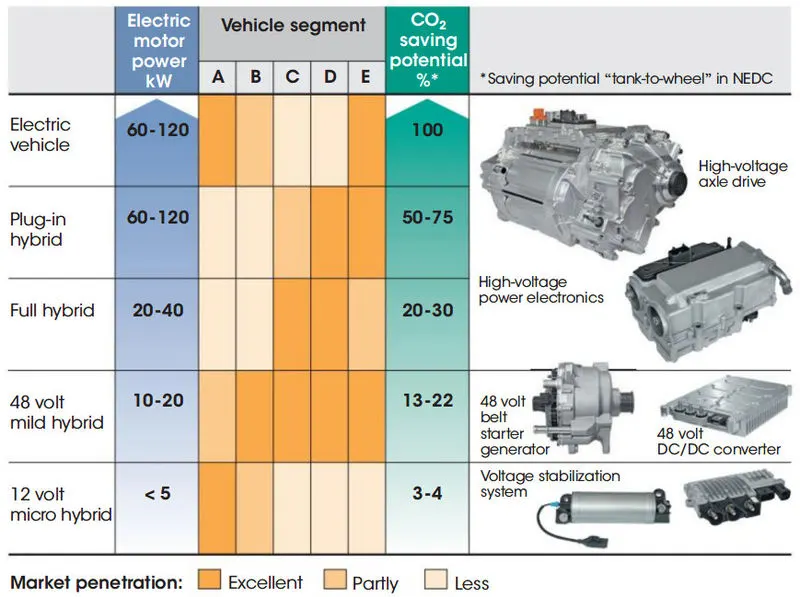
where the vehicle segments are:
A – Subcompact cars
B – Compact cars
C – medium cars
D – Large cars
E – Premium cars
According to Continental, a MHEV is defined by:
- an available electrical power between 10 – 20 kW
- a high voltage battery of 48 V
- a fuel consumption / CO2 saving potential between 13 – 22 % (compared with a conventional vehicle)
Cost is another major factor which impacts the level of electrical hybridization of a vehicle. Since the introduction of the electrical components comes with a higher cost, the level of hybridization depends on the vehicle segment. Smaller, cost competitive vehicles will have the minimum level of electrical hybridization integration, because of the impact on the overall price of the vehicle.
In the MHEV automotive market, there are currently two major categories for the operating value of the high voltage network: 48 V and up to 160 V. The focus is shifting towards the 48V solution, which will become the standard solution for MHEV. A mild hybrid electric vehicle is also defined function of the operating modes that can be performed. In the table below you can see a synthesis of the different levels of vehicle hybridization, function of their energy properties and control functions (operating modes).
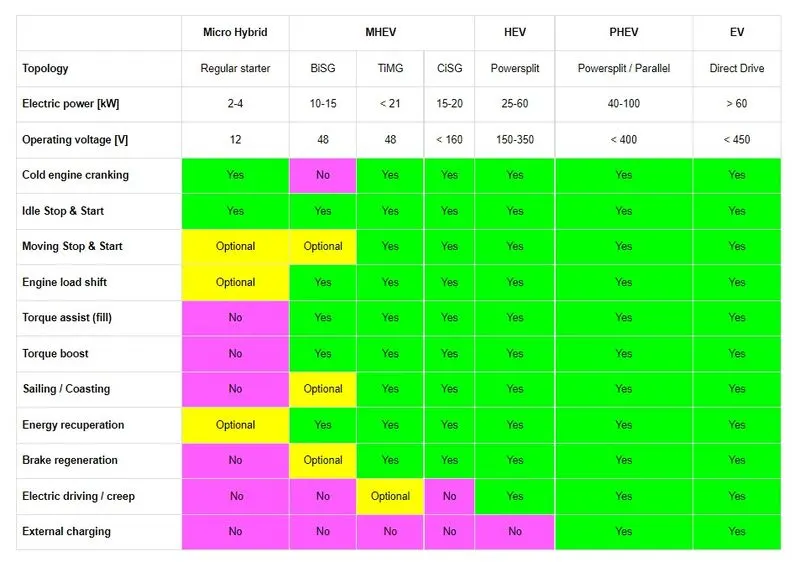
Legend:
BiSG – Belt-integrated Starter Generator (engine side)
TiMG – Transmission-integrated Motor Generator (transmission side)
CiSG – Crankshaft-integrated Starter Generator (between engine and transmission)
As you can see in the table above, there are different “flavours” of MHEVs, the main difference being the topology (architecture) and the bus voltage. Depending on the positioning of the electric machine (engine side, between engine and transmission or transmission side) different control function can be performed. The TiMG MHEV topology has the highest flexibility in terms of control functions / driving modes, being similar to a full hybrid electric vehicle (HEV).
Becasue of their advantages, 48V MHEV systems are entering the mass market. The biggest advantages of the 48V technology are: the relatively simple integration in the existing vehicle architectures and the high efficiency of the components.
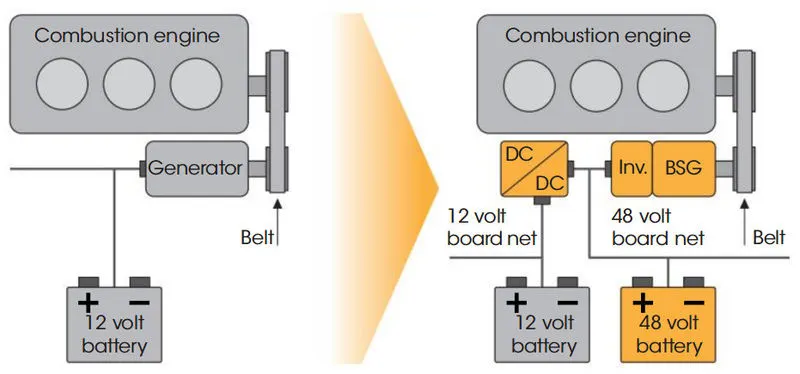
A 48V MHEV system has four main components:
- electric machine (BiSG or TiMG)
- inverter (usually integrated with the electric machine)
- DCDC converter
- high voltage (48 V) battery
To minimize the integration cost of a 48V hybrid system, the impact on the conventional vehicle and transmission architecture should be kept to a minimum. The BiSG MHEV system introduces the fewest changes on the existing vehicle architecture, therefore is the most cost effective hybridization solution.
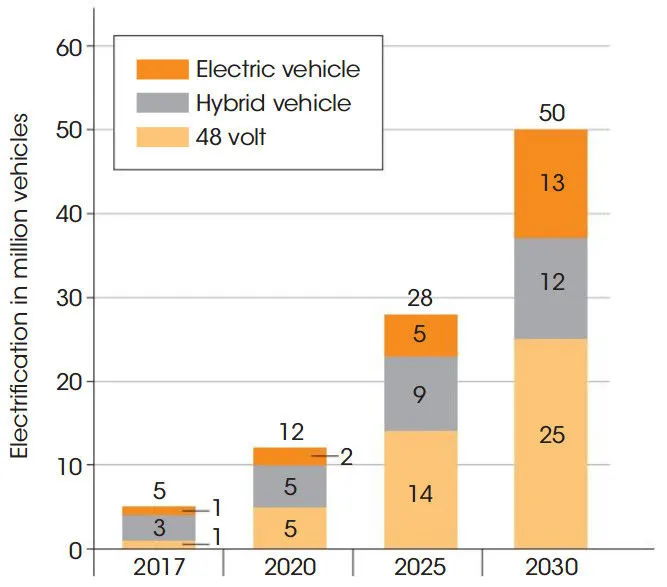
According to Continental, in the foreseeable future, there will be a continuous increase of market share for hybrid and pure electric vehicles (PHEV and pure EV). The biggest increase is expected to come from the 48V MHEV architectures, which will reach around 25 million units sold, until the year 2030.
Matlab Program
%% Skill-Lync -> Hybrid Drives Development
% Conventional Vehicle Model
% Description:
%% Initialization File
% Initialization file for loading the variables for the Conventional vehicle simulation model
%% Vehicle Parameters
M = 1500; % Vehicle weight [kg]
Cr = 0.015; % Rolling resistance coefficient
Rw = 0.35; % Rolling radius [m]
Cd = 0.33; % Drag coefficient
Af = 2; % Frontal area [m2]
rhoa = 1.225; % Air density [kg/m3]
Vwind = 0; % Wind velocity [kmph]
g = 9.81; % Gravitational acceleration [m/s2]
theta = 0; % Slope [deg]
myu_road_tire = 1; % Coefficient of friction between tire - road interface
%% Powertrain Parameters
FDR = 3.73; % Final Drive Ratio / Diff Ratio
DiffEff = 0.99; % Differential efficiency (assumed independent of operating conditions)
NumGear = 4; % Number of gears in transmission
TransGear = [1:NumGear]; % Transmission Gears
TransRatio = [3.06, 1.62, 1, 0.7]; % Corresponding Transmission ratios
TransEff = 0.90; % Transmission efficiency (assumed independent of operating conditions)
TC_SR = [0, .5, .6, .7, .8, .87, .92, .94, .96, .97, 1]; % Torque Converter Speed Ratio (Matlab default) -> TurbSpd/PumpSpd
TC_TR = [2.232, 1.5462, 1.4058, 1.2746, 1.1528, 1.0732, 1.0192, 1, 1, 1, 1]; % Torque Converter Torque Ratio (Matlab default) -> TurbTrq/PumpTrq
TC_Cf = 1e-4 * [.72558, .66322, .63463, .59042, .51331, .4144, .29287, .22444, .12186, .04386, 0]; % Torque Converter Capacity Factor (Matlab default) -> PumpTrq/PumpSpd^2 [Nm/rpm^2]
load Vehicle_Data/Engine_data_1_9L_Saturn_95kW
load Vehicle_Data/Trans_Shift_map
load Vehicle_Data/EM_Honda_Insight_10kW
load Vehicle_Data/ESS_NiMH6
ESS_init_soc = 0.8;
ESS_soc_max = 0.9;
ESS_soc_min = 0.6;
%% Driver Parameters
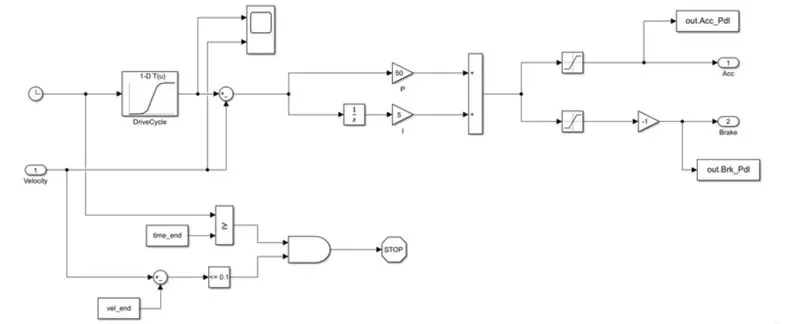
Kp = 10; % P gain for driver PI model
Ki = 1; % I gain for driver PI model
Drive_Cycle_Select = 2; % Drive cycle selection
% Drive cycle values in m/s
if Drive_Cycle_Select == 1
load DriveCycles/UDDS;
elseif Drive_Cycle_Select == 2
load DriveCycles/HWFET;
elseif Drive_Cycle_Select == 3
load DriveCycles/FTP;
elseif Drive_Cycle_Select == 4
load DriveCycles/US06;
elseif Drive_Cycle_Select == 5
load DriveCycles/NEDC;
elseif Drive_Cycle_Select == 6
load DriveCycles/WLTP;
end
time_end = cyc_time(end);
vel_end = cyc_vel(end);
After running this coding file
Layout:-
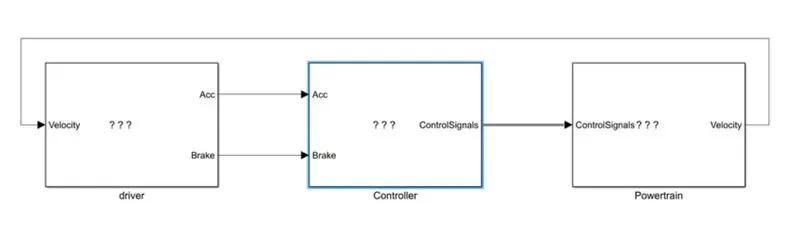
Driver:-
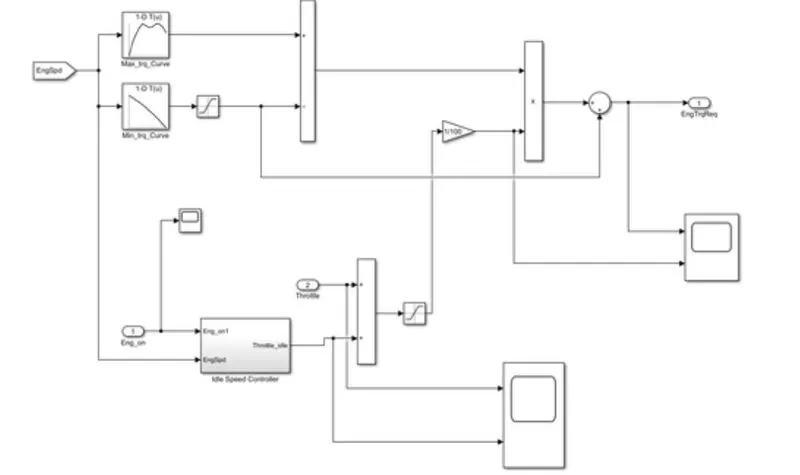
Engine Control Unit:-
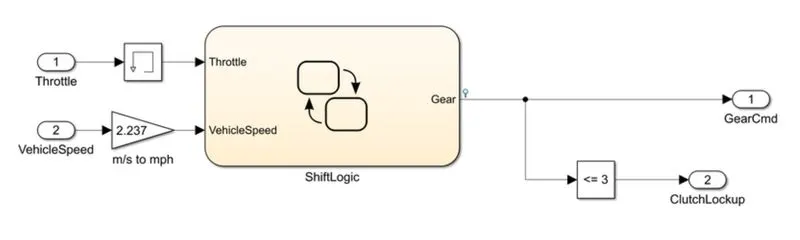
Transmission Control Unit:-
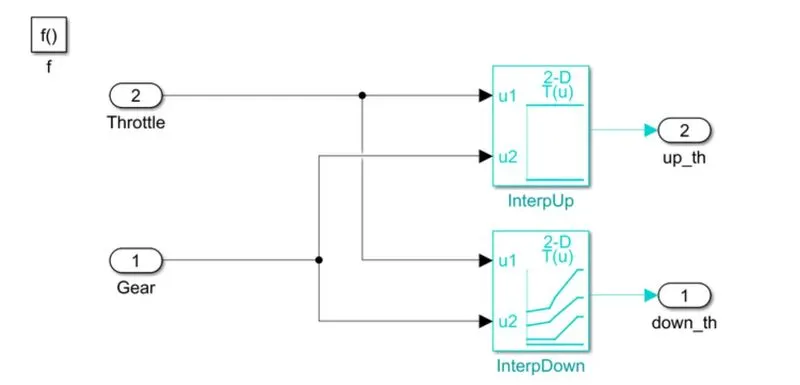
Threshold value:-
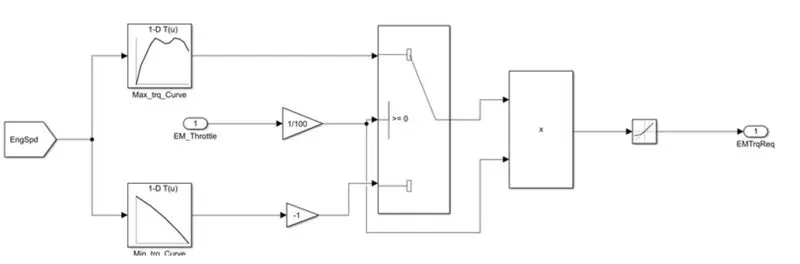
Electric Motor Control Unit:-
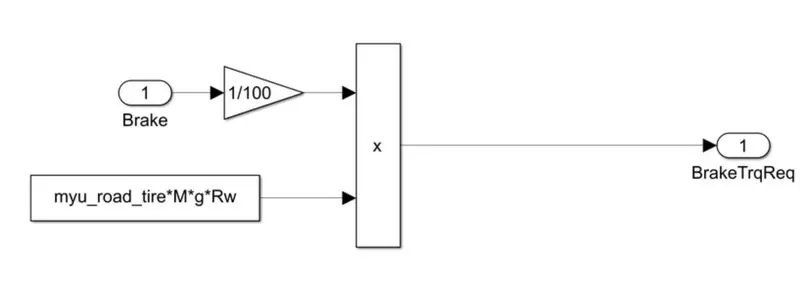
Brake Control Unit:-
Crankhub:-