Project 2
AIM:To create a model of a P1-HEV by adding up electric machine and battery to the power source of a conventional vehicle.
P1-HEV ARCHITECTURE: The P1 architecture,also known as the parallel hybrid architecture,is one of the common types of HEV architecture.The internal combustion engine(ICE) and electric motor(EM) are both mechanically connected by means of crank to the transmission and propel the vehicle simultaneously after taking the inputs from control system and the control system processes information given by the driver.
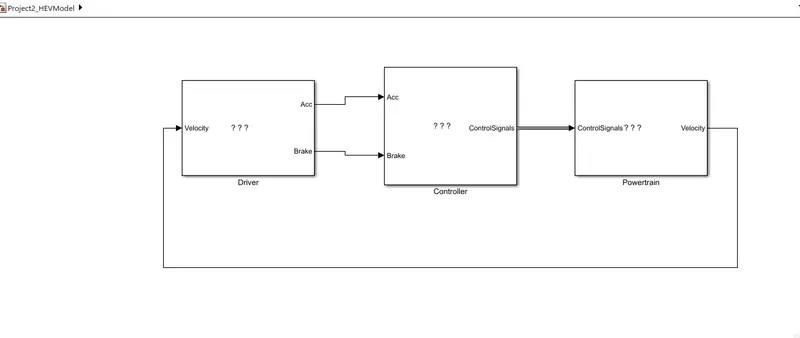
The input signals from control system flow within a closed loop system which came from power sources,propulsion system which is depending upon the operating modes.
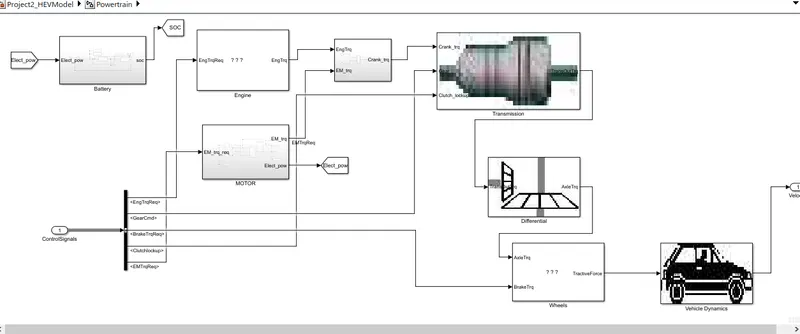
The P1 model consists of;
1) ICE: The ICE or internal combustion engine is the primary source of power in P1 model.
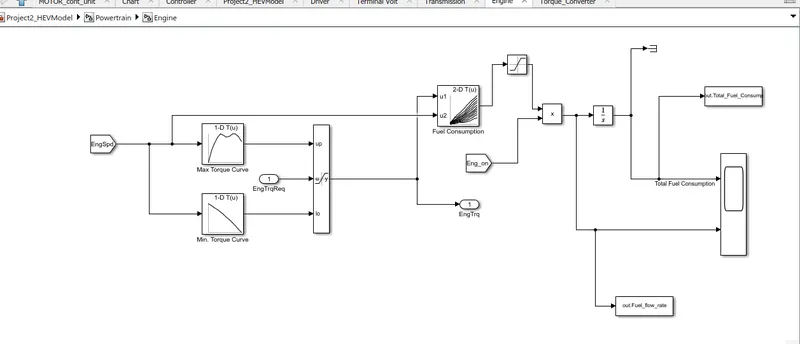
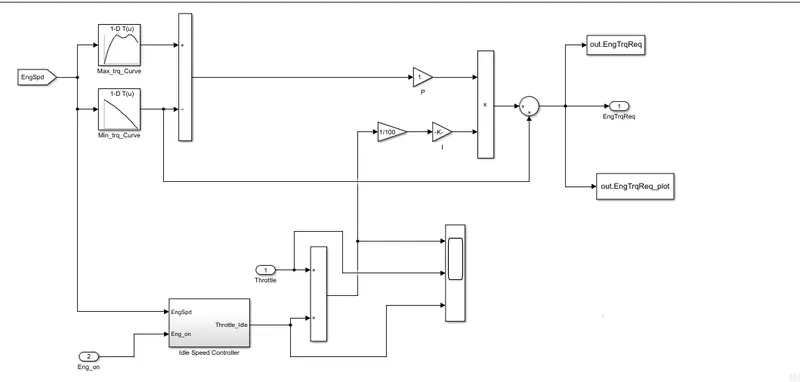
The engine control unit in the control system process the data from driver end as the modes of engine and it's speed, control unit mange the required torque as an output in a control system between maximum and minimum torque range with safety from tested data of the engine.
FUEL CONSUMPTION:This forward energy based fuel consumption model is the method to estimate the fuel consumption of a P1-architecture based vehicle, which is a type of hybrid electric vehicle here. For given mode the fuel consumption under different operating point in reference with different engine speed and engine torque as;
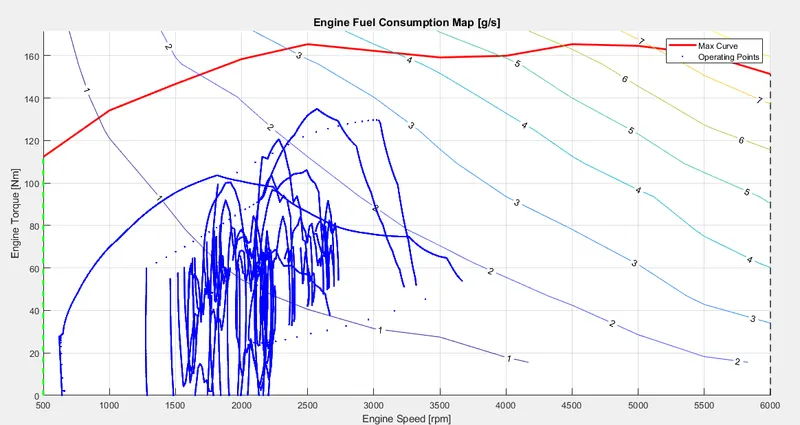
The operating points are based upon the engine start,stop,travel and throttling system. In this vehicle model distance with the changes of different transmission level with respect to travel time is as;
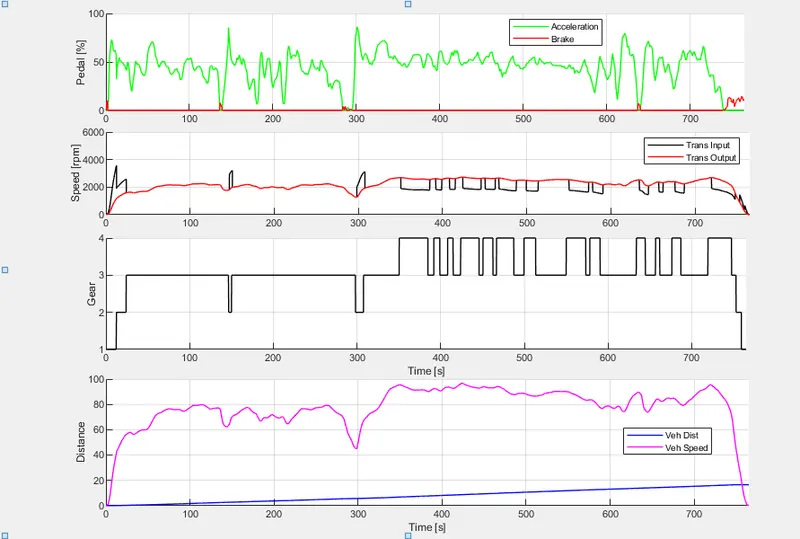
The energy provided by the ICE is calculated based on the ICE's fuel consumption rate and the distance traveled.
2) MOTOR:
The simulink model of electric motor used in the P1-HEV model is;
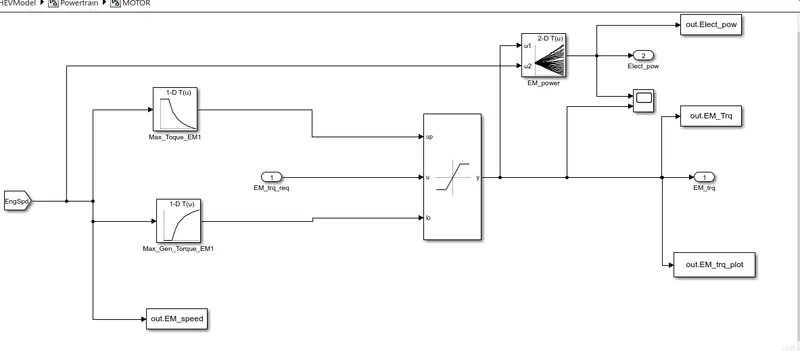
The energy provided by the electric motor(EM) depends onthe operating mode of the vehicle.We all know that in hybrid the energy required to get the traction force of the vehicle over rolling resistance,aerodynamic resistance is given by ICE and the EM,both.The electric power generated by the motor (Elect_pow) dpends
MOTOR'S EFFICIENCY:
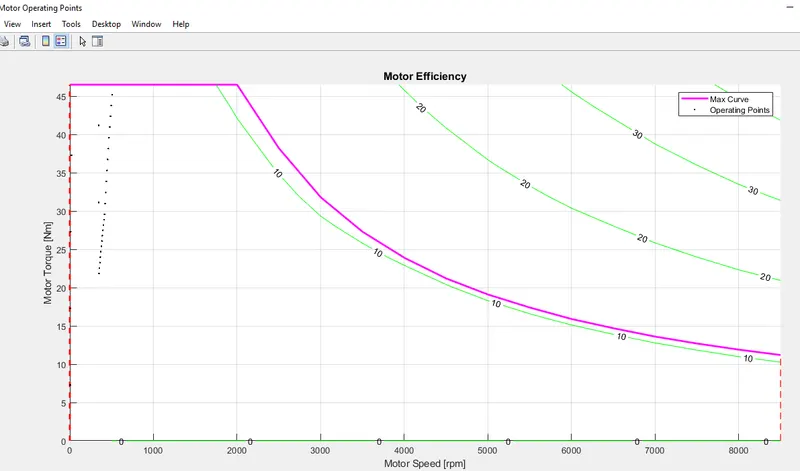
on the motor's efficiency(here in this plot the motor efficiency map has been generated based upon the operating conditions of vehicle.) and the vehicle's speed and acceleration which is define by driver through transmission system.For the different vehicle speed conditions of operations with respect to different gear ratios, ECU or elecronic control unit operates with logic as follows for the transmission unit.
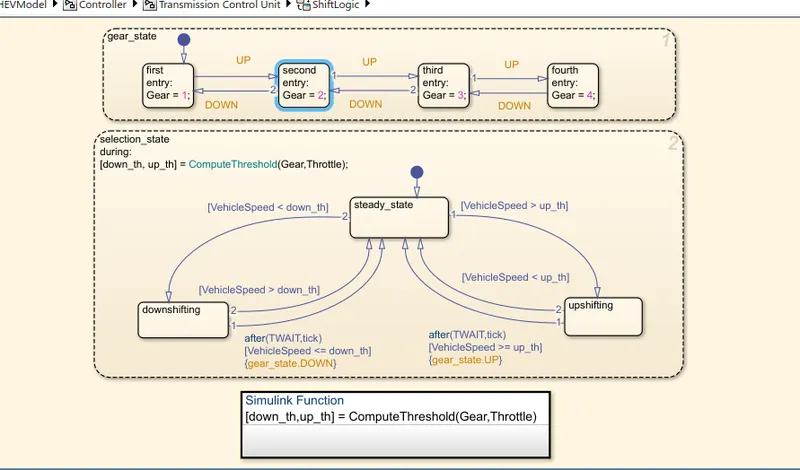
ECU: The ECU or electronic control unit is an arrangement of power electronics which recieves signal from driver and feedback from vehicle's propulsion data and helps to operate vehicle's different units and a smooth run.It connects with transmission system, battery system, power sources and it is the neaural system of the vehicle.
Not only that,in forward model ECU helps the energy storage system(ESS) or battery to charge itself while the vehicle is in regenerative braking mode.
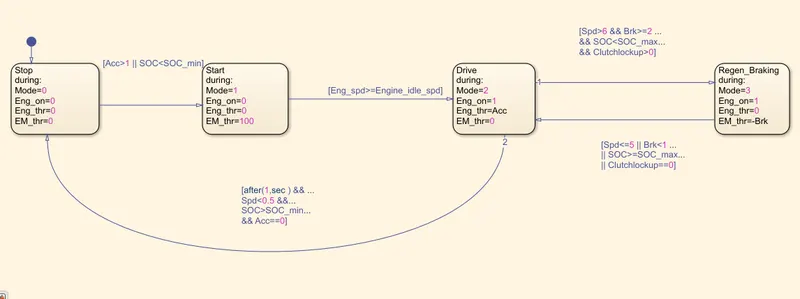
In this condition electric motor acts as a generator and converts the kinetic energy of the vehicle into electric energy.
Regenerative energy(ER) can be calculated as the product of electric power produced by motor and the duration of the regenerative braking event.It shows as the battery charge level or SOC of the battery.
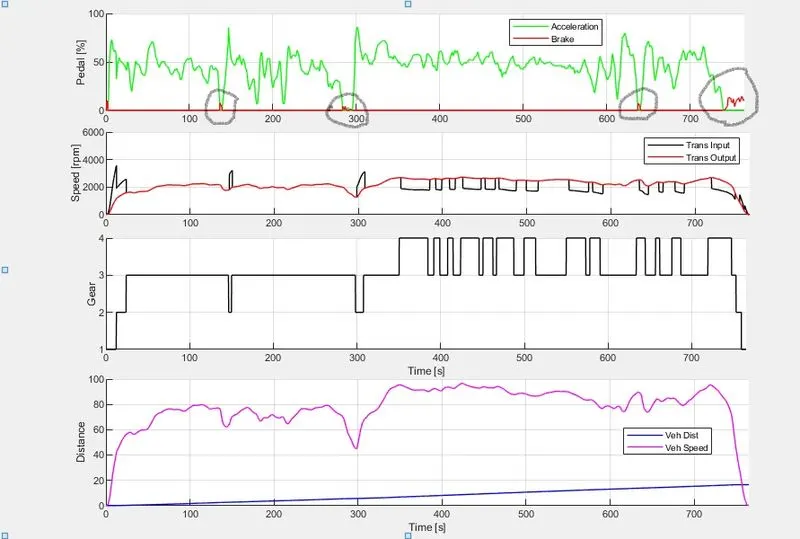
At the first plot acceleratin vs. braking at the marked section where the acceleration drpped, regenerative braking (red spikes) took places.So that regenerated energy(ER) storage too happened.
ER= Elect_power x Braking_Time
In the following plot SOC plot has been shown due to this vehicle model with operating modes given above.
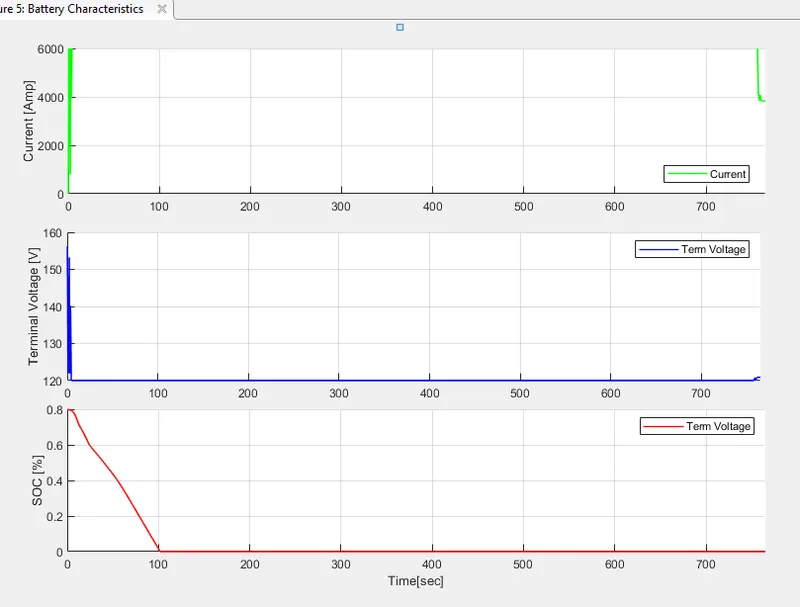
In summary, the forward energy based model estimates fuel consumption of P1 model of HEV by calculating the energy usage and regeneration during each operating mode.The energy usage and regeneration are then used to estimate,the fuel consumption by dividing the total energy used by the fuel enrgy density.