Project
Aim:-
To carry out system level simulation of an all terrain vehicle using simulink.
Objective:-
To create technical report BAJA ALL TERRAIN VEHICLE ATV model.
Theory:-
BAJA ALL TERRAIN VEHICLE (ATV) model:-
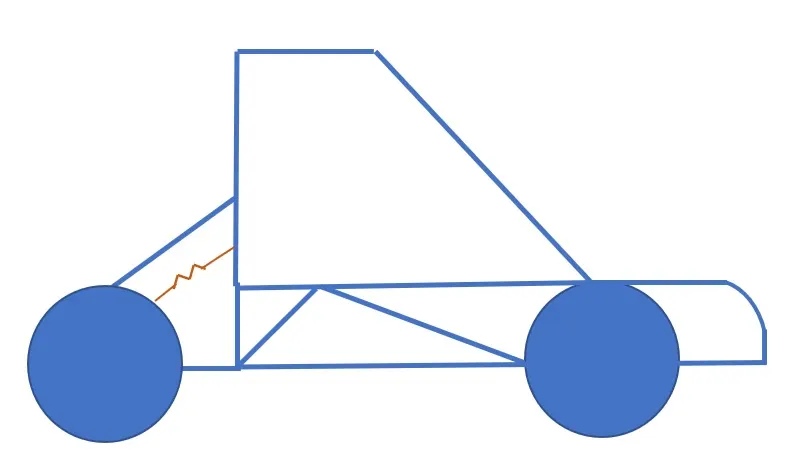
All Terrain Vehicles(ATV) are among the most useful land vehicles designed to combat the hazards of different kinds of terrain, they can be used in almost every worksite not only do they make traveling easier for drivers, they are also safe to use when transporting loads or cargo,Suspension and chasis play a vital role in the structural performance of an off-road vehicle. This model was specially designed for off road work places where so much terrain.It can be used on mountains and sand area. It is single seated mobile also called as buggy.
COMPONENTS OF A BAJA ALL TERRAIN VEHICLE (ATV) :-
-
Vehicle Body
-
Suspension
-
Tire
-
Engine
-
Continously Variable Transmission (CVT)
Continously Variable Transmission (CVT):-
A continuously variable transmission (CVT), also known as a shiftless transmission, stepless transmission, pulley transmission is anautomatic transmission that can change seamlessly through a continuous range of effective gear ratios. This contrasts with other mechanical transmissions that offer a fixed number of gear ratios. The flexibility of a CVT with suitable control may allow the input shaft to maintain a constant angular velocity even as the output speed varies.
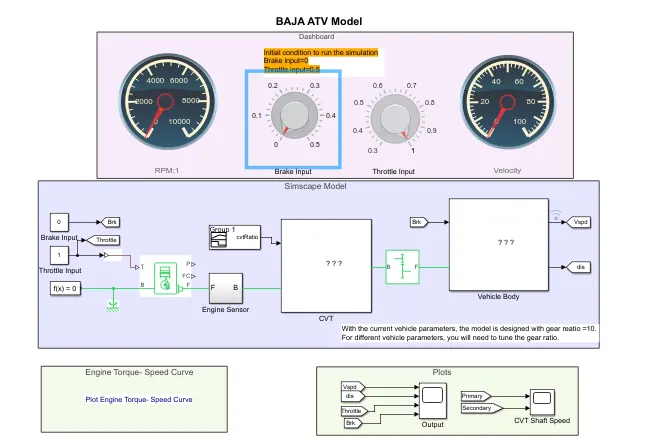
SIMULINK MODEL FOR BAJA ALL TERRAIN VEHICLE WITH CVT :-
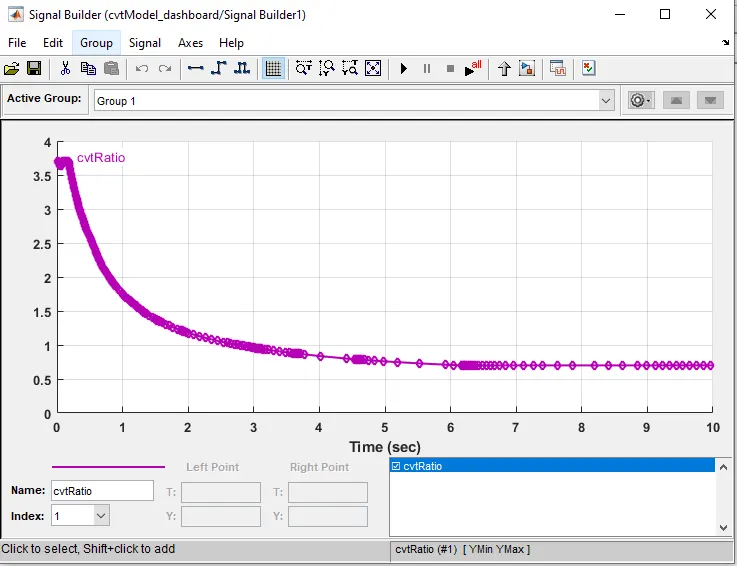
Signal builder:-
Signal builder is one of input provided to CVT. It is the CVT ratio with respect to time.
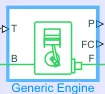
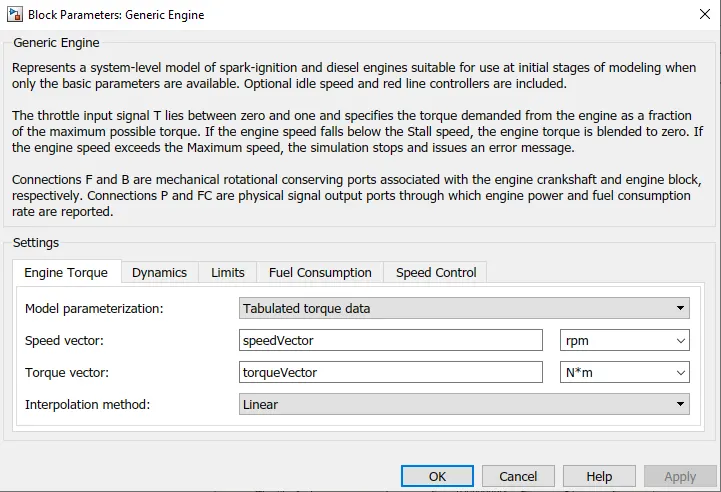
Generic engine:-
Represents a system-level model of spark-ignition and diesel engines suitable for use at initial stages of modeling when only the basic parameters are available. Optional idle speed and red line controllers are included.
Connections F and B are mechanical rotational conserving ports associated with the engine crankshaft and engine block, respectively. Connections P and FC are physical signal output ports through which engine power and fuel consumption rate are reported.
Engine sensor:-
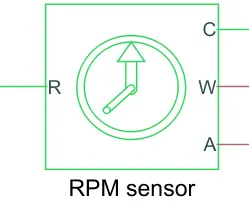
Engine sensor is connected with Generic Engine. Engine Sensor contains Ideal Mechanical Rotational Sensor that converts an across variable measured between two mechanical rotational nodes into a control signal proportional to angular velocity or angle.
CVT:-
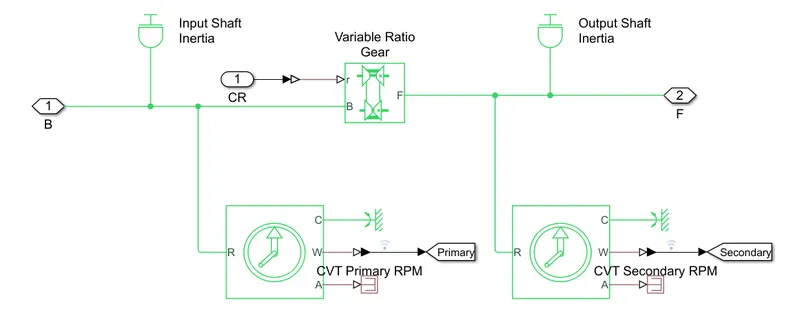
Engine is Connecting to CVT with Simple Gear ratio for Speed Reduction.
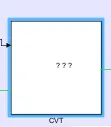
The main components of Continously Variable Transmission (CVT) is given below:
- Primary Pulley
- Secondary Pulley
- Variator
- Belt
Vehicle Body:-
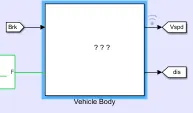
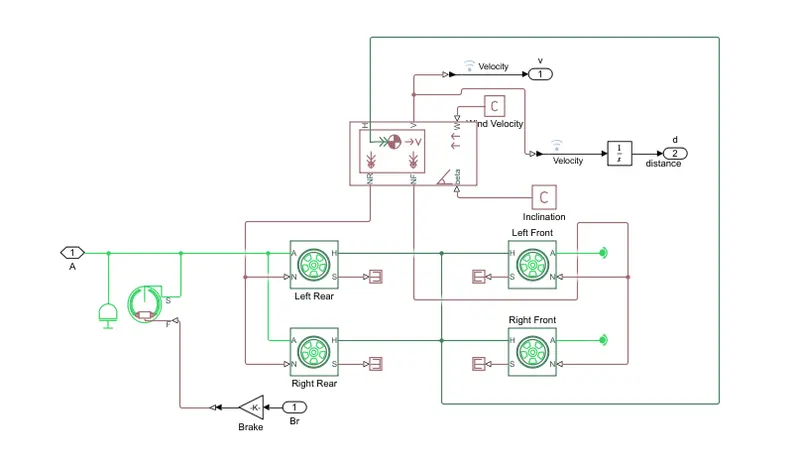
Represents a two-axle vehicle body in longitudinal motion. The block accounts for body mass, aerodynamic drag, road incline, and weight distribution between axles due to acceleration and road profile. The vehicle can have the same or a different number of wheels on each axle. Optionally include pitch and suspension dynamics or additional variable mass and inertia. The vehicle does not move vertically relative to the ground.
Case 1:-
When
Break input=0
Throttle input= 1
Model:-
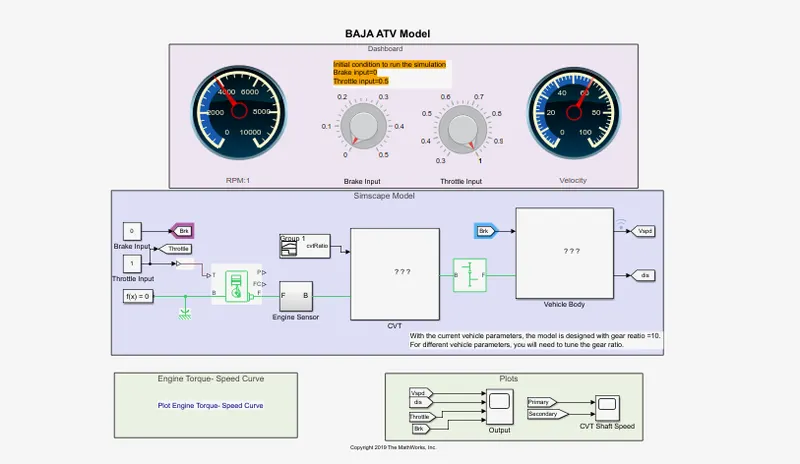
After running model for some time model RPM riches to the value of almost 3800 and somes constant graph with respect to time.
Results:-
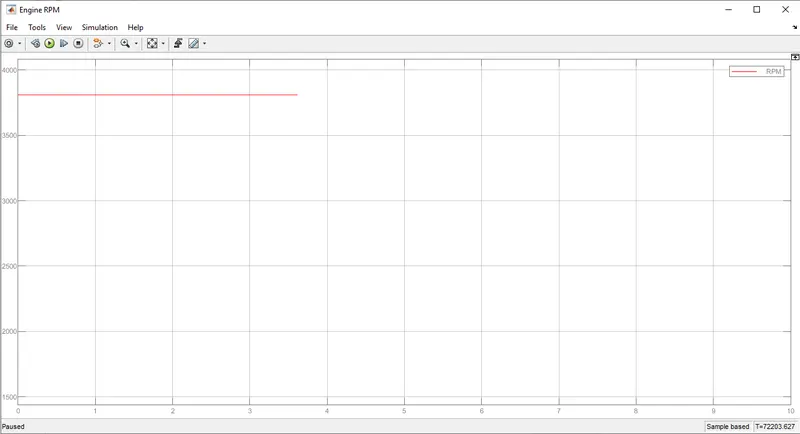
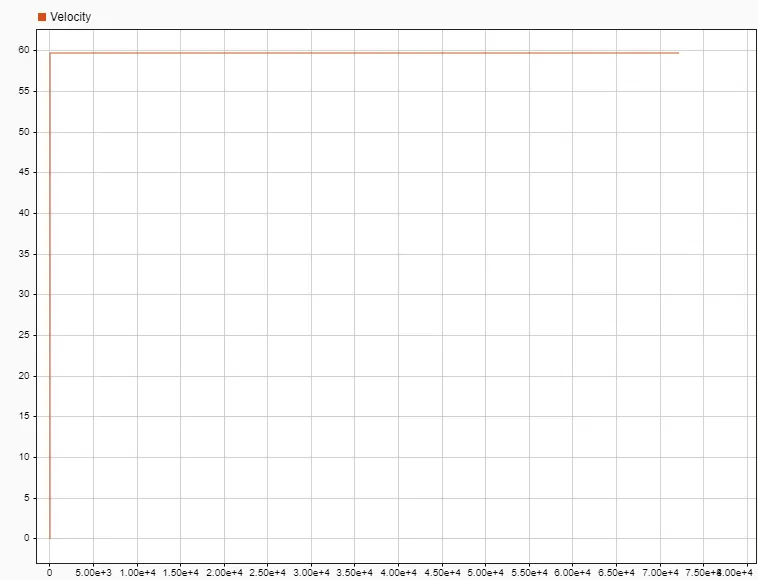
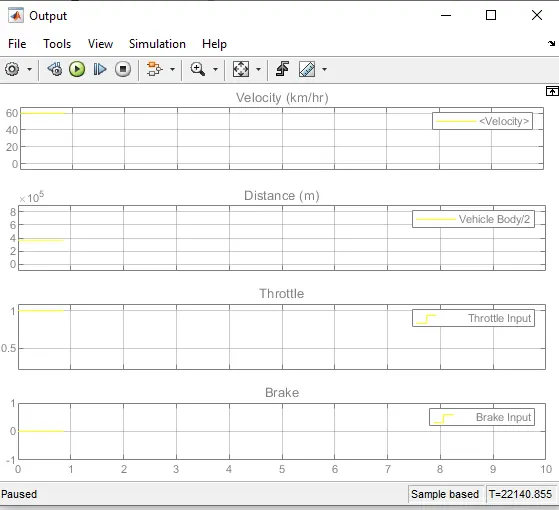
Velocity with repect to time remain constant there is no acceleration because of there is no break applied.
Graphical representation of all the outputs.
Velocity in km/hr
Distance in m
Throttle input
Break
Engine speed with respect to time graph. It is the zigzag line as shown below.
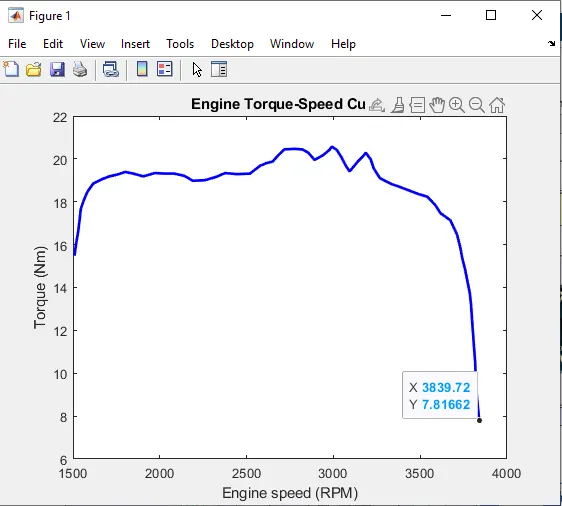
In the above plot Maximum Velocity reaches at 3840 RPM. Vehicle Speed is depends on CVT Ratio.
Case3:-
When
Throttle input=
Breaking=
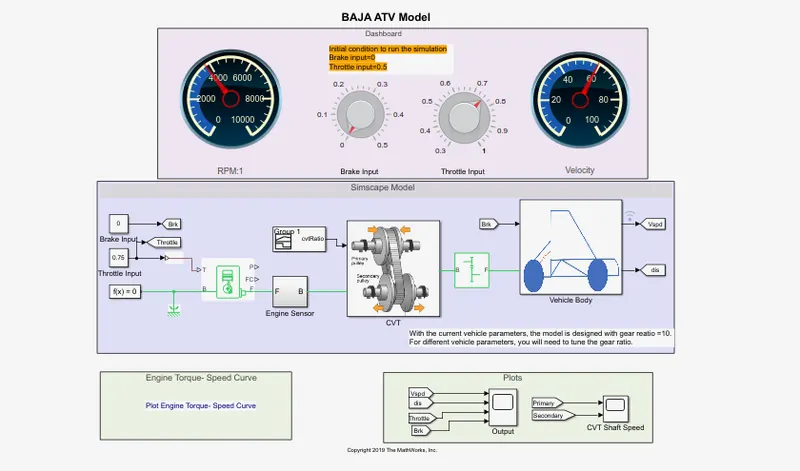
Model:-
Results:-
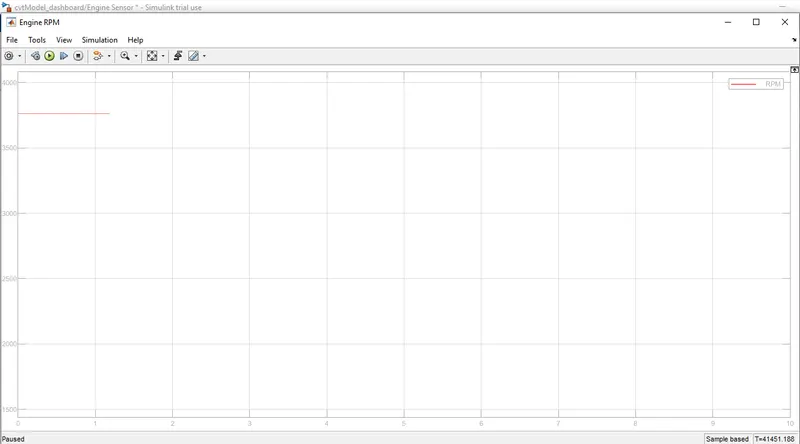
Engine RPM speed remains constant through out.
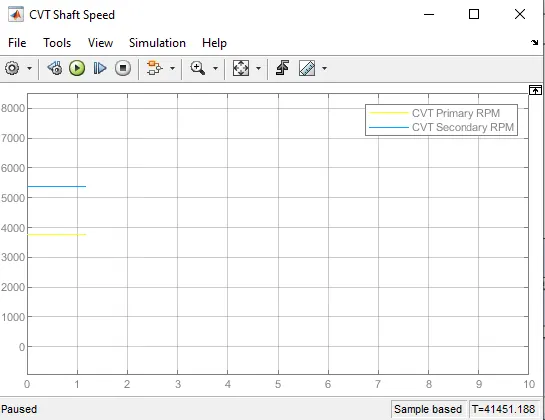
While CVT shaft speed
For primary RPM=5400
For secondary RPM=3800
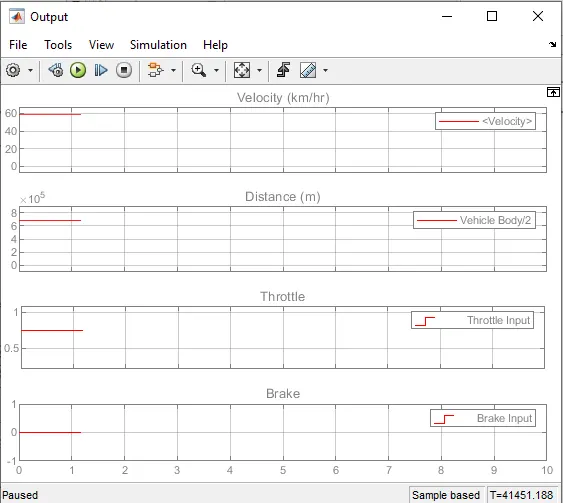
Output values:-
For the given throttle speed .75 and breaking of 0
Velocity of vehicle remains constan 59.
Case3:-
When
Throttle input = 0.3
Breaking= 0.5
Model:-
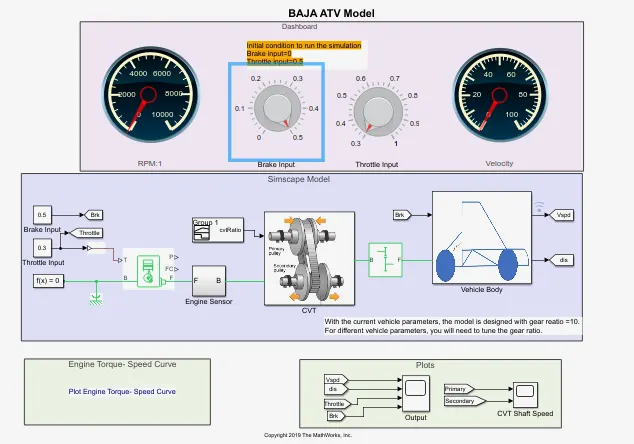
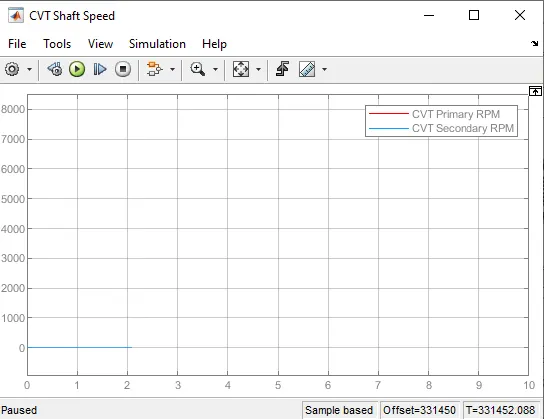
After running model for some time model RPM remain 0.
Results:-
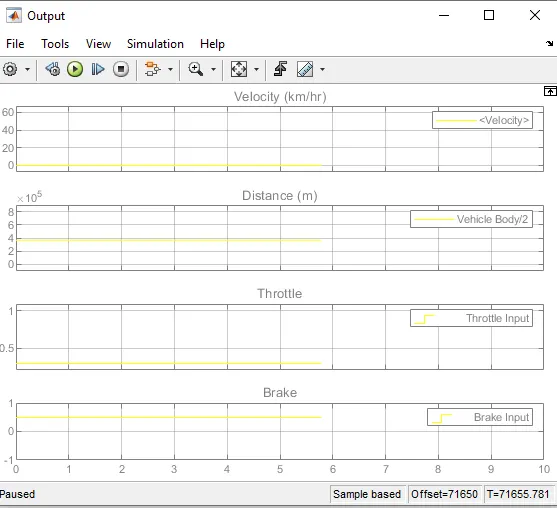
Running model for some time its rpm and shaft speed and velocity remains 0 bacause Throttle value is 0.3 which is less than 0.5 breaking value.
Output values:-
Velocity remains 0.
Conclusion:-
System level Simulation of an BAJA All terrain vehicle carried out and technical report for the model has been prepared and Output Results are plotted.