Project
Aim:
To prepare a technical report of Simulation of BAJA All-Terrain Vehicle (ATV) under different conditions.
ALL TERRAIN VEHICLE:
An all-terrain vehicle (ATV) is defined as a motorized off-highway vehicle designed to travel on four low-pressure or non-pneumatic tires, having a seat designed to be straddled by the operator and handlebars for steering control.
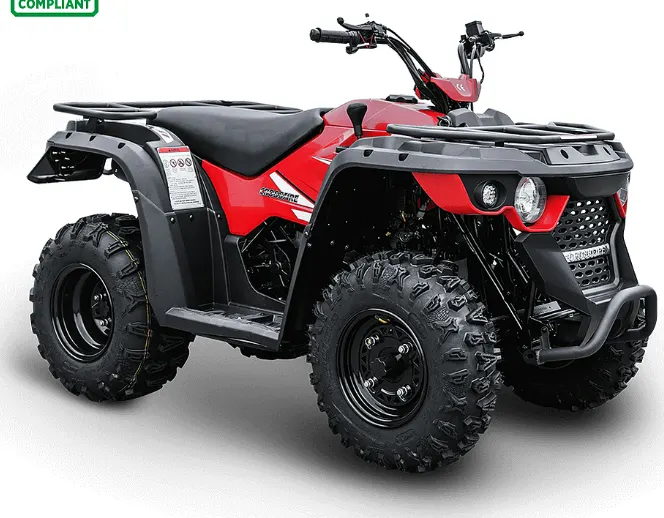
FIGURE-1
Main parts of vehicle
1.vehicle body
2.suspension
3.Engine
4.CVT
VEHICLE BODY:
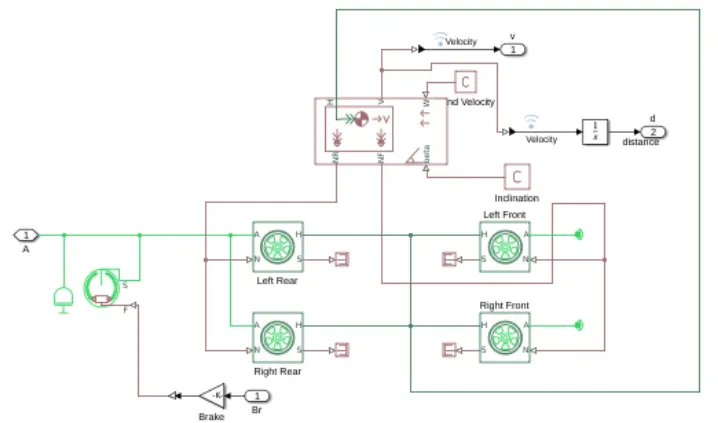
FIGURE-2
it consisit of tyres,brake,shaft,inertia and output of velocity and distance
the output will changes when changes in input
CVT:
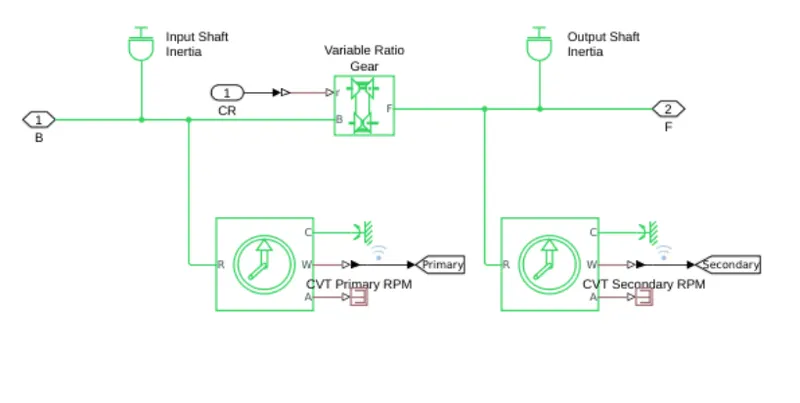
FIgure-3
CVT sub system consist of CVT primary RPM and CVT secondary RPM,variable gear ration and input/output shaft inertia block
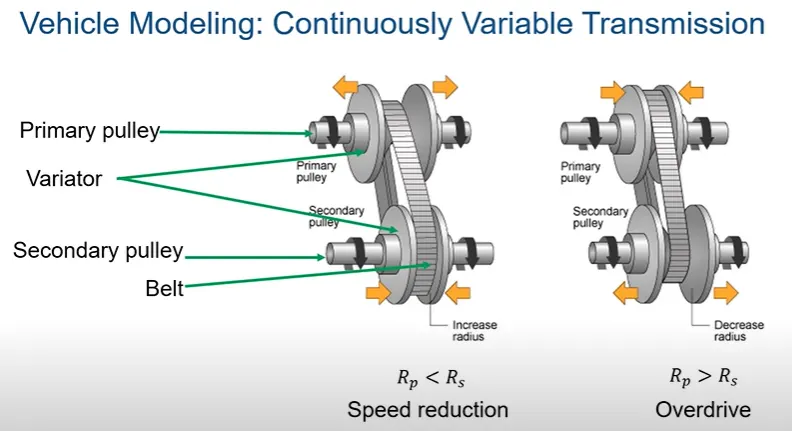
FIGURE-4
Main part in continuosly Variable transmission are
1.Primary pully
2.Variator
3.secondary pully
4.belt
in speed reduction primary pully move outward secondary pully move inward in overdrive condition primary oully move inward and secondary pully move outward
VARIABLE TRANSMISSION RATIO:
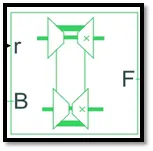
Represents a variable ratio gearbox such as implemented by mechanical belt CVT, electric, or hydraulic transmissions. The physical signal input r defines the ratio of input to output angular shaft velocities.
Connections B (base) and F (follower) are mechanical rotational conserving ports. Specify the relation between base and follower rotation directions with the Output shaft rotates parameter.
ENGINE:
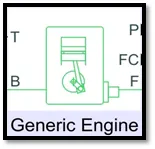
Represents a system-level model of spark-ignition and diesel engines suitable for use at initial stages of modelling when only the basic parameters are available. Optional idle speed and red line controllers are included. The throttle input signal T lies between zero and one and specifies the torque demanded from the engine as a fraction of the maximum possible torque.
Connections F and B are mechanical rotational conserving ports associated with the engine crankshaft and engine block, respectively. Connections P and FC are physical signal output ports through which engine power and fuel consumption rate are reported.
1. Study the baja ATV model without dashboard.
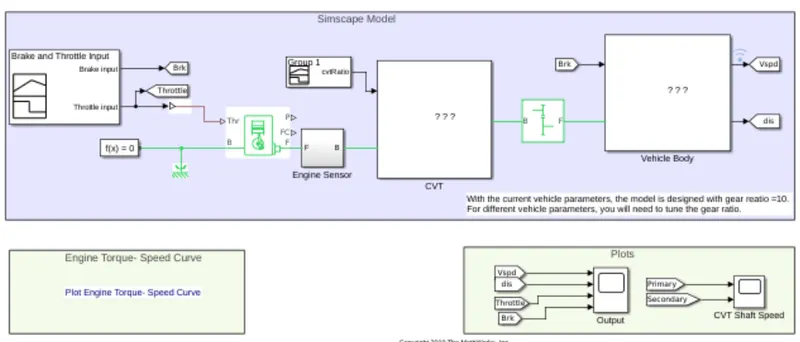
FIGURE-6
By using simulink model of CVT consists of Signal builder, generic engine, motion sensors, vehicle transmission, vehicle body,tyres and solver configuration blocks etc., as shown in figure-1. The CVT subsystem includes Transmission block, input and output shaft inertia and motion sensors as shown in figure-3
The vehicle body subsystem includes vehicle body block, double drum brake and tyres as shown in figure-2.
input is given from signal builder
SIGNAL BUILDER INPUT:
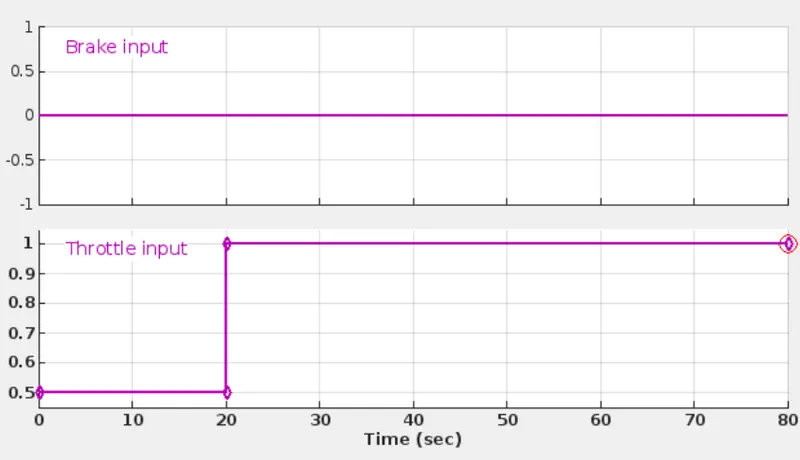
Figure-7
OUTPUT SIGNAL
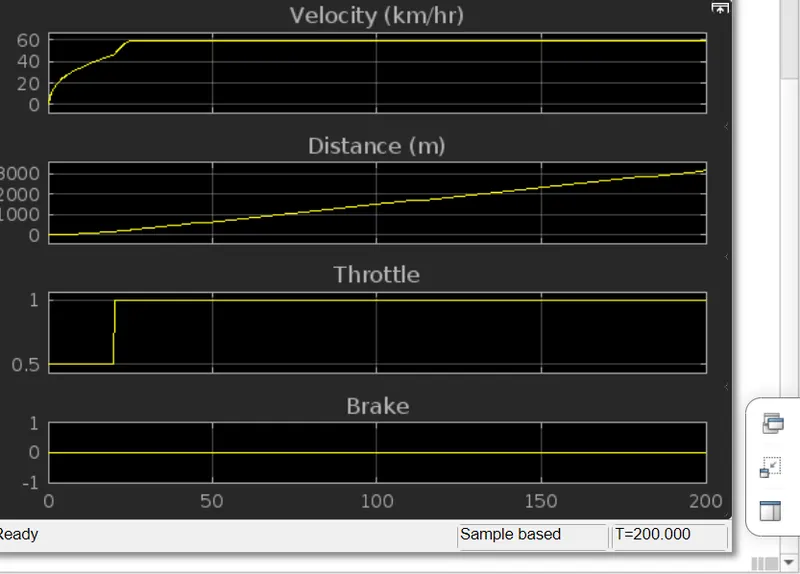
Figure-8
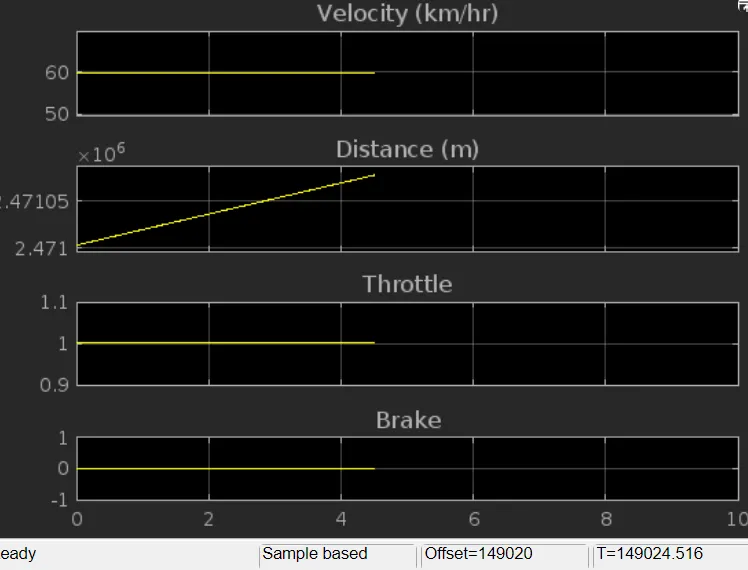
velocity increses by varying throttle input in figure -8 output is going constant 60kmh for the throttle input of 1
2. Study the baja ATV model with dashboard.
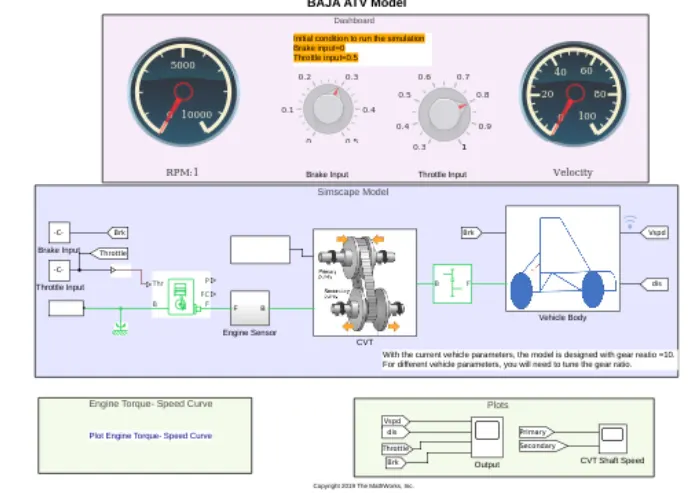
Figure-9
The above figure shows 'Baja ATV with dashboard' model which consists throttle meter and brake input in the dash board instead of giving input through signal builder. Rest of the blocks and subsystems are common in the above baja ATV model without dash board as shown in figure 9
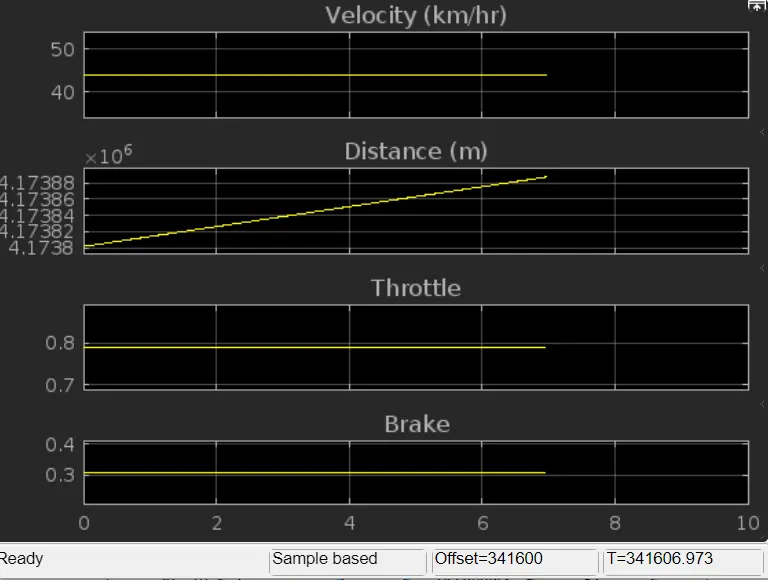
The main concept of using dash board is study the result by varying the input of brake and throttle, which shows that the velocity and speed of the engine.
CVT ratio is as below
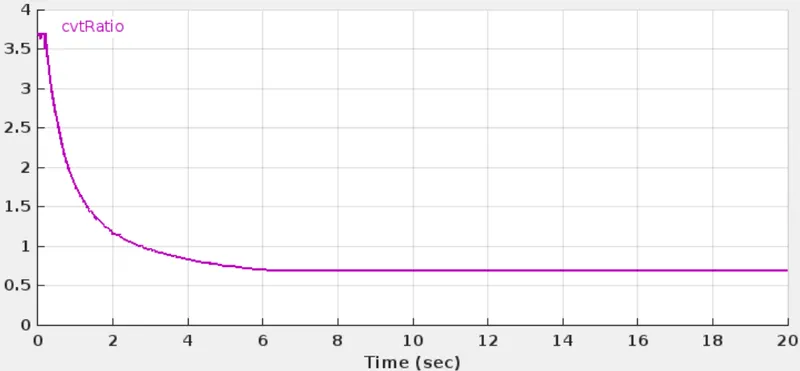
Figure-10
OUTPUT:
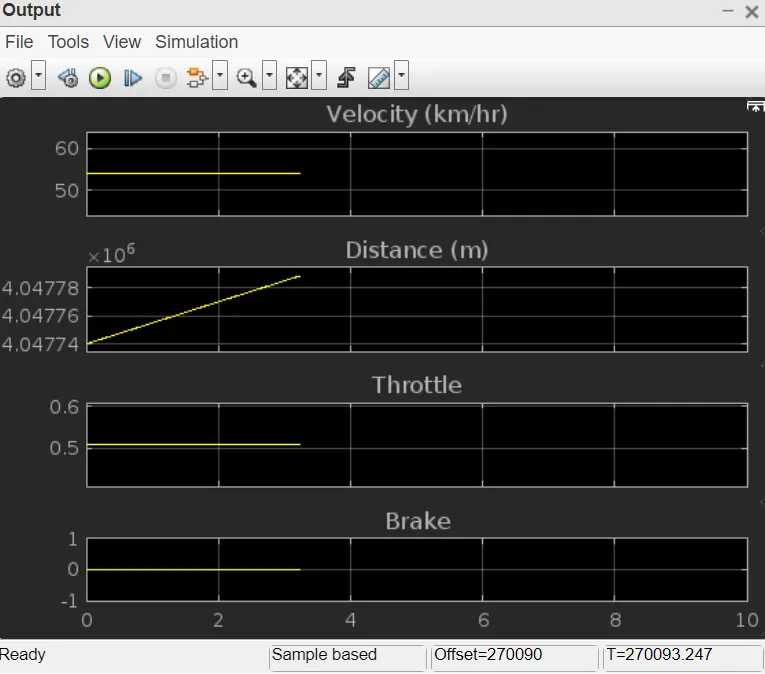
Figure-11
CONCLUSION:
1.As the throttle increases, the velocity also increases which inturn the power in the engine also increases.
2. As the brake input increases, the velocity decreases and engine power also decreases. At a certain brake input value the engine may shut down and there is no power output. The engine power is inversly proportional to the brake input.