Project-1: Powertrain for aircraft in runways
Part A:
1. Search and list out the total weight of various types of aircrafts.
1)
Boeing 747-8
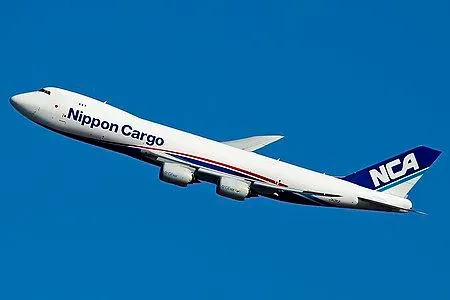
| Role | Wide-body jet airliner |
|---|---|
| National origin | United States |
| Manufacturer | Boeing Commercial Airplanes |
| First flight | 747-8F: February 8, 2010 747-8I: March 20, 2011 |
| Introduction | 747-8F: October 12, 2011, with Cargolux 747-8I: June 1, 2012, with Lufthansa |
| Status | In service |
| Primary users | UPS Airlines Lufthansa Korean Air Cathay Pacific Cargo |
| Produced | 2008–2023 |
| Number built | 155 |
| Developed from | Boeing 747-400 |
| Variants | Boeing VC-25B |
Vickers Viscount
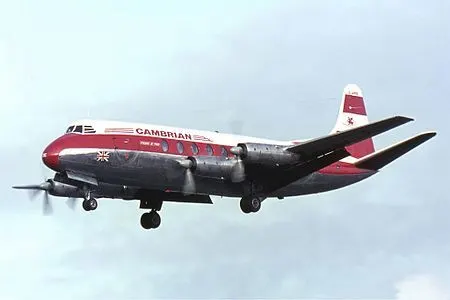
weight=30,400 KG
| Cambrian Airways Vickers Viscount | |
| Role | Turboprop airliner |
|---|---|
| National origin | United Kingdom |
| Manufacturer | Vickers-Armstrongs |
| First flight | 16 July 1948 |
| Introduction | 18 April 1953 with British European Airways |
| Retired | January 2009 |
| Status | Retired |
| Primary users | British European Airways Capital Airlines Trans-Canada Air Lines Air Canada |
| Produced | 1948–1963 |
| Number built | 445 |
| Developed into | Vickers Vanguard |
Boeing 777
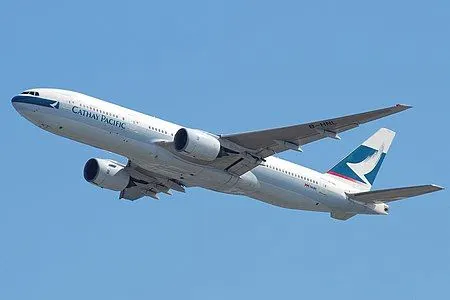
weight=347,800 KG
| The first Boeing 777 built | |
| Role | Wide-body jet airliner |
|---|---|
| National origin | United States |
| Manufacturer | Boeing Commercial Airplanes |
| First flight | June 12, 1994 |
| Introduction | June 7, 1995 with United Airlines |
| Status | In production |
| Primary users | Emirates United Airlines Air France Cathay Pacific |
| Produced | 1993–present |
| Number built | 1,701 as of December 2022 based on deliveries[1][2][3] |
| Developed into | Boeing 777X |
Dassault Rafale
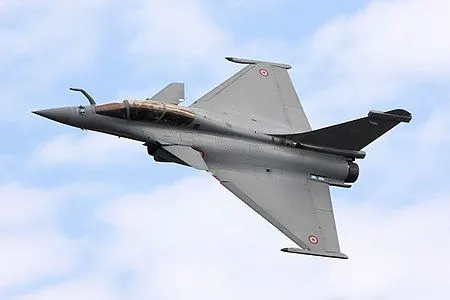
weight=24500 Kg
| A French Air Force Dassault Rafale B at RIAT in 2009 | |
| Role | Multirole fighter |
|---|---|
| National origin | France |
| Manufacturer | Dassault Aviation |
| First flight | Rafale A demo: 4 July 1986 Rafale C: 19 May 1991 |
| Introduction | 18 May 2001 |
| Status | In service |
| Primary users | French Air and Space Force French Navy Indian Air Force Qatar Emiri Air Force |
| Produced | 1986–present |
2. Is there any difference between ground speed and air speed?
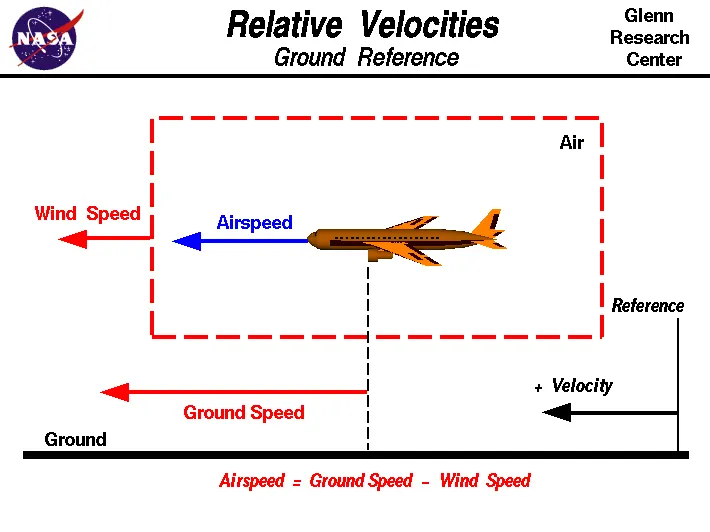
Airspeed vs. Ground Speed
As mentioned above, true airspeed is simply the speed at which an aircraft is moving relative to the air it is flying in. As such, it’s also the speed at which the air is flowing around the aircraft’s wings.
Ground speed, on the other hand, is the aircraft’s speed relative to the ground. One thing that should be noted here is that it’s its horizontal rather than vertical speed – an aircraft climbing completely vertically would have a ground speed of zero.
3. Why is it not recommended to use aircraft engine power to move it on the ground at Airport?
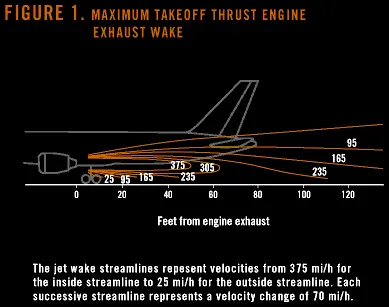
High engine thrust during maintenance activity can cause considerable damage to airplanes and other elements in the airport environment. An example of this problem occurred after an airplane arrived at its final destination with a log entry indicating the flight crew had experienced anomalous engine operation.
4. How an aircraft is pushed to runway when its ready to take off?
The airplane may be pushed or pulled by landing gear or wing struts since they're known to be strong enough to drag the airplane through the air. To allow for turns, a person may either pick up or push down on the tail to raise either the nose wheel or tail wheel off the ground, then rotate the airplane by hand.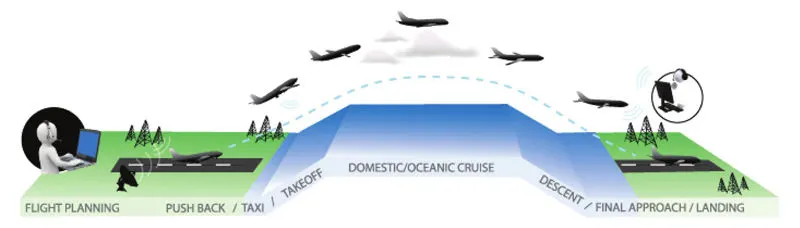
5. Learn about take off power, tyre design, rolling resistance, tyre pressure, brake forces when landing.
-Take off is the phase of the flight in which an aeroplane leaves ground and becomes airbone.For lighter aircraft full power is given durong take off where as on the other hand large cargo carriers aircraft make use of less power during take off inorder to inrease the life span of engine,reduce maintenance cost ,reduce engine heat and also for a smooth take off flight.
-The forces involved during take off are the following:
T=Thrust froce pushes the aircraft in forward dierection on the runway.
D=Drag force resist the forward motion of the aircraft.
F=Rolling resistance force when wheel comes in contact with the gorund during landing and take off.
-During take off on the runway the imbalance froce will cause an acceleration along the runway and it is given by the formula:
dvdt=T-D-Fm">dvdt=T−D−Fm����=�-�-��
-Now when the pilot is ready to take off the aircraft will accelerated to a speed which would be given by aircraft controlling department.Then after take off the flight will be elevated to a certain angle and hieght.then it will be made to stabilies in an equilibrium manner.
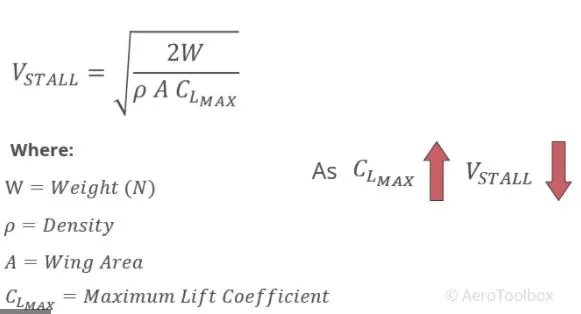
-Here safe speed or rotational speed is defined as Vr which act as a critical factor for determining take off performance.For safety reasons Vr is usually determined as 1.1*Vstall(lowest speed that aircraft can be flown before the air starts to seperate from the wings when the angle of attract becomes too great.
-Vstall can be calculated by using a formula given:
*Tyre design of an aircraft:
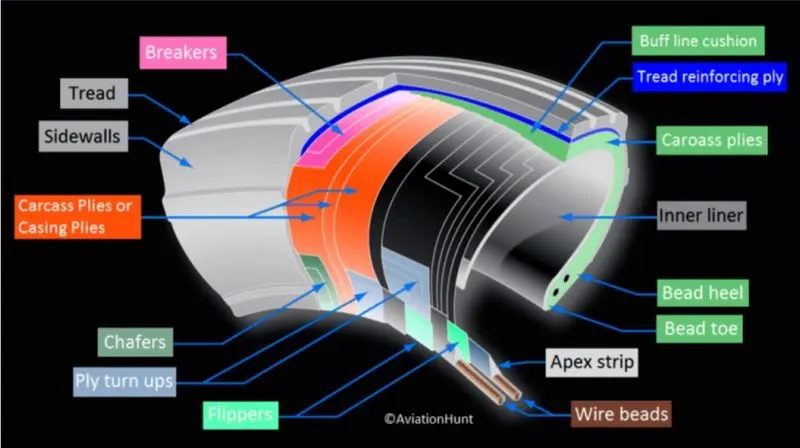
-An aircraft tyre are deisgned to withstand extreme heavy loads by absording shocks during and there by providing cushioning effect.
-The number of tires required for an aircraft depends on the total weight of aircraft as the weight needs to be distributed evenly.
-Aircraft tyre are designed to facillitate stability in high crosswind condition,to chanalize the water away for preventing skidding and helps to give a good braking effect.
-Aircraft tires are usually inflated by nitrogen air inorder to reduce expansion and contraction from extrerme changes in ambient pressure and tempurature.This type of inert gases will eliminate the possibilty of tire explosion.
-Aircraft tire design are set into an aircraft based on its application and also suffeicient clearance with the ground for allowing tyre growth which happens when centrifugal force is at high speed.
*Rolling Resistance:
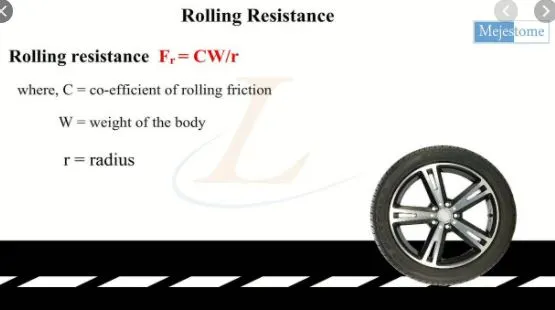
-Rolling resistance or rolling drag is the force resisting the motion when the body rolls on a surface and it is mainly caused by non elasticity that is not all the energy needed for deformation of wheel is recovered when the pressure is removed.
-The rolling resistance equation can be defined by the folowing equation:
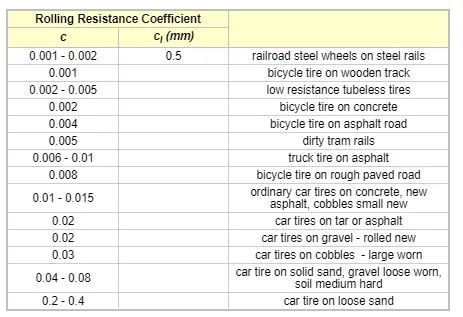
-Usually aircrafts have a very low rolling resistance coeffiecient of 0.06. Some other examples are as follows:
*Tyre Pressure:
-Aircraft tyres are designed to withstand heavy loads and shocks durong landing and take off and also needs to distribute weight evenly.
-As per research and testing it is found that aircraft tyres are able to sustain pressure upto 800 psi.Generally to note the tyre pressure of an aircraft a special type of sensors are used,its daigram is given below:
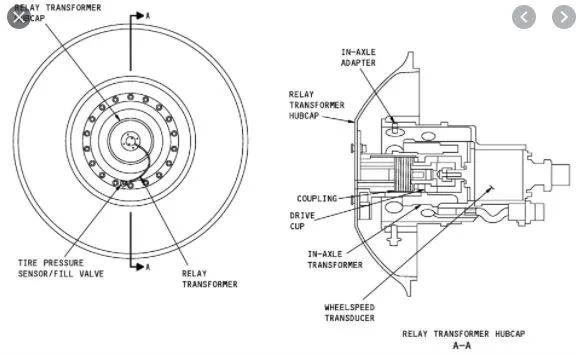
-There are 2 primary parameters which is hazardous to the aircraft tires:
I)Deflation:
Here the tire deflates in a controlled ma-nner with minimum dierect consequence to other system.
II)Explosive breakup:
In this case the tire deflates or bursts in an uncontrolled manner with a probablity of causing damage to other secondary system,which further can cause a major crash landing incidents.
Part B:
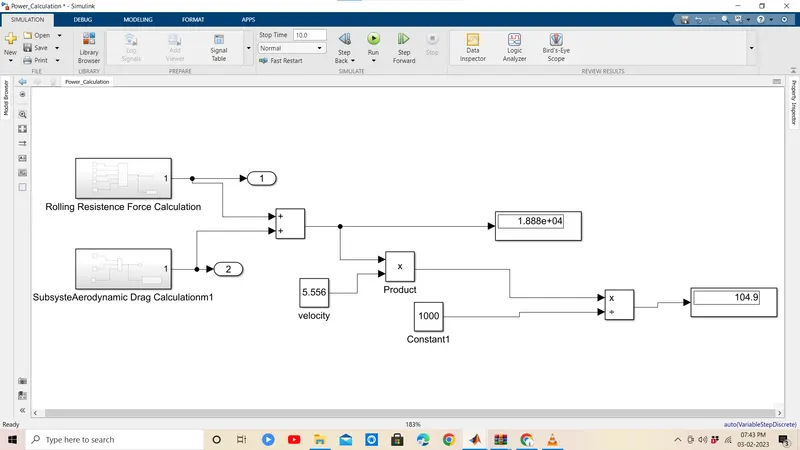
6. A. With necessary assumptions, calculate the force and power required to push / pull an aircraft by a towing vehicle.
Pulling an Airplane Force required to pull an air plane.
The rolling resistance for the air plane can be calculated as
Fr = c mr ag
where
Fr = rolling (N, lbf)
c = rolling resistance coefficient
mr = rolling mass (kg, lbm)
ag = acceleration of gravity (9.81 m/s2)
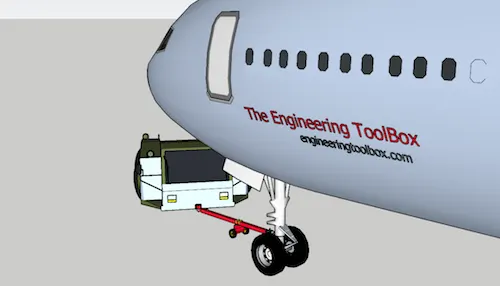
Calculation: Assumption:
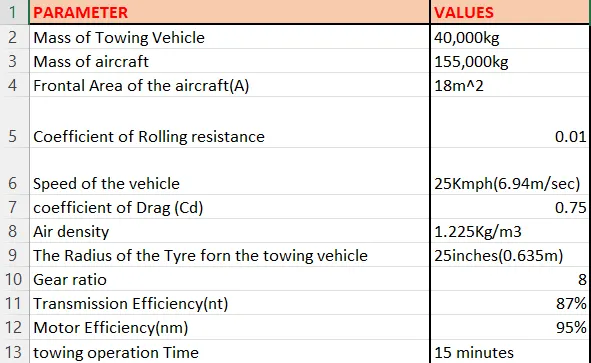
Towing Vehicle Mass(kg) - 40000 kg
Mass of the aircraft which act as a payload to the Towing Vehicle(kg) - 150000 kg
Therefore, Total Mass of the towing vehicle(m)=150000+40000 = 190000 kg.
rontal Area of the vehicle(A) = 18 m
2 Speed of the vehicle(v) = 20kmph. In m/sec;
Speed of the vehicle(v) = 20*5/18 = 5.556m/sec
Rolling Resistance Co-efficient( C r r ) = 0.01 Now,
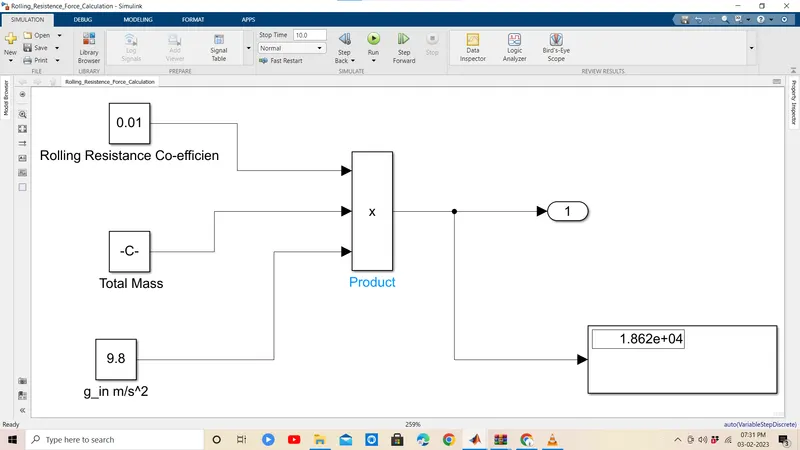
Rolling Resistance Force( F r r ) = C ⋅ r r m ⋅ g =0.01*190000*9.8 = 18,620N
Similarly,for Aerodynamic Drag: Coefficient of Drag for the towing vehicle( C d _v) = 0.608
Coefficient of Drag for the aircraft( C d _a) = 0.15
Air Density( ρ ) = 1.225kg/m3 Now,
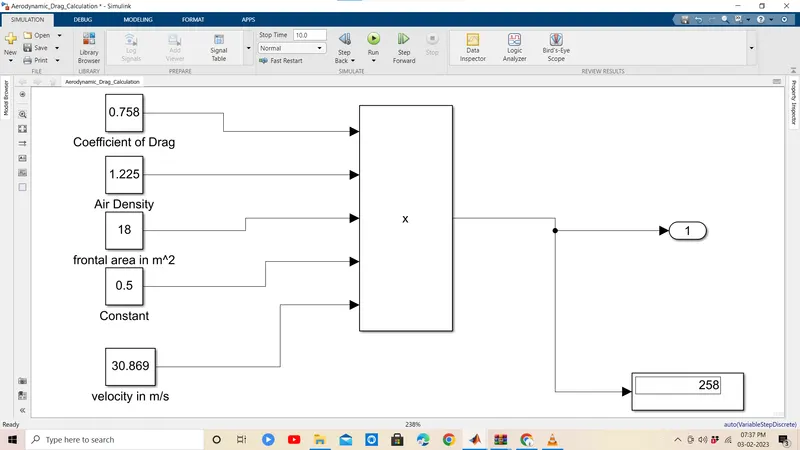
Aerodynamic Drag( F a d ) = 0.5*( C d _v + C d _a)* v 2 * ρ *A = 0.5*(0.608+0.15)* 5.556 2 *1.225*18 = 257.97N
Therefore
, Total Force Required to Push/Pull the aircraft by the Towing Vehicle is: = F r r + F a d = 18,620+257.97 = 18,859.97N
Power calculation: = F r r * V = 18,859.97 * 5.556 = 104785.993 W = 104.7 KW.
B. Develop the model for the calculated force and power using Simulink.
- Rolling Resistence Force Calculation
- Aerodynamic Drag Calculation
- Power Calculation
7. A. Design an electric powertrain with type of motor, it’s power rating, and energy requirement to fulfill aircraft towing application in Simulink. Estimate the duty cycle range to control the aircraft speed from zero to highest. Make all required assumptions. Prepare a table of assumed parameters. Draw a block diagram of powertrain.
block diagram of powertrain.
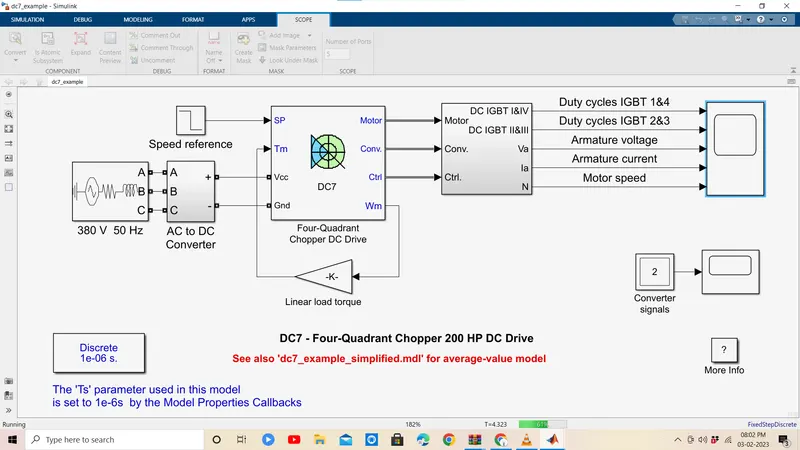
(Hint :DC7 Block)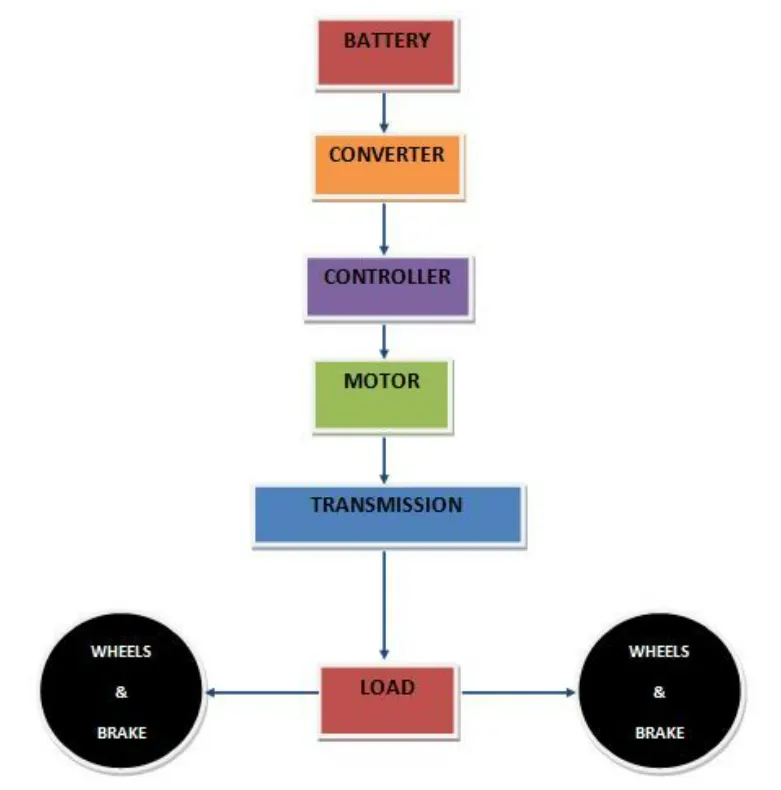
refrance copy =
https://in.mathworks.com/help/sps/ug/dc7-four-quadrant-chopper-200-hp-dc-drive.html
Simulink Diagram of powertrain:
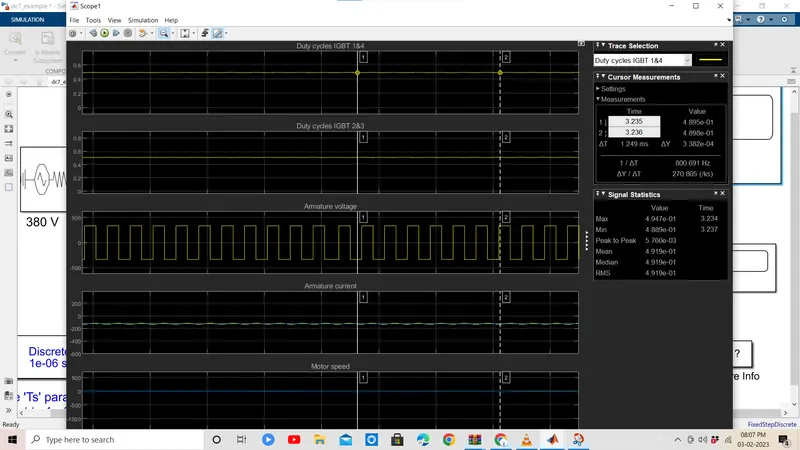
Output:
B. Also, Design the parameters in excel sheet.