Project-1: Powertrain for aircraft in runways
Aim:
To develop the air Powertrain for aircraft in runways an various performances.
Objective:
Part A:
1. Search and list out the total weight of various types of aircrafts.
2. Is there any difference between ground speed and air speed?
3. Why is it not recommended to use aircraft engine power to move it on the ground at Airport?
4. How an aircraft is pushed to runway when its ready to take off?
5. Learn about take off power, tyre design, rolling resistance, tyre pressure, brake forces when landing.
Part B:
6. A. With necessary assumptions, calculate the force and power required to push / pull an aircraft by a towing vehicle.
B. Develop the model for the calculated force and power using Simulink.
7. A. Design an electric powertrain with type of motor, it’s power rating, and energy requirement to fulfill aircraft towing application in Simulink. Estimate the duty cycle range to control the aircraft speed from zero to highest. Make all required assumptions. Prepare a table of assumed parameters. Draw a block diagram of powertrain.
(Hint :DC7 Block)
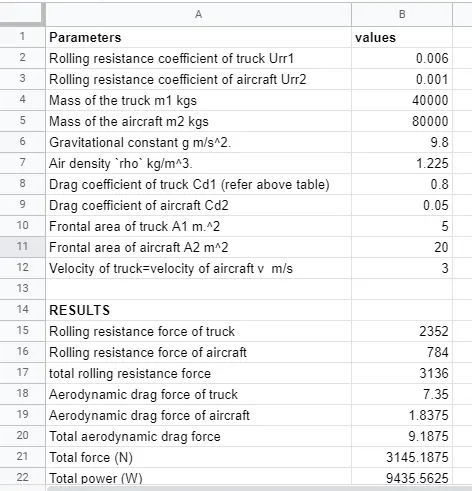
B. Also, Design the parameters in excel sheet.
Part A:
Q 1: Search and list out the total weight of various types of aircrafts
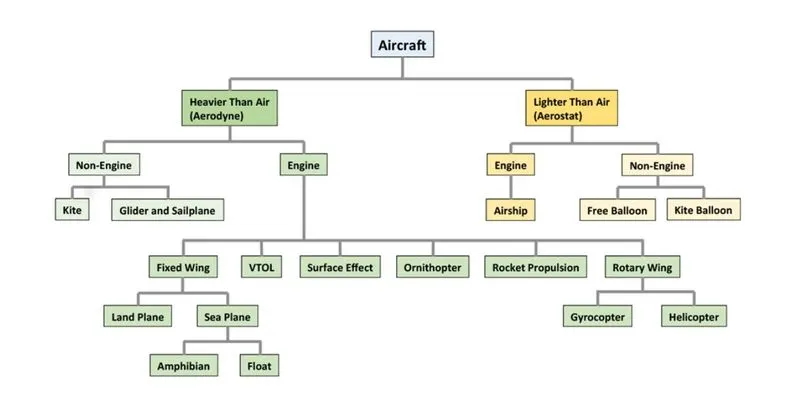
Type of aircraft:
Aircraft Gross-Weight:
It is the total aircraft weight at any moment during the flight or ground operation. This decreases during the flight due to fuel and oil consumption
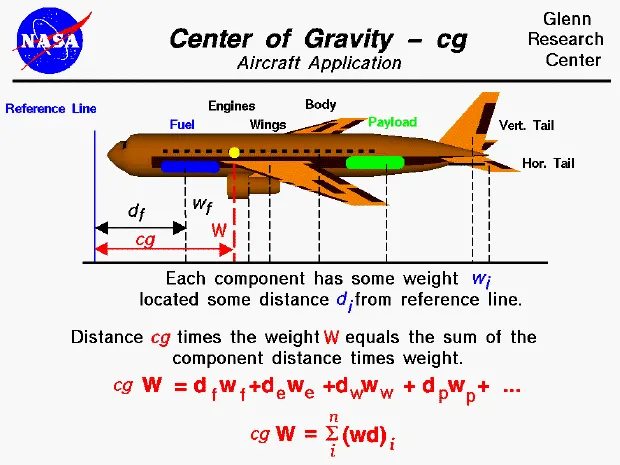
Maximum Landing Weight(MLW):
This maximum weight at which an aircraft is permitted to land. The following image depicts takeoff weight components:
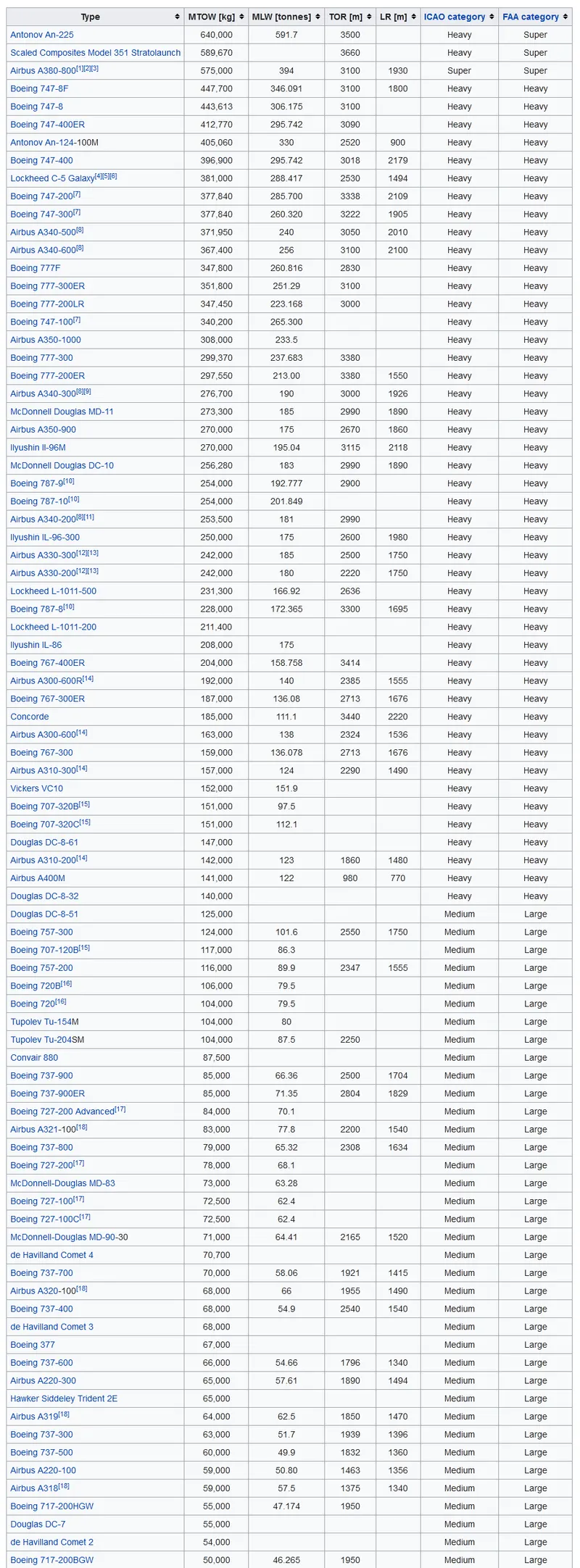
Aircrafts list:
Airplane image:
Q 2: Is there any difference between ground speed and air speed?
Ground speed
The horizontal speed of an aircraft relative to the Earth's surface. ... An airspeed indicator indicates the aircraft's speed relative to the air mass.
Airspeed
The speed of an aircraft relative to the air through which it is moving
Airspeed is simply the speed at which an aircraft is moving relative to the air it is flying in. As such, it’s also the speed at which the air is flowing around the aircraft’s wings whereas Ground speed, on the other hand, is the aircraft’s speed relative to the ground.
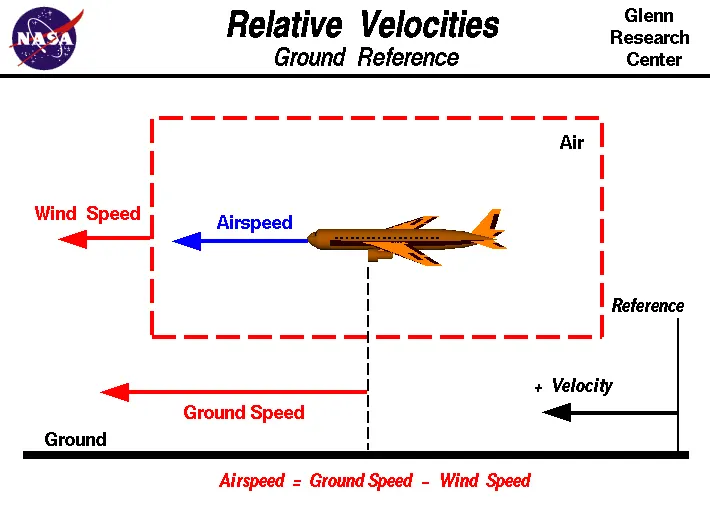
Airspeed =Ground speed - Wind speed
Q 3: Why is it not recommended to use aircraft engine power to move it on the ground at Airport
Aircraft have no power wheels.so the forward thrusting and taxing is done engine power.
The pushback operation from the gate is done by the tractor.
Reasons
- To save the fuel & cost for the aeroplane company.
- To improve fuel efficiency.
- The tractor driver can see more clearly than the pilot while operating the plane in the airport.
- For the safety operation in airports the aircraft engines are not powered because the aircraft engines are highly powered,it might lose control .
- Large sound produced by the aircraft gives the unpleasant atmosphere for the passenger in the airport
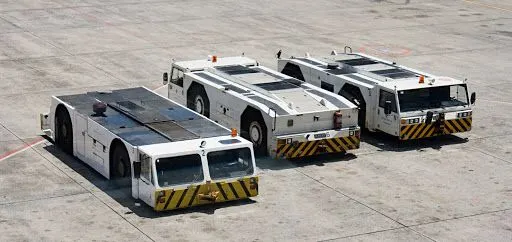
Towing vehicle for aircrafts;
Q 4: How an aircraft is pushed to runway when its ready to take off?
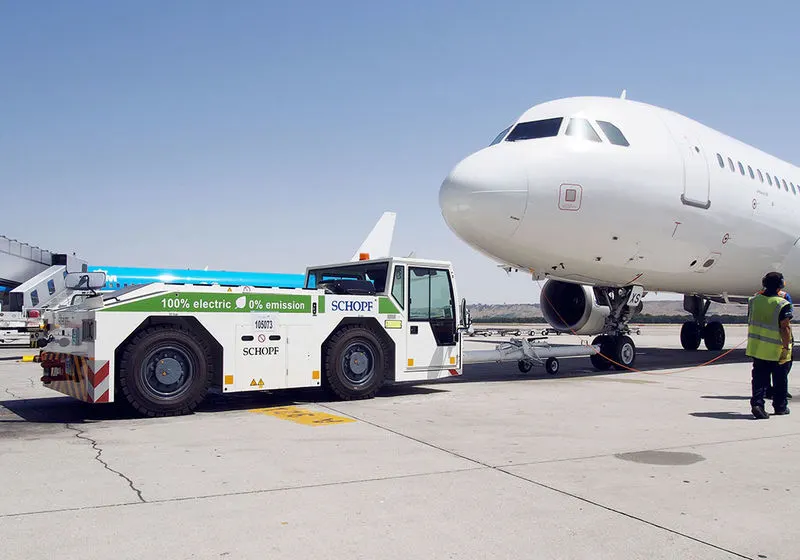
An airplane uses tugs or tractors for moving from one place on an airport to another; for example, when moving from a hangar to the runway.(process known as towing)
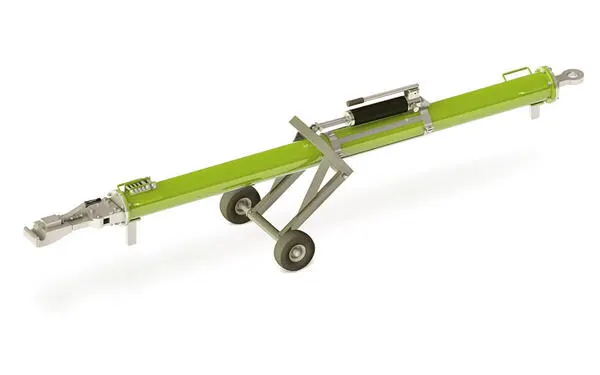
The tractors are attached to the nose wheel of the plane by the tow bar.
New technologies like pilot controlled tugs,electric motors placed on plane landing gear for reducing fuel and noise
For small homebuilt aircraft, human power is enough for towing and taxiing from terminal to runway and some may use small tow bars that have a powered wheel to help move the airplane, with power sources as diverse as lawnmower engines or battery-operated electric drills image is here
Q 5: Learn about take off power, tyre design, rolling resistance, tyre pressure, brake forces when landing
In order to understand the part this 35 feet screen height plays in the takeoff, we first need to look at the various distances that affect the take-off performance of an aircraft
Now to analyze the take-off power of an aircraft we should consider the parameters like
- D= drag force
- F = rolling resistance
- T = thrust of the propulsion
During take-off: m*dv/dt = T -F -D, where m=mass of aircraft; dv/dt is the acceleration
Now the vehicle will reach its safe flying speed. The safe flying speed is represented by 'Vr'
Vr = 1.1*Vstall
where Vstall = √(2*(G/S)/(ρ*Clmax))
G = aircraft weight; S = aircraft wing area; Clmax = lift co-efficient; ρ = density of air
here we consider the displacement as 2*S
Takeoff power = force*displacement = (m*dv/dt)*2*S = (T -F -D)*S
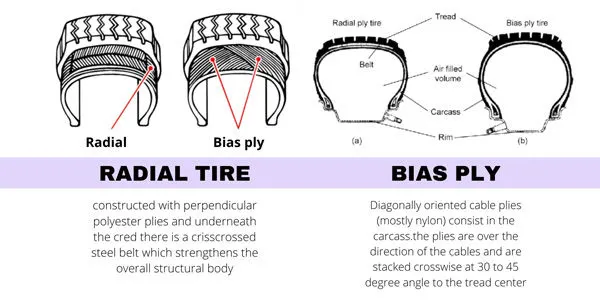
Tyre Design:
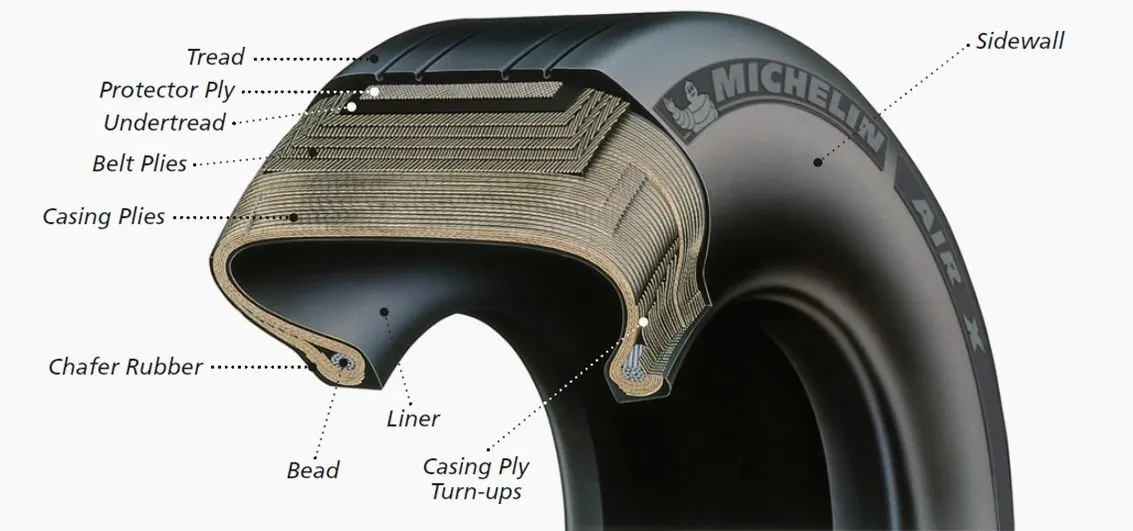
The material used to manufacture the tire is Carcass plies. They are sometimes called casing plies. An aircraft tire is constructed for the purpose it serves.
- They support the weight of an aircraft while it is on the ground.
- It also provides the necessary traction for braking and stopping an airplane.
- Tyre also helps to absorb the shock of landing and provides cushioning for the roughness of takeoff, roll-out, and taxi operations
Wheel construction:
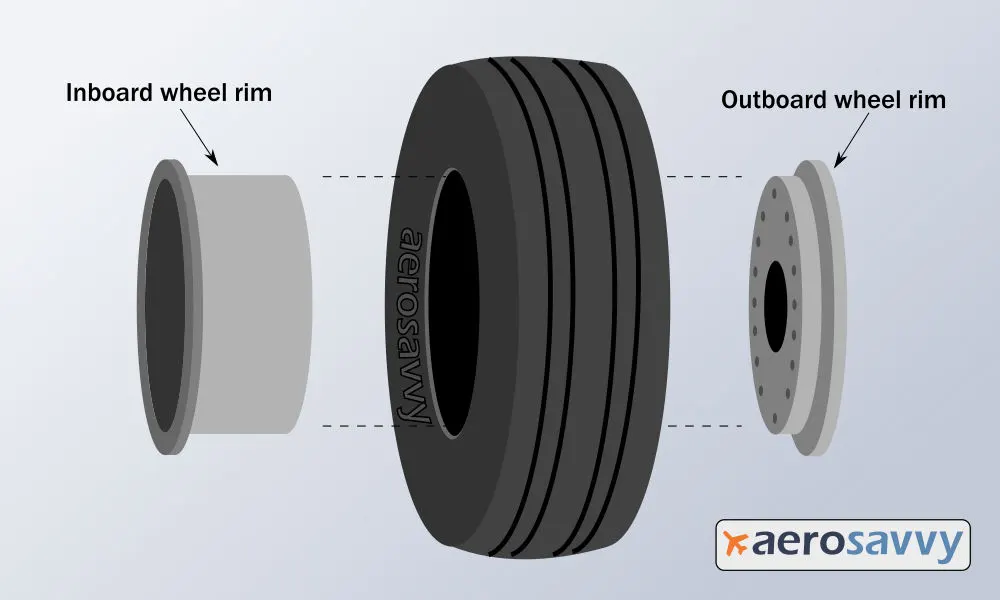
The typical modern two-piece aircraft wheel is cast or forged from aluminum or magnesium alloy. The halves are bolted together and contain a groove at the mating surface for an o-ring, which seals the rim since most modern aircraft utilize tubeless tires. The bead seat area of a wheel is where the tire actually contacts the wheel
Need of aircraft tire:
Aircraft wheels are an important component of a landing gear system. With tires mounted upon them, they support the entire weight of the aircraft during taxi, takeoff, and landing. The typical aircraft wheel is lightweight, strong, and made from aluminium alloy. Some magnesium alloy wheels also exist. Early aircraft wheels were of single-piece construction, much the same as the modern automobile wheel
Take off power:
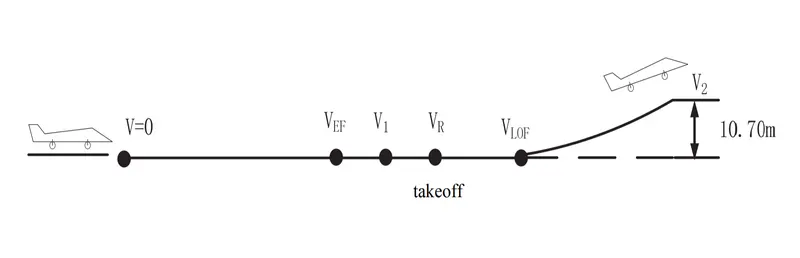
Takeoff is the phase of flight in which an aerospace vehicle leaves the ground and becomes airborne.
The takeoff speed is usually dependent on the aircraft weight; the heavier the weight, the greater the speed needed, & also determined by the length of runway and slope of the runway and any peculiar conditions, such as obstacles off the end of the runway.
Tire Pressure:
Aircraft tires generally operate at high pressures, up to 200 psi (14 bar; 1,400 kPa) for airliners, and even higher for business jets. The main landing gear on the Concorde was typically inflated to 232 psi (16.0 bar), whilst its tail bumper gear tires were as high as 294 psi (20.3 bar)
The mechanism aircrafts tyer arm;
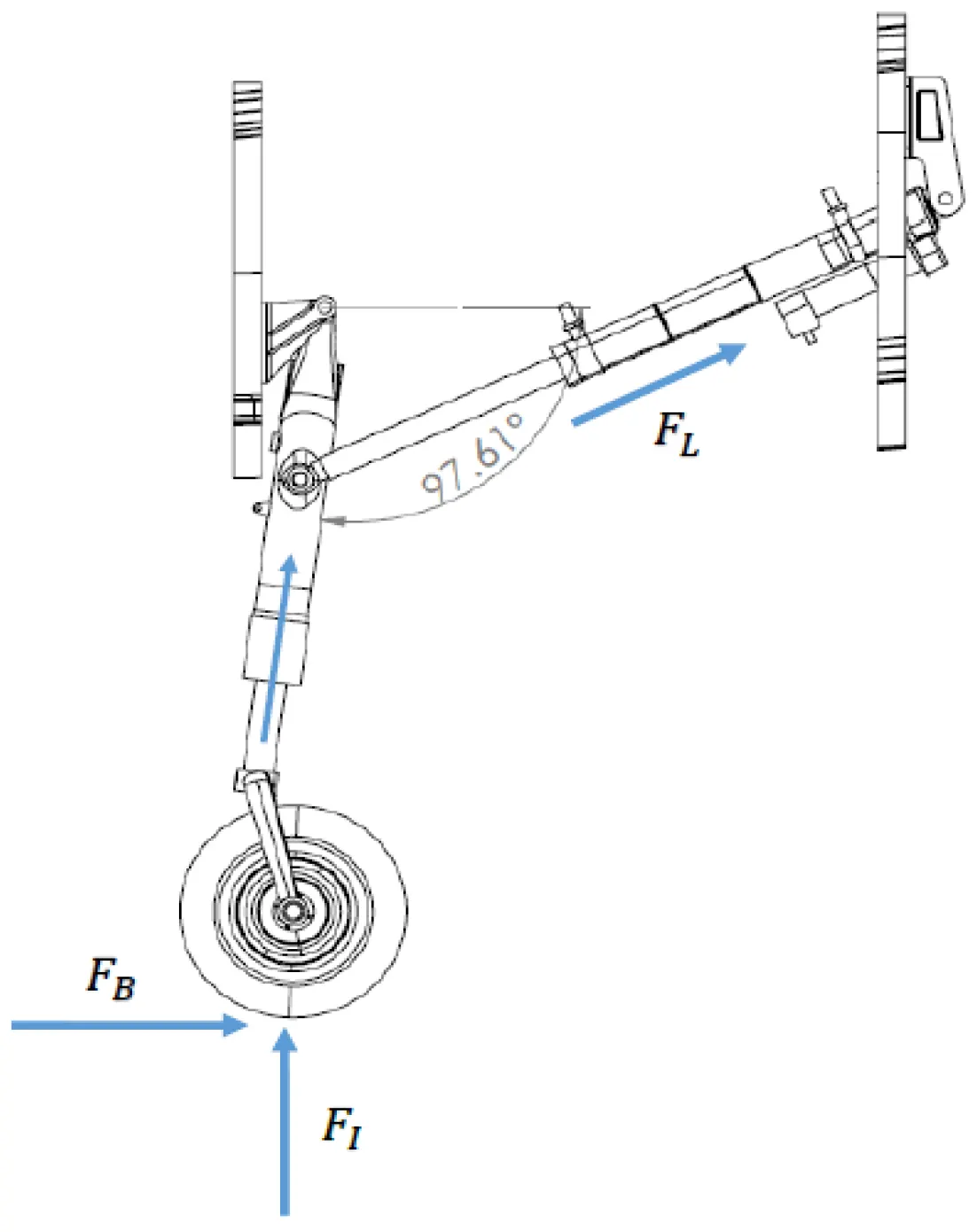
Forces acting on an aircraft after landing are rolling friction force(Froll), drag force(Fd), braking force(Fb), normal reaction of nose gear(Nng), normal reaction of main-gears(Nmg)
Part-B
Q 6: A. With necessary assumptions, calculate the force and power required to push / pull an aircraft by a towing vehicle.
Let’s calculate the force and power required to push / pull an aircraft by a towing vehicle.
Assumption data
Weight of aircraft :1,00,000 kg
Frontal area of aircraft :125 m2
Speed of the towing tug :20 kmph
Co-efficient on rolling resistance :0.03
Coefficient of drag :0.02
Radius of tyre :0.65 m2
Gear ratio :11
Using the values the force and power of the motor is calculated by excel calculator
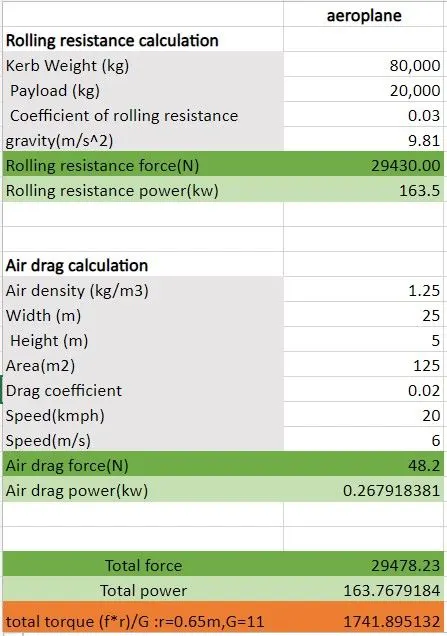
(a)Rolling resistance force-Fr = c*Mr*g
The force to move an airplane on an absolute flat runway with no wind at constant low speed is equal to the rolling resistance between the plane and the tarmac.
where Fr = rolling resistance(N);c = rolling resistance coefficient;Mr = rolling mass(kg); g= acceleration due to gravity
For a320-Mf = Ff/(μ*g) = 4905N/(0.75*9.81) = 666.666kg
For TWIN 6500:-
consider c = 0.01, Mr = 1180kg, g = 9.81m/s^2
Fr = 0.01*1180*9.81
=> Fr = 115.78N = 0.115kN
Mf = Ff/(μ*g) = 115.78/(0.75*9.81) = 15.736kg
(b) Aerodynamic Force: Fad = (1/2)*(ρ*A*Cd*V^2)
For A320:
Fad = 5.131N =0.005131kN
For TWIN 6500:
consider ρ = 1.225kg/m^3; A = 0.70657m^2; Cd = 0.025; V = 1.667m/s
Fad = 0.0360N = 0.000036kN
(c) Inertial Force: F = m(v/t)
where F = force required, m= mass of vehicle, v = velocity of vehicle, t= towing time
For A320:
F = 50000*(1.667/18) = 4630.55N
= 4.63kN
For TWIN 6500:
F = 1180*(1.667/18) = 109.281N
= 0.109kN
Total Traction Power = 9.7591*1.667 = 16.26kW
Q 6: B. Develop the model for the calculated force and power using Simulink.
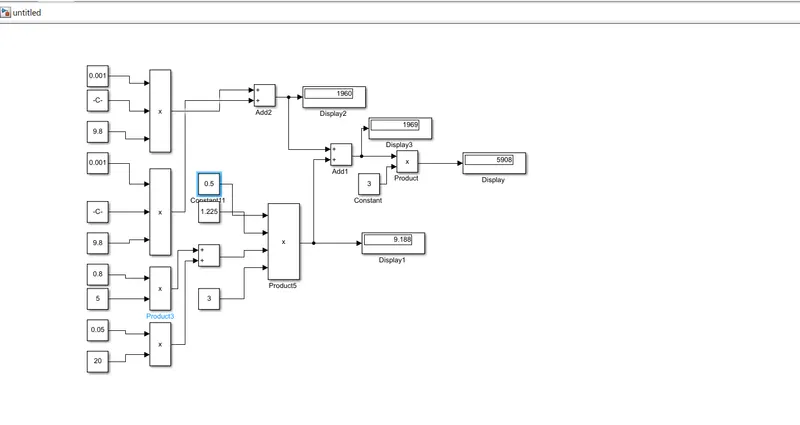
Here I simulated a model to display the traction effort required for towing by connecting simple math blocks(i.e., Constant, product, divide, square, add blocks).
Q 7:
Here I considered Aircraft with mass of 50000kg and towing vehicle(TWIN 6500) of 1180kg for pull/tow of aircraft
Here by we utilised DC7 chopper block in order to produce the required torque for towing puprose.
Here the towing vehicle 4 batteries are arranged in series combination as we are using for high torque application.
So the overall voltage & current will be V = 48v and I = 880Ah respectively.
Now the RPM of the motor is defined by considering its wheel radius and the max towing speed of the vehicle i.e.,
N = 6kmph= 1.667m/s
Rpm of vehicle = N/ r; where N = speed of vehicle, r = radius of vehicle
Rpm = 1.667/0.127m = 125.29=> ω = 125.29rpm.
Radius of the tyre = height of towing vehicle - ground clearance = 344 - 88.5 = 258.5 mm(diameter)
Now to calculate the armature resistance of motor we opt
=> battery 'V' / battery resistance'r' = 48v/4*(3.5ohm) = 3.428A
Armature resistance = V/I = 48v/3.428
= 14.4ohm
Required torque (T) = F.r / G.η ;
F = force at wheels, r = radius of wheel, G = gear ratio=10, η = efficiency
T = (9.7591kN)*(0.127m)/(10*0.87)
= 142.4Nm
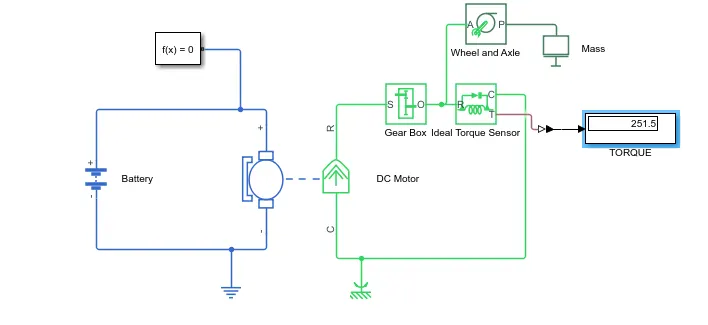
Block diagram of power train
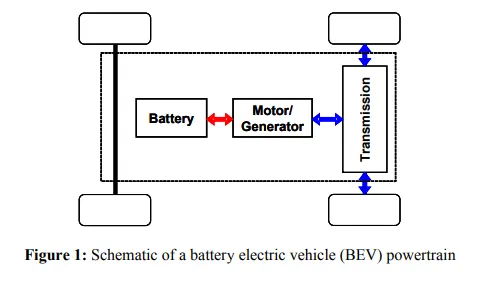
A battery electric vehicle (BEV) is a vehicle that is powered entirely on electric energy, typicallya large electric motor and a large battery pack.
Based on the type of transmission; the use of a
clutch, gearbox, differential, and fixed gearing; and the number of battery packs and motors there
are many variations on the BEV design. However, a basic BEV system is shown in Figure 1.
Q 7B:
conclusion /Result:
We completed part-A,part-B qustions are successfully completed when the outputs are displayed .