Project-1: Powertrain for aircraft in runways
Part A:
1. Search and list out the total weight of various types of aircrafts.
| No. | AIRCRAFT | TOTAL WEIGHT |
| 1 |
Turbo Aircraft:The turboprop aircraft has one or more gas turbine engines. They are both connected to a gearbox which turns the propellers. This is contrary to the pistons or jet engines that are found in the other types of small aircraft. The turboprop airplanes are usually much bigger than the piston aircraft that they resemble and can fly at much higher altitudes of 35,000 feet. They are well suited to flying for 600 to 1000 miles in a single flight, and a much cheaper option to private jets. |
1300kg |
| 2 |
Piston aircraft:These resemble turboprop aircraft but are much smaller. They have one more piston-powered engines that are connected to the propellers. They are also incapable of flying at the high altitudes that the turboprop aircraft fly at (15,000 feet) and can cover much less distance (300 to 400 miles). The typical piston aircraft can seat around one to six people, which seats that are in rows of two. Piston aircraft don’t need long runways to fly and don’t need traffic control towers to navigate. |
1732kg |
| 3 |
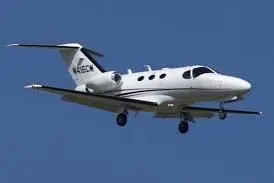
Jet:Jet planes are known for their speed and power as compared to normal aircraft. They achieve maximum efficiency at high speeds and so can even go supersonic (faster than the speed of sound). Jet aircraft can usually go at around Mach 0.8 (609 miles per hour), and fly at altitudes of 49,000 feet.Jets were first developed in 1928 in England but were perfected in Germany in 1936, when Ernst Heinkel led the construction of the first jet plane.
1)Light Jet:Light Jet planes are the most common type of chartered planes amongst business owners. These are sometimes alternatives for those looking for something other than turboprop aircraft while traveling on a budget. These are cost-effective for small distances and light luggage. Most very light jets don’t have toilets on board and most light jets do. 2)Mid-Size Jet:A mid-size jet is a little bigger than a light jet and has much greater speed than one. It is a viable option for short haul or long haul flights. The smaller midsize jets are more efficient than larger ones and are a popular choice due to their low operating costs. The ample luggage compartments, the enclosed apartments, and the full stand up cabins make them an attractive choice for wealthy passengers.Some of the popular mid-size jets include the Hawker Beechcraft 800XP and the Embraer Legacy 500. Other larger jets include the Cessna Citation Sovereign, the Bombardier Learjet 35, and the Bombardier Learjet 60XR. 3)JumboJet:Heavy jets are the ultimate in increased range and greater space. They offer opportunities that are much loftier than their smaller counterparts. They’re for strictly long hauls and long trips. There are also ultra-long-range heavy jets that serve the VIP charters that offer the utmost luxury.These luxury private jets are only for the wealthiest and offer a long line of options such as fine dining, entertainment rooms, etc. Some standard heavy jet models include the Global 6000, the Dassault Falcon 7X, the Gulfstream G550, the Gulfstream GIV, and the Bombardier Challenger 604. 4)Regional-Jet:The Regional Jet is a Narrow Body aircraft that has short range and doesn’t allow for transatlantic or transcontinental flights. It has limited capacity for about 100 passengers and is only suitable for short flights that are destined for airline hubs from smaller airports nearby. They are also called Feederliners and Commuters since they feed into larger commuter hubs. |
5670kg 9000kg-1800kg 137892kg-199581kg 29937kg-49895kg |
| 4 |
Narrow body Aircraft:Narrow body aircraft are also known as single-aisle aircraft since they allow seating in a single row and have a cabin with a diameter of about three to four meters. This allows for up to 6 abreast seating and down to 2-abreast.The highest seating capacity is 295 passengers. This only occurs with the Boeing 757-300. The size of the fuselage in a narrow body airplane allows passengers to stand and walk around, but not with much autonomy. There is also room for lavatories and for flight attendants to attend to the travelers. |
60000kg-850000kg |
| 5 |
Wide body Aircraft:Widebody airliners allow for a lot more room and movement within them as suggested by the name. The cabin diameter in the plane is near five to six meters. The passenger flights are usually pretty comfortable with passengers able to move around comfortably and enough room to accommodate two passenger aisles. There are up to eleven seats abreast.The seating capacity can go up to 850 passengers in a typical wide-body plane and be at a minimum of 200 passengers. The largest wide-body jets are almost 6 meters wide and accommodate even more passengers. There are several facilities inside including cargo holds, lavatories, and flight attendants. |
120000kg-183520kg |
| 6 |
Regional airline:Regional airliners have seating for about a hundred passengers and can be powered by anything from turbofans to turboprops. These airliners are the smaller, non-mainline counterparts to larger aircraft that are operated by major carriers. They are used to feed traffic into large airline hubs and focus cities.These routes are usually suited to the size of these smaller aircraft. Hence, the aircraft can meet the frequency needs and service levels that the customers expect in the marketed product offered by larger airlines.Regional Airliners are also employed when small cities feed passengers to hub airports and vice versa. These are usually employed when a large national or flag carrier requires their services. |
19958kg |
| 7 |
Commuter liners:These are very light aircraft and can only be employed for short hauls. They can carry up to 19 passengers or less and are called commuter aircraft. They are called air taxies, feederliners, etc. These names depend on the size of the aircraft and how they’re marketed. It also depends on the region of the world they are and the seating configurations.For example, the Beechcraft 1900 plane nearly has 19 seats. It is classified as a commuter aircraft, but only under certain circumstances, such as when it is not subject to regulations that are applied to larger aircraft.Other popular Commuterliners include the Fairchild Metro, the Jetstream 31, the Embraer EMB 110, the Cessna Caravan, and the Pilatus PC-12. |
2145kg |
| 8 |
Air bus:Airbus is a European manufacturer of airplanes that is registered in the Netherlands but has its services registered in other countries such as France, Germany, and Spain. It has been operational since 1970 and deals in large planes that can carry a large number of passengers. The first Airbus was the A300, and it was the world’s first twin-aisle aircraft with twin engines. A smaller version of the A300, the A310, came into existence shortly after.Variations of the aircraft exist such as the A318, A319, A350, A220, and the A321. These range from airplanes with 2 engines and 2 aisles, to 4 engines and double deckers with twin aisles. |
575000kg |
| 9 |
Concorde:This is unquestionably one of the most iconic planes in history. It was legendary for its speed, the sound it made while flying over cities and towns, its iconic pointed nose design, and the luxury and extravagance that it stood for. However, it is no longer operational due to its inefficiency and the thondorous sound that it created when it flew over communities. |
78700kg |
| 10 |
Tupolev-Tu 144:The Tupolev, though not as iconic as the Concorde, was one of the two supersonic airplanes that were operational in history. It was created in the Soviet Union, and first flew in 1968. The commercial introduction of the airliner was in November 1977, and it was retired from service almost a year later in 1978. It could fly at a top speed of 1200 miles per hour, almost as fast as the Concorde. It faced similar problems as the Concorde in operation, since it was inefficient and unprofitable.However, it was used by the space program to train pilots of the Buran Spacecraft. It was also used by NASA for supersonic research at their national facilities. |
85000kg |
| 11 |
Military Aircraft:Military aircraft is a term that refers to the fixed wing or rotary wing aircraft that are operated by a legal or insurrectionary armed service. This could include a noncombatant aircraft, a marine or navy aircraft or that belonging to the airforce. This could be meant for surveillance, an attack, or transport. |
249000kg |
| 12 |
Fighter:The primary role of fighter jets is to destroy the enemy aircraft in air to air combat. It is one of the most common aircraft type that is used for combat. These are meant specifically for defensive and offensive missions either to attack the enemy, or engage in defensive strategies. They are capable of carrying a lot of weapons including cannons, guided missiles, bombs, machine guns, and rockets. |
36700kg |
| 13 |
Water bomber:Bombers are usually larger, heavier and less maneuverable than fighters. They are intended to hover above targets and drop their payloads. They can carry bombs, torpedoes, nuclear bombs to deliver using gravity, and they can also carry cruise missiles. The most famous example of a bomber is the B-52 which dropped the first ever nuclear bomb used in a war on Hiroshima in 1945. |
2903kg |
| 14 |
Maritime Patrol:A maritime patrol aircraft is a fixed-wing aircraft for the military that is designed for long term operations over water. It is used to patrol for submarines, ships, and for rescue operations. It began as patrol aircraft that were specifically chosen to patrol over waters, and then it carved out its own niche. Some famous maritime patrol aircraft include Boeing P-8 Poseidon, and Boeing 737-800. |
79700kg |
| 15 |
Multirole Combat:Multi-role combat aircraft have a multi-role ability which can include being fighters and bombers at the same time. Hence they can be utilized for multiple missions if they are chosen. An example is the F-15E Strike Eagle and the F/A-18 Hornet, or the F-35 Lightning II. These planes began being manufactured during the first and second world wars as they served multiple purposes at a time of shortage of supplies and the need for quick thinking and action. |
8000kg |
| 16 |
Transport:Military transport aircraft are used first and foremost for the transportation of troops and to supply food and ammunition for war. They can be used for cargo drops as long as the cargo is attached to pallets, which can be easily loaded and secured for flights. The Cargo can also be discharged from flying aircraft on parachutes. Hence the need for landing can be eliminated. |
31800kg |
2. Is there any difference between ground speed and air speed?
Ans;
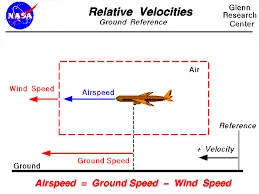
Ground speed :is the horizontal speed of an aircraft relative to the Earth’s surface. It is vital for accurate navigation that the pilot has an estimate of the ground speed that will be achieved during each leg of a flight.An aircraft diving vertically would have a ground speed of zero. Information displayed to passengers through the entertainment system of airline aircraft usually gives the aircraft ground speed rather than airspeed,Ground speed can be determined by the vectorsumof the aircraft's true air and the current wind speed and direction; a hedwind subtracts from the ground speed, while a tailwindadds to it. Winds at other angles to the heading will have components of either headwind or tailwind as well as a crosswind component.
An airspeed :indicates the aircraft's speed relative to the air mass. The air mass may be moving over the ground due to wind, and therefore some additional means to provide position over the ground is required. This might be through navigation using landmarks, radio aided position location, inertial navigation system, or GPS. When more advanced technology is unavailable, an E6B flight computer may be used to calculate ground speed. Ground speed can measure it directly.
Three types of air speeds are
1)Indicated airspeed is an airspeed that is calculated directly off an aircraft’s pitot-static system. It’s the calculated off the aircraft’s dynamic pressure – the difference between its total pressure and static pressure.The dynamic pressure depends not only on the aircraft’s speed, but also on the density of the air it is flying in. As such, the higher the aircraft flies – and the lower the air density as a result – the bigger the difference between indicated and true airspeed is.
2)Calibrated airspeed is indicated airspeed adjusted for a variety of errors.
Just as an example, one of the things it’s adjusted for is the flap position. The reason for that is that at different flap positions, air flows differently around the pitot-static system and affects the indicated airspeed readings.
3)True airspeed is, as has been mentioned numerous times in this article, the actual speed at which an aircraft is moving relative to the air it is traveling in. It’s calibrated airspeed adjusted for the the exact conditions (altitude, air temperature, etc.) that the aircraft is flying in.
- Ground speed is quite different from airspeed. When an aircraft is airborne the ground speed does not determine when the aircraft will stall, and it doesn't influence the aircraft performance such as rate of climb.
- true airspeed is simply the speed at which an aircraft is moving relative to the air it is flying in. As such, it’s also the speed at which the air is flowing around the aircraft’s wings.
- Ground speed, on the other hand, is the aircraft’s speed relative to the ground. One thing that should be noted here is that it’s its horizontal rather than vertical speed – an aircraft climbing completely vertically would have a ground speed of zero.
- In other words, while airspeed is what determines whether there is enough airflow around an aircraft to make it fly, ground speed is what determines how fast an aircraft will get to its destination.
3. Why is it not recommended to use aircraft engine power to move it on the ground at Airport?
Ans:
Majority airliners do have a reverse thrust mechanism that can theoretically allow it to reverse from the bay. This reverse thrust mechanism is used by pilots to slow the aircraft down after it has landed.The reason why reverse thrust cannot be used is that it reverses the direction of jet thrust that can prove itself to be very dangerous on the bay. An aircraft bay is designed in a way that airport building and facilities are located in front of the aircraft.Aircraft engines produce thrust by expelling high temperature and high velocity air behind the aircraft (and thus force the aircraft to move forward by Newton’s law of action and reaction). Reverse thrust mechanism will reverse the thrust and direct it towards the airport building and facilities such as the Passanger boarding bridgeDue to this reason, an aircraft cannot reverse itself and thus requires an aircraft pushback tractor to push it back from the bay.It is clear why an aircraft cannot reverse itself from the bay, however, the question that why can’t aircraft move from one point to another on an airport still remains. The answer lies in economics of jet engines vs. pushback tractor for on-ground movement.An aircraft jet engine is not designed for moving an aircraft on ground at 10-30 km/hr (typical taxiing speed). It is designed for moving an aircraft at 700 km/hr cruising speed. Its fuel efficiency does not follow a linear pattern where lowering the speed would lower the fuel consumption by the same factor. Jet engines are as much fuel inefficient at low speeds as they are fuel efficient at their optimal speeds.On the other hand, an aircraft pushback tractor has a diesel engine, gearbox and chassis especially designed for high torque and low speed operation. Its fuel consumption is far lower than a jet engine in the speed range typical for ground handling.Due to above reason, airlines and ground handling agencies use pushback tractors for on ground maneuvering of the aircraft.
4. How an aircraft is pushed to runway when its ready to take off?
Ans:
Airplanes get towed or pushed by tractors and tugs when jet blast from their engines or prop wash from their propellers will create a hazard to nearby buildings, ground crew, other aircraft & ground handling equipment. Moving aircraft from hangers to aprons does not require pilots if being towed.Depending on the airport, some aircraft movements have to be made with assistance to ensure the safety of all those working in the area or when the need to start the engines is overkill for the maintenance task required.Airplanes get towed when the thrust of their engines creates a significant hazard to the immediate area surrounding them. Planes also get towed for maintenance purposes so pilots are not required to move the aircraft as airplane mechanics are trained in the use of the aircraft brakes while towing.When aircraft go in for maintenance or are not required for flight by far the easiest way is to send a tow vehicle to the gate and have the maintenance team tow the aircraft to the hanger or parking areas. By doing this it allows time freedom for the airline, the airport ground controllers, and the maintenance team as pilots are not required to start the engines.When an aircraft is being towed, trained and authorized maintenance personnel will be on board the aircraft to release and control the brakes to aid the tow vehicle operator.Some airplanes will need to have their APU (Auxillary Power Unit) started by the maintenance personnel so that electrical and hydraulic systems can be operational to operate the braking systems and aircraft lights when towing at night.Some tow vehicles may have the ability to hook up to the aircraft to negate the need to start the APU, making the towing process simpler and save fuel that the APU would burn.Another reason you might see or experience being towed is when your aircraft has to be towed from the taxiway to the gate. This will be due to the tight confines of the terminal gates and the restricted view the pilots have may require a tow to conduct the arrival safely. As airplanes become larger and airports get busier you may see this quite often.Even though pilots follow taxi centerlines, airplanes with very large wingspans could create tight spots and any contact made between two aircraft can cause significant damage, lost time, and potentially huge costs, so a simple tow helps prevent this.Airplanes are pushed back from the gate to prevent reverse thrust from the engines being used. Reverse thrust requires high engine power creating high-speed jet blast. Any debris can damage airport terminals, jetways & ground vehicles. Pilots also cannot see behind making reversing very hazardous.Large airplanes required a lot of force to get moving from a dead stop.
There are two ways to get a plane moving:
- Use the engines to provide reverse thrust
- Use a tow vehicle to push the airplane back
Using the engines to create reverse thrust is accomplished by using deflector scoops on each engine to channel the thrust airflow sidewards and slightly forwards. This is mainly used to aid in slowing the aircraft down during landing but can allow the aircraft to reverse, but it has implications.Older aircraft that had their engines mounted high up on the rear of the aircraft could use reverse thrust to back out from the gate but with most modern airplanes the engines are mounted under the wing placing them close to the ground.When an airplane uses reverse thrust it takes a high power setting to get the aircraft moving initially. This creates a high-speed wind that can easily damage the airport terminal, jetway, surrounding ground vehicles, baggage, and ground personnel and cause debris to be ingested by the engine – not good!For propellor-based aircraft like the Bombardier Dash 8 they can reverse the pitch of the propellor blades forcing the thrust forwards and propelling the airplane backward. Again this creates high-speed debris and airflow that can cause problems on a busy airport apron.By far the most common option is to use a tow vehicle to hook up to that airplane and propel it backward without the airplane’s engines running.by doing this
- Far greater safety because the tow truck operator has a much better view of the entire area surrounding and under the aircraft
- The vehicle driver is in communication with the pilots to ensure aircraft braking can be applied if needed in an emergency
- With the aid of ground personnel who walk under the wingtips, the tow truck driver can precisely position the aircraft and ensure it does not contact any structure,vehicle, person or aircraft
- It allows the airports ground controllers to get aircraft moved with much greater time constraints thus improving the flow around the apron and gate areas
5. Learn about take off power, tyre design, rolling resistance, tyre pressure, brake forces when landing.
ans:
Take off power :
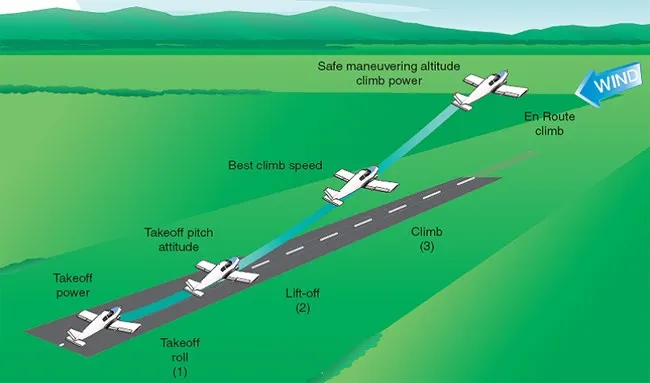
The amount of power that an engine is allowed to produce for a limited period of time for takeoff. The use of takeoff power is usually limited to 5 min for reciprocating engines and up to 2½ min for
gas turbine engines. This may not always be the case. Specifically, with respect to reciprocating engines, it is the brake horsepower developed under standard, seaevel conditions and under the maximum
conditions of the crankshaft rotational speed and the engine manifold pressure approved for the normal takeoff. It is limited in continuous use to the period of time shown in the approved engine
specifications. With respect to gas turbine engines, it is the thrust developed under static conditions at a specified altitude and atmospheric conditions of the rotor shaft rotational speed and gas
temperature approved for the normal takeoff. It is limited in continuous use to the period of time shown in the approved engine specifications.
Tyre Design:
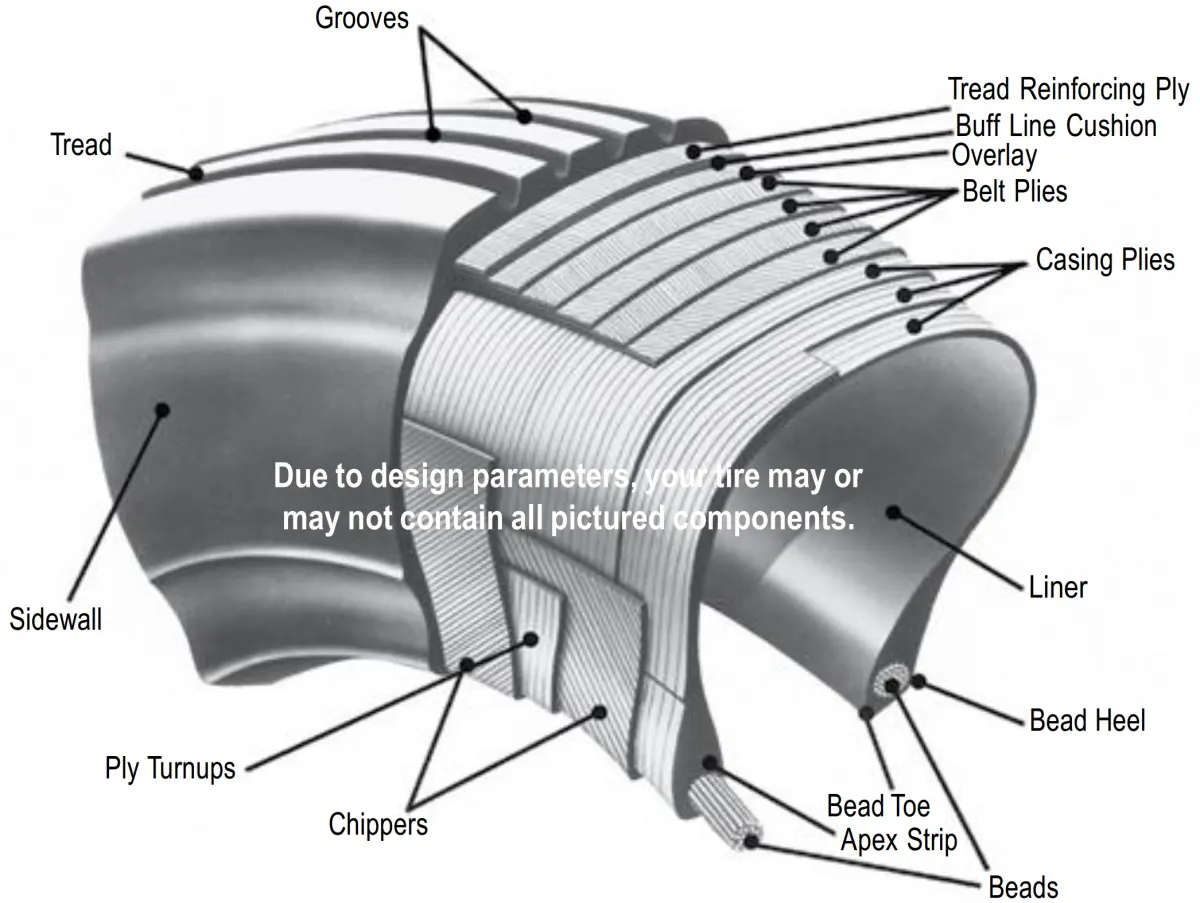
When it comes to safety, tyres are one of the most important components of aircraft. They help to absorb the shock of landing and provide cushioning. It also provides the necessary traction for braking and stopping of an aircraft.An aircraft tyre is designed to withstand extremely heavy loads while landing, take off, taxing, and parking. The number of wheels required for aircraft increases with the weight of the aircraft, as the weight of the aeroplane needs to be distributed more evenly.
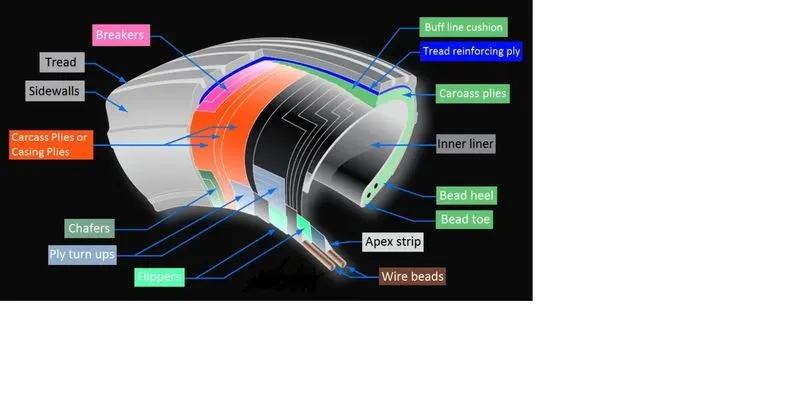
Retreading – Retreading is methods of restoring a worn tyre by renewing the tread area or by renewing the tread area plus one or both sidewalls. Repairs are included in the tyre retreading process.
Ply Rating – Ply Rating is used to identify the maximum recommended load rating and inflation pressure for a specified tyre. It is an index of tyre strength.
Speed Rating – The speed rating is the maximum takeoff speed to which the tyre has been tested.
Skid Depth – Skid depth is the distance between the tread surface and the deepest groove as measured in the mould.
Aircraft tyres must have an approved speed and load rating and have sufficient clearance when retracted through landing gear to allow for tyre growth. Tyre growth is the increase in the size of the tyre due to centrifugal forces at high speed.
Air craft tyre may be radial or bias:Almost all airliners are using Radial tyre. Bias is an older design, and it’s mainly used for road vehicles. Radial tyres have the word RADIAL on the sidewall. Radial tires are more expensive than bias-ply tyres. Radial tires are in demand because of their lower life cycle cost and long term value.
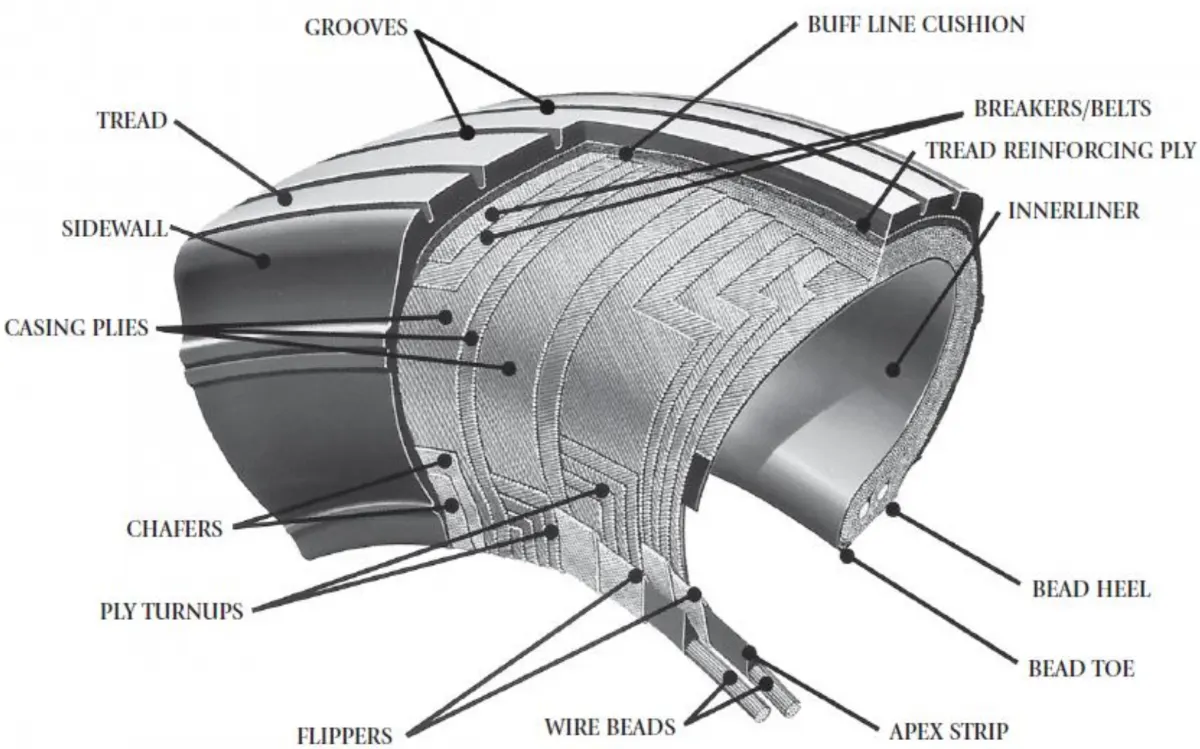
Today’s tyres are conductive. Aircraft tyres are manufactured with tread rubber with conducting compounds to permit earthing of static charges.
In early days when tyres were not sufficiently conductive, aircraft used to have a conductive strip hanging down from the axle of the landing gear. Upon landing, this strip would be the first part of the aircraft to touch the earth. This discharges any static electricity accumulated on the outer surfaces of the aircraft. Now you don’t see them anymore.
Chines are also called deflectors. Chine tyre used on the nose wheel of aircraft, specially fuselage-mounted jet engines. It diverts runway water away from the engine inlets.Chines are circumferential protrusions that are moulded into the sidewall of nose tyres that deflect water sideways to help reduce excess water ingestion into the engines. Tyres may have chines on one or both sides, depending on the number of nose tyres on the aircraft.
Air Craft tyre standard:Each tyre manufacturer produces their own designs of the tyre with different tread patterns, wear patterns, wear limits etc, and in some cases, different names for the same part of the tyre. But all tyres must meet the approved standards before being accepted by the FAA or CAA.All commercial aircraft tyres approved under FAA Requirement Technical Standard Order (TSO) C62. A TSO is a minimum performance standard for specified materials, parts, and appliances used on civil aircraft.
Rolling resistance:Rolling resistance is the combination of forces that work against the forward motion of your vehicle. The weight of the vehicle, gravity and inertia, the amount of friction between the tires and the road surface, and air drag all play a part.
Rolling resistance Force =Mrrmg
Mrr=rolling resistance coefficient
m=mass of the body
g=acceleration due to gravity
Tyre pressure;
Airliner wheels are subjected to the daily punishment of multiple takeoffs and landings. Tires are exposed to temperatures below -40°C during cruise. At touchdown, rubber temperatures can momentarily exceed 200°C.Wheels must handle the most extreme torture in aviation: a maximum weight, high-speed rejected takeoff: A fully loaded aircraft accelerates to takeoff speed, then stops on the remaining runway. Tires withstand extreme heat and stress until the aircraft is safely stopped.A gas station air pump is fine for filling car tires, but large airliner tires must be filled with an inert, dry gas. Nitrogen is inexpensive and perfect for the job.Nitrogen-filled tires reduce the chance of fire or explosion . Tire rubber is flammable and wheel brakes reach very high temperatures. A large tire with 200 psi of atmospheric air would provide a lot of oxidizing power to feed a fire. Nitrogen does not support combustion, greatly reducing the risk of a tire fire or explosion.Large airliners are heavy . A Boeing 767 has a max takeoff weight of over 400,000 pounds. A fully loaded 747-8 weighs nearly a million pounds. All that weight rides on a handful of tires.Automobile tires are pressurized to around 30-40 psi. If large aircraft tires were filled with 35 psi, they would be flat under the weight.Large aircraft tire pressures are ridiculously high. A Boeing 767-300 main wheel is inflated to 205 psi. The high pressure supports the tire’s maximum rated load of 51,000 lbs.An over pressure relief valve is a hollow bolt with a rupture disk inside. The disk ruptures when nitrogen pressure exceeds the design limit.OPRVs are installed on most wheel rims to protect tires from over-pressure or explosion that can occur during nitrogen servicing.On a Boeing 767, the pressure relief valves release pressure at 375-450 psi.Over-pressurization accidents have dismembered and killed maintenance personnel. Aircraft tires are so strong that the wheel rim and bolts fail before the tire, launching shrapnel outward. OPR valves reduce this risk. Maintenance technicians receive special training before they can service wheels.
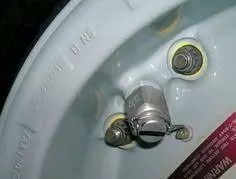
Some aircraft models have TPMS sensors in their wheels. The system is very similar to the TPMS in automobiles. Cockpit displays show tire pressures for all tires equipped with the sensors.The TPMS triggers an alert in the cockpit if a tire has low pressure. The UPS fleet has two fleets with TPMS; the 747 and MD-11.
Brake forces:
Aircraft brakes stop a moving aircraft by converting its kinetic energy to heat energy by means of friction between rotating and stationary discs located in brake assemblies in the wheels.Brakes provide this critical stopping function during landings to enable airplanes to stop within the length of the runway. They also stop aircraft during rejected takeoff events, in which an attempted takeoff is canceled as the airplane is rolling down the runway before it lifts off from the ground due to engine failure, tire blowout, other system failure or direction from air traffic control.Aircraft brakes also prevent motion of the aircraft when it is parked, limit its speed during taxiing and can even help steer the aircraft on the ground by applying different levels of braking force to the left- and right-side brakes.Aircraft brakes work in conjunction with other brake mechanisms such as thrust reversers, air brake and spoilers. Thrust reversers are surfaces that are deployed into the path of the jet blast from the engines to redirect propulsive thrust in a direction that opposes the motion of the aircraft. Air brakes and spoilers are flight control surfaces that create additional aerodynamic drag when deployed into the path of air flowing around the aircraft.Very early aircraft have no brake system to slow and stop the aircraft while it is on the ground. Instead, they rely on slow speeds, soft airfield surfaces, and the friction developed by the tail skid to reduce speed during ground operation. Brake systems designed for aircraft became common after World War I as the speed and complexity of aircraft increased and the use of smooth, paved runway surfaces proliferated. All modern aircraft are equipped with brakes. Their proper functioning is relied upon for safe operation of the aircraft on the ground. The brakes slow the aircraft and stop it in a reasonable amount of time. They hold the aircraft stationary during engine run-up and, in many cases, steer the aircraft during taxi. On most aircraft, each of the main wheels is equipped with a brake unit. The nose wheel or tail wheel does not have a brake.In the typical brake system, mechanical and/or hydraulic linkages to the rudder pedals allow the pilot to control the brakes. Pushing on the top of the right rudder pedal activates the brake on the right main wheel(s) and pushing on the top of the left rudder pedal operates the brake on the left main wheel(s). The basic operation of brakes involves converting the kinetic energy of motion into heat energy through the creation of friction. A great amount of heat is developed and forces on the brake system components are demanding. Proper adjustment, inspection, and maintenance of the brakes is essential for effective operation.Modern aircraft typically use disc brakes. The disc rotates with the turning wheel assembly while a stationary caliper resists the rotation by causing friction against the disc when the brakes are applied. The size, weight, and landing speed of the aircraft influence the design and complexity of the disc brake system. Single, dual, and multiple disc brakes are common types of brakes. Segmented rotor brakes are used on large aircraft. Expander tube brakes are found on older large aircraft. The use of carbon discs is increasing in the modern aviation fleet.
Part B:
6. A. With necessary assumptions, calculate the force and power required to push / pull an aircraft by a towing vehicle.
Ans:
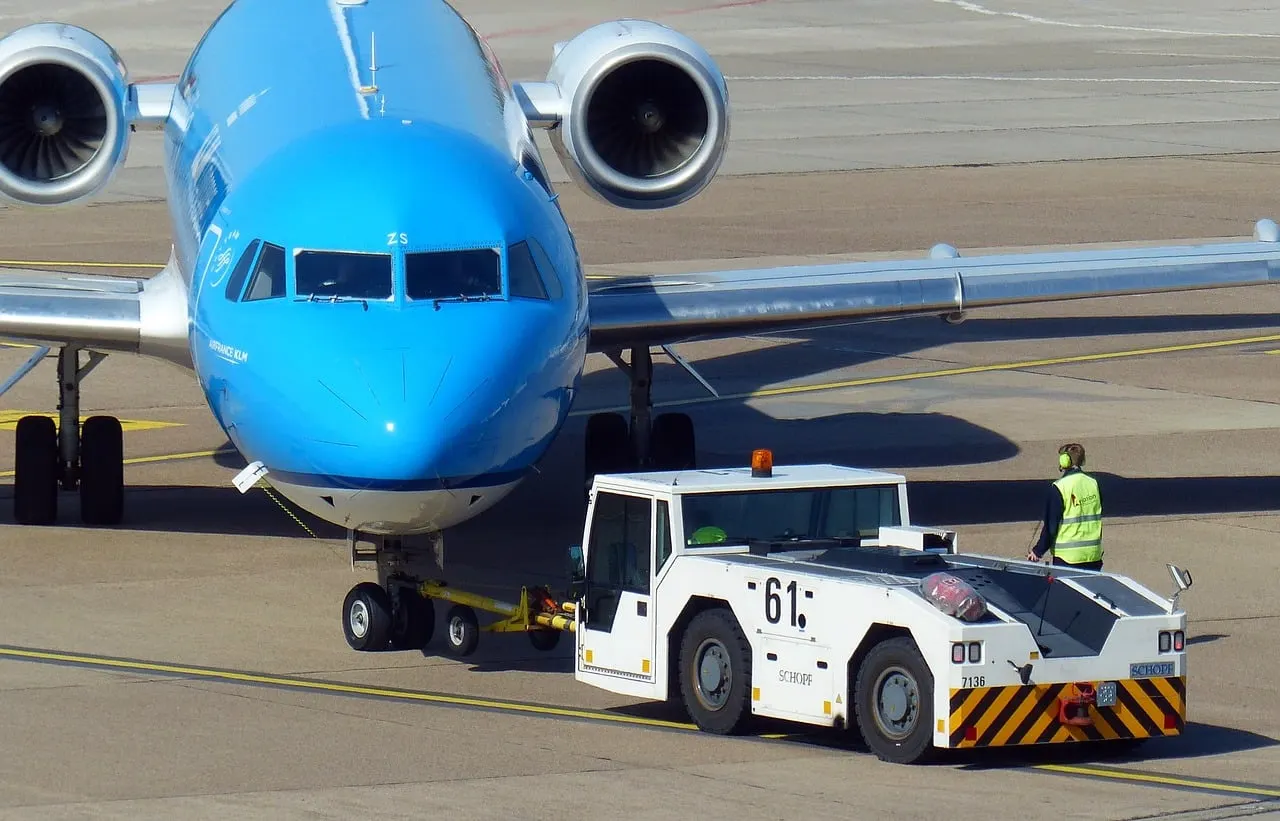
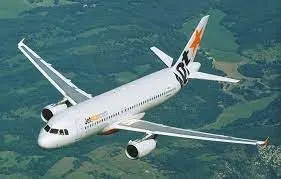
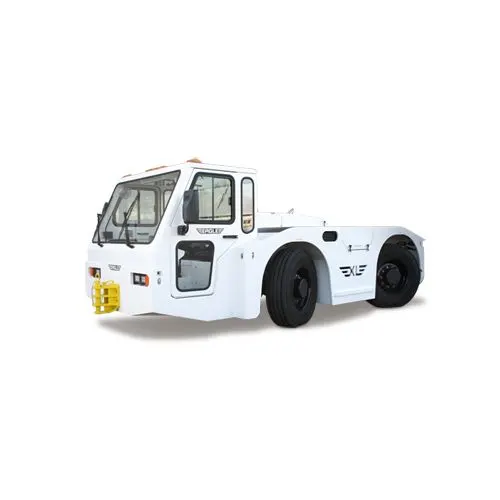
W are taking A320aircraft of 64000kg Eagle XL30 tow vehicle
We know that total tractive force include rolling resistancevforce,aerodynamic drag force,hill climbing force,accelerational force(angular acceleration,linear acceleration)
Take, weight of the air craft=64,000kg
weight of towing vehicle=14514kg
Rolling resistance force,Frr=Mrrmg
Aerodynamic drag force,Fad=0.5ρACdv^2
Acceleration force=ma+IG^2/r^2*a/g
Total Force=Rolling resistance force+Aerodynamic drag force+accelerational force
Total power required=Tractive force*velocity
B. Develop the model for the calculated force and power using Simulink.
Developed the model for calculating tractive force and power as shown below
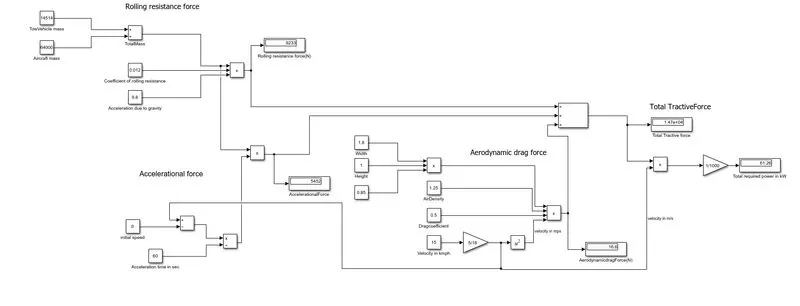
Block used:Constant block,add,divide,product ,gain and display
procedure:connected the block as shown above and run the model for 10 sec
Output:
we got the tractive force and power
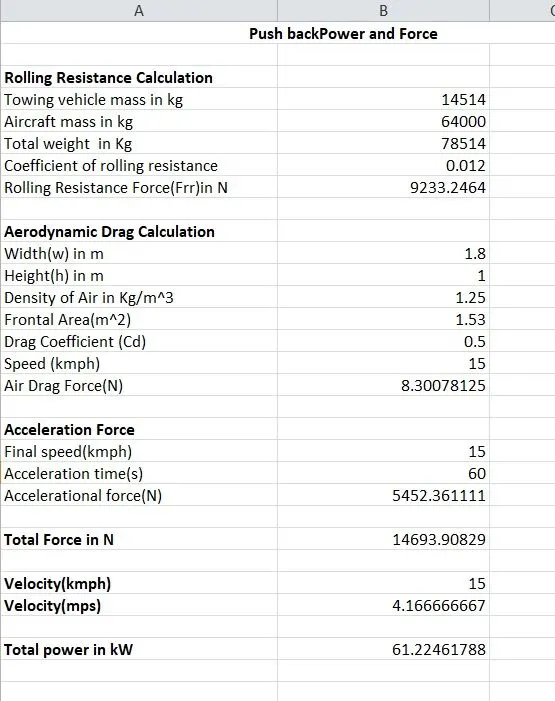
Rolling resistance force:9233N
Aerodynamic drag force:8.3N
Accelerational force:5452N
Total tractive force:14693N
Total tractive power:61.26kW
7. A. Design an electric powertrain with type of motor, it’s power rating, and energy requirement to fulfill aircraft towing application in Simulink. Estimate the duty cycle range to control the aircraft speed from zero to highest. Make all required assumptions. Prepare a table of assumed parameters. Draw a block diagram of powertrain.
(Hint :DC7 Block)
Ans:
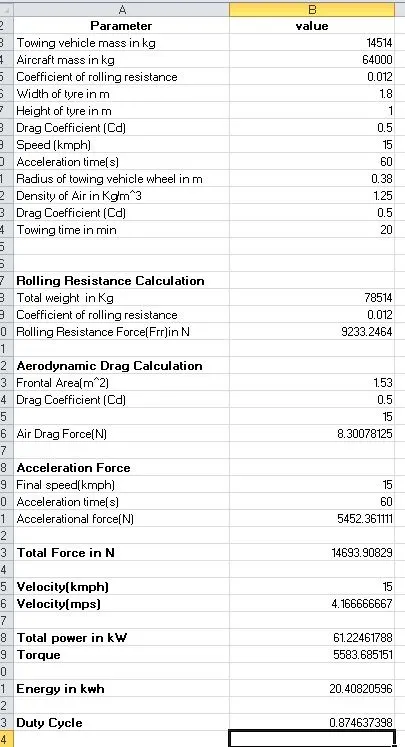
To design an electric power train for towing vehicle we assumed following parameter
| PARAMETER | VALUE |
| Aircraft mass in kg | 64000 |
| Towing vehicle mass in kg | 14514 |
| Air density kg/m^3 | 1.25 |
| Drag coefficient | 0.5 |
| Frontalarea(m^2) | 1.53 |
| Towing velocity in kmph | 15 |
| Radius of Towing wheel in meter | 0.38 |
| Towing time | 20min |
Power required=61.22kW
Torque=Force*Wheel radius=14693*0.38=5583.34Nm
Energy =Power*Time=61.22*(20/60)=20.40kWh
Design of ElectricPowerTrain for Eagle XL30 towing truck
Radius of Wheel=0.38
Total Tractive Force=14693N
Total power in kW=61.2kW
| Motor parameter | value |
| output power | 70kW |
| rpm | 4000 |
| outputvoltage | 800 |
| efficiency | 90% |
Assume gear ratio=8
Transmission efficiency=85%
Motor efficiency=90%
Torque reduired at the wheel=Total tractive force *radius of the wheel
=5583.34Nm
Motor torque=(wheel torque)/(gearratio*transmission efficiency)=5583.34*8*0.85=821Nm
considering motor efficiency :
Total motor torque required=821/0.9=912.25Nm
Total power required at the wheel=61.2kW
Considering transmission efficiency and motor efficiency:
Total power required=61.2kW/(.9*.85)
Energy required=20.40kWh
For this we can use BLDC motor with proper gear system
if we consider battery capacity=70kW
Duty cycle=61.22/70=0.87
so duty cycle range has to be varied from 0 to 87% to control aircraft
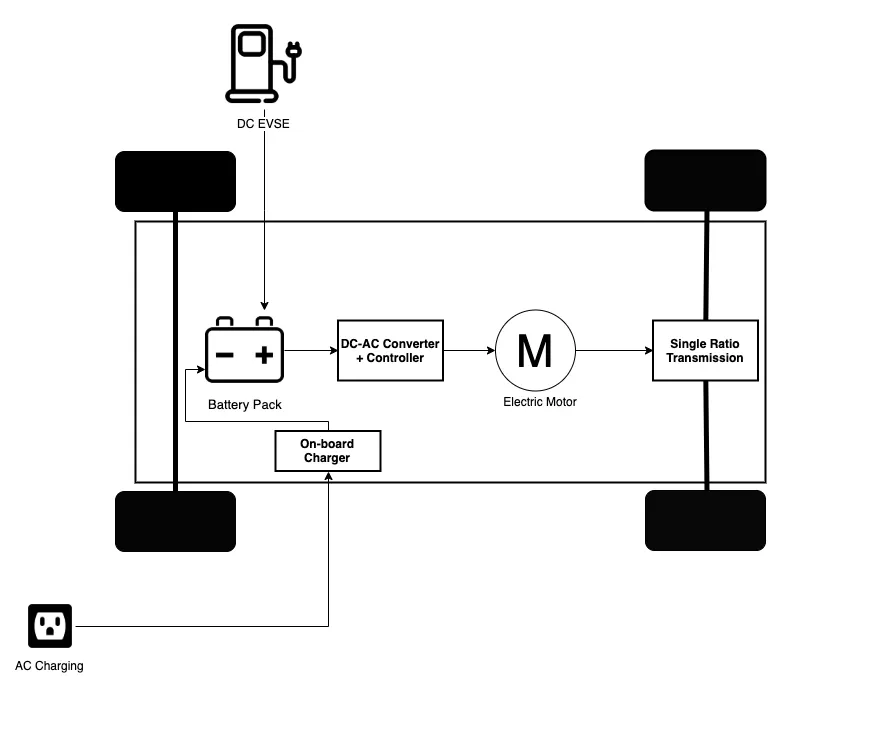
Power Train block diagram is shown below:A powertrain is an assembly of every component that pushes your vehicle forward. Your car's powertrain creates power from the engine and delivers it to the wheels on the ground. The key components of a powertrain include an engine, transmission, driveshaft, axles, and differential.
Simulink model of power tarin is given below
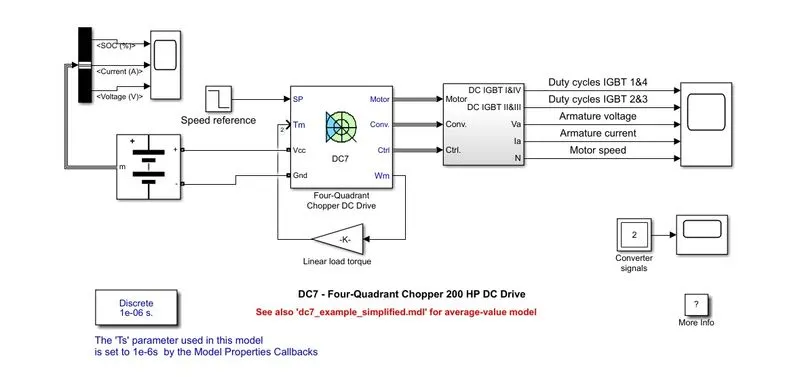
In this dc power from battery is given to a four quadrant chopper dc drive and with this chopper we are controlling the motor speed
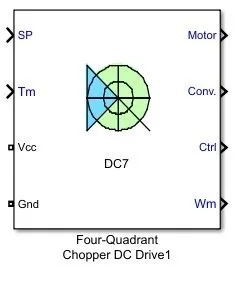
This chopper can operates in all modes and regenerative breaking also possible in this ,in this speed is controlled by current pulses we can achieve required speed of motor by controlling pulses with proper duty cycle.
B. Also, Design the parameters in excel sheet.
We designed parameter in excel sheet as shown below