Project-1: Powertrain for aircraft in runways
Part A:
1. Search and list out the total weight of various types of aircrafts.
What Is Aircraft?
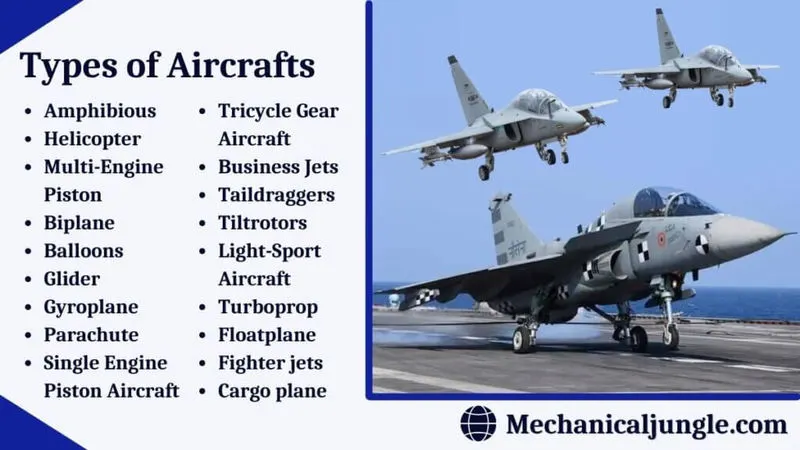
Any vehicle that is built and made to fly in the air is called an aircraft. While the airplane is the most well-known, familiar, and popular type of aircraft that we know of, other aircraft that fly in the air also fall into this category. They all have propellers and wings or machinery to move them through the air; however, they can vary according to size, type, usage, and more.
Classification of Aircrafts:
Before we get to know and study the different types of aircraft, let us understand how these aircraft are classified. In most general terms, there are two types of classifications for aircraft. One is lighter than the aircraft, known as aerostats, and the other is heavier than the aircraft, known as aerodynes. Aerostats (lighter than air): Aerostats are much lighter in weight than or airplanes.
These types of light aircraft typically use buoyancy, like ships, to help them float through the air. Low-density gas such as hydrogen, heliums, or hot air balloons is used to fill the aircraft. This low-density gas is lighter than air, & hence the name.
The most common types of aerostats known to us are hot air balloons & sky lanterns. Aerodyne (Heavier than Air): Alternatively, other aircraft, which are heavier than air or Aerodyne, as we understand it, is much greater in weight & size.
They push the gas or air downwards; Which reactions help in making the aircraft upwards? Since these move through motion in the air, they are called aerodyne. This dynamic lift through the air can happen mostly through mechanisms, as you may already know.
Total Weight Various:-
Weight is a major factor in air plane construction and operation and it demands respect from all pilots and particular diligence by all maintenance personnel. Excessive weight reduces the efficiency of an aircraft and the available safety margin if an emergency condition should arise. The total weight is the maximum take-off weight It is the maximum mass at which the aircraft is certified for take-off dur to structural limits.
MTOW=Maximum take-off weight,MLW=Maximum landing weight,TOR=Take-off run,LR=Landing Run
Maximum Take off Weight:-
The Maximum weight lights for an air craft to begin its take roll is called the maximum take off weight.
Maximum Landing Weight:-
The Maximum landing weight is, as you might imagine, the maximum aircraft weight limit approved for an aircraft to land landing weight can cause structural damage.
Landing run:-
The distance that an aircraft travels in contact with the ground during landing
Take off Run:-
The distance traveled by an airplane from the commencement of take off to the point when it leaves the ground or water.
2) Is there any difference between ground speed and air speed?
Ground Speed:-
Ground speed is the horizontal speed of an air craft relative to the ground. An air craft heading vertically would have a ground speed of zero.
Ground speed can be determined by the vector sum of the aircraft’s true air speed and the current wind speed and direction a headwind subtracts from the ground speed, while a tailwind adds to it. Winds at other angles to the heading will have components of either head wind as well as a cross wind component.
Wind Speed:-
For a reference point picked on the ground, the air moves relative to the reference point at the wind speed. A positive velocity is defined to be in the direction of the aircraft’s motion. we are neglecting cross winds, which occur perpendicular to the flight path but parallel to the ground and down crafts, which occur perpendicular to the ground.
Air Speed:-
The important quantity in the generation of lift is the relative velocity between the object and the air, which is called the air speed. Air Speed cannot be directly measured from a ground position, but must be computed from the ground speed and the wind speed. Air speed is the vector difference between the ground speed and the wind speed.
Air Speed =Ground Speed – Wind speed
- The air craft usually operates on land as well as in air and so we need to study the speed difference in ground and in air.
- The ground speed and the air speed usually change based on the wind component.
- If we consider that is no wind component then, ground speed =air speed
- If the wind is blowing in the tail direction o f the air craft then,(air speed>ground speed)so air speed= ground speed+wind component.
- If the wind is blowing in the head direction o f the air craft then,(air speed
- Also, gravity plays a major role increasing the air crafts speed while it is descending.
- Here the wind speed is the vector difference between ground and air speed. On a particular day, the wind speed may be zero and its equal to the groundspeed.
- If the measured airspeed is greater than the observed ground speed the wind speed becomes positive.
3)Why is it not recommended to use aircraft engine power to move it on the ground at Airport?
Air craft can move using their own engine power all the time on the airport apron and taxiways under the own power to go to words run away and after landing taxi to their assigned gate. But the thrust produced resulting jet blast might cause damage to the terminal building or equipment Engines close to the ground may also blow sand and debris forward and then suck them into the engine, cause damage to the engine. A push back is therefore the preferred method to move the aircraft away from the gate. and also it can reduce the cost for fuel. Taxing can save money.
- Effectively a loss of control can happen, especially during high power engine running. Damage can occur to the aircraft itself, other aircraft near by or to air side structures.
- There is a risk of injury to ground support personnel who may be in relatively close proximity to the aircraft.
- It is a easier for truck driver to see the surroundings better than the pilot sitting in the cockpit with limited window .The pushback driver knows the airport better than the pilot.
4) How an aircraft is pushed to runway when its ready to take off?
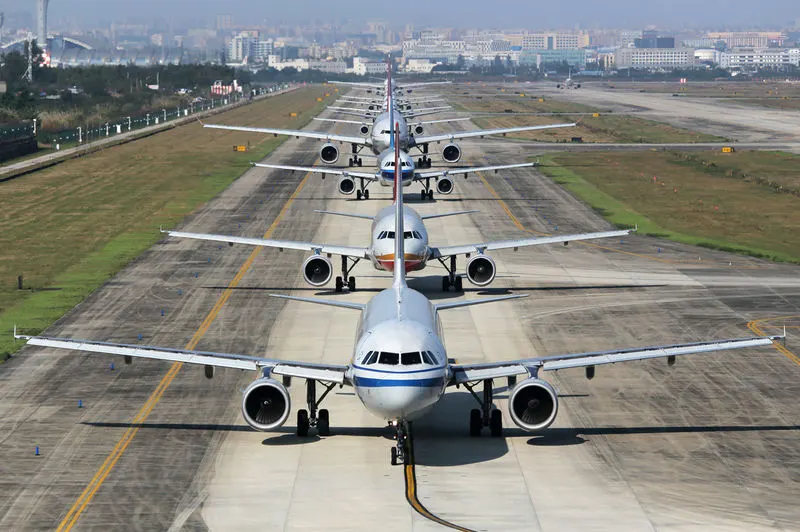
Taxing:
Taxiing is an important process for nearly all airplanes. From small and medium-sized airliners to large wide-body airliners, most airplanes require taxiing while on the runway. Before taking off and after landing, for example, airplanes must taxied
Taxing
Taxiing is simply the process of moving an airplane while it’s on the runway. It occurs after an airplane has landed, and it occurs before an airplane takes off. Airplanes don’t actually fly while on the ground. As a result, the process by which they move on the runway isn’t known as flying; it’s known as taxiing.
How Taxiing Works
There are different ways that airplanes can be taxied. Taxiing is most commonly performed using an airplane’s own propulsion system. For propulsion, most airplanes have either jet engines or propellers. Engaging the propulsion system allows airplanes to move while on the runway.
Some airplanes also have thrust reversers. Thrust reversers live up to their namesake by changing the direction of an airplane’s thrust. In jet-engine airplanes, thrust reversers can assist with taxiing. It essentially allows airplanes to back up while on the runway.
Pilots must still steer airplanes when taxiing them on. Steering is performed using the same control systems as flying an airplane. Pilots can turn the nose wheel or rudder to change the direction in which their airplanes travel while on the runway.
Towing:-
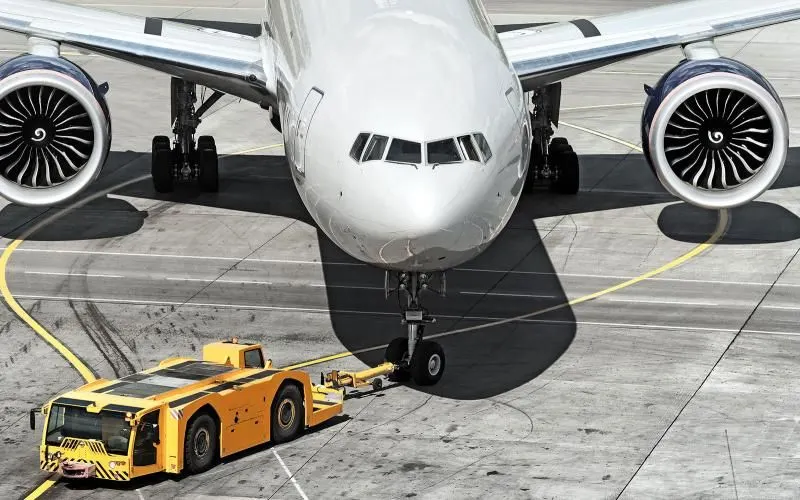
The forward movement of an aircraft, usually with engines off, using the power of a specialised ground vehicle attached to or supporting the nose landing gear. It may occur for the movement of both in service and out of service aircraft. This will affect the promulgation of procedures and the required qualification for those occupying the flight crew seats on the aircraft during the manoeuvre. As part of out of service repositioning of aircraft supervised by maintenance personnel, it may follow the Pushback from a nose-in gate of an empty aircraft with engines off.
PushBack:-
Pushback means the movement of an aircraft from a nose-in parking stand using the power of a specialised ground vehicle attached to or supporting the nose landing gear. It is commonly the second part of a ‘Taxi In Push Out’ (TIPO) procedure at airport terminal gates and will be necessary to depart from all except self manoeuvring parking stands unless the aircraft type is capable of power back and local procedures allow this. Occasionally, a pushback may need to be followed by an engines-running pull forward to a position where local procedures allow aircraft to move forward under their own power, but usually, ground vehicle disconnection will occur after the completion of a pushback.
5)Take off Power:-
The amount of power that an engine is allowed to produce for a limited period of time for takeoff. The use of takeoff power is usually limited to 5 min for reciprocating engines and up to 2½ min for gas turbine engines. This may not always be the case. Specifically, with respect to reciprocating engines, it is the brake horsepower developed under standard, sea-level conditions and under the maximum conditions of the crankshaft rotational speed and the engine manifold pressure approved for the normal take-off. It is limited in continuous use to the period of time shown in the approved engine specifications. With respect to gas turbine engines, it is the thrust developed under static conditions at a specified altitude and atmospheric conditions of the rotor shaft rotational speed and gas temperature approved for the normal takeoff. It is limited in continuous use to the period of time shown in the approved engine specifications.
Tyre Design:-
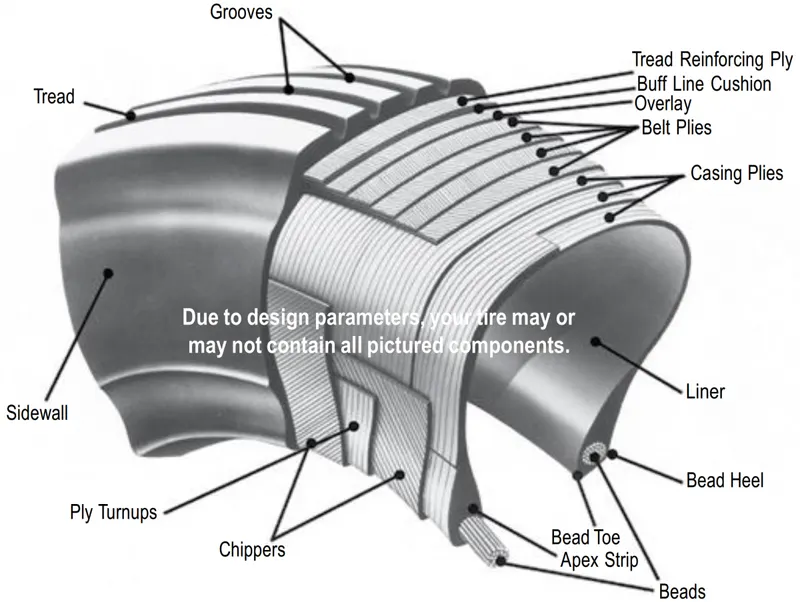
Design and Construction of Aircraft tyre
Carcass plies are used to form the tire. They are sometimes called casing plies. An aircraft tyre is constructed for the purpose it serves.
They support the weight of an aircraft while it is on the ground.
It also provides the necessary traction for braking and stopping of an aeroplane.
Tyre also helps to absorb the shock of landing and provide cushioning the roughness of takeoff, roll-out, and taxi operations.
Unlike an automobile or truck tyre, it does not have to carry a load for a long period of continuous operation. However, an aircraft tyre absorbs the high impact loads of landing, and also it’s operating at high speeds for a short time when required.
Aircraft Tyre Construction
Let’s go through some technical aspects of the tyre.
Retreading – Retreading is methods of restoring a worn tyre by renewing the tread area or by renewing the tread area plus one or both sidewalls. Repairs are included in the tyre retreading process.
Load Rating – Load rating is the maximum permissible load at a specified inflation pressure.
Ply Rating – Ply Rating is used to identify the maximum recommended load rating and inflation pressure for a specified tyre. It is an index of tyre strength.
Speed Rating – The speed rating is the maximum takeoff speed to which the tyre has been tested.
Skid Depth – Skid depth is the distance between the tread surface and the deepest groove as measured in the mould.
Aircraft tyres must have an approved speed and load rating and have sufficient clearance when retracted through landing gear to allow for tyre growth. Tyre growth is the increase in the size of the tyre due to centrifugal forces at high speed.
Tyre Pressure:-
All the things that operators can do to improve the life of the aviation tire, maintaining good pressure maintenance is right at the top of every list. This article briefly explains why pressure maintenance is so important. For more information check out our useful guide! No other tire has to deal with such high load and extreme speed as an airplane tire. So they need a bit more care than the tires on your car or motorcycle.
Think of the role of the tire as holding the air at a pressure that is able to support the load of the airplane. (Nitrogen is normally used in commercial operations instead of air.)
Like all things aviation, the tire is one part of an assembly which can only work as intended when the parts are used as defined by the airframe and component manufacturers.
Under-inflating the tire or allowing the tire to operate when it is under-inflated will prevent the parts working together as intended.
And it will be the tire that will take the strain. It will deflect more and it will wear more. Harsh operating environments will only make it worse.
Some of the wear will be visible – on the tread and some of the wear will be invisible – inside the structure of the aviation tire.
Visible Wear
Under-inflation will increase the footprint of the aviation tire as it rolls on the ground and will increase the build-up of heat. Heat is no friend to tires on airplanes and the tread will wear out more quickly than it should. On multi-tire landing gear the under-inflated tire will force the other, maybe correctly inflated tires, to take a little bit more of the strain. This will wear those other tires a little more.
Invisible Wear
As extra heat caused by under-inflation builds up in the airplane tire the internal components of the tire might start to separate from each other. A catastrophic failure might result. Component separation in the casing of the tyre will prevent retreading and will increase operating costs. All for a bit of pressure maintenance!
24 Hour Pressure Checks
A carefully thought out pressure maintenance routine will increase the life of the tyre and will reduce the number of wheel changes required.
As all tires can allow a small pressure decrease during normal operations (due to the intense nature of their service life) airplane operators should check tire pressure every 24 hours.
Because putting the right pressure in the tires will always take pressure off the airplane operation
Rolling Resistance:-
The Rolling Friction of Several Airplane Wheels and Tires and the Effect of Rolling Friction on Take-Off
This report presents the results of test made to determine the rolling friction of airplane wheels and tires under various conditions of wheel loading, tire inflation pressure, and ground surface. The effect of wheel-bearing type was also investigated. Six pairs of wheels and tires were tested including two sizes of each of the types designated as standard (high pressure), low pressure, and extra low pressure. The results of calculations intended to show the effect of variations in rolling friction on take-off are also presented.
Part B:
6. A. With necessary assumptions, calculate the force and power required to push / pull an aircraft by a towing vehicle.
B. Develop the model for the calculated force and power using Simulink.
Co-efficient of Rolling Resistance Truck μrr1=0.006
Mass of the Truck m1=40000kgs
Gravitational Constant g=9.8m/s^2
Air Density p=1.225kg/m^3
Drag Co-efficient of Truck Cd1=0.8
Frontal Area Truck A1=5 m^2
Velocity=Truck=3 m/s
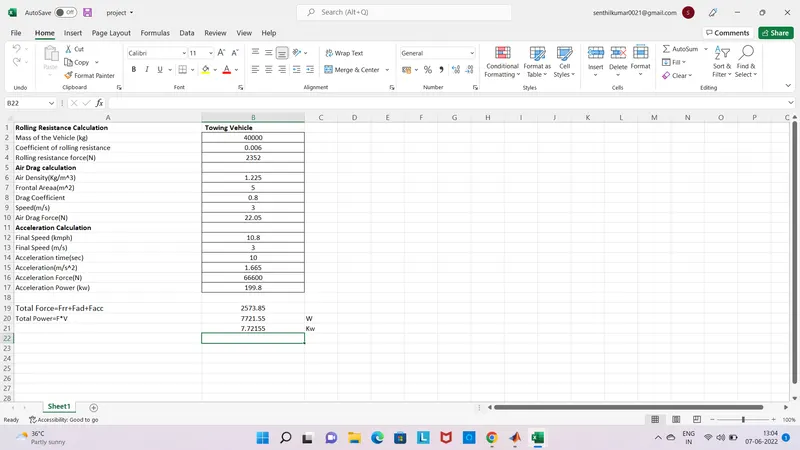
B. Develop the model for the calculated force and power using Simulink.
Aim:- The calculated force and power using Simulink
Parameters:-
Constant
Add
Product
From,Goto
Divide
Display
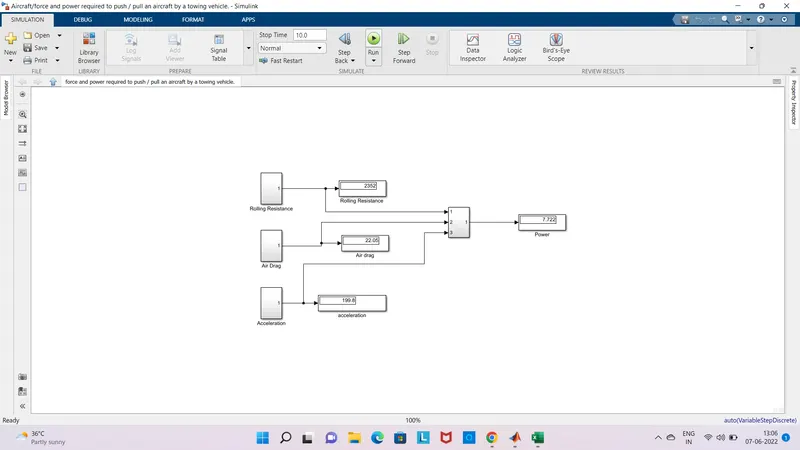
Total Force:-2574N
Total Power 7.722kw
7.A. Design an electric power train with type of motor,it's power rating and energy requirement to fulfill aircraft towing application in simulink.Estimate the duty cycle range to control the aircraft speed from zero to highest make all required assmuptions.prepare a table of assumed parameters.Draw a block diagram of power train.