Project-1: Powertrain for aircraft in runways
AIM:
1. Search and list out the total weight of various types of aircrafts. 2. Is there any difference between ground speed and air speed?
3. Why is it not recommended to use aircraft engine power to move it on the ground at Airport?
4. How an aircraft is pushed to runway when it's ready to take off? 5. Learn about take-off power, tyre design, rolling resistance, tyre pressure, brake forces when landing.
6. With necessary assumptions, calculate the force and power required to push / pull an aircraft by a towing vehicle. 7. Design an electric powertrain with type of motor, its power rating. and energy requirement to fulfil aircraft towing application. Estimate the duty cycle range to control the aircraft speed from zero to highest Make all required assumptions. Prepare a table of assumed parameters, Draw a block diagram of powertrain.
STUDY 1:
List out the total weight of various types of aircrafts,
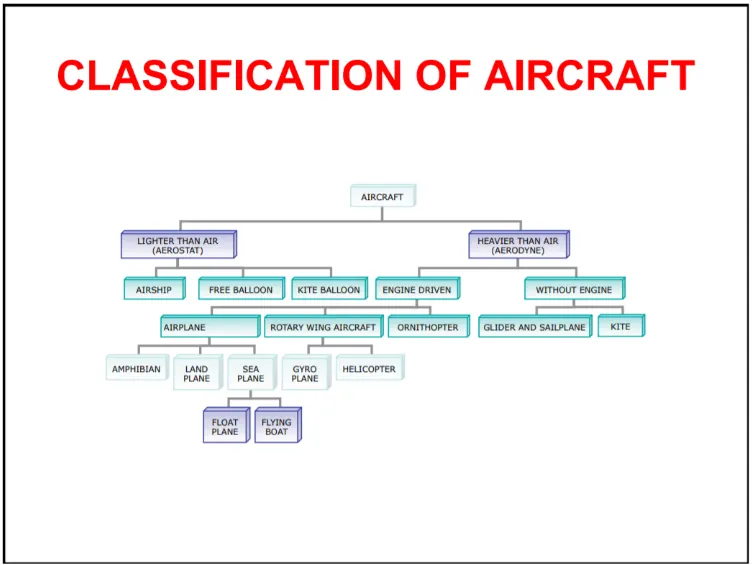
Weight is a major factor in airplane construction and operation, and it demands respect from all pilots and particular diligence by all maintenance personnel Excessive weight reduces the efficiency of an aircraft and the available safety margin if an emergency condition should arise. The total weight is the maximum take-off weight it is the maximum mass at which the aircraft is certified for take-off due to structural or other limits.
Aircraft Total weight
- Average sized airplane
Eg: Boeing 737-800 80,000kg
- Fighter jet
Eg: Boeing F-18 Hornet 113,646kg
- Cargo airplanes
Eg: Airbus A300 600F 165,900kg
- Military Helicopter
Eg: Boeing RAH-66 Comanche 7,791kg
• Mid-size Helicopter
Eg Bell 212 5,080kg
• Turboprop aircraft
Eg Grand Caravan EX 3,994kg
STUDY 2:
Difference between ground speed and air speed
The importance of the relative velocity explains why, even today, airplanes take oft and land on different runways on different days Airplanes always try to take off and land into the wind. This requires a lower ground spned, which means the plane can take off or land in the shortest distance travelled along the ground Since runways have a licect length you want to get airborne as fast as possible on take off and stopped as soon as possible on landing in the old days, a large wind sock was hung near the runway for pilots to see which way the wind was blowing to adjust their take-off and landing directions Now mechanical or electronic devices provide the information that is goed to the cockpit it is important to understand the relationships of wind speed to ground speed and artpott
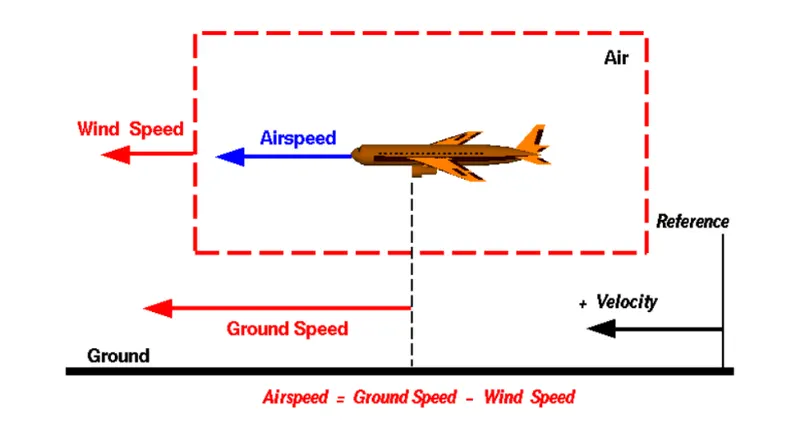
Wind Speed: A reference point picked on the ground, the air moves relative to the reference point at wind speed. The wind speed is a vector quantity and has both magnitude and direction. The wind blowing against the motion of aircraft is called Head wind. We have defined a positive velocity to be in direction of the aircraft motion, head wind is a negative velocity. When the wind blows in the same direction of aircraft motion it is called Tail wind. The sign of wind is now positiye
Ground Speed: The speed on which the aircraft moves relative to the
point on the ground. Ground speed is a vector quantity
Air Speed: The relative velocity between the object and the air is called air speed. Airspeed cannot be directly measured from a ground position, but must be computed from the ground speed and the wind speed Airspeed is the vector difference between the ground speed and the wind speed
To visualize these speed an animation by NASA is attached below https://www.grc.nasa.gov/www/k
12/airplane/Animation/airrol/anrelw.html
STUDY 3:
Why is it not recommended to use aircraft engine power to move it on the ground at Airport?
Aircraft can move using their own engine power all the time on the airport apron and taxiways under their own power to go towards runways and after landing taxi to their assigned gate. But the thrust produced resulting jet blast might cause damage to the terminal building or equipment. Engines close to the ground may also blow sand and debris forward and then suck them into the engine, causing damage to the engine. A pushback is therefore the preferred method to move the aircraft away from the gate. And also it can reduce the cost for fuel. Taxing can save money.
STUDY 4:
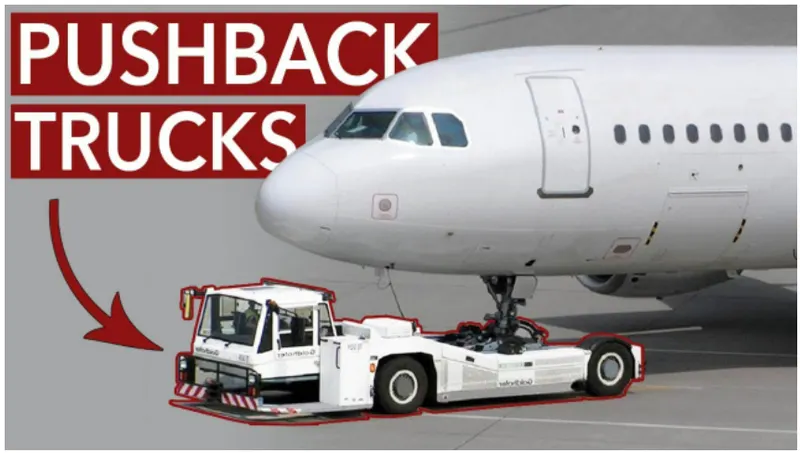
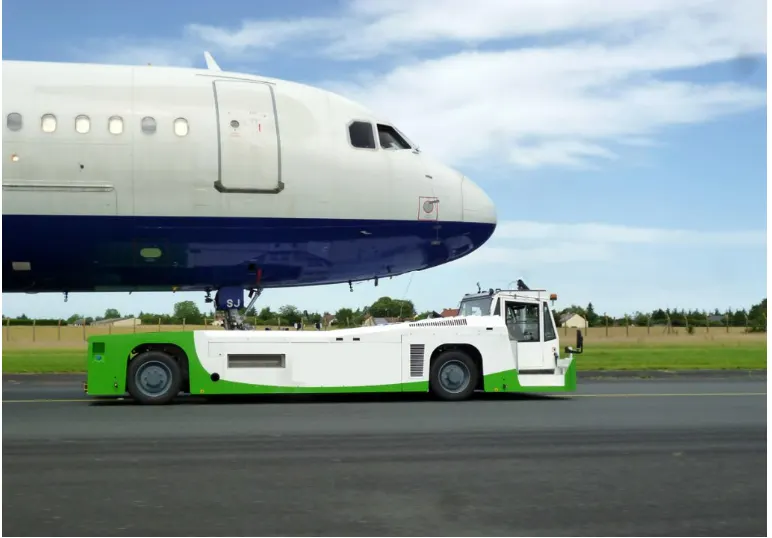
How an aircraft is pushed to runway when it's ready to take off? Pushback is when an aircraft is pushed backwards away from the airport gate by vehicles called tugs or tractors Closer to departure, an aircraft tug will park right in front of the nose wheel. The tug might be directly attached to the plane's nose gear with a tow bar, or could be a wheel-lift tug These tugs cradle the nose gear, then lift it up before moving the plane That gives the tug driver control over the plane's direction during pushback New taxi technologies are appearing, like pilot-controlled tugs, and electric motors mounted to the plane's landing gear Both promise to save fuel, and reduce oirport naise
STUDY 5:
Learn about take-off power, tyre design, rolling resistance, tyre pressure, brake forces when landing.
Take-off Power:
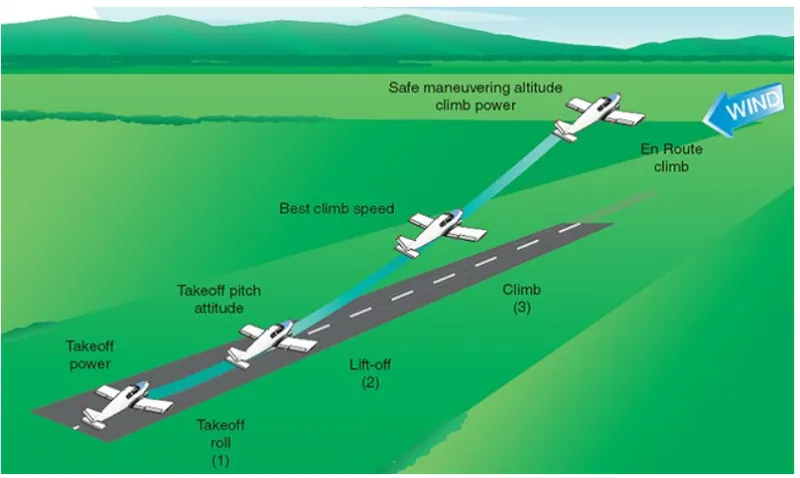
A normal take-off is one in which the airplane is headed into the wind, or the wind is very light. Also, the take-off surface is firm and of sufficient length to permit the airplane to gradually accelerate to normal lift-off and climb-out speed, and there are no obstructions along the take-off path.
There are four forces which helps the aircraft to take off:
Wings keep an airplane up in the air, but the four forces are what make
this happen. They push a plane up, down, forward, or slow it down. Thrust: It is a force that moves an aircraft in the direction of the motion. It is created with a propeller, jet engine, or rocket Air is pulled in and then pushed out in an opposite direction. One example is a household fan.
Drag: It is the force that acts opposite to the direction of motion. It tends to slow an object Drag is caused by friction and differences in air pressure. An example is putting your hand out of a moving car window and feeling it pull back
Weight: It is the force caused by gravity.
Lift it is the force that holds an airplane in the air. The wings create most of the lift used by airplanes
Therefore Take-off power Total force Velocity
For smaller aircrafts like turboprop we use full power for take-off. Because they don't have take-off power settings. But in aircrafts like Jet plane they have take-off power settings so they don't have to take the full power.
Rolling Resistance:
The friction between aircraft and runway will be proportional to the
normal force exerted by the aircraft on the runway
The normal force will be the difference between Weight (W) of aircraft and Lift (L), the friction coefficient (p) will be typically of a magnitude of 0.02 for a standard tarmac runway
Tyre Design:
Designing aircraft tires is a very intense undertaking. The tyre is designed to withstand heavy loads while landing, take off, taxing, and parking. The number of wheels required for aircraft increases with the weight of the aircraft, as the weight of the aeroplane needs to be distributed more evenly. Aircraft tyre generates more heat during landing Aircraft drags the wheel until they match the rotational velocity of wheels Due to this heat generates. However, each tyre is built to operate within a given temperature. This is known as vulcanization temperature. During the course of its use if the tire is heated past the vulcanization temperature, it begins to wear gradually
Two types of tires are used in aircraft applications: bias-ply tires and radial tires
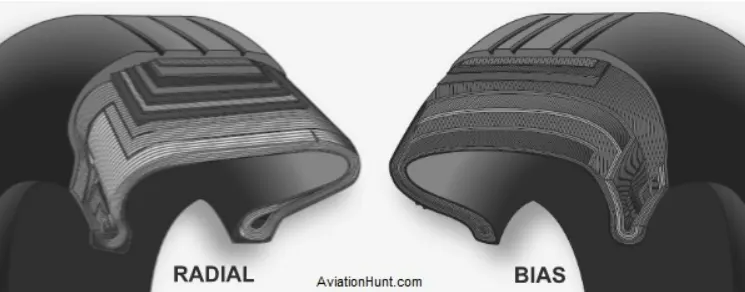
Radial Tyre: It has fibre strands of the ply fabric oriented at 90° to the direction of rotation and the tyre sidewall. This restricts flexibility bidirectional and the flexibility of the sidewall while it strengthens the tyre to carry heavy loads. Due to their unique construction most radial tyres are resistant to penetration ad cuts. Due to stiffer tread they distribute weight evenly. Thus provide greater traction. Radial tyres have an advantage in term of reducing the heat better
Bias-ply Tyre: It has the fabric bias oriented with and across the direction of rotation and the sidewall. Since fabric can stretch on the bias, the tyre is flexible and can absorb loads. Tyre strength is obtained by adding plies. It is cut resistant is sidewall area. These tyres do not offer as much smoothness in terms of riding quality.
Tyre Pressure:
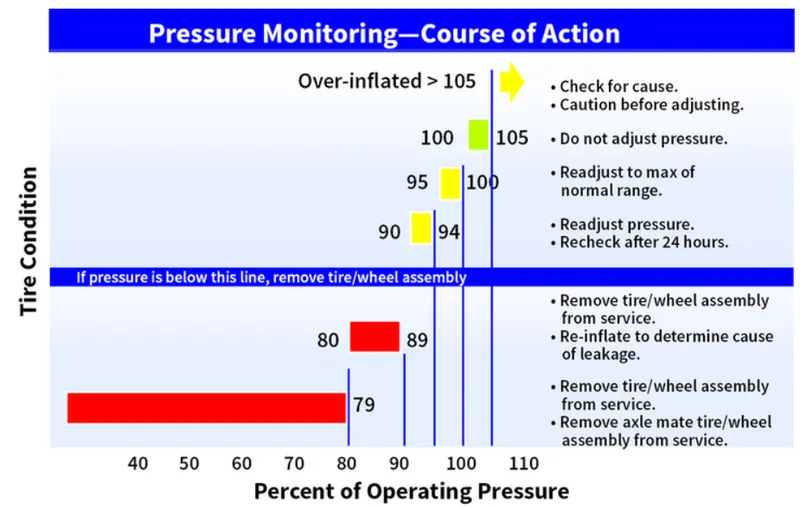
Aircraft tyres operate at such high extremes of pressure, load, and speed, their care and service is critically important. The most important action an operator can take to prevent tyre-related events is to maintain proper tire inflation pressure Failure to keep aircraft tires properly inflated can lead to very serious consequences One relatively easy way to help avoid those consequences is to check tire pressures regularly and service them as necessary Following these three actions is a good way to make sure you get the most value out of your tires and contribute to the safe operation of your aircraft
1. Perform daily pressure checks with a calibrated gauge. 2 Target the highest pressure recommended in the AMM or POH
(105 percent of operating pressure)
3. Compensate for ambient temperature changes.
Brake forces when landing:
Stopping a 200-tonne aircraft landing at 180 mph requires a lot of braking force. To do this either hydraulic brakes or electric brakes are used Hydraulic brakes put on weight of the aircraft. Now a days designers use electric brake system. The aim of brake force when landing is to minimise the distance.
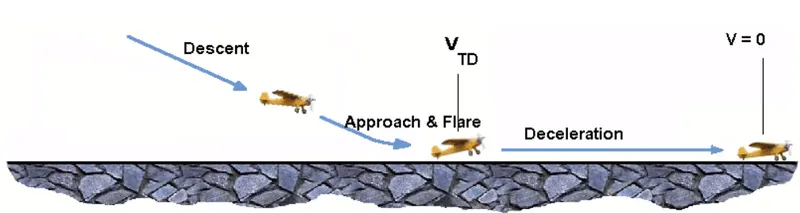
The touch down velocity should be approximately the stall speed of the aircraft in landing configuration. This will be achieved by increasing the drag and decelerate the aircraft to minimum flying speed. The deceleration on the landing roll from to will be accomplished by braking and reverse thrust. This can be solved by the average acceleration approach that was used to estimate the take off roll.
`dv/dt = (-t-d-f)/m`
Where,
T-Thrust of propulsion system pushing aircraft along runway.
D-Aerodynamic Drag of vehicle resisting the aircraft motion.
F-Rolling resistance friction due to the contact of wheels or
skids on the ground.
m-Mass
So the brake force= Mass Deceleration
STUDY 6:
Calculate the force and power required to push / pull an aircraft by a
The force to move an airplane on an absolute flat runway with no wind at constant low speed is equal to the rolling resistance between the plane and the tarmac
The rolling resistance for the air plane can be calculated as
`Fr = c.mr.ag`
If the mass of a plane is 40000 kg and the rolling coefficient between the aircraft wheel and the tarmac is 0.02
The force required to overcome the rolling resistance
calculated as
Fr= 0.02 (40000 kg) (9.81 m/s2)
= 7848 N
This force can be delivered by a pulling truck. Enough weight of truck is required to create friction forces against the tarmac that equals the plane rolling resistance
The friction force for the puller can be calculated to
F-W
(2)
Where,
can be
Fy frictional force (N, lb)
μ = friction coefficient
W weight (N, lbf)
my friction mass (kg).
Required Mass for Pulling Truck
The friction coefficient between a pulling truck rubber wheels and dry tarmac is 0.9
Since pulling trucks are connected to air crafts nose wheels close to tarmac we simplify the calculation of required truck mass to my=(7848 N) / (09 (981 m/s2)) 889 kg
Power required for pulling truck with a velocity of 5m/s
P= F V
Where
F = total force acting on truck (N)
V = velocity of truck (m/s)
P=78485
- 39.24 kW
STUDY 7:
Design an electric powertrain with type of motor, its power rating, and energy requirement to fulfil circraft towing application. Estimate the duty cycle range to control the aircraft speed from zero to highest Make all required assumptions. Prepare a table of assumed parameters Draw a block diagram of powertrain.
According to study 6 for towing an aircraft of 40000kg needed 39 24kW of power
So we are selecting a motor which can take this much power Vehicle Drive 58.3 HP/45.5 kW, 80 VDC Traction Motor mated with Auburn/Dana 44 Differential
Aurburn is a high performance series differential which deliver more traction and faster engagement for controlled power transfer and lightning fast reaction to changing load
Power Output= 45,5 kW
Batteries Two 40 VDC industrial, 595 AMP-HR Batteries (6 hr rate).
Wired in series Power Input =VI
=80*595= 47.6 kW
Efficiency of motor = Power Output / Power Input
= 45.5/47.6
= 95.58 %
Energy required for towing aircraft= Required Power * Time
Assume taxing time = 15min Therefore Energy required= 39.24 0.25
= 9.81 kWh
Assume highest speed =25 kmph
Duty cycle = Average power/ Peak power
= 39 24/45.5
= 86 %
Assumed parameters:
Rajat Ramteke, [16-05-2022 01:24]
SI.NO Parameters Values
1 Weight of Aircraft 40000 kg
2 Rolling Coefficient of Aircraft 0.02
3 Rolling Coefficient of Trastor 0.9
4 Highest speed 25 kmph
5 Taxing time 15min
6 Battery Voltage 40 V (2nos)
7 Motor Power 45.5 kW
8 Terminal Voltage 80 V
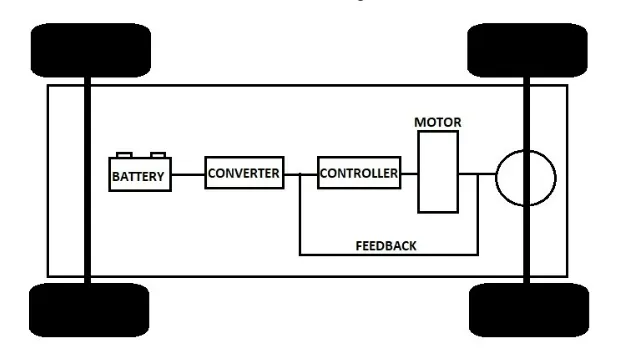
Battery It stores the energy needed to run the vehicle. It provides the direct current (DC) output.
Converter DC-DC converter converts the DC current and supply to the motor
Controller: Between converter and motor we use a controller. It is used to manage the power transfer. It controls the frequency and magnitude of voltage supplied to electric motor in order to manage the speed and acceleration.
Electric Motor Converts electrical energy to mechanical energy and deliver it into wheels via a transmission. Many EVS use motor generators that can perform regeneration as well.
Differential: To give power to both wheels from motor a differential is
used, which also helps in fast engagement in controlled power.