Project-1: Powertrain for aircraft in runways
Study 1 - Search and list out the total weight of various types of aircrafts.
Aircraft is a machine, which is capable of flying by gaining support from air. Generally, aircraft classified into two categories – lighter than air, heavier than air. According to international civil aviation organisation aircraft can be classified into three categories, according to take-off mass – Heavy -Aircraft types of 136000kg or more, Medium- aircraft with weight between 136000 Kg and 7000Kg, Light-aircraft types of 7000Kg or less. The following table contains aircraft category and weight –
|
Aircraft Name |
MTOW(Kg) |
ICAO Category |
|
Antonov An-225 |
640,000 |
Heavy |
|
Stratolaunch Model 351 |
589,670 |
Heavy |
|
Airbus A380-800 |
575,000 |
Super (Exclusive) |
|
Boeing 747-8F |
447,700 |
Heavy |
|
Boeing 747-8 |
443,613 |
Heavy |
|
Boeing 747-8ER |
412,770 |
Heavy |
|
Lockheed L-1011-200 |
231,300 |
Heavy |
|
Douglas DC-8-32 |
140,000 |
Medium |
|
Douglas DC-8-51 |
125,000 |
Medium |
|
Boeing 757-300 |
124,000 |
Medium |
|
Airbus A319 |
64,000 |
Medium |
|
Learjet 75 |
9,752 |
Medium |
|
Embraer Phenom 100 |
4,800 |
Light |
|
Mil-Mi 12 |
105,000 |
Medium |
|
Boeing CH-47D/F Chinook |
22,680 |
Medium |
|
Bell Boeing V-22 Osprey |
27,445 |
Medium |
|
Bell XV-15 |
6009 |
Light |
MTOW – Maximum take-off weight
Study 2 - Is there any difference between ground speed and air speed?
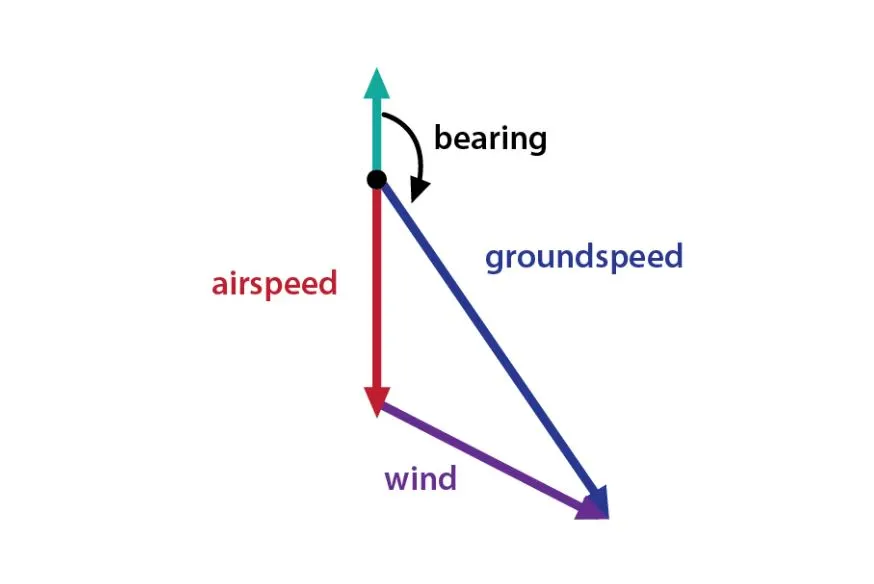
Ground speed is the speed of airplane relative to the surface of earth whereas airspeed is speed of aircraft relative to air, it is flying in. So, we say on a perfectly still day the airspeed is equal to ground speed. But if the wind is blowing, the aircraft speed will be less or high according to direction of wind.
Study 3 - Why is it not recommended to use aircraft engine power to move it on the ground at Airport?
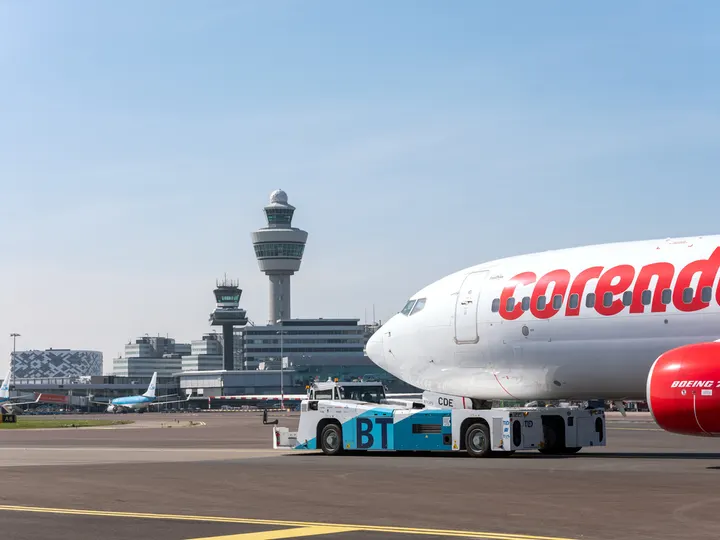
Taxiing is the controlled movement of an airplane on the ground. For movement on the ground the aircraft uses its own power, however since the aircraft cannot move backwords on its own, pushback trucks are used for it, but it is not recommended to move an aircraft with its engine power because high trust of engine blows foreign objects which can damage other grounded aircraft. Second thing we can consider fuel consumption, aircraft consumes a lots of fuel, so it is prudent to use trucks for taxiing.
Study 4 - How an aircraft is pushed to runway when its ready to take off?
For the convenience of passengers boarding and safety measures, aeroplane is parked near the terminal building. After passenger boarding is over, the aeroplane is required to go taxi track at the back of it. A motorized vehicle is used to push the aircraft back from its gate. The aircraft then moves under its own power along the taxiways. Push back occurs only the pilot has clearance to do so otherwise, airplane is ready to take off.
Study 5 - Learn about take off power, tyre design, rolling resistance, tyre pressure, brake forces when landing.
Take off power – Take off is the phase of flight in which aircraft goes through a transition from moving along the ground to flying in the air, usually on a runway and power used this phase called take off power. Usually the engines are run at full power during take-off, but large transport category aircraft may use reduced power for take-off to reduce maintenance cost, reduce noise emission and prolong engine life.
Tyre Design –
An aircraft must withstand a wide range of operational conditions. When on the ground, it must support the weight of the aircraft, during taxied it must provide cushioned ride. At take off the tire structure must be able endure forces generated at higher angular velocities. Landing requires the tire to absorb impact shocks.
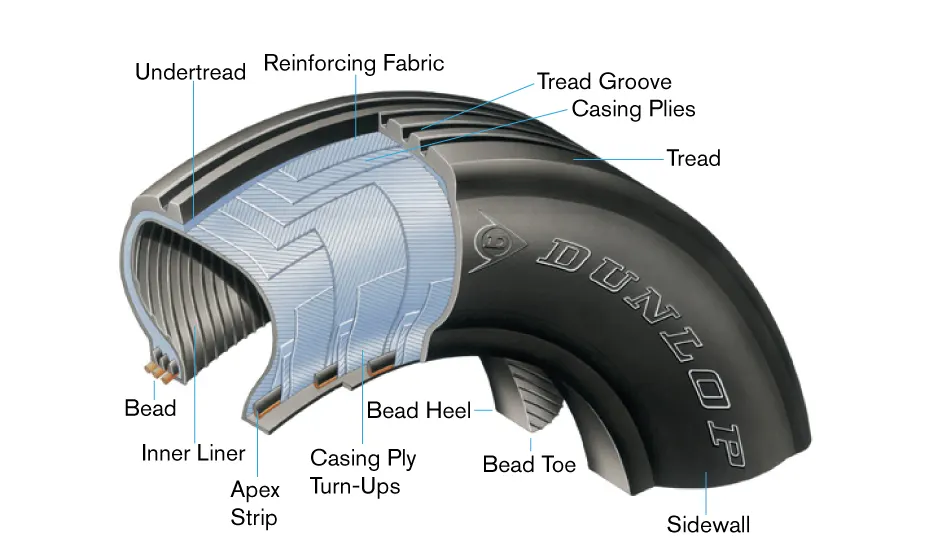
These extreme demands require a tire which is highly engineered and precisely manufactured. For these tires are made of various rubber, fabric and steed material. To meet the aircraft demands tire are manufactured in two distinct categories Bias tire and radial tire.
Bias Tyre construction – these types of tire consist casing plies which is running diagonally at approximate right angle to one another. The number of plies and the angles at which they are laid decide strength and load capacity.
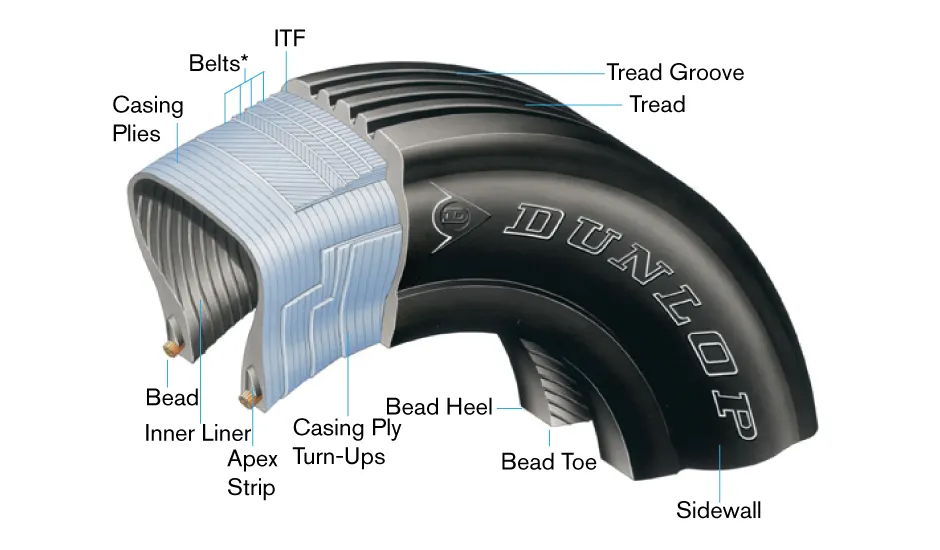
Radial Tyre construction – these are the most modern design of aircraft tyres.in radial tires each carcass ply is laid at right angle. The radial tire offers more landings per thread and lighter weight than a bias tire.
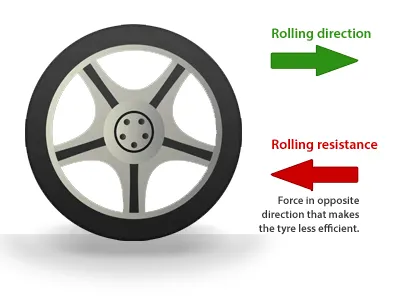
Rolling resistance – when a tire rolls on the road, mechanical energy is converted to heat as a result of phenomenon referred to as rolling resistance. The term rolling resistance is often mistaken as a measure of the force opposing tire rotation, when instead is actually a measure of rolling energy loss.i in another terms we can say rolling resistance is the effort required to keep a given tire rolling. Its magnitude depends on the tire used, roughness of road, inflation pressure, load and speed. Generally rolling resistance is given by following formula –
`F = C_r*R`
`F` = Rolling resistance force
`C_r` = rolling resistance coefficient
`R` = Normal force between surface and tire
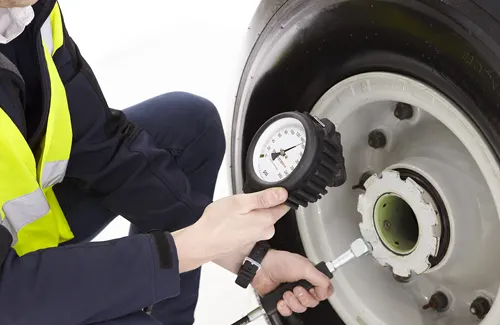
Tyre Pressure – Aircraft tires are subjected to huge temperature variation, have much higher pressures and have much narrower tolerances on what is and isn’t acceptable wear, so adequate tire pressure is necessary to get desirable performance. Aircraft tire generally operate at high pressure up to 200psi or airlines and even higher for business jets.
Brake forces when landing – to stop aircraft thrust reversers, spoilers and beta props are used as brakes. Ground spoilers increases aerodynamic drag, which contributes to aircraft deceleration and it generates lift dumping which increase load on wheel, it increases wheel brakes efficiency.Another force is working while braking, which is friction force, working between the tires and runway surfaces. Braking force is equal to the load applied on the wheel multiplied by the runway friction coefficient.
Study 6 - With necessary assumptions, calculate the force and power required to push / pull an aircraft by a towing vehicle.
The force required to push/pull aircraft is given by following formula –
Total resistance force = Rolling resistance force (Towing vehicle + Airplane) + Aerodynamic drag force (towing vehicle)
Rolling resistance force(`F_r`) = `C_r*m*g`
`C_r`= rolling resistance coefficient
`m` = weight of vehicle
`g` = gravitational acceleration
Rolling resistance force –
Rolling resistance coefficient for towing vehicle = 0.01
Weight of towing vehicle = 10100Kg
`F_r`(Towing vehicle) = `C_r*m*g`
= `0.008*10100*9.81`
`F_r` = 762.64 N
Rolling resistance coefficient for aircraft = 0.006
Weight of aircraft = 125,000Kg
`F_r`(Aircraft) = `C_r*m*g`
= `0.006*125000*9.81`
`F_r` = 7357.5 N
Air drag force (`F_a`) = `0.5*rho*a*v^2*c_d`
`rho` = 1.225 Kg/m^3
Frontal area(`a`) = 15m^2
Flow Velocity(`v`) = 18Kmph = 5 m/s
Air drag coefficient (`c_d`) = 0.82
`F_a` (Towing vehicle) = `0.5*1.225*15*(5) ^2*0.82`
`F_a`= 188.34 N
Total force required to pull an aircraft = Total resistance force + Air drag force
= `792.64 +7357.5+188.34`
= 8338.48 = 8.34KN
Power required to push an aircraft = total force * speed
= `8.34*5.555`
= 46.32 KW
Study 7 - Design an electric powertrain with type of motor, it’s power rating, and energy requirement to fulfill aircraft towing application. Estimate the duty cycle range to control the aircraft speed from zero to highest. Make all required assumptions. Prepare a table of assumed parameters. Draw a block diagram of powertrain.
Block diagram of EV powertrain -
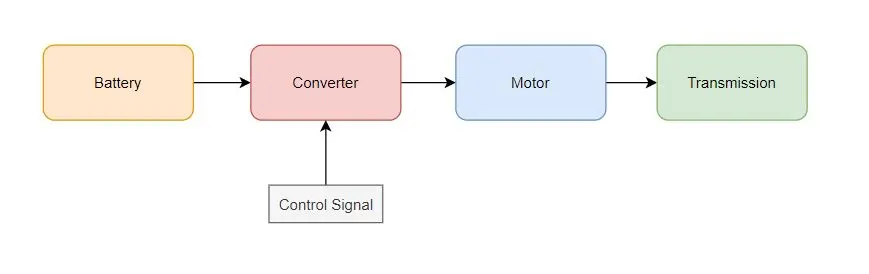
Electric powertrain includes battery pack, convertor, controller, motor and axle. We need to assume parameters in order to design ev powertrain, as follows –
|
Parameters |
Values |
|
Weight of aircraft |
125,000 Kg |
|
Weight of towing vehicle |
10100 Kg |
|
Air density |
1.225 Kg/m^3 |
|
Frontal area of towing vehicle |
15 m^2 |
|
Relative flow velocity |
5 m/s |
|
Air drag coefficient |
0.82 |
|
Rolling resistance coefficient for aircraft |
0.006 |
|
Rolling resistance coefficient for towing vehicle |
0.008 |
|
Radius of tyre |
0.508m |
|
Gear ratio |
1:8 |
Power required to pull an aircraft on the basis of above parameters is 46.32KW. Torque at wheel level can be calculated according to below formula –
Torque at wheel level (T_w) = Force*radius
T = `8338.48*0.508` = 4235.94 Nm
Torque output by motor (`T_m`) = Torque output at wheel level(`T_w`)/(gear ratio*efficiency)
`T_m` = `4235.94/(8*0.90)`= 588.32 Nm
Required output power of motor = power required to pull aircraft/ efficiency
= `46.32/0.90`
= 51.46 KW
So we need a motor which can provide 589Nm torque and 52KW minimum output power. We are choosing elaphe’s M1100 heavy duty motor, to fulfil towing vehicle demand. Motor has following specifications –
Nominal voltage - 370V
Peak torque – 1100Nm
Continuous torque – 700Nm
Top speed – up to 1160 rpm
Peak power – 90KW
Continuous power – 70KW
Duty cycle = required power/motor rated power
= `51.46/70`
= 0.735
Duty cycle = 73.5 %
Duty cycle range for zero to highest speed = 0 to 73.5%
Lets towing truck takes 15minute to toe aircraft -
Energy = power*time
= `51.46*15*10` = 7719 KJ = 2.144 KWh
Battery required to supply 2.144 KWh energy to run motor at rated power, with a duty cycle, for towing.