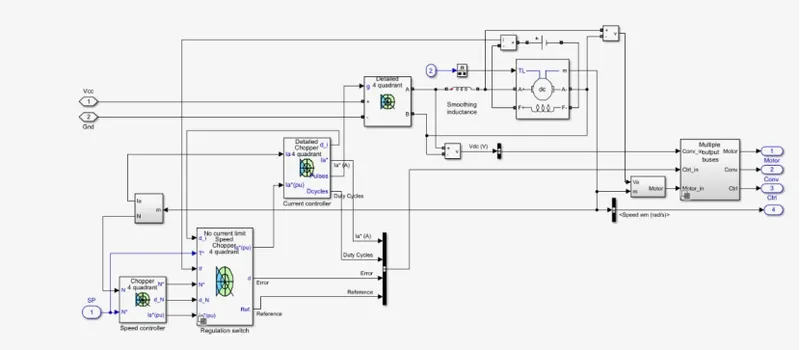
Project-1: Powertrain for aircraft in runways
1.)There are 6 categories -- (A) Heavy, (B) B757, (C) Large Jet, (D) Large Commuter, (E) Medium, (F) Small.
(A) Heavy: Any aircraft weighing more than 255,000 lb such as the Boeing 747 or the Airbus A340;
(B) B757: Boeing 757 all series;
(C) Large Jet: Large jet aircraft weighing more than 41,000 and up to 255,000 lbs such as the Boeing 737 or the Airbus A320;
(D) Large Commuter: Large non-jet aircraft (such as the Aerospatiale/Alenia ATR-42 and the Saab SF 340), and small regional jets (such as the Bombardier Canadair Regional Jet), weighing more than 41,000 and up to 255,000 lbs;
(E) Medium: Small commuter aircraft including business jets weighing more than 12,500 up to 41,000 lbs such as the Embraer 120 or the Learjet 35; and
(F) Small: Small, single, or twin-engine aircraft weighing 12,500 lbs or less such as the Beech 90 or the Cessna Caravan.
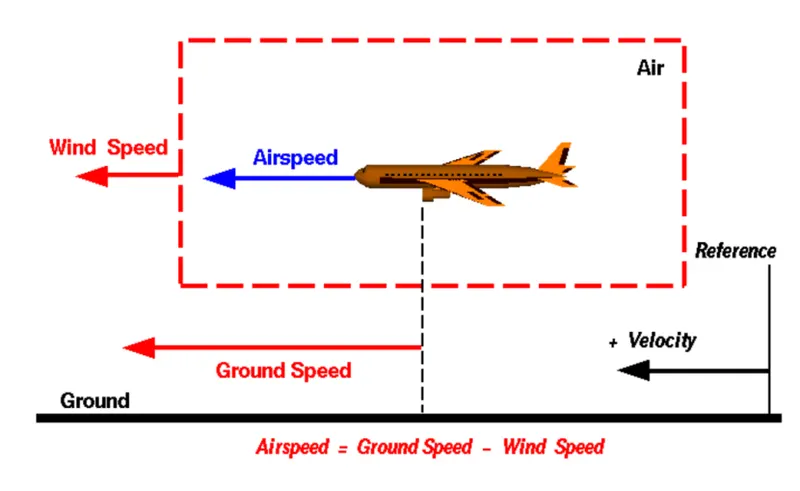
2.) Ground speed is how fast an airplane is traveling, relative to a fixed point on the ground. Think of it this way: Ground speed is how fast an airplane's shadow would move across the land. If there's a strong wind pushing an aircraft, that's reflected in the ground speed.
Airspeed, in contrast, is how fast an airplane is really flying strictly under its own power, which is calculated by subtracting the wind speed from the ground speed.
On a perfectly still day, the airspeed is equal to the ground speed. But if the wind is blowing in the same direction that the aircraft is moving, the airspeed will be less than the ground speed.
3.) Aircraft don’t have powered wheels, and hence cannot move in reverse (let alone forward by themselves). Imagine a tiny jet strapped to one of your toy cars; that’s essentially how airplanes work on the ground! They go where the engines push them towards. (Note: There is a mechanism known as reverse thrusters, which allow the engine air flow to be pushed towards the front, but that is highly risky maneuver and is only used to reduce speed immediately after landing.)
Another reason to push back an aircraft to a safe area, is for safety reasons. The engines produce tremendous thrust from the exit, and an immense vacuum from the front; enough to suck in people, small vehicles, ground equipment etc.
Hence it is a common procedure to start the engines once it is cleared away from the terminal area and lined up on a taxiway (roads that lead to the runway).
- ) Aircraft are usually ‘pushed’ by ground vehicles known as tow vehicles.These tow trucks will only help move the aircraft to an area where the pilots can safely switch on the engines, not the runway!
- )Aircraft tires are amazing when you think about it. The typical airliner tire can handle a 38-ton load. It can meet the ground 500 times before needing a re-tread, a refresh it can take on seven times in its life.
The key to their remarkable durability is maximizing the air pressure.
The high-flying rubber is typically inflated to 200 psi, roughly six times what you put in an automobile tire, and the tires on an F-16 fighter are pumped to 320 psi. “It's really pressurized air that's so strong,” The tires themselves aren't terribly large--- a Boeing 737 rides on 27x7.75 R15 rubber. In English, that means it is 27 inches in diameter, 7.75 inches wide, and wrapped around a 15-inch wheel. The sidewalls aren't terribly thick, and the strength of the tire lies in the cords embedded below the tread, Bartholomew says. They're typically nylon, and more recently a variety known as aramid. Each layer of the casing contributes to its load bearing and air pressure resisting capabilities. Of course, tires can fail, especially when under-inflated or overloaded. Treads can come off and casings can blow out.
In the first moments after a plane touches down, the tires are skidding, not rolling. The airplane essentially drags them down the runway until their rotational velocity matches the velocity of the
Airplanes rely on a braking system to safely land on runways. At cruising altitude, most commercial airplanes fly at a speed of roughly 500 to 600 mph. When landing, however, they must reduce their speed. A typical 747, for instance, has a landing speed of about 160 to 170 mph. And upon touching the runway, airplanes must quickly brake until they come to a complete stop
6.
The Towing vehicle considering here is the TMX-50, and the aircraft is the Airbus A320.
TMX-50
Weight: 7.8 tons
Maximum Speed: 25 km/h [16 mph]
Length: 2.21 meter
Width: 2.06 meter
Airbus A320
Wing area=124 m2
MTOW=68 t (150,000 lb)
Drag coefficient for Aircraft 0.024
Note: Aircraft use their wing area as the reference area when computing cd.
Rolling resistance Force
Coefficient of Rolling resistanc=0.0035
Frr=Frr(Towing vehicle)+Frr(Aircraft)
Frr=2.59 kN
Drag Force
Fd=0.5*0.024*6.94^2*124*1.225=87.7926
Fd=0.5*1.225*6.94^2*4.55*0.5=67.110
Total Drag force= 158.3056
Total Force required =2.758kN
Power required by the motor is=Total force* Velcoity
=19.15kW
In a car, the power-train is a system that generates and delivers the power to the wheels to make the car move.
- Battery Pack
- DC - AC Converter / DC_DC Converter
- Electric Motor
7 It is now possible to calculate the energy required by the vehicle or supplied by the battery
Towing can be completed in 15 minutes. So, energy = power*time
Energy = 4.7875 kWh
Torque = Force* radius=1.1032 kN-m
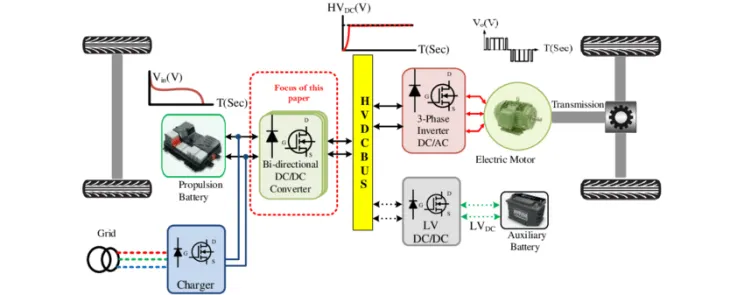
The corresponding DC-DC Converter can be replaced by a battery of desired capacity, depending on the application.