Project-1: Powertrain for aircraft in runways
Part A:
1. Search and list out the total weight of various types of aircrafts.
Introduction to Aircraft :
An aircraft is a vehicle or machine that is able to fly by gaining support from the air. It counters the force of gravity by using either static lift or by using the dynamic lift of an airfoil.
The aircraft gross weight is the total aircraft weight at any moment during the flight or ground operation. During releasing its brakes, the aricraft gross weight is equal to takeoff weight. But during flight, the aircrafts gross weight is referred to in-flight weight.
Types of aircrafts and its weight :
a) Glider
A glider is a fixed-wing aircraft that is supported in flight by the dynamic reaction of the air against its lifting surfaces, and whose free flight does not depend on an engine. Weight of the Glider planes are in between 110Kg to 200Kg.
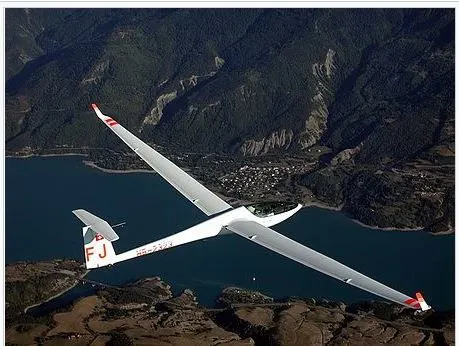
Figure 1
Figure 1 shows the glider aircraft
b) Powered lift
A powered lift aircraft takes off and land vertically under engine power but uses a fixed wing for horizontal flight. Weight of the Powered lift aircraft is 200kg-1600kg
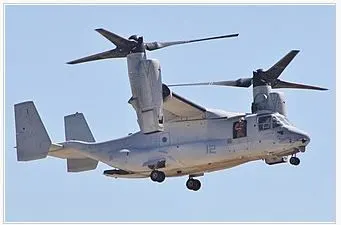
Figure 2
Figure 2 shows the powered lift aricraft
c) Fighter aircraft:
Fighter aircraft are fixed wing military aircraft designed primarily for air-to-air combat. In military conflict, the role of fighter aircraft is to establish air superiority of the battlespace.
Weight of the fighter aircraft is 13500 Kg
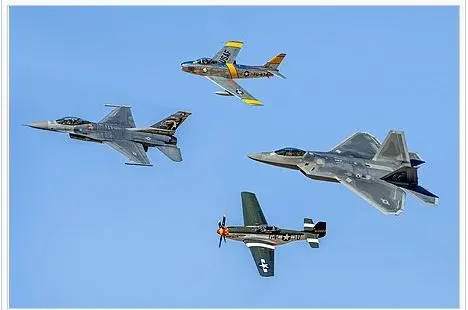
Figure 3
Figure 3 shows the Fighter aircraft
d) Military transporter planes:
A military transport aircraft, military cargo aircraft or airlifter is a military owned transport aircrafts used to support military operations by airlifting troops and military equipment. The weight is greater than 150000 kgs
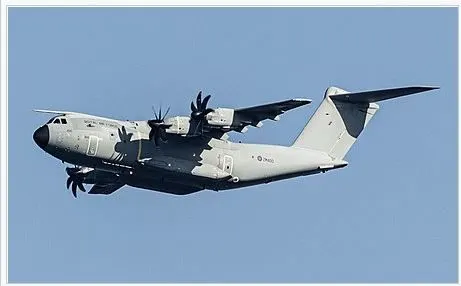
Figure 4
Figure 4 shows the one of the model of military transport planes
e) Aerobatic aircraft:
An aerobatic aircraft is an aerodyne used in aerobatics, both for flight exhibitions and aerobatic competitions. The weright of aerobatic aircrafts is greater than 1000 kgs.
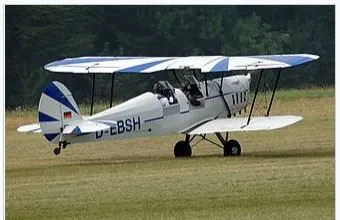
Figure 5
Figure 5 shows the Aerobatic aircraft.
2. Is there any difference between ground speed and air speed?
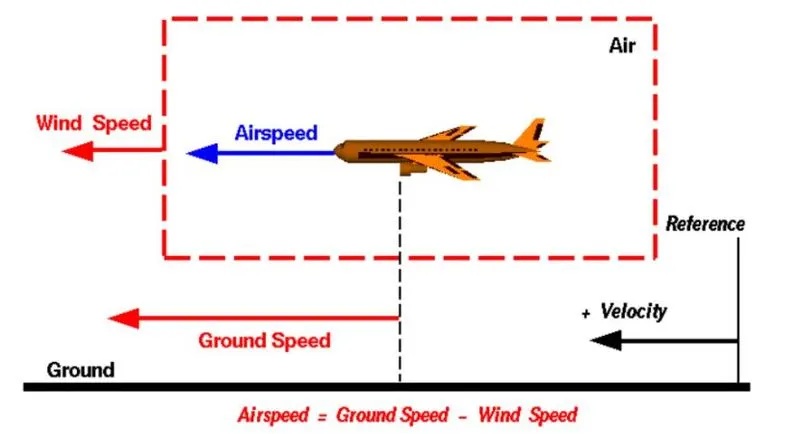
Figure 6
Figure 6 shows the ground and wind speed of a aircraft
Ground Speed :
a) It is the airplanes speed relative to the surface of the earth
b) It determines how fast an aircraft will get to its destination.
c) It is simply the sum of airspeed and wind speed.
Air speed :
a) Speed relative to the air it is flying in.
b) It determines whether there is enough airflow around an aircraft to make it fly.
c) Independent of ground speed
3. Why is it not recommended to use aircraft engine power to move it on the ground at Airport?
The forward movement of an aircraft, usually with engines off, using the power of a specialised ground vehicle attached to or supporting the nose landing gear. It may occur for the movement of both in service and out of service aircraft. This will affect the promulgation of procedures and the required qualification for those occupying the flight crew seats on the aircraft during the manoeuvre. As part of out of service repositioning of aircraft supervised by maintenance personnel, it may follow the pushback from a nose-in gate of an empty aircraft with engines off.
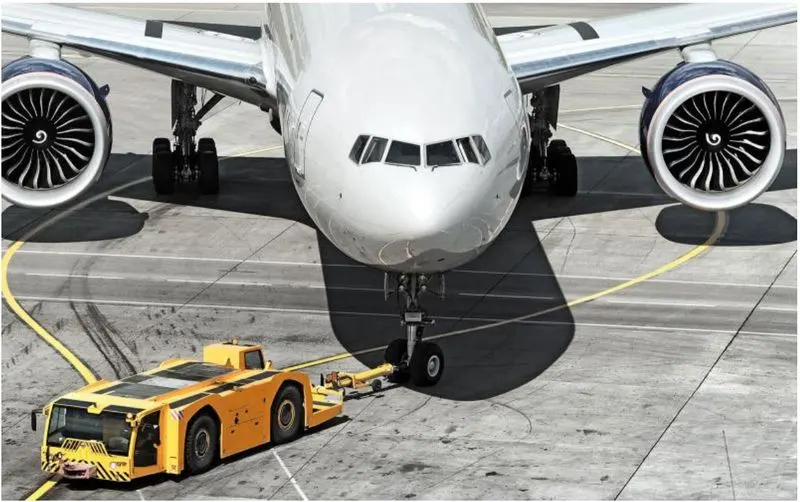
Figure 7
Figure 7 shows the Air Towing
High engine thrust during maintenance activity can cause considerable damage to airplanes and other elements in the airport environment. An example of this problem occurred after an airplane arrived at its final destination with a log entry indicating the flight crew had experienced anomalous engine operation.
4. How an aircraft is pushed to runway when its ready to take off?
pushback truck reverses the aircraft into taxiing position, pushing it with a towbar attached to the nose-wheel strut. Or, in the most modern versions, by actually lifting the wheel. That speeds up coupling and decoupling. The aircraft taxis to the runway to depart at the agreed time.
Taxiing is the movement of an aircraft on the ground, under its own power, in contrast to towing or pushback where the aircraft is moved by a tug. The aircraft usually moves on wheels, but the term also includes aircraft with skis or flots. An airplane uses taxiways to taxi from one place on an airport to another.
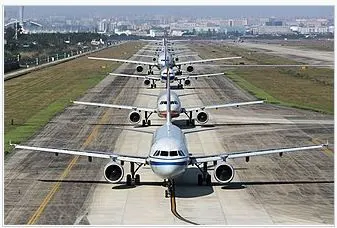
Figure 8
Figure 8 shows the taxiing
5. Learn about take off power, tyre design, rolling resistance, tyre pressure, brake forces when landing.
a) Take off power:
The amount of power that an engine is allowed to produce for a limited period of time for takeoff. The use of takeoff power is usually limited to 5 min for reciprocating engines and up to 2½ min for gas turbine engines. This may not always be the case. Specifically, with respect to reciprocating engines, it is the brake horsepower developed under standard, sealevel conditions and under the maximum conditions of the crankshaft rotational speed and the engine manifold pressure approved for the normal takeoff. It is limited in continuous use to the period of time shown in the approved engine specifications. With respect to gas turbine engines, it is the thrust developed under static conditions at a specified altitude and atmospheric conditions of the rotor shaft rotational speed and gas temperature approved for the normal takeoff.
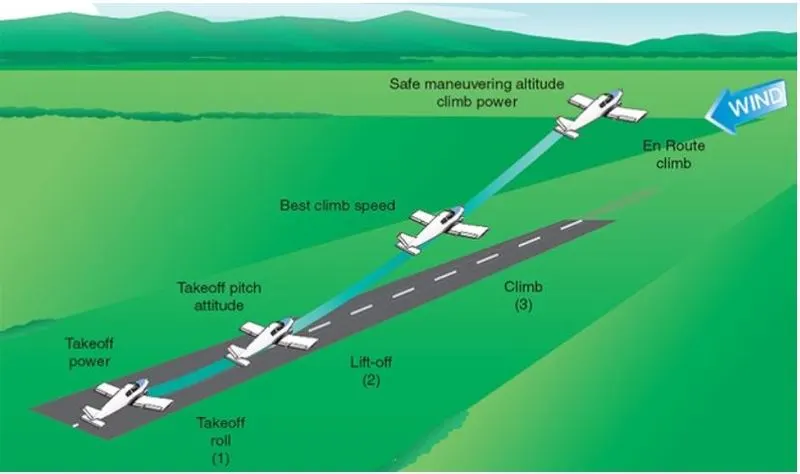
Figure 9
Figure 9 shows that flight during take off
b) Tyre design:
n aircraft tyre is constructed for the purpose it serves.
- They support the weight of an aircraft while it is on the ground.
- It also provides the necessary traction for braking and stopping of an aeroplane.
- Tyre also helps to absorb the shock of landing and provide cushioning the roughness of takeoff, roll-out, and taxi operations.
Unlike an automobile or truck tyre, it does not have to carry a load for a long period of continuous operation. However, an aircraft tyre absorbs the high impact loads of landing, and also it’s operating at high speeds for a short time when required.
Figure 9
Figure 9 shows the aircraft tyre
Retreading is methods of restoring a worn tyre by renewing the tread area or by renewing the tread area plus one or both sidewalls. Repairs are included in the tyre retreading process.
Load rating is the maximum permissible load at a specified inflation pressure.
Ply Rating is used to identify the maximum recommended load rating and inflation pressure for a specified tyre. It is an index of tyre strength.
Skid depth is the distance between the tread surface and the deepest groove as measured in the mould.
Aircraft tyres must have an approved speed and load rating and have sufficient clearance when retracted through landing gear to allow for tyre growth. Tyre growth is the increase in the size of the tyre due to centrifugal forces at high speed.
c) Rolling resistance :
Rolling resistance is the force resisting the motion when a body rolls on a surface. It is mainly caused by non-elestic effects; that is, not all the energy needed for deformation of the wheel is recovered when the pressure is removed. Dissipation term should be treated separately from rolling resistance because it is due to the applied torque to the wheel and the resultant slip between the wheel and ground, which is called slip loss or slip resistance. In addition, only the so-called slip resistance involves friction , therefore the name "rolling friction" is to an extent a misnomer. or
The force that resists the motion of a body rolling on a surface is called the rolling resistance or the rolling friction.
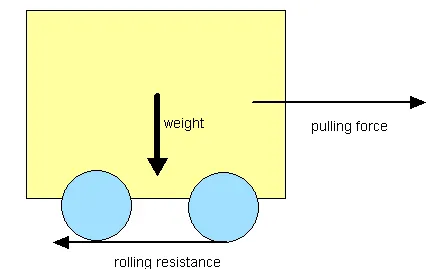
Figure 10
Figure 10 shows the rolling resistance
The rolling resistance can be expressed by the generic equation
Fr = c W (1)
where
Fr = rolling resistance or rolling friction (N, lbf)
c = rolling resistance coefficient - dimensionless (coefficient of rolling friction - CRF)
W = m ag
= normal force - or weight - of the body (N, lbf)
m = mass of body (kg, lb)
ag = acceleration of gravity (9.81 m/s2, 32.174 ft/s2)
Note that the rolling resistance coefficient - c - is influenced by different variables like wheel design, rolling surface, wheel dimensions and more.
d) Tyre pressure:
An aircraft tyre is designed to withstand extremely heavy loads for short durations. The number of tires required for aircraft increases with the weight of the aircraft, as the weight of the airplane needs to be distributed more evenly. Aircraft tire tread patterns are designed to facilitate stability in high crosswind conditions, to channel water away to prevent hydroplanning, and for braking effect.
Aircraft tires also include fusible plugs , designed to melt at a certain temperature. Tires often overheat if maximum braking is applied during an aborted takeoff or an emergency landing. The fuses provide a safer failure mode that prevents tire explosions by deflating in a controlled manner, thus minimizing damage to aircraft and objects in the surrounding environment.
The high-flying rubber is typically inflated to 200 psi, roughly six times what you put in an automobile tire, and the tires on an F-16 fighter are pumped to 320 psi.
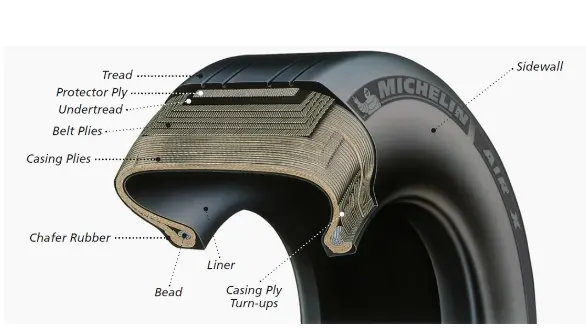
Figure 11
Figure 11 shows the tyre of aircraft
e) Brake force when landing :
Aircraft braking systems include:
- Aircraft disk breaks in the landing gear, used to brake the wheels while touching the ground. These brakes are operated hydraulically or pneumatically. In most modern aircraft they are activated by the top section of the rudder pedals. In some older aircraft the bottom section is used instead.
- Thrust reverses , that allow thrust from the engines to be used to slow the aircraft.
- Air brakes , dedicated flight control surfacethat work by increasing drag.
- Large drogue parachutes , used by several former and current military and civilian aircraf
6. A. With necessary assumptions, calculate the force and power required to push / pull an aircraft by a towing vehicle.
B. Develop the model for the calculated force and power using Simulink.
I am considering the Douglas towbarless aircraft
Specifications are
Gross weight = 35,000 kg
width = 3.4 m
Height = 4.4 m
Length = 8.47 m
Tyre size = 571.5 mm (radius)
Maximum vehicle speed = 32 kmph
velocity of the tug = 8.89 m/s
Coefficient of rolling resistance = 0.02
Model of aircraft :
Airbus A310 considering
Higher gross weight = 164000 kg
Height = 15.80 m
Width = 43.6m
Drag coefficient (Cd) = 0.0265
Total force = Frr+Fda
Rolling resistance force (Frr) = Urr*m*g
Drag force (Fad) = 0.5*p*A*Cd*v^2
mass = 35000+164000
Frr = 0.02*199000*9.81 = 39043.8 N
to calculate Fad
A = 15.80*43.9 = 693.62 m^2
v = (20*5/18) = 5.56 m^2
Fad = 0.5*1.22*693.62*0.0265*(5.56)^2
Fad = 348.035 N
Total Force = 39043.8+348.035
Fte = 4252.415 N
Power required by towing vehicle
Ptow = Fte*v
= 4252.415*5.56 = 23643.42 W
Ptow = 23.643 KW
Torque of the vehicle
T = Fte*R = 4252.415*0.5715
T = 2430.225 N-m
6. B. Develop the model for the calculated force and power using Simulink.
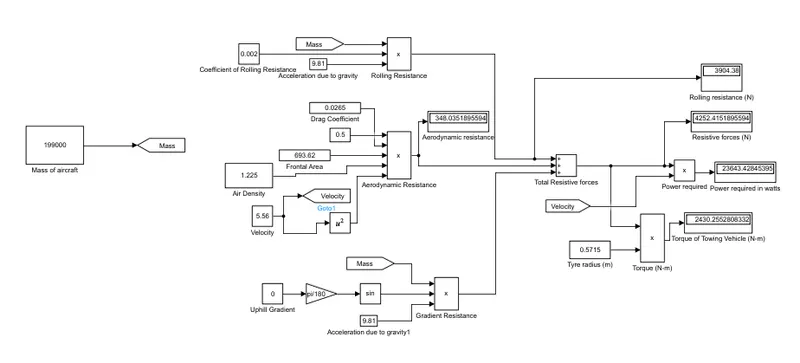
Figure 12
Figure 12 shows the simulink diagram of power calculation
resistive forces are calculated by using product blocks. To give input f mass, coefficients constant blocks are used.
7. A. Design an electric powertrain with type of motor, it’s power rating, and energy requirement to fulfill aircraft towing application in Simulink. Estimate the duty cycle range to control the aircraft speed from zero to highest. Make all required assumptions. Prepare a table of assumed parameters. Draw a block diagram of powertrain.
B. Also, Design the parameters in excel sheet.
To calculate the energu required for towing
Energy for towing = (Power required for towing)*(time required for towing)
for example
E = 84.86*(900/1200) = 63645 wh of energy required
Assume that
Input voltage = 200 and current (i) = 400 amps
Power input = V*i = 200*400 = 80000 W = 80 KW
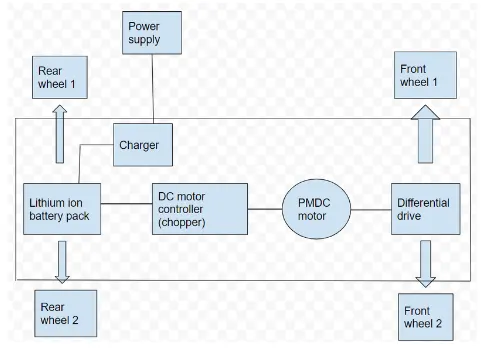
Figure 13
Figure 13 show the block diagram of Power Train
Assumption parameters are
Aircraft weight = 41000 kg
Rolling resistance (Urr) = 0.02
Rolling resistance (Urr1) for push back = 0.10
Pushback vehicle weight = 2000 kg
Pushback velocity = 5.55 m/s
Towing operation time = 15 min
Battery voltage = 200 V
Maximum load Current = 400 A
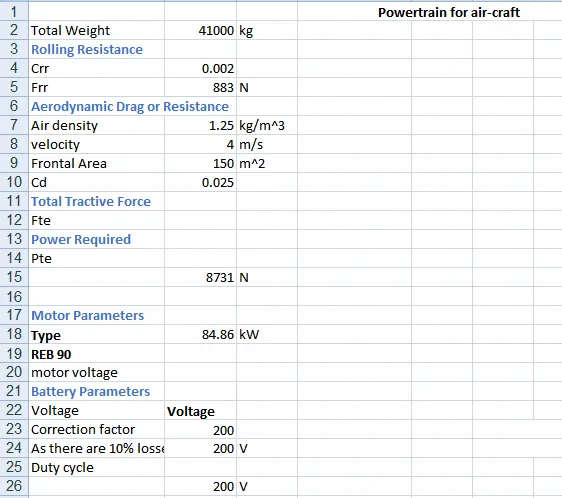
Figure 14
Figure 14 shows ths excel calculation