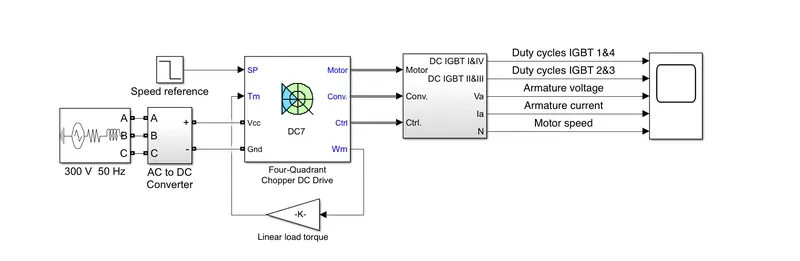
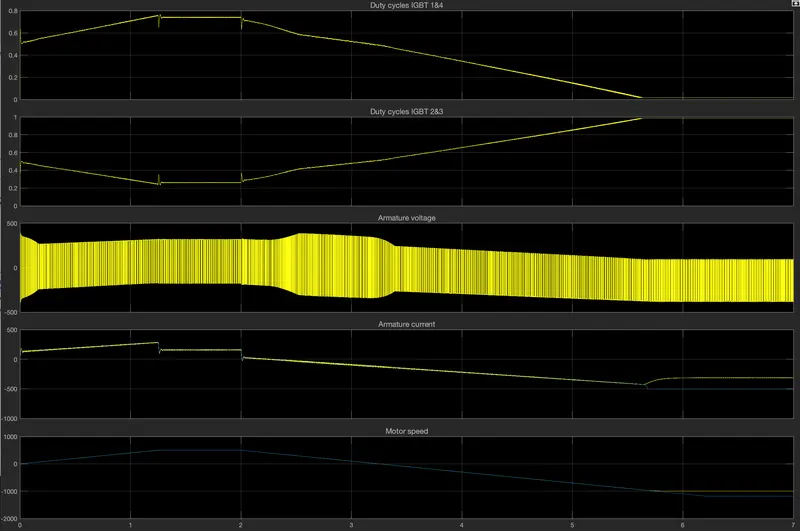
Project-1: Powertrain for aircraft in runways
Q1. https://docs.google.com/spreadsheets/d/1SGVIUIMjdVOU8oh-lK4WOZM6YrQ9aIovVqChmu6zL6E/edit?usp=sharing
Q2.
there are two different types of speed when talking about airplanes – ground speed and airspeed.
While ground speed is the airplane’s speed relative to the surface of the Earth, airspeed – at least true airspeed – is its speed relative to the air it is flying in.
true airspeed is simply the speed at which an aircraft is moving relative to the air it is flying in. As such, it’s also the speed at which the air is flowing around the aircraft’s wings.
Ground speed, on the other hand, is the aircraft’s speed relative to the ground. One thing that should be noted here is that it’s its horizontal rather than vertical speed – an aircraft climbing completely vertically would have a ground speed of zero.
In other words, while airspeed is what determines whether there is enough airflow around an aircraft to make it fly, ground speed is what determines how fast an aircraft will get to its destination.
Q3. Why is it not recommended to use aircraft engine power to move it on the ground at Airport
Unless the aircraft is in a location where it is unwise to taxi under aircraft power and necessitating a tow by a large tractor, the aircraft’s engine(s) is how the craft moves. Obviously, it is prudent to use only the amount of power to get the airplane moving and then reduce the power for taxiing to avoid high volumes of air spreading debris or damaging other aircraft or ground vehicles.
Power Hazard Areas:-
When modern jet engines are operated at rated thrust levels, the exhaust wake can exceed 375 mi/h (325 kn or 603 km/h) immediately aft of the engine exhaust nozzle. This exhaust flow field extends aft in a rapidly expanding cone, with portions of the flow field contacting and extending aft along the pavement surface. Exhaust velocity components are attenuated with increasing distance from the engine exhaust nozzle.
Maintenance Activity
High engine thrust during maintenance activity can cause considerable damage to airplanes and other elements in the airport environment
Foreign Object Damage
Foreign object damage (FOD) caused by high engine thrust can affect airport operations as it relates to
- Airplane structure.
- Flight controls.
- Equipment and personnel.
Q4.
Large jetliner passenger aircraft are pushed away from the passenger loading gate by a tug. This is a machine with wheels, some form of power such as an internal combustion engine, or a battery. When the large aircraft is being pushed backwards, there is someone on each wing tip. They are looking out to make sure nothing will touch the aircraft. The whole idea is to avoid expensive crunching noises.
An airliner might be pushed backwards off the ramp, and onto a taxi way. Then the engines can start, the aircraft can proceed forward under its own power. A twin engine jet might not start the second engine until it is close to takeoff runway, clearance is certain.
A piston engine can run at idle power using only a small percentage of the fuel consumption used at operating power level. Turbine engines such as modern airliner turbo fan engine burn a lot of fuel once they are started. So, there is a lot of incentive to not run them until it is time to fly.
Taxiing refers to the movement of an aircraft on the ground, under its own power. The aircraft moves on wheels. An airplane uses taxiways to taxi from one place on an airport to another, for example, when moving from a terminal to the runway.
The aircrafts always moves on the ground following the yellow lines, to avoid any collision with the surrounding buildings, vehicles or other aircrafts. The taxiing motion has a speed limit. Before making a turn, the pilot reduces the speed further to prevent tire skids. Just like cars, there is a certain list of priorities during taxiing. The aircrafts that are landing or taking off have higher priority. The other aircrafts have to wait for these aircrafts before they start or continue taxiing.
The thrust to propel the aircraft forward comes from its propellers or jet engines. Steering is achieved by turning a nose wheel or tail wheel/rudder; the pilot controlling the direction travelled with their feet. The use of engine thrust near terminals is restricted due to the possibility of jet blast damage. This is why the aircrafts are pushed back from the buildings by a vehicle before they can start their own engines for taxiing.
Q5.
TAKE OFF POWER:
The amount of power that an engine is allowed to produce for a limited period of time for takeoff. The use of takeoff power is usually limited to 5 min for reciprocating engines and up to 2½ min for gas turbine engines. This may not always be the case. Specifically, with respect to reciprocating engines, it is the brake horsepower developed under standard, sea-level conditions and under the maximum conditions of the crankshaft rotational speed and the engine manifold pressure approved for the normal take-off. It is limited in continuous use to the period of time shown in the approved engine specifications. With respect to gas turbine engines, it is the thrust developed under static conditions at a specified altitude and atmospheric conditions of the rotor shaft rotational speed and gas temperature approved for the normal takeoff. It is limited in continuous use to the period of time shown in the approved engine specifications.
TYRE DESIGN AND CONSTRUCTION
Design and Construction of Aircraft tyre
An aircraft tyre is designed to withstand extremely heavy loads while landing, take off, taxing, and parking. The number of wheels required for aircraft increases with the weight of the aircraft, as the weight of the aeroplane needs to be distributed more evenly. Carcass plies are used to form the tire. They are sometimes called casing plies. An aircraft tyre is constructed for the purpose it serves.
- They support the weight of an aircraft while it is on the ground.
- It also provides the necessary traction for braking and stopping of an aeroplane.
- Tyre also helps to absorb the shock of landing and provide cushioning the roughness of takeoff, roll-out, and taxi operations.
Unlike an automobile or truck tyre, it does not have to carry a load for a long period of continuous operation. However, an aircraft tyre absorbs the high impact loads of landing, and also it’s operating at high speeds for a short time when required.
some aspects of aircraft tyre
Retreading – Retreading is methods of restoring a worn tyre by renewing the tread area or by renewing the tread area plus one or both sidewalls. Repairs are included in the tyre retreading process.
Load Rating – Load rating is the maximum permissible load at a specified inflation pressure.
Ply Rating – Ply Rating is used to identify the maximum recommended load rating and inflation pressure for a specified tyre. It is an index of tyre strength.
Speed Rating – The speed rating is the maximum takeoff speed to which the tyre has been tested.
Skid Depth – Skid depth is the distance between the tread surface and the deepest groove as measured in the mould.
These tyres can be tubeless or tube type and Radial or Bias
Brake Force when Landing:
A short landing run requirement for an aircraft is important from economic, operational and strategic considerations. Too strong a braking produces skid, which is an undesirable condition, while weak breaking results in a long landing run. The shortest possible (optimal) landing run without any skidding requires a variable braking force to match the frictional force at all times. The maximum allowable braking force at any instant is a random variable as the ground-induced excitation and the frictional force between the wheel and the tyre are random in nature. In view of the time lag in the actuation of a servo system and its completion of the execution, a one-step prediction is employed to obtain the braking force required at a future instant.
PART B
6.a.
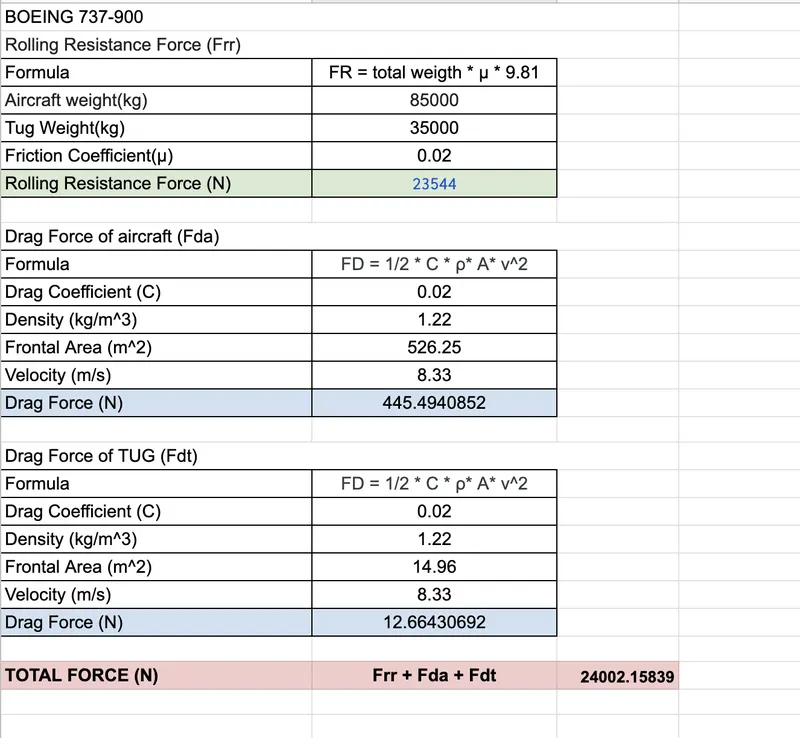
excel link - https://docs.google.com/spreadsheets/d/1POAWXiyRC7eiCJAt0SyycViAFGeGoe5Zf1zPPFjpSCo/edit?usp=sharing
6.b
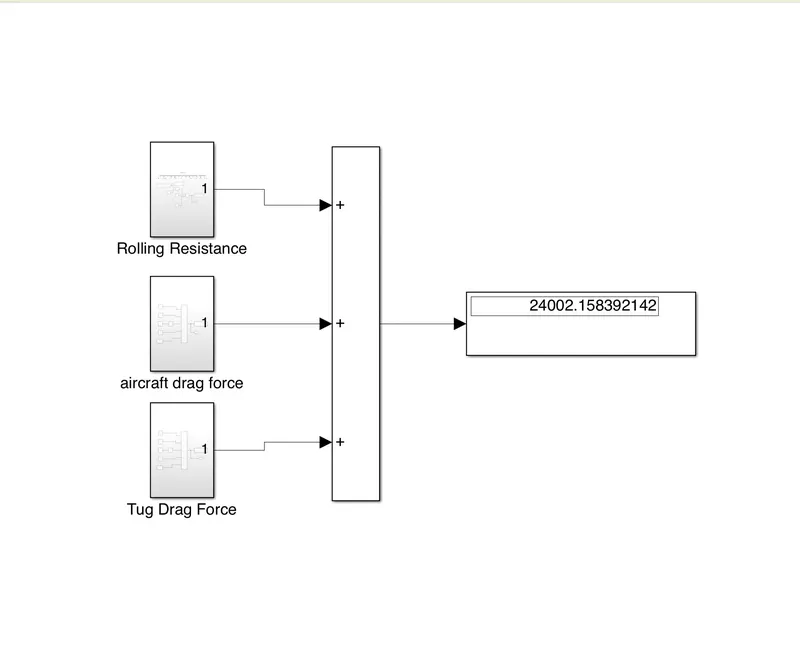
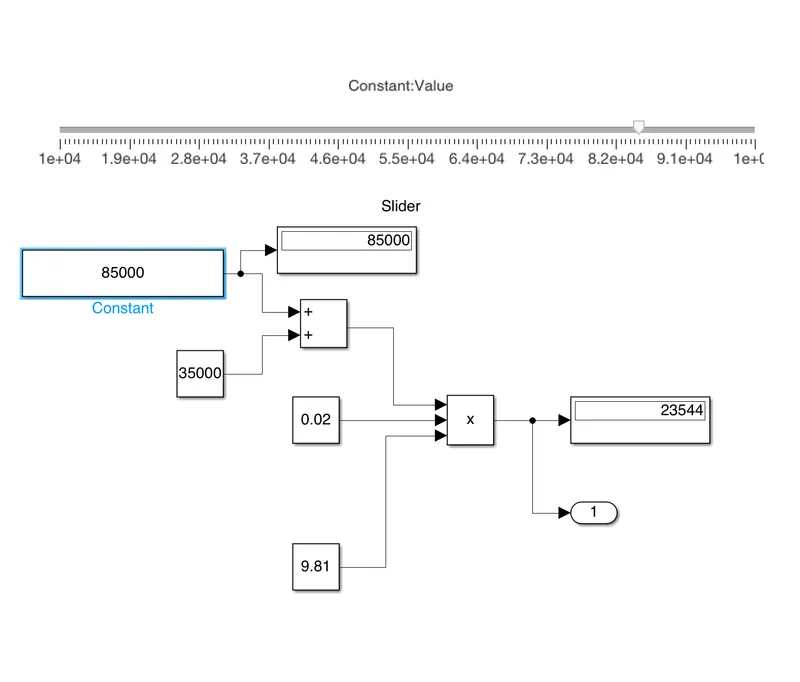
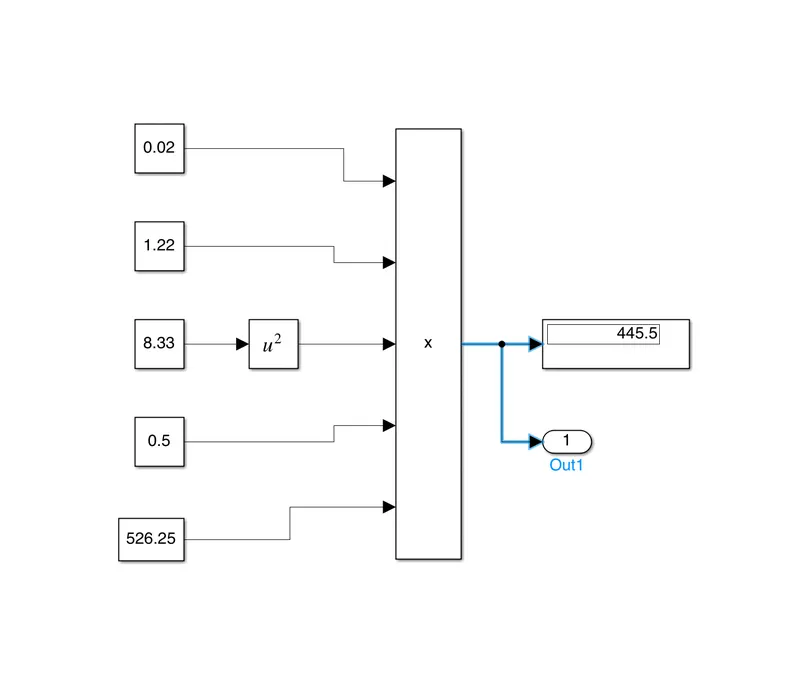
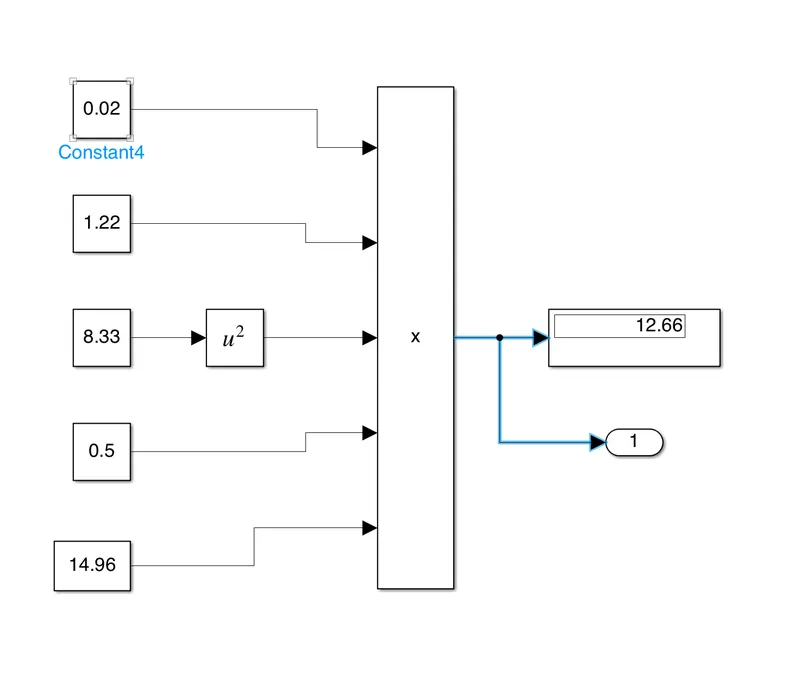
Simulink model for calculating push/pull force
rolling resistance
Drag force of Aircraft
Drag force of tug
7.a
Assumtion For Powertrain Design-
Aircraft Mass 85000 Kg
Towing Vehicle Mass 35000 Kg
Rolling Resistance Co-efficient 0.02
Air Density 1.22 kg/m*3
Towing Vehicle Drag Co-efficient 0.02
Aircraft Drag Co-efficient 0.02
Frontal area 14.96 m*2
Inclination Angle 0 rad
Towing Velocity(V) = 8.33m/s
Towing Time(t) 2 min
Radius of the towing vehicle wheel 0.38m
Therefore from the excel power calculator we have got the necessary Traction force(F) quantity that is
= 24002.15N
Required power(P) = F * V
= 24002.15 * 8.33
=199,937.91 W = 199.937 KW
As we know Torque(T) = Force(F) * Wheel radious(r)
So, from the above equation we have got the required torque(T) = 24002.15 * 0.38
= 9120.817 N-m.
Required Energy(E) for towing application based on the assumed time, that is E = P * t
= 199.937 * (120/3600)
= 6.664 KWh