Project-1: Modelling an electric Car with Li-ion battery
Create a MATLAB model of electric car which uses lithium ion battery and suitable motor. Choose suitable blocks from Simscape or Powertrain block set. Implement the vehicle speed control using PI controller and generate brake and accelerator commands. Avoid using readymade driver block for speed control.
Prepare a report about your model including following:
Objectives, System level configurations, Model parameters, Results, Conclusion.
AIM:- Modelling an Electric Car with a Lithium-ion battery
INTRODUCTION:-
The electric vehicle is a vehicle, which uses one or more electric motors for propulsion. Depending on the type of the vehicle motion may be provided by rotary motor or by a linear motor (in the tracked vehicle). The electricity stored in battery-powered by electric motor & battery can be charged by plugging it in the grid, like our phone.
According to the degree of electricity used, an electric vehicle is divided into 3 categories-BEV, PHEV & HEV.
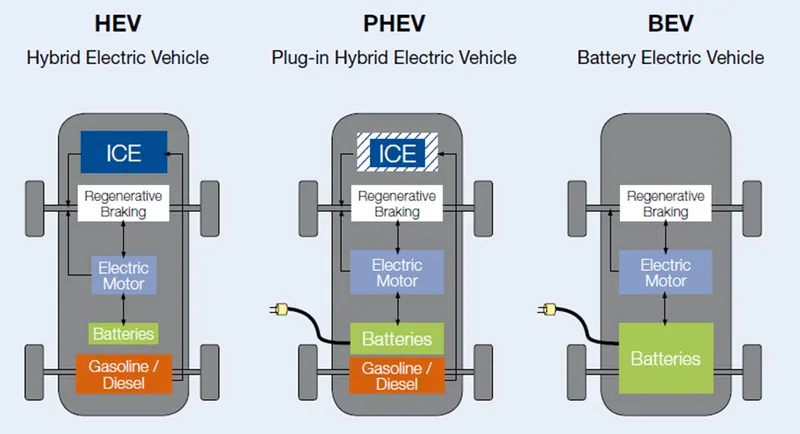
Battery Electric Vehicles (BEV)
BEVs are fully electric vehicles with rechargeable batteries with no engine. It stares power in battery pack & this power is used to run the vehicle & other peripherals BEVs are charged by electricity from external source BEVS don't emit any hazardous emissions. Some most famous examples of these types of cars are BMW 13, Tesla Model, 3. Kia Soul Toyota Rav4 etc.
Plug-In Hybrid Electric Vehicles (PHEV)
These types of vehicles are propelled by motor and gasoline engine Battery is charged with regenerative braking & it can be charged with external source PHEVS can go from 10-40 miles before the assistance of engine Examples PHEVs-Chevy Volt. Audi A3 E-Tron BMW i8. Toyota Prius etc
Hybrid Electric Vehicle (HEVs)
HEVS are powered with both gasoline & electricity. The battery can be charged with regenerative power only. The motor supplies power from starting, the engine takes care of high speed & heavy load. Controller used to ensure the best economy, HEVs are-Honda Civic Hybrid, Toyota Prius Hybrid, Toyota Camry Hybrid.
OBJECTIVES:
- Create a MATLAB model of an electric car that uses a lithium-ion battery and a suitable motor. Choose sustainable blocks from Simscape or Powertrain block set
- Implement the vehicle speed control using Pi controller and generate brake and accelerator commands Avoid using readymade driver black for speed control
Prepare a report about your model including the following:
# Objectives
# System-level configurations
# Model parameters
# Results
# Conclusion
CASE-STUDY
MATLAB Model of Electric Car which uses Li-ion Battery and Suitable Motor:
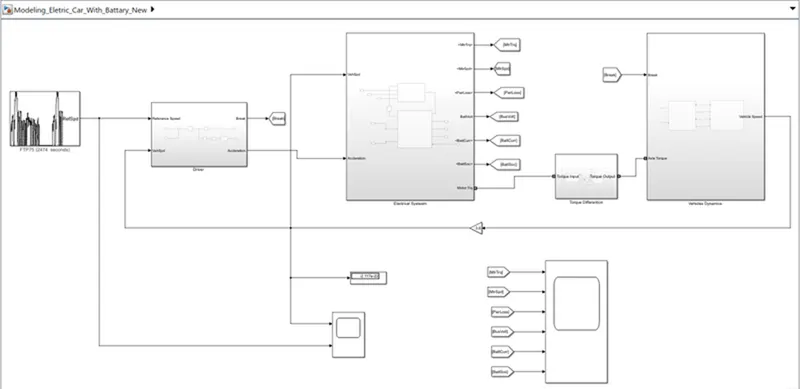
Electric Vehicle model Explanation
@ The electric vehicle model is represented by using MATLAB/Simulink. This model is a complete representation of an electric vehicle that is built using Powertrain Blockset.
@ This model has vehicle dynamics & electrical system, the vehicle dynamics contains subsystem relates to the vehicle body & tires whereas the electrical system contains a subsystem related to the motor & battery pack This subsystem contains various other components which we will understand further
PROCEDURE
1 Vehicle Dynamics Subsystem Model
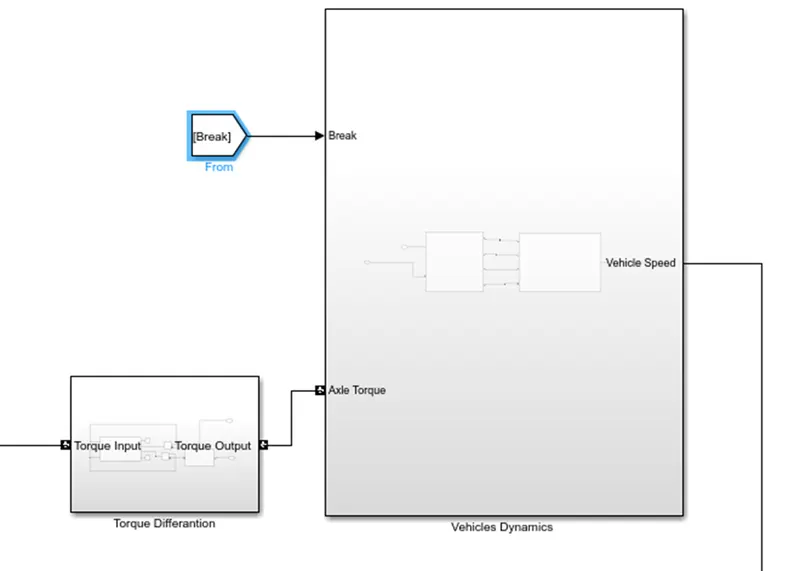
The vehicle dynamics is nothing but the study of the vehicle motion & how the vehicle behaves in motion
The vehicle Dynamics consist of 2 main subsystems
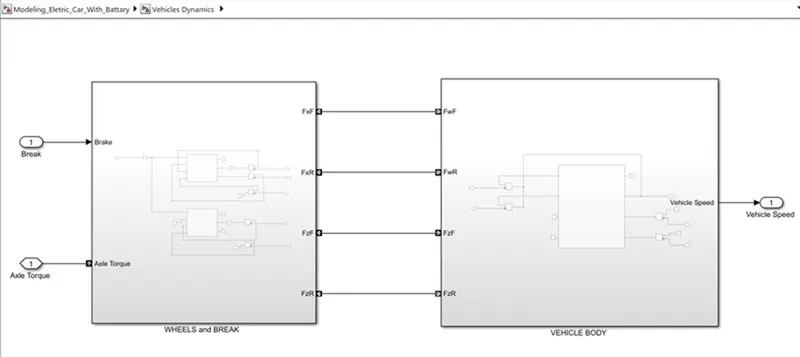
1.1 Wheels & Brakes
1.2 Vehicle Body
1.1 Wheels & Brakes
- The wheels used in this vehicle are longitudinal wheels that have brakes of disk type.
- Disk brakes have great stopping power and cause less wear & tear & provide precise braking. This block implements the longitudinal behaviour of the actual wheels.
- This vehicle is rear wheeled drive hence the axle torque is connected to the rear of the wheels & the axle of the front wheel is grounded
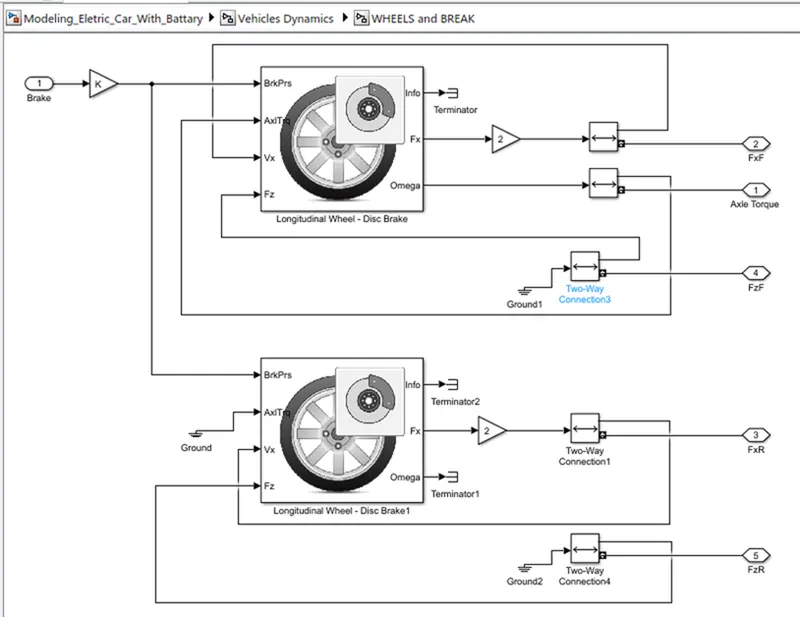
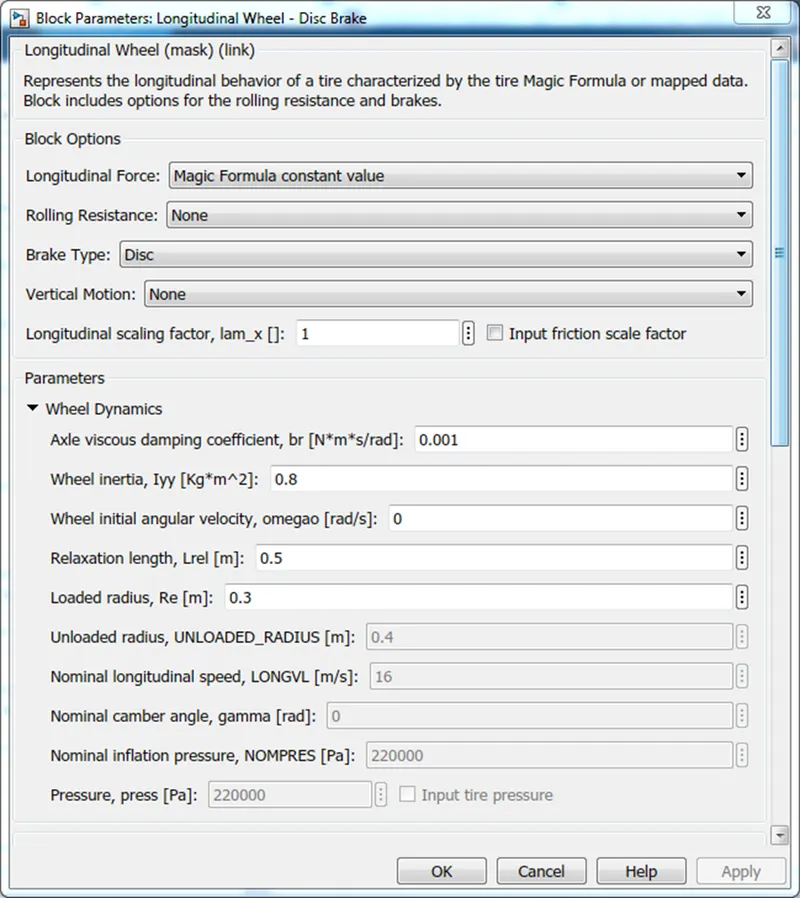
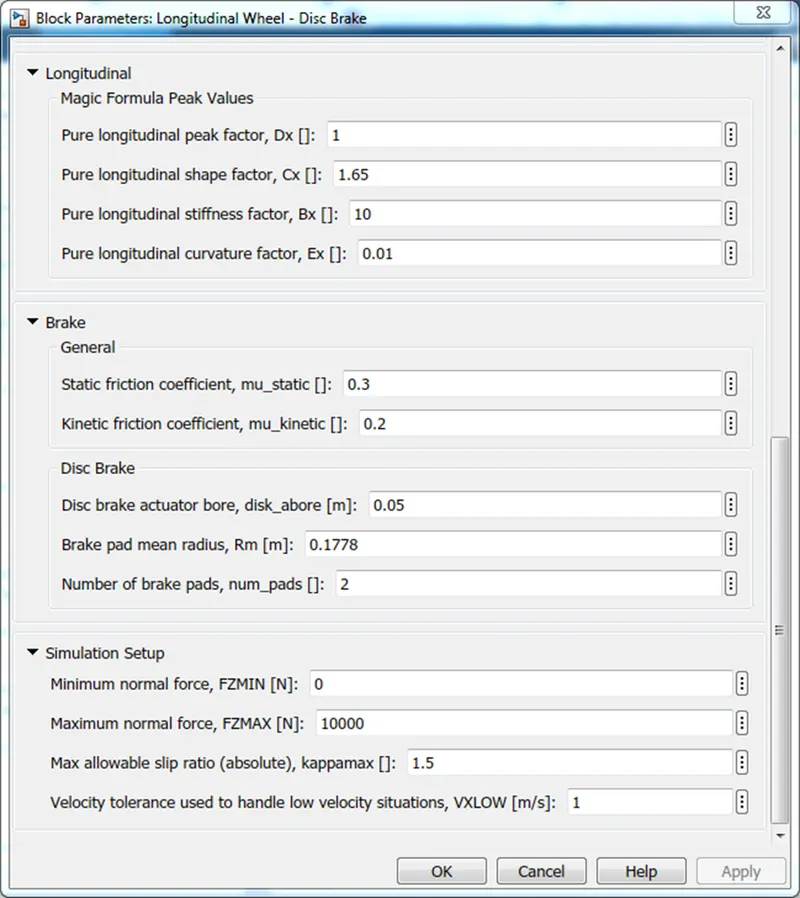
- The longitudinal forces of the tires are set to magic formula constant. A magic formula is a separate form of a characteristic function of stiffness, shape, peak (BCDE). & curvature
The magic formula is given as (F=f (k, F)=FDsin(C tan-1[{B-E[B-tan-1(B)]}])
The brake input command for the front & rear wheels is connected commonly as one input port. Omega is the angular velocity of the wheels in the y-axis hence this form is considered as torque input to the wheels
Parameters for wheels as showing below
1.2 Vehicle Body
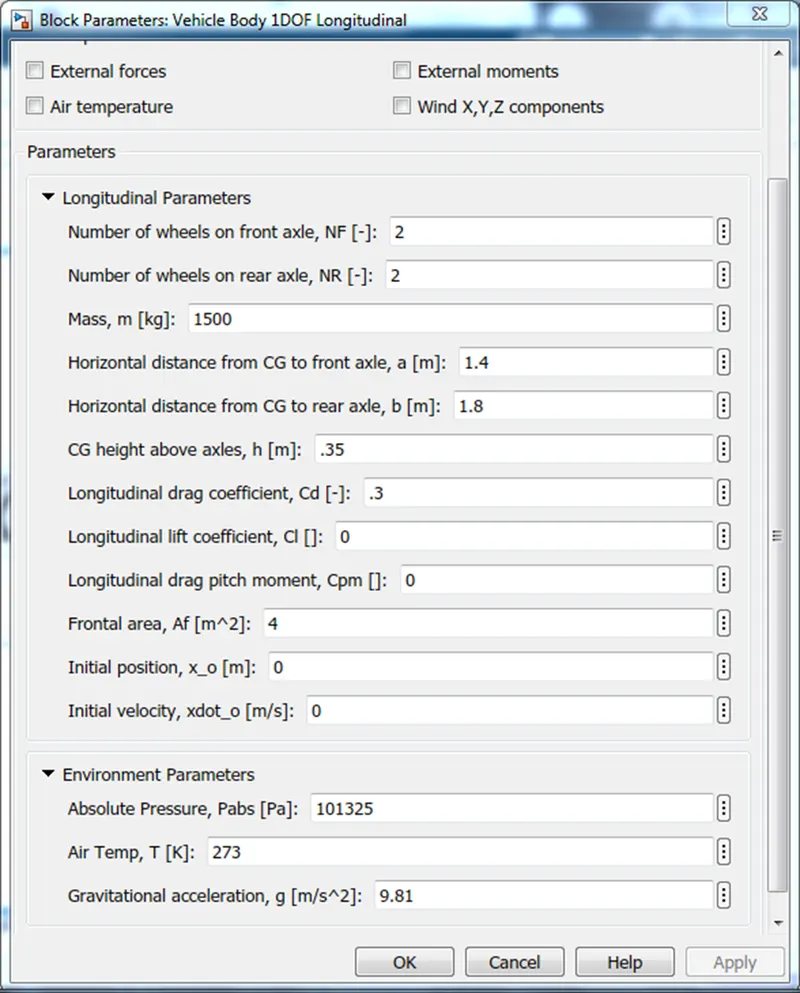
# In this model Vehicle Body (1DOF) longitudinal block is implemented. This block helps us to determine the vehicle inertia & drag load.
# There are mainly 2 forces acting on the axle of the wheels: longitudinal forces & normal forces. These forces act on the rear & front of the wheels, the longitudinal forces on the rear & front is given by (FwF, FwR).
# Whereas the normal forces are given by (FzF, FzR) These forces are connected to the respective axle of the wheels.
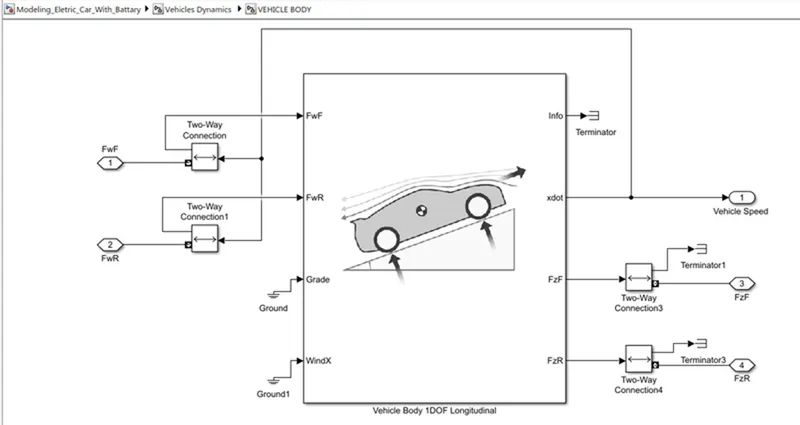
# The vehicle body consists of Grade & Wind input ports which can be used to simulate Slope & Wind Drag but this port is been grounded to minimize the complexity of the model
# The X-Dot output port is a longitudinal force in the x-axis which acts as the velocity/speed of the vehicle in m/s
- Torque Differential Subsystem Model
- The torque differential block is connected between the motor shaft & axle of the wheels. The block consists of an open the and differential block & torsional compliance
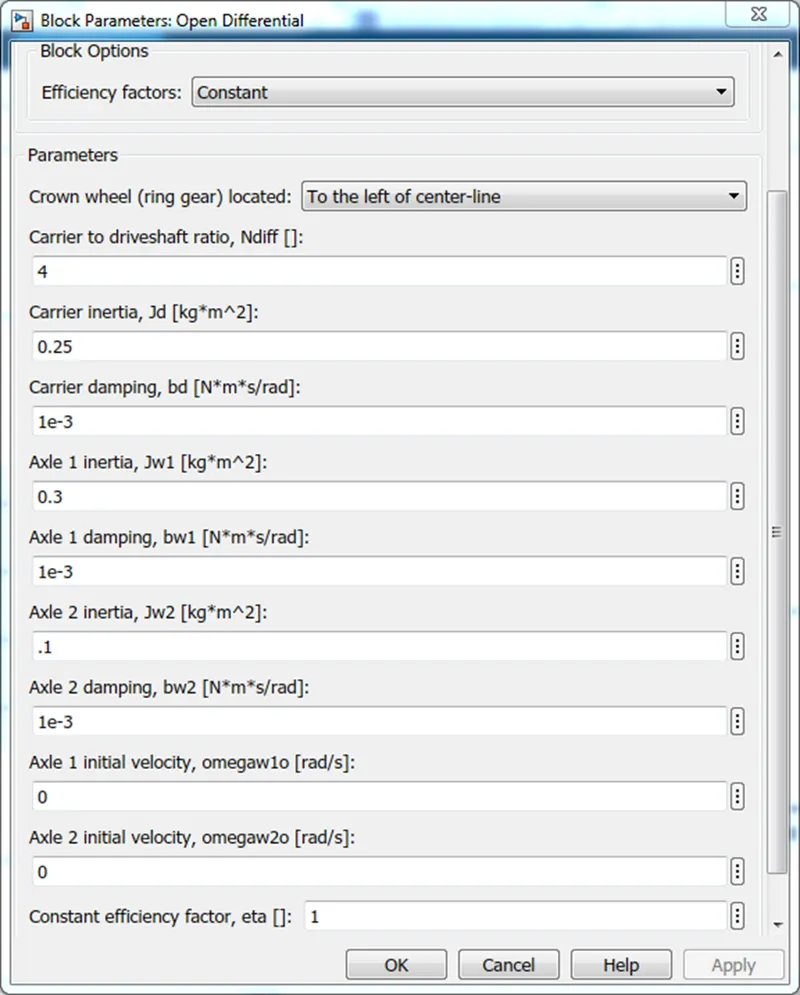
- The open differential block is basically a set of Planetary gear systems, it matches the drive shaft gear to the crown gear and couples the transmission driveshaft to the wheel axle.
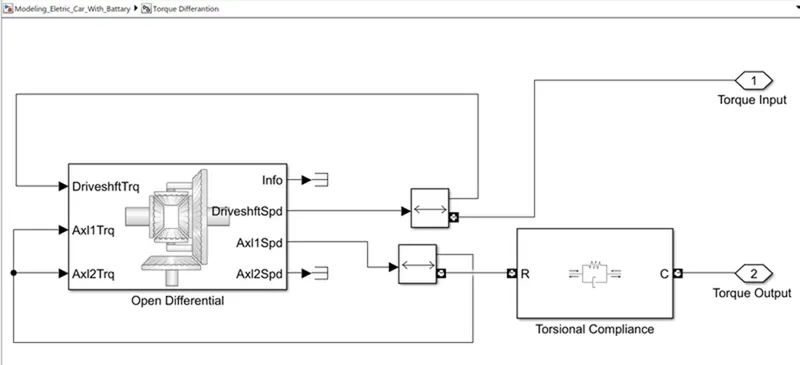
- The block uses a coordinate system that produces a positive tire & wheel motion.
- Input for the open differential drive shaft torque which accepts input from the motor drive shaft & axle torque which are connected to the axle of the wheels
- On the other side torsional compliance is basically a spring-damper which is a shaft that connects between the open differential & axle wheels
- Electrical Subsystem Model
The electrical system is the most important in the whole drive cycle.
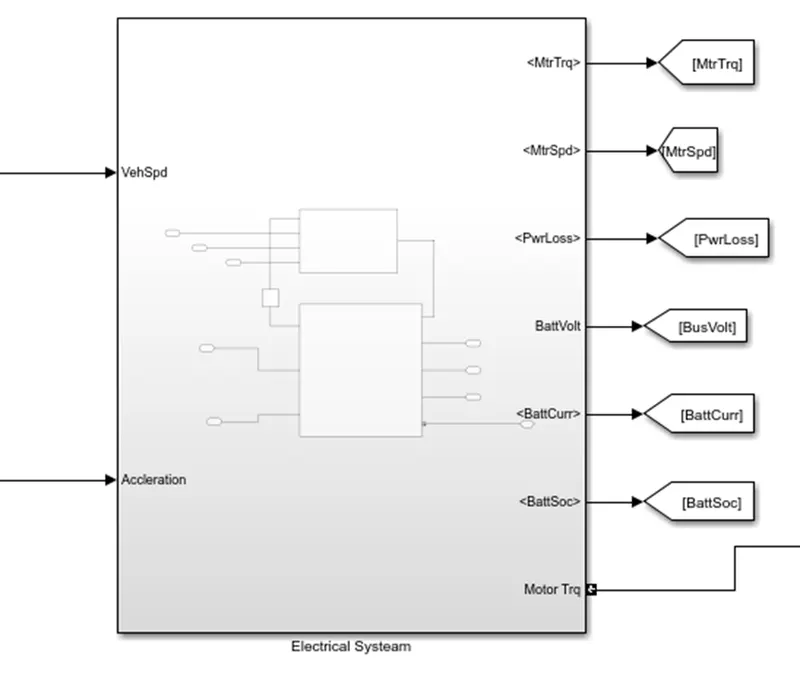
The electrical system is subdivided by -
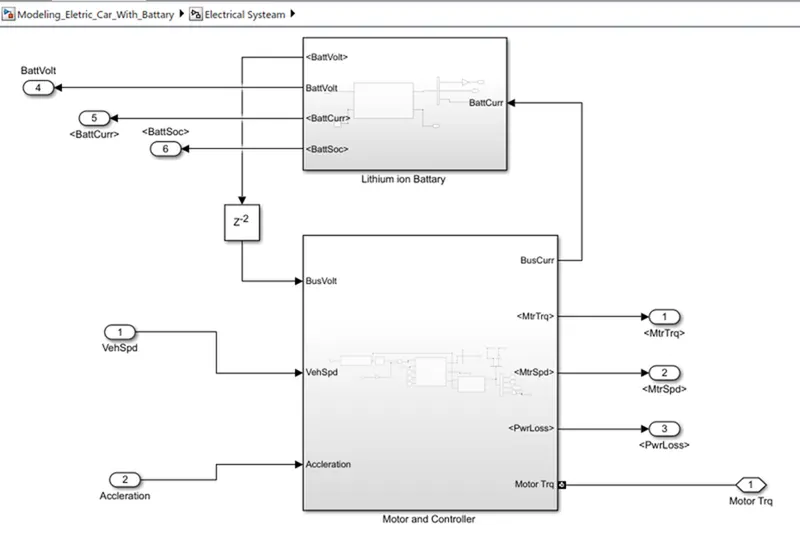
3.1. Induction Motor and Controller
3.2. Battery (Lithium-Ion Battery)
3.1. Induction Motor and Controller
This vehicle uses a three-phase induction motor as the main driving source The Induction Motor is also called an asynchrony motor
It is an AC motor that works on the principle of electromagnetic induction most electric cars use IP as their man die because as they offer high power torque density and speed range and compact size
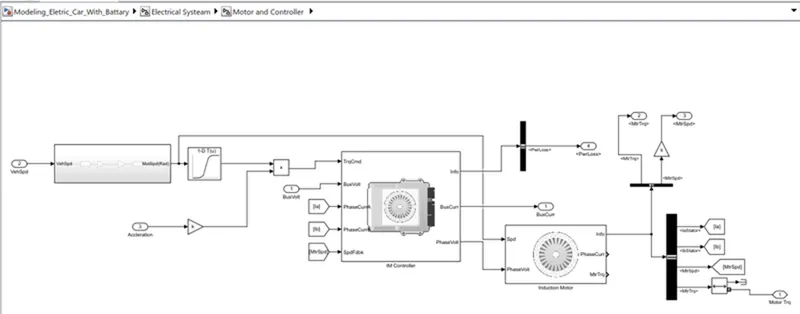
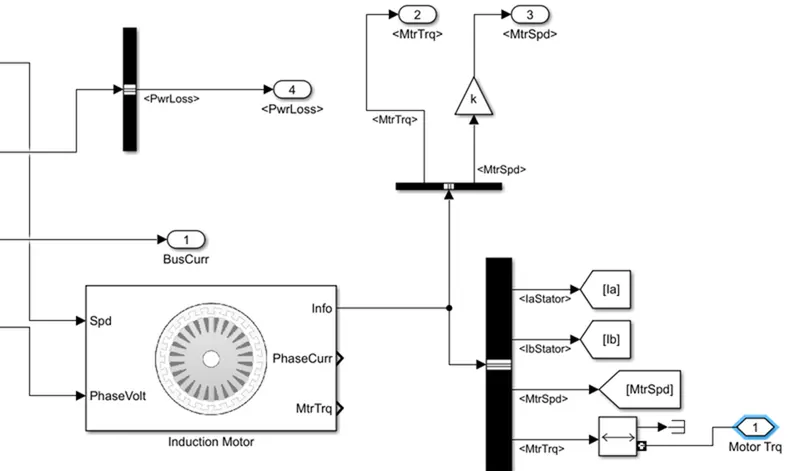
- Induction Motor performance in field weakening constant power region but IM has low-speed performance efficiency, heat loss which lead to low power factor and efficiency.
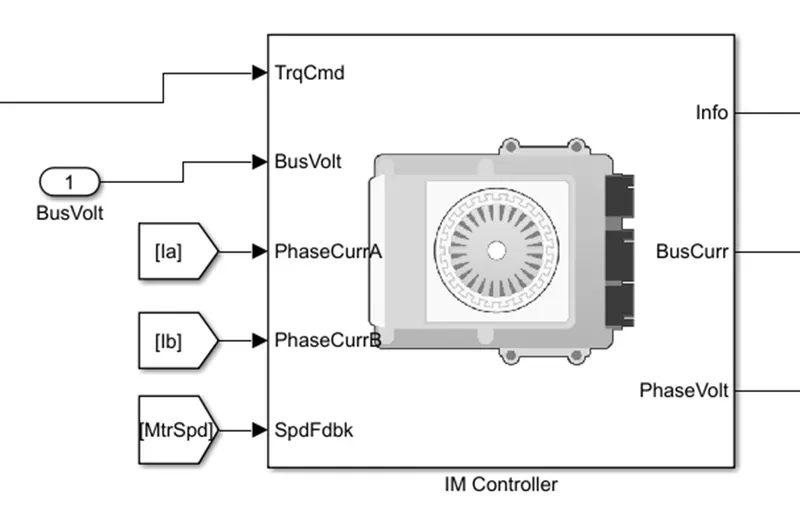
- Hence to control the speed and torque of the motor we need to use an IM controller. The IM controller blocks implemented a torque based field-oriented controller with an outer speed loop control.
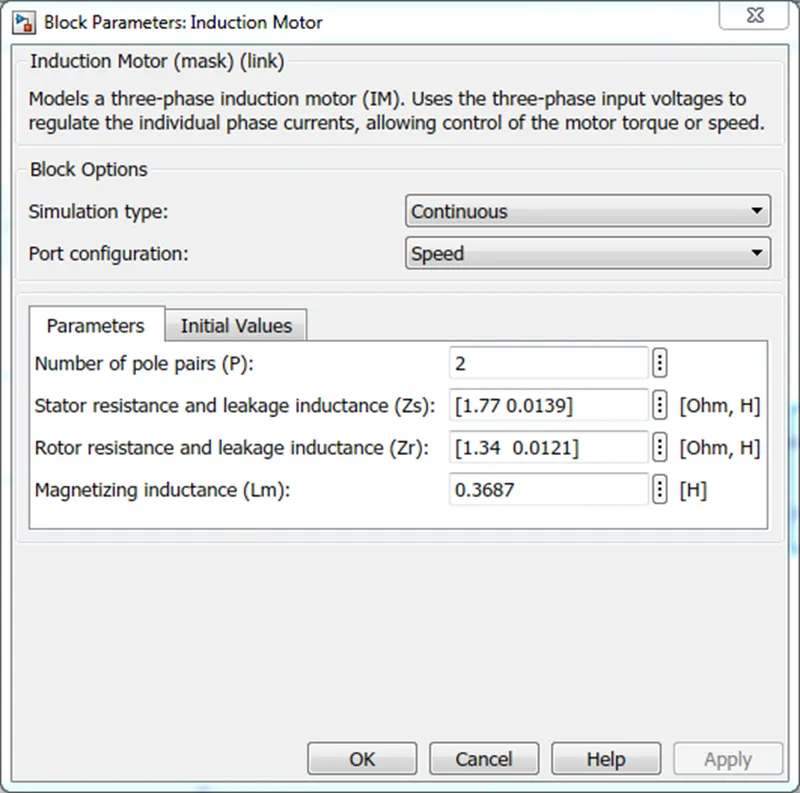
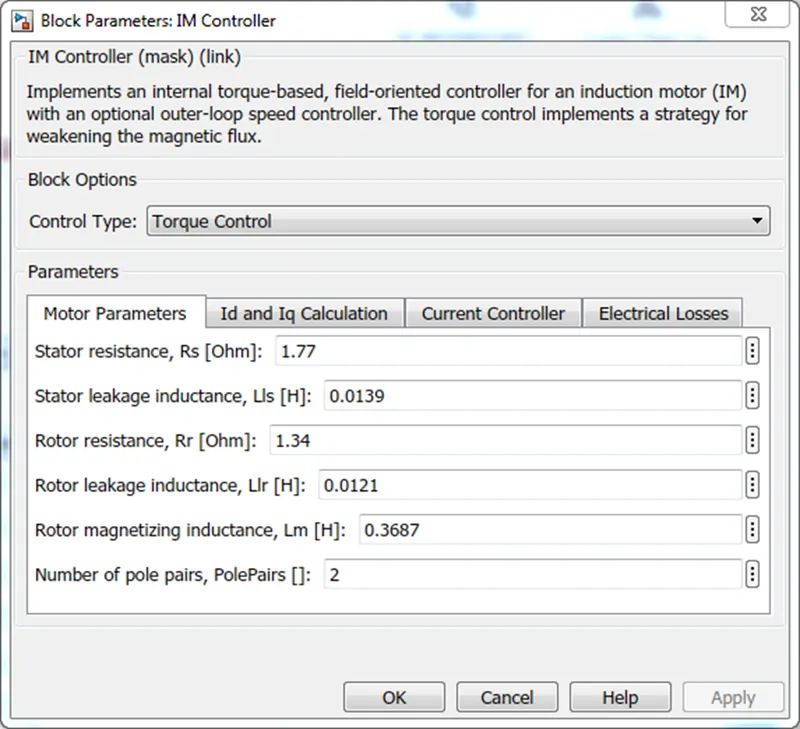
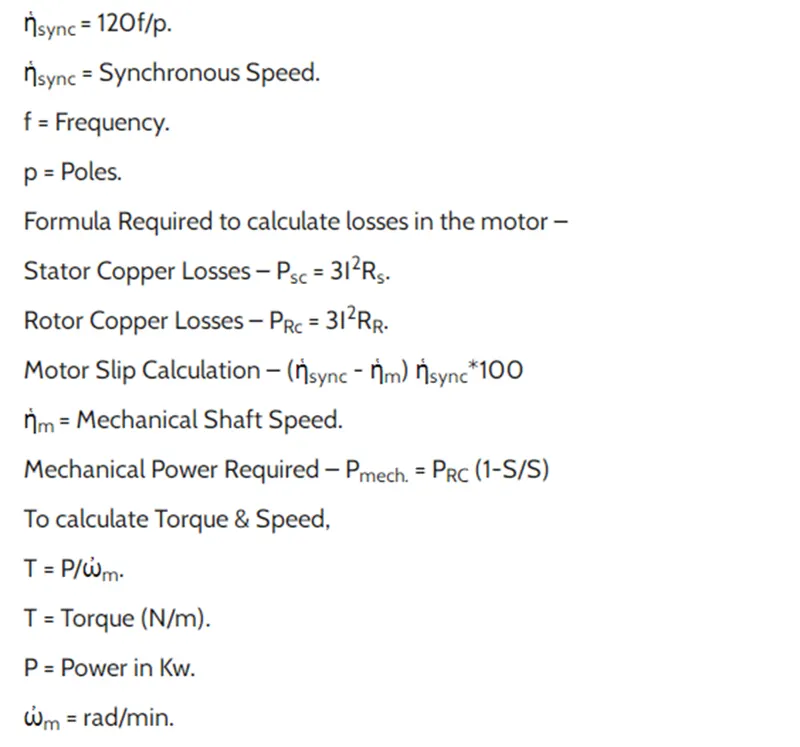
The controller also implements the equation for speed control. torque determination regular some basic formula that the blocks implements are
To calculate speed, frequency and poles formula required to calculate losses in the motor
- The corresponding phases (AB) is connected to the motor controller the speed of the motor is constantly regulated by its controller closed-loop speed control (SpdFdk port)
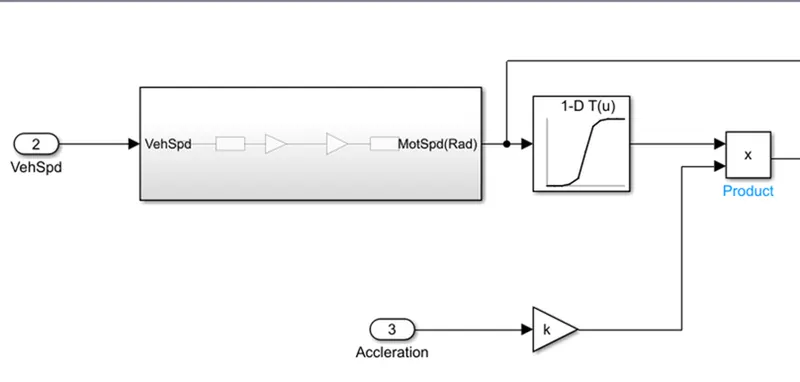
- The vehicle speed in (m/s) is converted to motor speed in (rad) with the help of unit conversion and signal specification block
- Taking a product of motor speed and acceleration a torque command is generated. The lookup table takes input as (VehSpd) in rad which is then scaled by accelerator command and the product of two is implemented as a torque command
3.1.1 Torque Command Data
• The resultant motor torque signal is obtained from the bus selector.

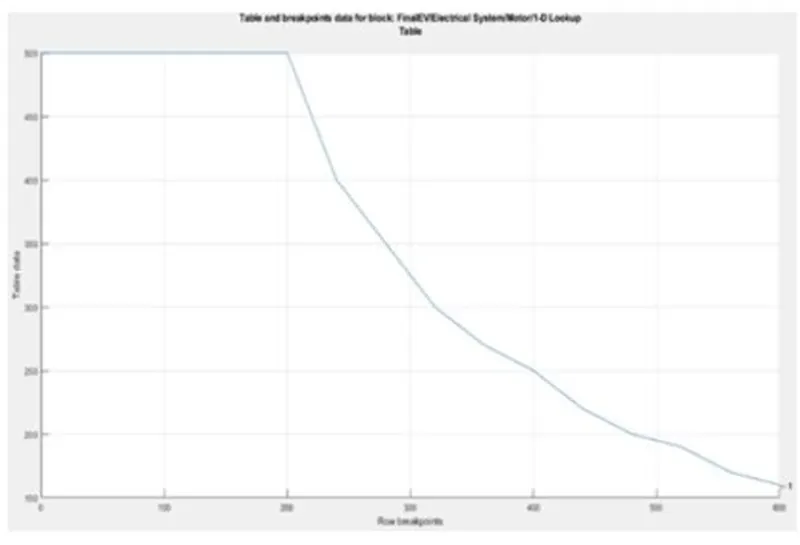
- The resultant motor torque signal is obtained from the bus selector.
3.2. Battery (Lithium-Ion Battery)
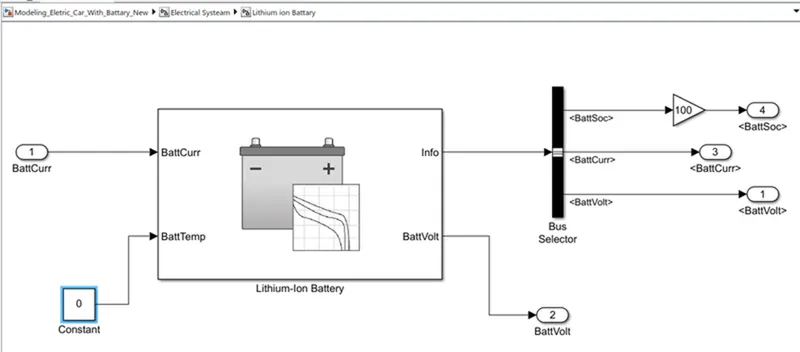
- The Battery is the energy source of any system the battery used in the system is a Datasheet battery which implements a model for the lithium-ion battery.
- The question arises that why most of the EVs uses lithium-ion cells as a source, like any other battery because battery like a lead-acid battery which required constant maintenance and monitoring, hydrogen cells which are quite bulky and expensive also capacitor banks are used as a battery pack but they have a high discharge rate and drain quickly.
• Hence the Lithium-Ion Battery eliminates all such disadvantages and requires less maintenance and operational cost are less.
- Longevity-The average lithium-ion battery life span for a large capacity is more than years. Safety-reduce the risk of accidents by eliminating exposures to flammable fuels able to withstand even in the high temperature without explosions.
- Environment Impact-Lithium-Ion batteries provide significant environmental benefits over fossil fuels. With the steady increase in electric vehicles, we can see an immediate impact on the reduction in carbon emission. Hence knowing all such advantages of lithium-ion manufacturers prefer using lithium cells as their main source of energy.
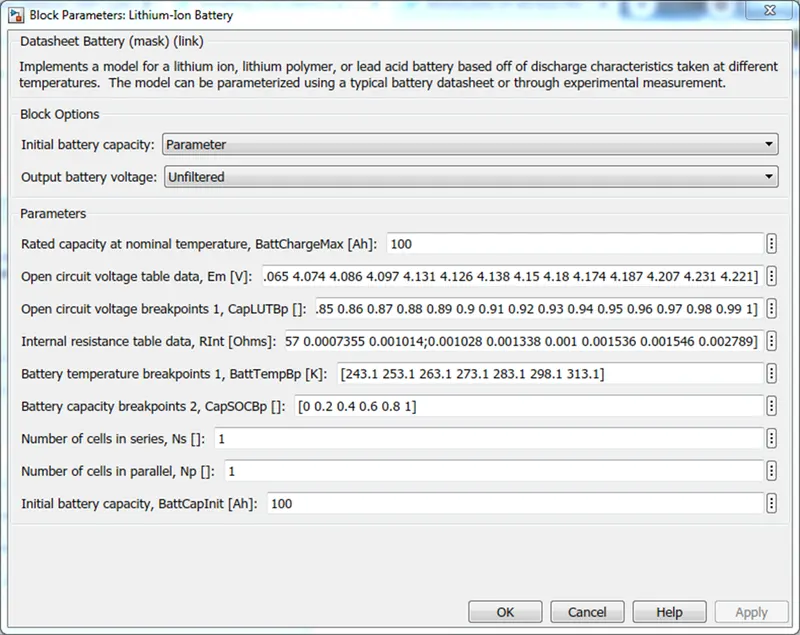
. The battery pack is packed with 30 numbers cells in series and 2 numbers of cells in parallel each Ah and the rated voltage is 12
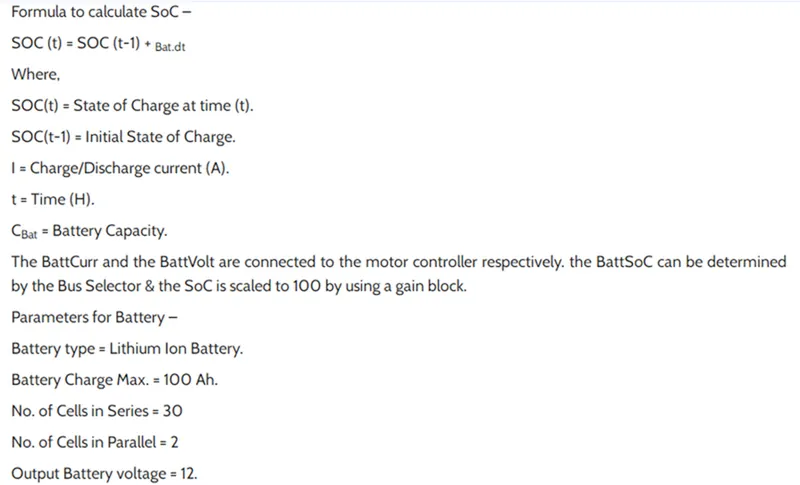
- The Battery rated capacity is 100 volt the battery provides 1200kwh considering its charging/ discharging
• Charging of battery if the applied current is to ampers, then it would be 100Ah/10A-10 hrs approximately. Discharging Battery Ah X Battery Volt/ Applied load say, 100Ah X 12V/100 watts-12 hrs (With 40% loss at the max-12-40).
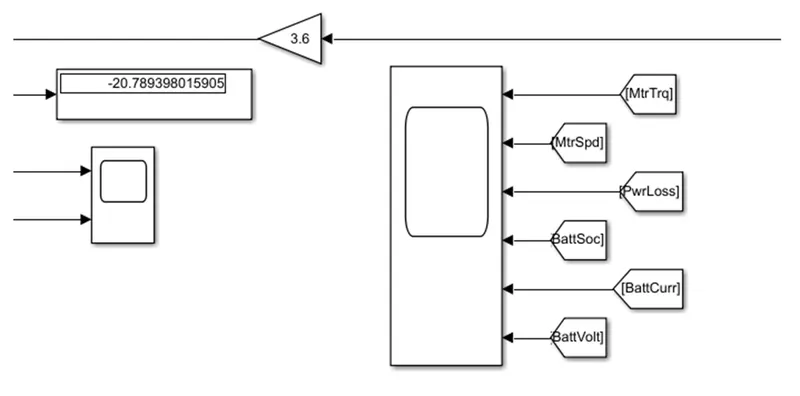
The BattCurr and the BattVolt are connected to the motor controller respectively, the batt SOC can be determined by the bus selector SOC is scaled to 100 by using gain black
- Driver Subsystem Model
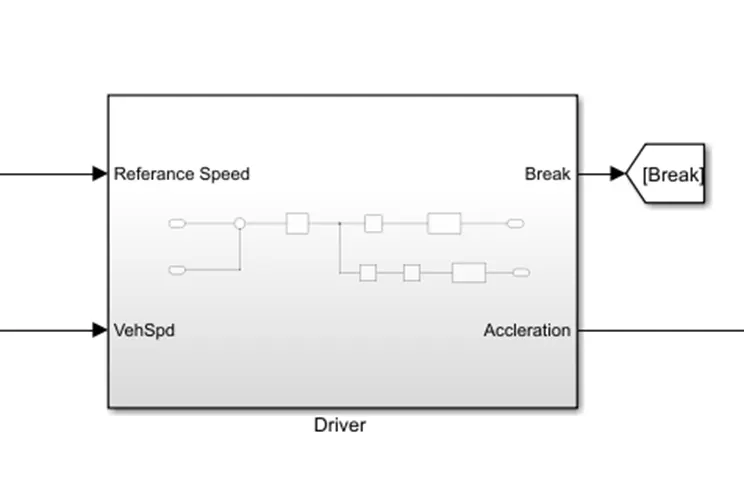
- The Driver block is basically a controller for the vehicle, it controls the acceleration, and braking of the vehicle. The block is implemented with a PID controller which is basically the main controller in the whole drive cycle
- The PID controller works as closed-loop speed control, it takes the input as a reference speed and connects the error generated by the vehicle speeds
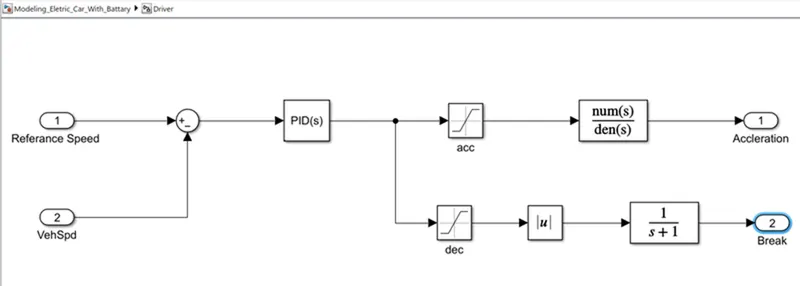
- PID controller is tuned for adequate acceleration and deacceleration commandant is done by limiting its output to upper and lower saturation Separating the output of the PID to accelerate and deacceleration command
- We Tune a situation block for each command for acc command we use an upper saturation value and for the deaccelerate command, we use a lower saturation value
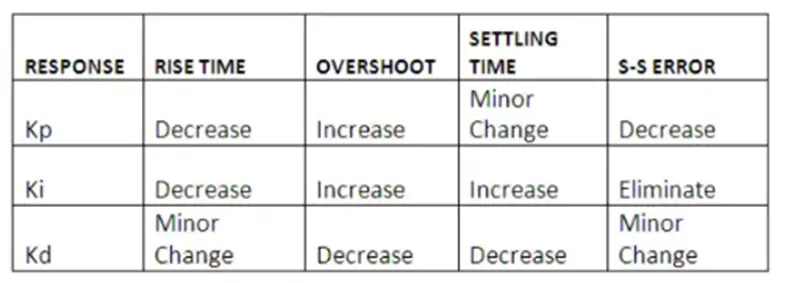
- Tuning is Proportional, derivative and integral values we should be able to track the reference speed. The below table gives us an idea for the manual tuning of the controller
Results
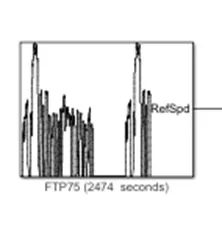
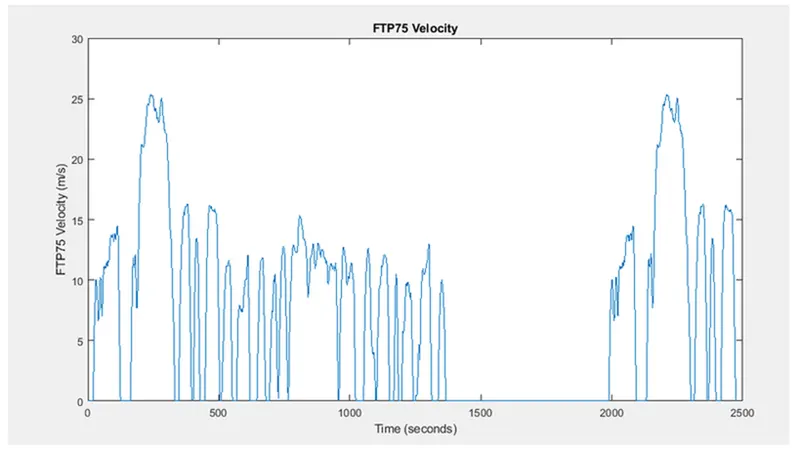
Drive Cycle (FTP75):
Output Plots:
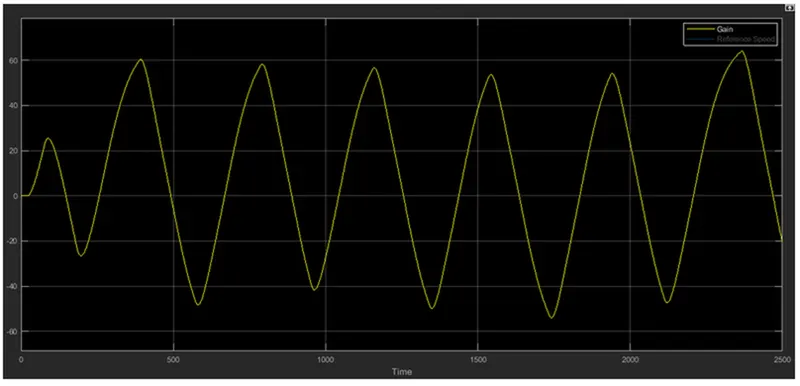
Vehicle Speed Plot
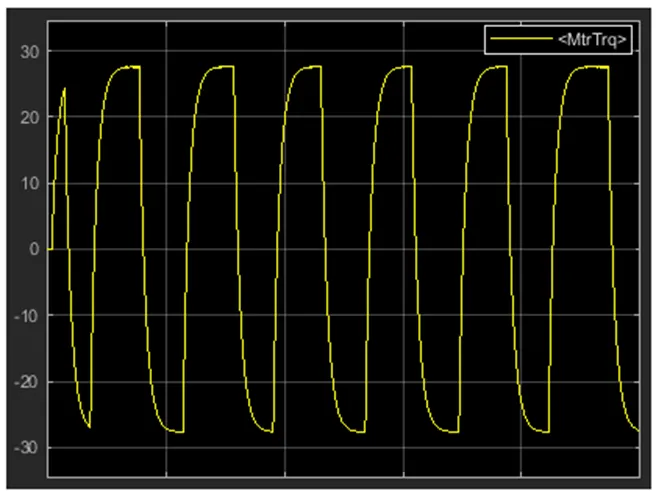
Martiq Plot:
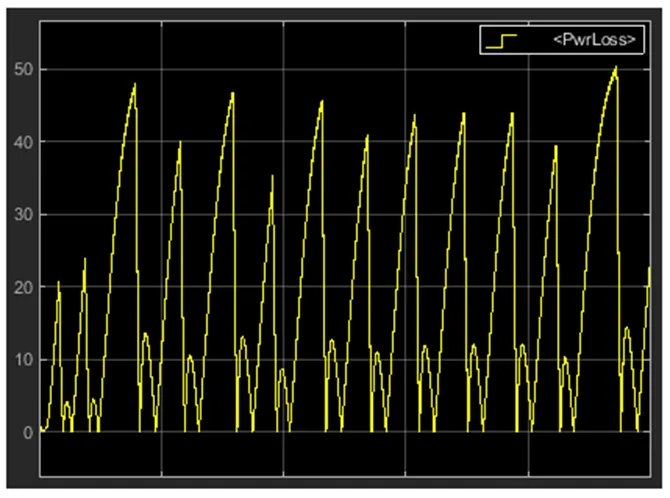
PwrLoss Plot :
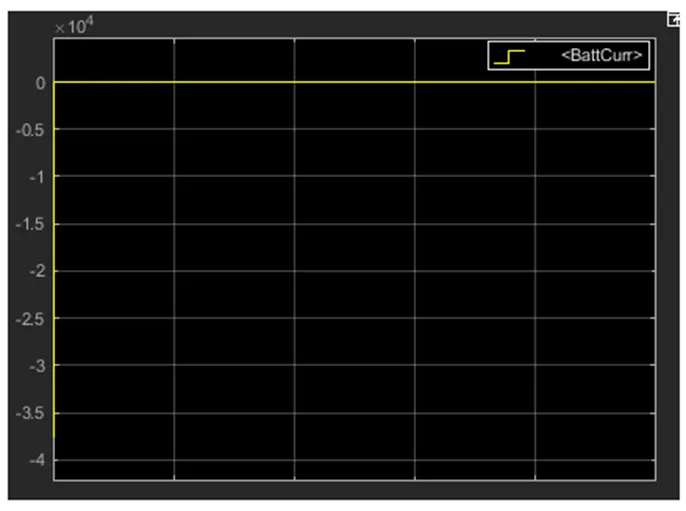
BattCurr Plot :
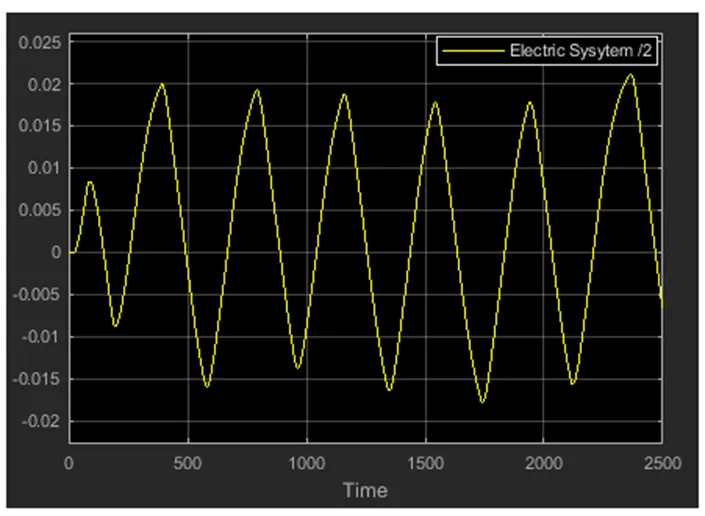
MtrSpd Plot:
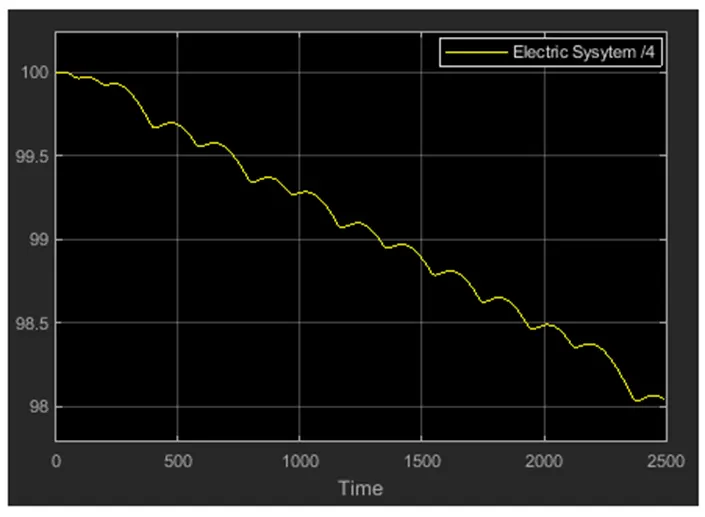
BattSoc Plot:
BattVolt Plot:
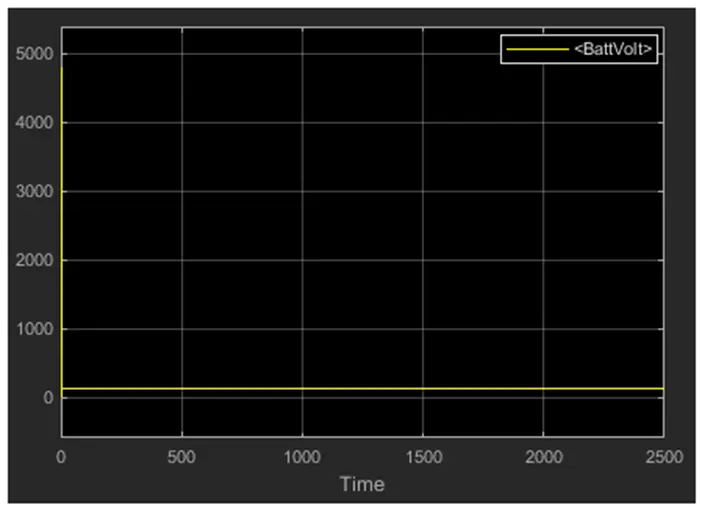
- The simulation was run for about 2500 sec and we have obtained the result shown above. There are 6 individual graphs showing the result for the motor and the battery in this result, we see that a max torque was obtained The graph of the battery SOC shows a linear and a slow discharge rate, we also observe a peak of charging spik as a cause by the regenerėtive braking of the vehicle.
- The Result for the Vehicle speed and reference speed is shown below we can see that the vehicle speed tracks the reference speeds of Artemis Motorway thanks to the PID controller, the manual tuning of the PID controller help to track the reference speeds.
CONCLUSION:
- We Create a MATLAB model of an electric car that uses a lithium-ion battery with a suitable motor. By using suitable blocks from Simscape or Powertrain block set and we Implement the vehicle speed control using Pl controller and generate brake and accelerator commands configurations Model parameters
- we have seen System level the model run as per our reference input given with less error in it due to PID controller.
note : this project i already done and get remarks also but some glitch in website i will show again to do this project