Project 1 Mechanical design of battery pack
Battery pack capacity: 18 kWh
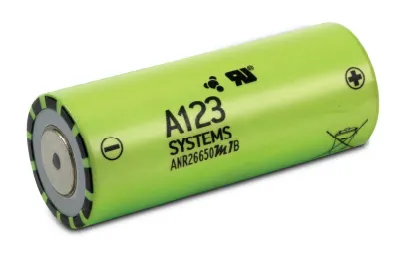
Cell: ANR26650M1-B
Prepare a detailed battery pack drawing along with its enclosure. State your assumptions.
In this project. we are going to calculate the all parameters which are required for the build EV battery pack. We are going to use the Celt ANR26650M1-B for our battery pack. In parameters, we will consider all electrical aspects like temperature. Depth of discharge. Operation current. Energy density. Work cycles, Battery capacity. State of Charge (SOC). State of Health (SOH), Ampere-hour (Ah) Capacity. We also calculate all geometrical considerations like size, weight. volume, area, etc. In the cnd, we consider some enclosures model for our battery pack.
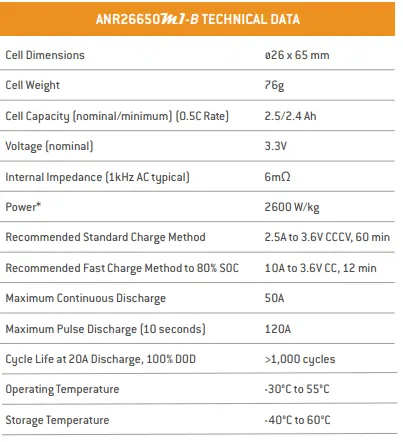
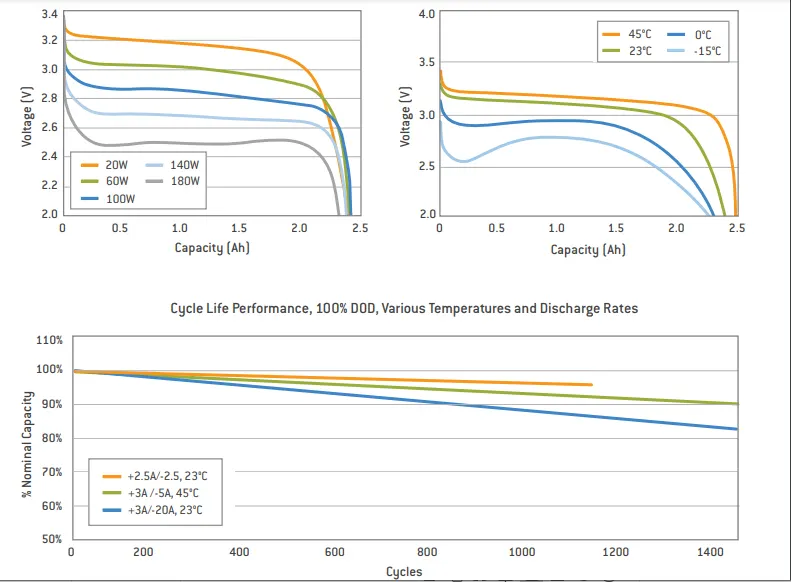
1) Collecting the data of Cell: ANR26650M1-B from Nanophosphate High Power LithiumIon Cell PDF.
2) Calculating all Electrical parameters for 18 kWh Battery Pack.
3) Calculating all Physical dimensions for Battery Pack.
4) Consider perfect enclosure for dimensions that we calculated for the Battery Pack.
1) To build the Battery pack for any Electric Vehicle, we have to calculate the first proportion of power then motor power, and depend on that we will model the battery pack so we know how much power we required which is 18kWh.
2) For the 18kWh battery Pack we have to calculate how many cells are parallel and how many cells are in series.
3) After calculation of series and parallel combination we have to calculate the proper Geometry and topology consideration for assembling batteries.
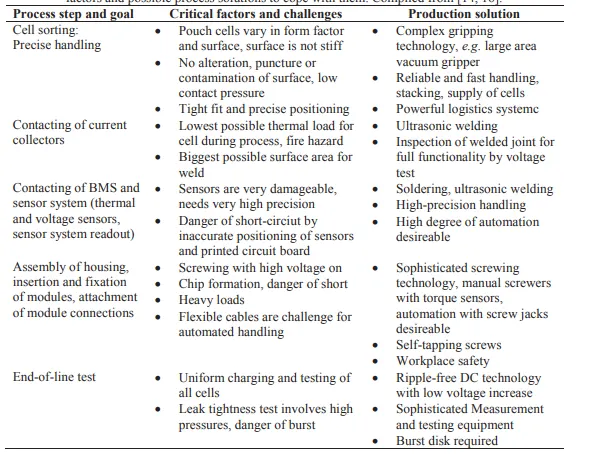
4) After Assembly we need to find a proper enclosure for the battery pack for thermal consideration and other physical damages.
The high voltage battery is one of the most important components of a battery electric vehicle (BEV). The battery parameters have a significant influence on other components and attributes of the vehicle, like:
• maximum traction motor torque • maximum regeneration brake torque
• vehicle range • vehicle total weight • vehicle price
Pretty much all major aspects of a pure electric vehicle (EV) depend on the parameters of the high voltage battery. For our electric vehicle battery design we are going to start from 4 core input parameters:
• chemistry • voltage • average energy consumption of the vehicle on a driving cycle • vehicle range
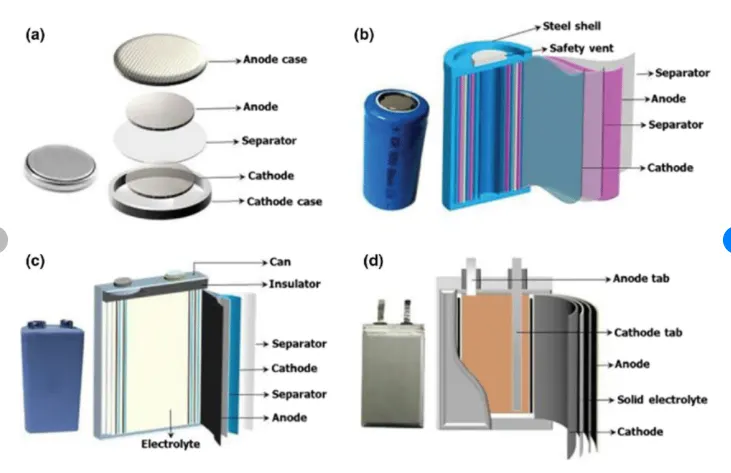
A battery consists of one or more electrochemical cells (battery cells) which are converting chemical energy into electrical energy (during discharging) and electrical energy into chemical energy (during charging). The type of elements contained within a battery and the chemical reactions during discharging-charging events define the chemistry of a battery. A battery cell consists of five major components: electrodes — anode and cathode, separators, terminals, electrolytes, and a case or enclosure. For automotive applications, there are different types of cells used Individual battery cells are grouped into a single mechanical and electrical unit called a battery module. The modules are electrically connected to form a battery pack.
The voltage level of the battery determines the maximum electrical power which can be delivered continuously. Power P[W] is the product between voltage [V] and current I
P = V*I
The higher the current, the bigger the diameter of the high voltage wires and the higher the thermal losses. For this reason, the current should be limited to a maximum, and the nominal power obtained by having a higher voltage. For our application, we are going to consider a nominal voltage of 400 V. the energy needed for propulsion, the high voltage battery must supply the energy for the vehicle's auxiliary devices Eau, [Whikm], like 12 V electrical system. heating, cooling. etc. Also, we have to consider the efficiency of the powertrain qpit]during the conversion from electrical energy to mechanical energy.
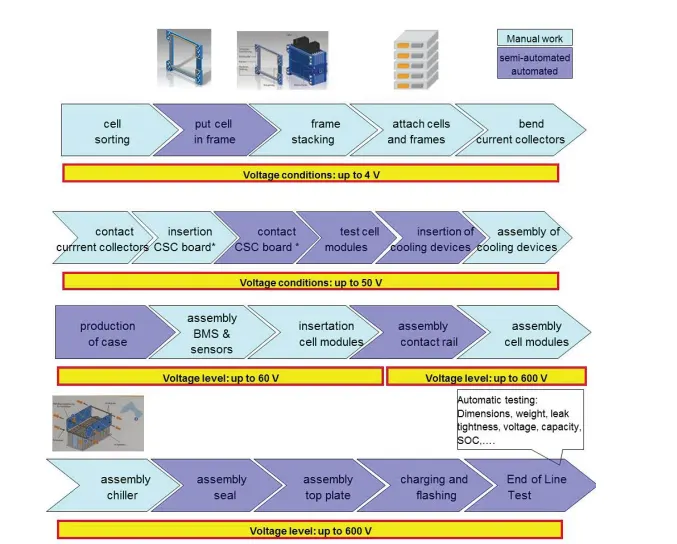
1) first we have to start with Cell calculation.
2) Then we will do Battery Pack assumptions.
3) After assumptions, we have to do Battery pack calculations.
4) from Cell Dimensions we calculate the surface required for a battery pack.
5) Depending upon the above calculations we build Battery Pack construction
Lithium Werks’ 26650 cells are capable of delivering very high power due to its use of patented Nanophosphate ® battery technology. Based on lithium iron phosphate chemistry (LiFePO4 ), the cells are inherently safe over a wide range of temperatures and conditions. Whether the application requires outstanding cycle life or stable float reliability, the Lithium Werks’ 26650 cells are suitable for a wide variety of power, pulse, or stand-by applications. Nanophosphate® Technology 26650 Lithium Ion Power Cell Nanophosphate® battery technology offers stable chemistry, faster charging, consistent output, excellent cycle life and superior cost performance. It provides the foundation for safe systems while meeting the most demanding customer requirements. Multiple layers of protection are employed at the chemistry, cell and system level to achieve an energy storage solution with superior safety and abuse tolerance compared to metal oxide lithium-ion chemistries.
Cell calculation:
1) Volume of the cell:
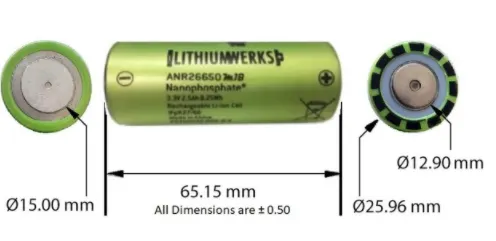
For the calculation of the volume of the cell we use the formula of Volume of cylinder. so the formula is: 7r r2 h From Datasheet of Cell, we have Y and values r=0.013m and h=0.065m = Volume of the cell: Irr2h : 3.14 0.0132. 0.065 :0.0000344929m3 The volume of the cell is 0.0000344929m3 Basically, the value of the volume of the cell is used to find out the total volume of the battery pack.
2) Cell Energy= Cell Capacity (Ah) x Cell Voltage (V) = 2.5 . 3.3 = 8.25 Wh Cell Energy is 8.25 Wh
The value of a single cell is used to calculate the total energy of the battery pack.
3)Single Cell Energy Density Volumetric energy (Wh/m3) = Single Cell Energy / Volume of each cell = 8.25 Wh / 0.0000344929m3 =2.39,179.6572 Wh/m3
Battery Pack Assumtions: There are 50 cell are in series and 44 cells are in parallel, and as above maintioned we are going to use Cell: AN R26650M1-B this cells. Battery pack calculation:
Now we calculated parallel and series combinations so we can now calculate total no of cells required
4)Total no of cells: Series cells * parallel cells :50*44 :2200.
Total no of cells required are 2200.
So from series and parallel combination, we can calculate the voltage of battery pack and the current of the battery pack.
5)Voltage= no of cell in series' nominal voltage. = 509.3 =165V
The total value of voltage is 165V.
6)Current=No of parallel cells * cell capacity = 44+2.5 =110Ah.
The total value of Current is 110Ah
So now we can calculate the how much mount of energy this combination have by product of voltage and current, and check the it will satisfied or not our requirement
7)Energy= Voltage Current = 165 * 110 = 18150WAh
The total value of Energy is 18150WAh.
So our calculation are satisfied requirement what we need.
now we have total no of cells and volume of single cell so we can calculate the total volume required for battery pack
8)Total volume = no of cells ' Volume of single cell = 2200 ' 0.0000344929 =0.075884381713 Total volume required for battery pack is 0.07588438m3
We also have single cell weight from that we can calculate the total weight of battery pack without other mechanical and electrical connections.
9)Weight = No of cells • weight of single cell. = 2200 ' 0.076 = 167.2kg
Weight of battery pack is 167.2kg
10)Energy density= volume * battery pack energy = 0.07588438 * 18150 - 1.377.301497kINh/m^3)
Energy density is 1.377.301497kWhim^3
Now we all parameters which we need to construct the battery pack in physically.
Assembly of the full battery pack with 50s/ 44P.
The arrangement of the pack is as follow:
T
2112 cells will have SOS / 44P Here I arrange the pack such that it will build a proper battery pack.
The detail technical specification of 2112 battery pack is as follow:
• Package: 505 / 44P '
• Capacity: 110 Ah
• Voltage: 165 V
• Wcight: 167.2kg (Only Cells)
• No of Cells: 2100
• Power 18150Wh or 18.15 kWh
Battery cells are like eggs. Cells come in fixed voltages and capacities. If you need more voltage, you can deal with multiples of the cell voltage. You can't get half an egg, and you can't get half a cell, at least in voltage. Cell capacities do vary, particularly with a supplier like PowerStream that has a great variety of cell sizes available, but voltages don't. All NiCad or NiMH cells are 1.2 volts nominal, lead acid is 2.0 volts nominal and the various lithium technologies are about 3.6 volts per cell. If you need more voltage you have to add them in series, if you need less voltage you need some kind of voltage regulator or DC/DC converter.
If you need more current than a single cell can supply you may need to put cells in parallel. If you need more capacity to give longer run time you may also put cells in parallel.
Many times the physical configuration makes it more attractive to use many small cells rather than a few large cells, since a large block is harder to fit than several small subunits.
Geometry and Topology Considerations for Assembling Batteries
There are an infinite variety of battery pack combinations. Here are the most popular:
Case 1: Ladder, linear, F type, or radial

Note that the straps will both come off the top when there are an even number of cells, and one off the top, the other off the bottom when there is an odd number of cells. With a connector and heat shrink wrap they look like this:
The size of a ladder pack is D x nD x H where D is the diameter of the cell, n is the number of cells, and H is the height of the cells.
Case 2: Multi-row cells
There are two ways to start packing them. One could be called the cubic, and the other face centered cubic, or nested.
Cubic packing is in neat rows. The size of such a pack is nD x mD x H, where n is the number of cells in a row, m is the number of rows, D is the cell diameter, and H is the cell height.
Case 3: Face centered "cubic"

Face centered cubic packing is nested to take up less room. Calculating the size takes a little geometry, which follows:
The size is L x W x H where
L = (n +½)D
W = [0.866(p-1)+1] D
H=H
p is the number of rows wide.
Case 4: FCC with alternating long and short rows
If there are alternating long and short rows, such as the 3,4,3 ten cell pack, the formulas are
L = mD
W = [0.866(p-1)+1] D
H = H
Where m is the number of cells in the longest layer, and p is the number of layers. With heat shrink it looks like this:

Case 5: Fixed channel width optimization
What if you have a fixed width channel and want to stagger the cells to maximize the number of cells per unit width? Pull out your high school geometry book, this is trickier!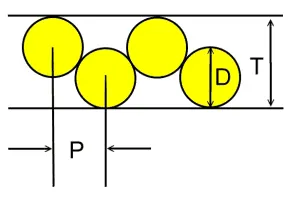
The distance P between the cells of Diameter D in a channel with height T is P = sqrt (2TD-T^2)
So if you have 18mm diameter batteries fitting into a 25.4mm channel, the distance between the cells is 16.8mm. In this case you can fit in an extra cell for every 15 cells, or save 1.2 mm of width per cell.
Case 6: Packing cells in a tube, 3 cells.
For a 3 cell pack, you can put the cells in a tube
The diameter of the outer circle is 2.16 D.
Case 7: Packing cells in a tube, 4 cells.
For a four cell pack in a circular tube
The diameter of the circumscribing circle is 2.41 D.
For example, with AA cells the diameter is 14.2 mm, so three would fit into a tube 30.7 mm in diameter, and four would fit in a tube 34.22 mm in diameter. Of course you will want to expand this slightly to account for up to 0.5 mm variation in cell diameters.
Injection Molded Plastic
Enclosures made from injection molded plastics are most commonly used for battery packs. For these enclosed pack designs, two or more plastic parts are molded and then assembled with the pack and accompanied circuitry. They can be sealed using glue, mechanical fasteners (Screws) or ultrasonic welding. The product cost can be reduced by using insert moldings in which the interconnection strips and the terminals are molded into the plastic parts to eliminate both materials and assembly costs.

Custom Designed Battery Pack Enclosure Made From Injection Molded Plastic
In some designs, the battery pack can form part of the outer case of the end product and usually requires a mechanical latch to hold the battery in place. This latch as well as the terminals must interface with plastic parts from the device itself so high precision and tight tolerances are essential.
Shrink Wrap or Vacuum Formed Plastic
The simplest and least expensive packaging for small batteries is shrink wrap or vacuum formed plastic. These solutions are only possible if the battery is intended to be completely enclosed by the finished product. In other cases, battery packs are mounted externally and may serve a mechanical function, such as a handle or base for the product. Our extensive experience in designing battery enclosures of all types allow us to enhance the functional design of the product while assuring that the battery passes any shock, vibration and environmental testing required for your application.
Other Considerations
Thermal effects need to be taken into account and, tolerances must allow for potential swelling of the cells. Some Lithium pouch cells may swell as much as 10% or more over the lifetime of the cell. For this reason, enclosures may be designed with vent holes to dissipate generated heat or exhaust vented gases from cells. Multiple vent holes may be used to increase airflow in and out of the pack.
Intrinsically Safe Batteries
Intrinsically safe batteries will not initiate and explosion should the electronic device malfunction while operating in areas that contain explosive gases or high dust concentration. For these applications, specific materials are selected for battery pack enclosure and many times potting material is used in the battery pack enclosure to eliminate any air gaps.