Project 1 Mechanical design of battery pack
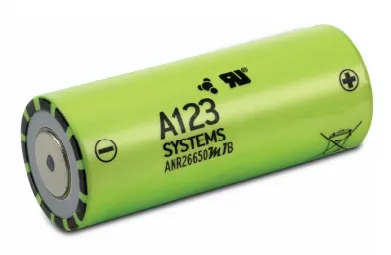
ABSTRACT: In this project, we are going to calculate the all parameters which are required for the build EV battery pack. We are going to use the Cell: ANR26650M1-B for our battery pack. In parameters, we will consider all electrical aspects like temperature, Depth of discharge, Operation current, Energy density, Work cycles, Battery capacity, State of Charge (SOC), State of Health (SOH), Ampere-hour (Ah) Capacity. We also calculate all geometrical considerations like size, weight, volume, area, etc. In the end, we consider some enclosures model for our battery pack.
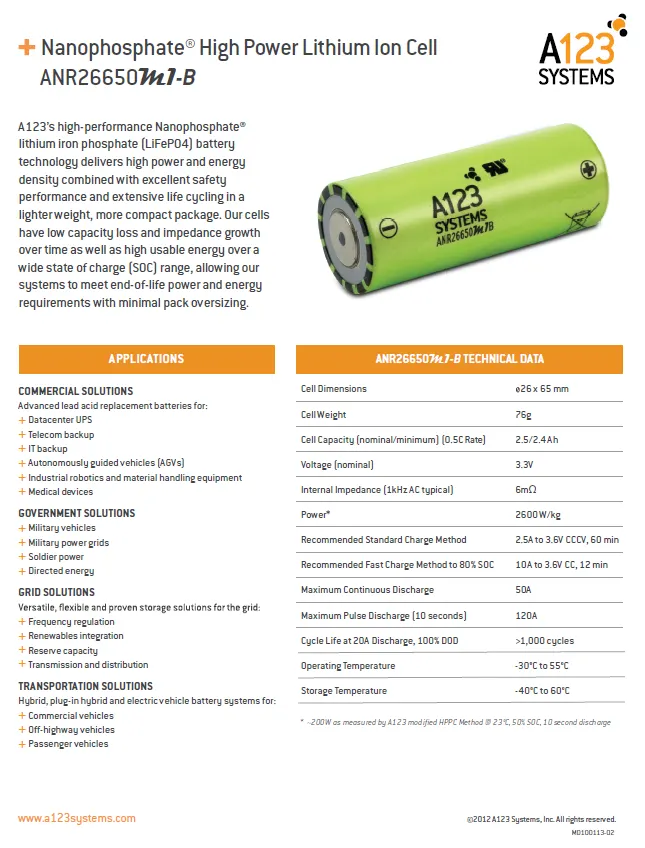
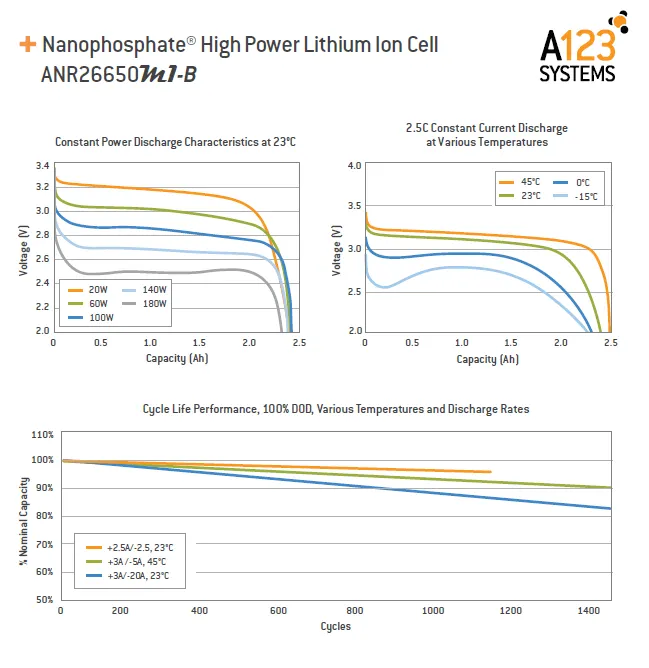
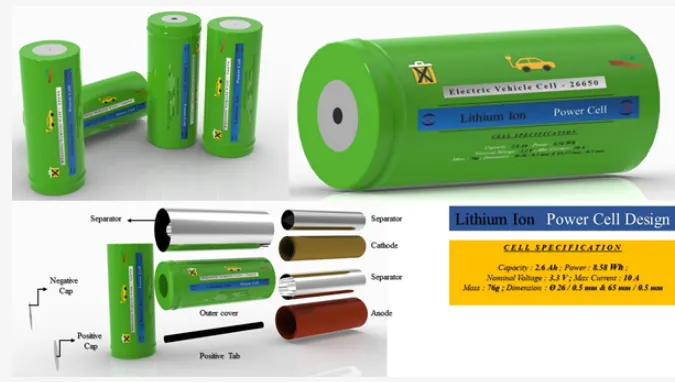
Cell dimensions:
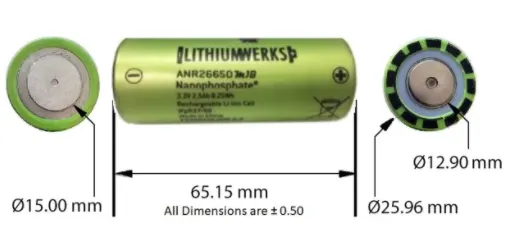
Cell calculation:
1) Volume of the cell: For the calculation of the volume of the cell we use the formula of Volume of cylinder.
so the formula is: πr ²h
From Datasheet of Cell, we have 'r' and 'h' values
r=0.01298m and h=0.065m = Volume of the cell: πr ²h
: 3.14*(0.01298) ²*0.065
: 0.0000343868 m3
The volume of the cell is 0.0000343868 m3
2) Basically, the value of the volume of the cell is used to find out the total volume of the battery pack.
- Single Cell Energy (Wh)
= Cell Capacity (Ah) x Cell Voltage (V)
= 2.5 x 3.3
= 8.25 Wh
Cell Energy is 8.25 Wh
3) The value of a single cell is used to calculate the total energy of the battery pack.
-Single Cell Energy Density
Volumetric energy (Wh/m^3) = Single Cell Energy / Volume of each cell
= 8.25 Wh / 0.0000343868 m^3
= 2,39,917.64 Wh/m^3
Single Cell Energy Density is 2,39,917.64 Wh/m3
Battery Pack Assumtions:
There are 50 cell are in series and 44 cells are in parallel, and as above maintioned we are going to use Cell: ANR26650M1-B this cells.
Battery pack calculation:
Now we calculated parallel and series combinations so we can now calculate total no of cells required
Total no of cells: Series cells * parallel cells
:50*44
:2200.
Total no of cells required are 2200.
So from series and parallel combination, we can calculate the voltage of battery pack and the current of the battery pack.
Voltage= no of cell in series* nominal voltage.
= 50*3.3
= 165 V
The total value of voltage is 165V.
Current=No of parallel cells * cell capacity
= 44*2.5
=110Ah.
The total value of Current is 110Ah
So now we can calculate the how much mount of energy this combination have by product of voltage and current, and check the it will satisfied or not our requirement
Energy= Voltage * Current
= 165 * 110
= 18150WAh
The total value of Energy is 18150WAh.
So our calculation are satisfied requirement what we need.
now we have total no of cells and volume of single cell so we can calculate the total volume required for battery pack
Total volume = no of cells * Volume of single cell
= 2200 * 0.0000343868
=0.07565096 m3
Total volume required for battery pack is 0.07565096 m3
We also have single cell weight from that we can calculate the total weight of battery pack without other mechanical and electrical connections.
Weight = No of cells * weight of single cell.
= 2200 * 0.076
= 167.2kg
Weight of battery pack is 167.2kg
Energy density= volume * battery pack energy
= 0.07565096 * 18150
= 1,373.064924 kWh/m^3
Energy density is 1,373.064924 kWh/m^3
Now we all parameters which we need to construct the battery pack in physically.
THEORY:
The high voltage battery is one of the most important components of a battery electric vehicle (BEV). The battery parameters have a significant influence on other components and attributes of the vehicle, like:
- maximum traction motor torque
- maximum regeneration brake torque
- vehicle range
- vehicle total weight
- vehicle price
Pretty much all major aspects of a pure electric vehicle (EV) depend on the parameters of the high voltage battery.
For our electric vehicle battery design we are going to start from 4 core input parameters:
- chemistry
- voltage
- average energy consumption of the vehicle on a driving cycle
- vehicle range
A battery consists of one or more electrochemical cells (battery cells) which are converting chemical energy into electrical energy (during discharging) and electrical energy into chemical energy (during charging). The type of elements contained within a battery and the chemical reactions during discharging-charging events define the chemistry of a battery.
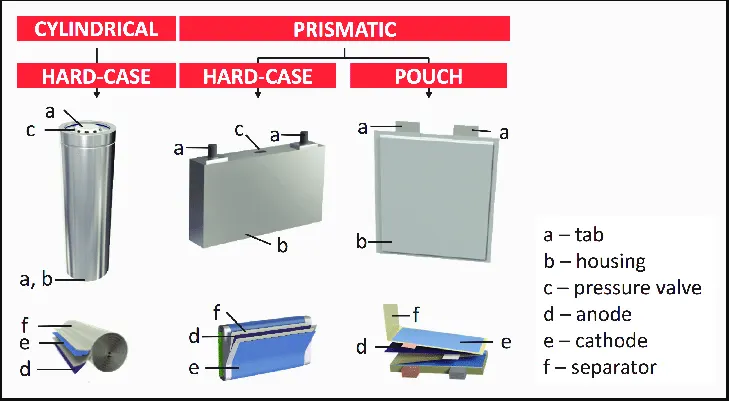
A battery cell consists of five major components: electrodes – anode and cathode, separators, terminals, electrolytes, and a case or enclosure. For automotive applications, there are different types of cells used Individual battery cells are grouped into a single mechanical and electrical unit called a battery module. The modules are electrically connected to form a battery pack.
The voltage level of the battery determines the maximum electrical power which can be delivered continuously. Power P [W] is the product between voltage U [V] and current I [A]:
P = U* I
The higher the current, the bigger the diameter of the high voltage wires and the higher the thermal losses. For this reason, the current should be limited to a maximum, and the nominal power obtained by having a higher voltage. For our application, we are going to consider a nominal voltage of 400 V.
the energy needed for propulsion, the high voltage battery must supply the energy for the vehicle’s auxiliary devices Eaux [Wh/km], like 12 V electrical system, heating, cooling, etc. Also, we have to consider the efficiency of the powertrain ηp [-] during the conversion from electrical energy to mechanical energy.
Battery pack architecture:
All high voltage battery packs are made up from battery cells arranged in strings and modules. A battery cell can be regarded as the smallest division of the voltage.
Individual battery cells may be grouped in parallel and/or series as modules. Further, battery modules can be connected in parallel and/or series to create a battery pack. Depending on the battery parameters, there may be several levels of modularity.
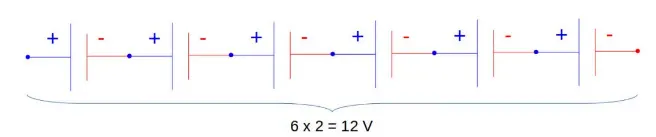
The total battery pack voltage is determined by the number of cells in series. For example, the total (string) voltage of 6 cells connected in series will be the sum of their individual voltage.
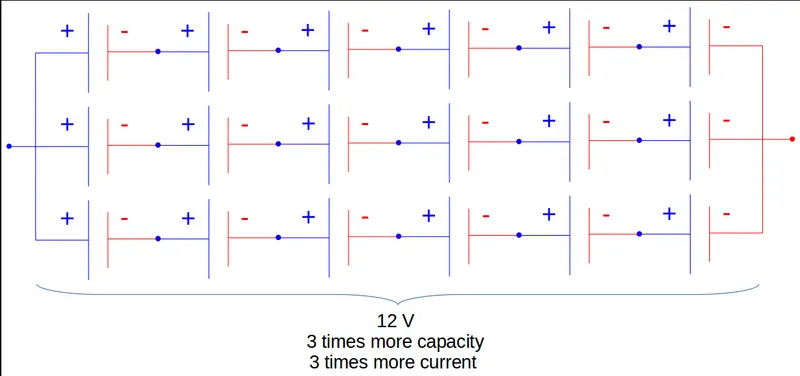
In order to increase the current capability the battery capacity, more strings have to be connected in parallel. For example, 3 strings connected in parallel will triple the capacity and current capability of the battery pack.
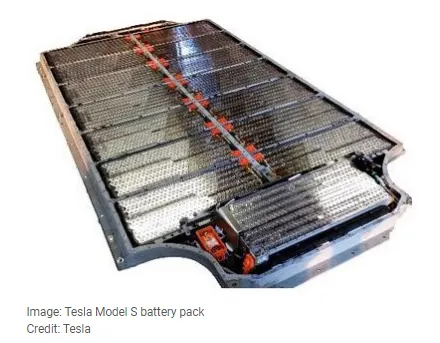
An example is the high voltage battery pack of Tesla Model S, which has:
- 74 cells in a parallel-group
- 6 groups in series for a module
- 16 modules in series
- 7104 cells in total
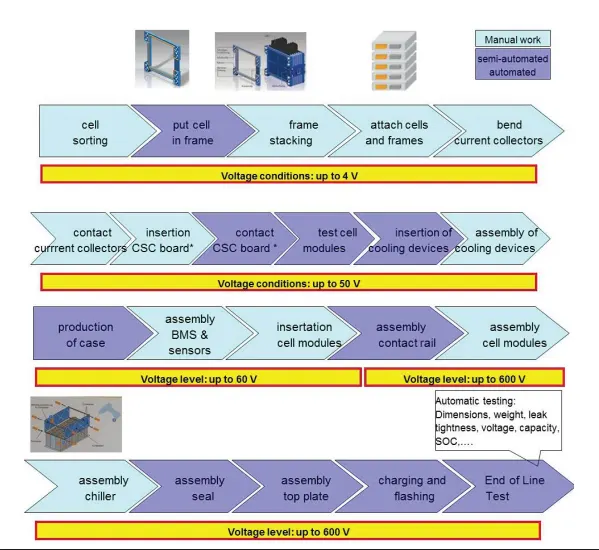
Battery pack production line:
The arrangement design of single-cell is shown below:
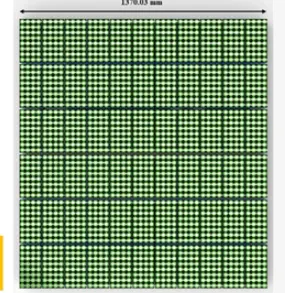
Assembly of the full battery pack with 50s/ 44P. The arrangement of the pack is as follow:
Then,
ANR26650M1-B will have 50S / 44P
Here I arrange the pack such that it will build a proper battery pack.
The detail technical specification of ANR26650M1-B battery pack is as follow:
- Package: 50S / 44P
- Capacity: 110 Ah
- Voltage: 165 V
- Weight: 167.2kg (Only Cells)
- No of Cells: 2100
- Power: 18150Wh or 18.15 kWh
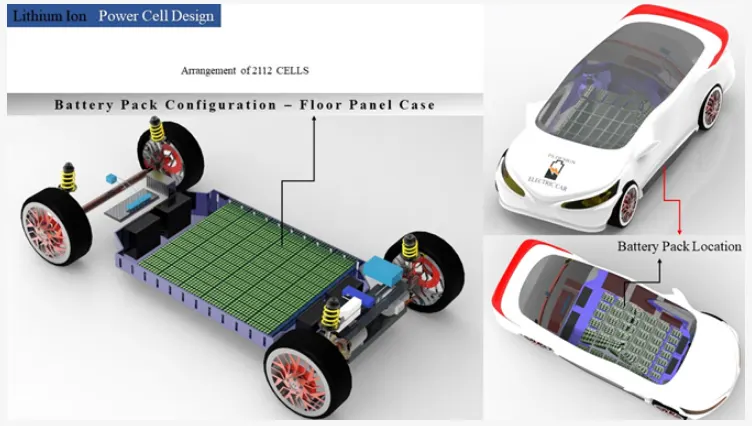
Here I also configure battery pack into electric vehicle lower floor panel case, a simple layout of the battery pack in an electric vehicle is shown below:
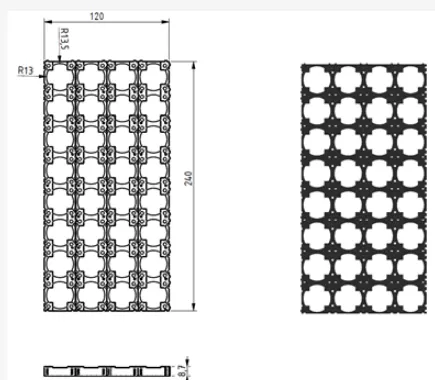
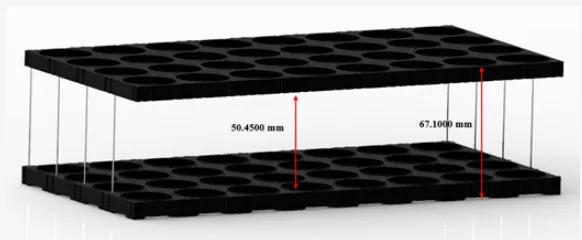
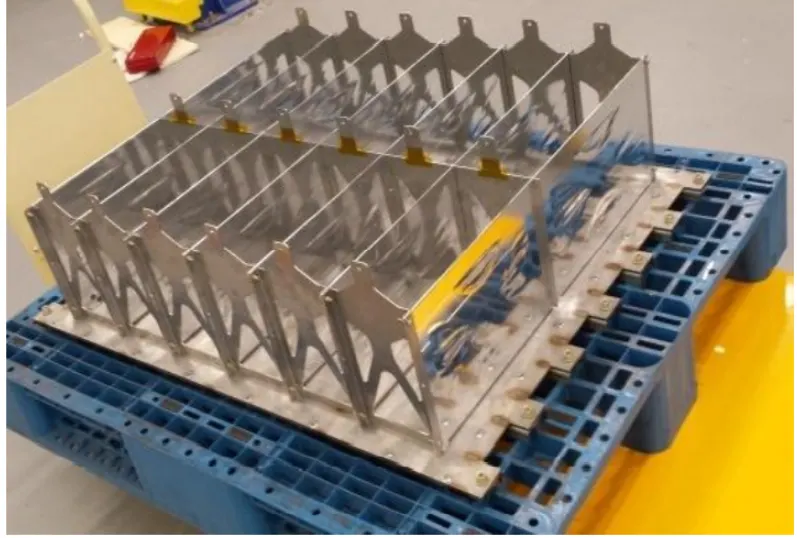
Design of cell holder (Bottom and Top)
The main function of a battery holder is to keep cells fixed in place safely and securely also it is used to keep cells in a proper arrangement so that there will be a decrease in mechanical vibration, and have a better thermal runway in between the cell gaps. Most of the cell holder is made up of polypropylene or nylon bodies rated for 80–100 °C.

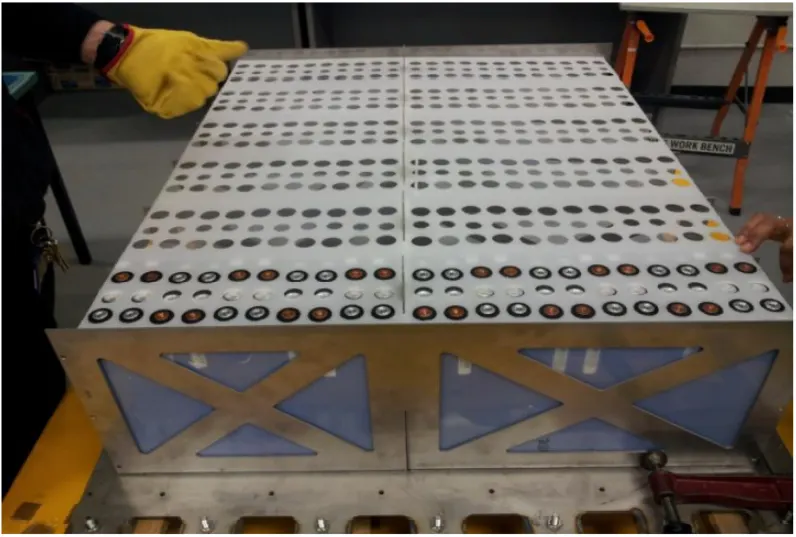
Design of pack cover
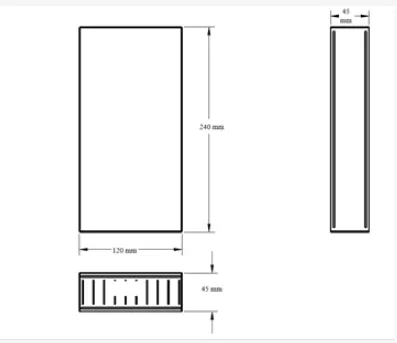
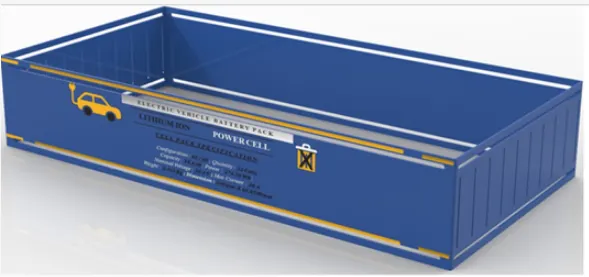
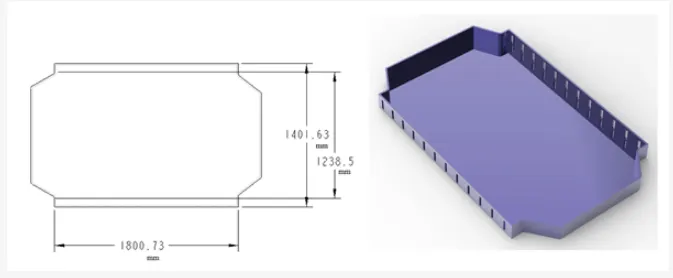
Basically, Pack cover is made up of Aluminium and the reason behind is to keep battery pack for lightweight. The casing/cover thickness is 0.5 mm and the design is as shown below:
A bottom cover is shown to cover below the bottom battery holder.

Design of Lower floor case for battery pack
Basically, the lower case is a part which is fitted in an electric vehicle for the assembly of the battery pack. A lower case is also made up of aluminum and it has top cover and bottom cover to battery pack from dust and environmental pollution.
The design of the lower case is shown
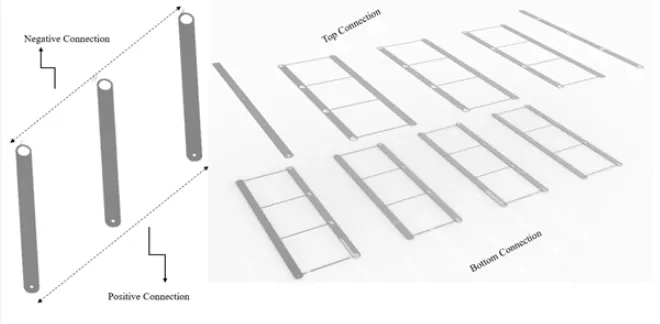
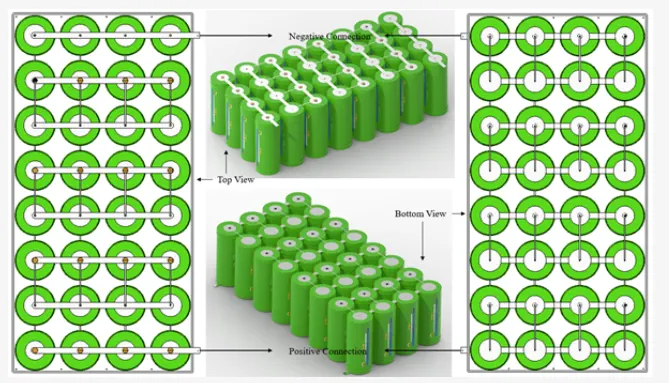
Positive and Negative Clip
A positive and negative clip is used to connect the battery end cap i.e (+) and (-). Design is shown below:
To make the battery pack, you have to connect the many cells together by means of Nickel strips or thick wire. Generally, Nickel strips are widely used for this. In general two types of nickel, strips are available in the market: nickel-plated steel strips and pure nickel strips. I will suggest buying a pure nickel. It is a little bit costlier than nickel-plated steel, but it has much lower resistance. Low resistance means, less heat generation during the charging and discharging, which leads to longer useful battery life.
Nickel strips come with different dimensions and lengths.

Joining of Cylindrical Cell Battery Pack
Cylindrical cells have improved thermal management efficiency because of compact shape, but have low packaging efficiency because of their round cross-section. Here I use a positive and negative tab to connect multi cells.
The suitability of joining methods to build battery packs using cylindrical cells is shown below:
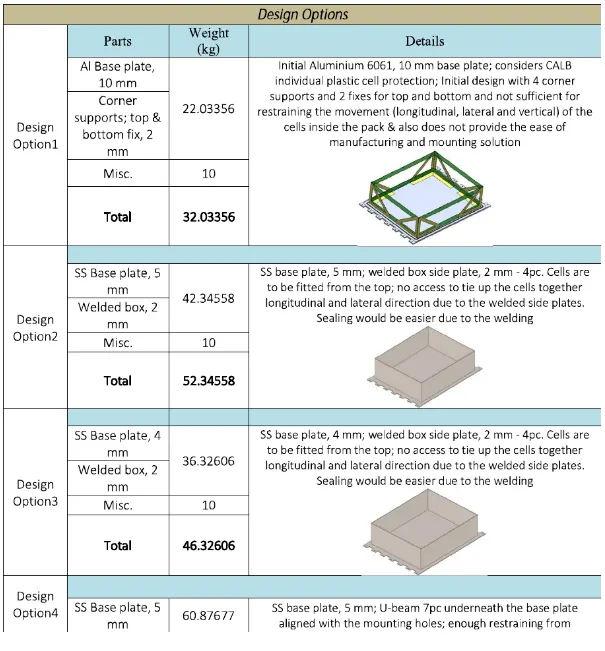
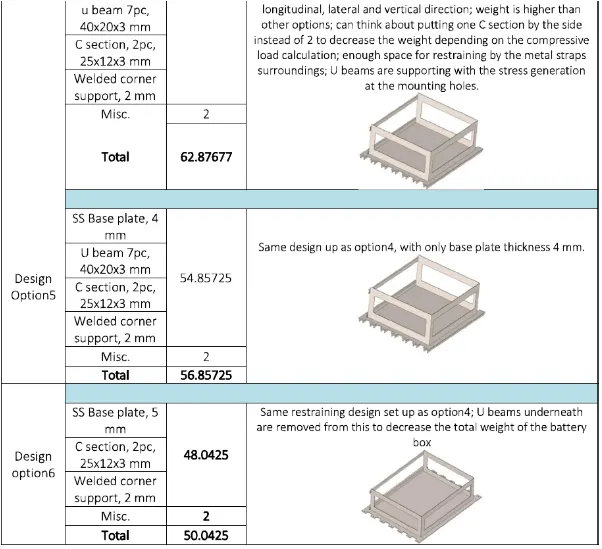
Some other design options for battery pack constructions:
RESULT:
| NO | Calculated Parameters | Value Get |
| 1 |
Cell Volume |
0.0000343868 m3 |
| 2 | Cell Energy | 8.25 Wh |
| 3 | Energy Density/Volumetric energy (Wh/m^3) | 2,39,917.64 Wh/m^3 |
| 4 | Pack assumptions | 50s 44p |
| 5 | Total no of cells | 2200 |
| 6 | Voltage | 165V |
| 7 | Capacity | 110Ah |
| 8 | Energy | 18150WAh |
| 9 | Total volume | 0.07565096 m3 |
| 10 | Energy Density | 1,373.064924 kWh/m^3 |
| 11 | Weight | 167.2kg |