Project 1 Mechanical design of battery pack
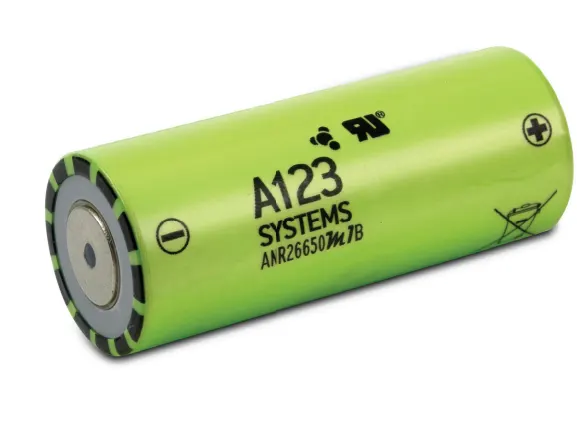
ANR26650M1-B
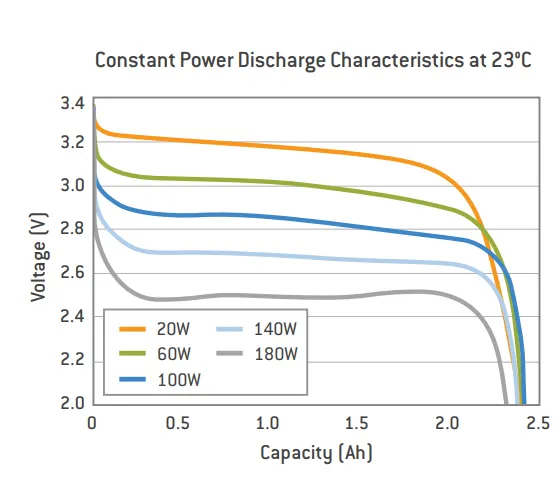
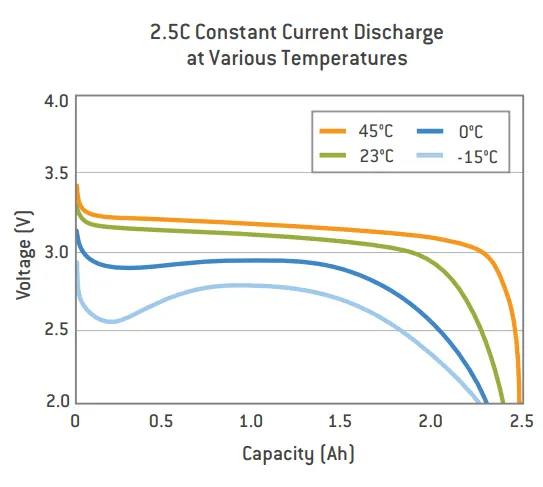
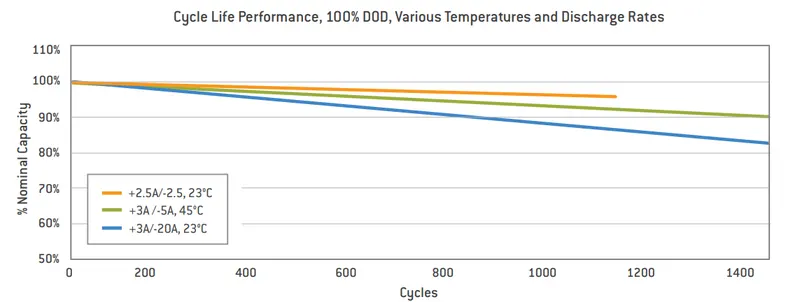
A123’s high-performance Nanophosphate® lithium iron phosphate (LiFePO4) battery technology delivers high power and energy density combined with excellent safety performance and extensive life cycling in a lighter-weight, more compact package. Our cells have a low capacity loss and impedance growth over time as well as high usable energy over a wide state of charge (SOC) range, allowing our systems to meet end-of-life power and energy requirements with minimal pack oversizing.
Finding the number of cells in series and parallel :
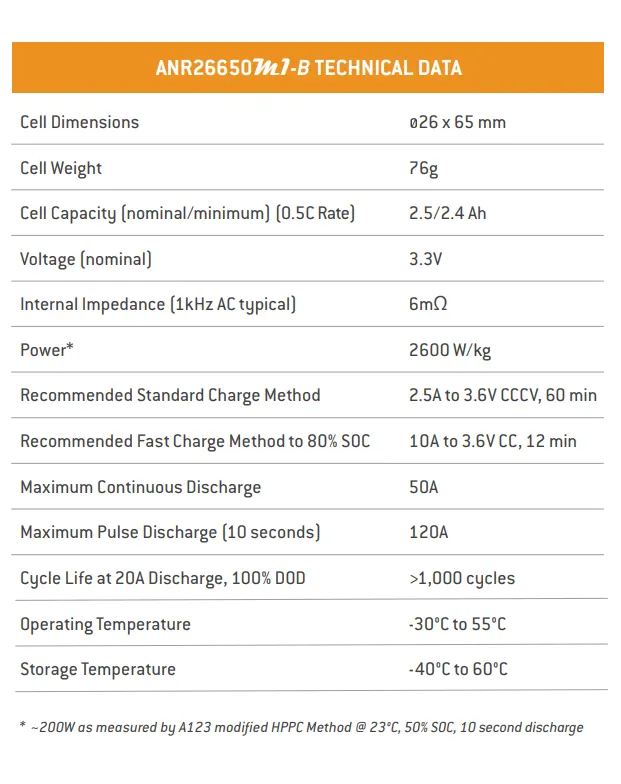
Nominal cell capacity = 2.5 Ah
Nominal Voltage = 3.3 V
Battery Pack Capacity = 18 kWh
Let the motor connected to the battery is 72 V.
So, the required capacity in Ah = 18 KWh/72V = 250 Ah
No of cells in series = 72/3.3 = 21.81
Let's take a close approximation of 22 Cells in series
No of cells in parallel = 250 Ah/2.5 Ah = 100
So total number of cells = 22*100 = 2200
Let the motor connected to the battery is 400 V.
So, the required capacity in Ah = 18 KWh/400V = 45 Ah
No of cells in series = 400/3.3 = 121.21
Let's take a close approximation of 122 Cells in series
No of cells in parallel = 45 Ah/2.5 Ah = 18
So total number of cells = 18*122 = 2196
So in both cases, we see that the total number of cells is approximately equal to 2200 and the volume required will also be approximately equal
Now to find the area and volume a matrix of 100 x 22 is made
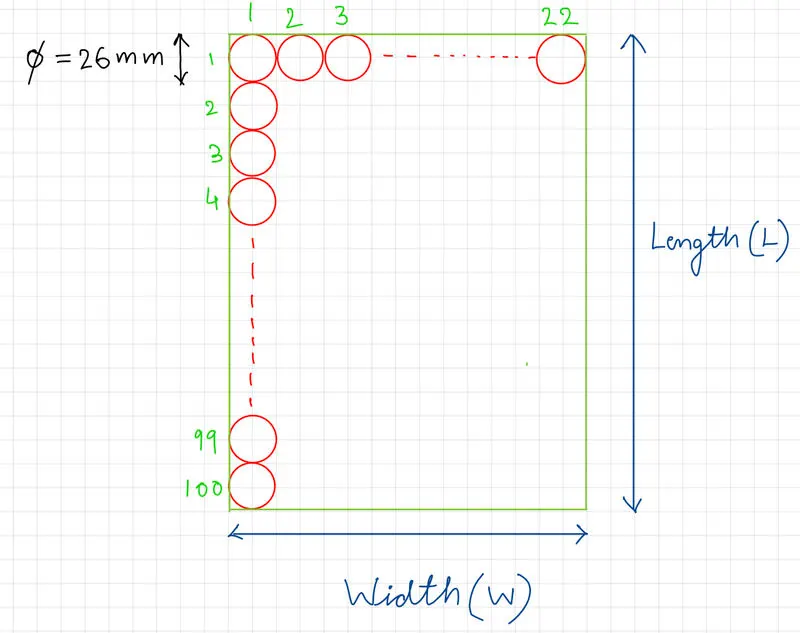
Hence we need to calculate the
The width of battery pack = 22 * dia of the cell = 22 * 26 = 572 mm
The length of the battery pack = 100 * dia of the cell = 100 * 26 = 2600
Top and bottom area = 572*2600 =14,87,200 square mm = 1.4872 square metre
Total volume = area * height of the cell = 1.4872 * 0.065 = 0.097 cubic metre
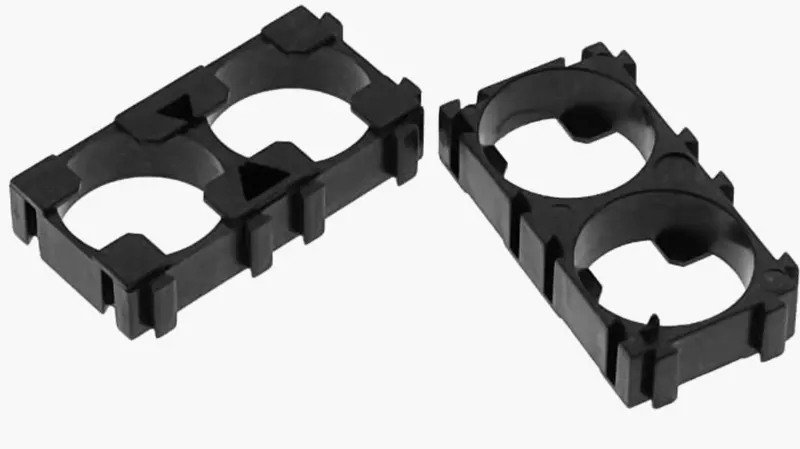
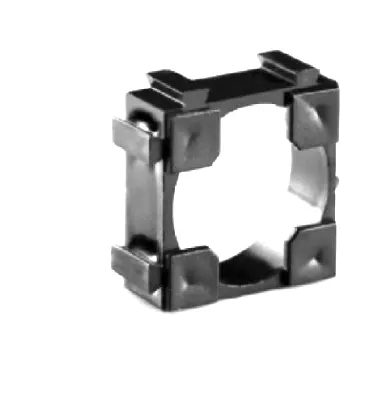
Now we use battery holders to make a grid of 22 x 100
And now place the cells in series and parallel in this grid where the battery holder is holding the cells at the top and bottom.
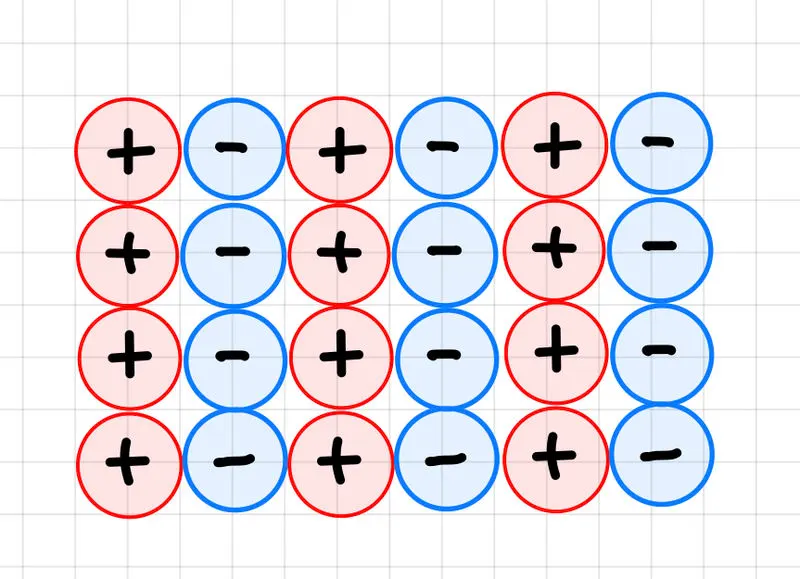
This is the top view of the battery pack where cells with the same orientation are in a column and cells in adjacent columns are in an opposite orientation
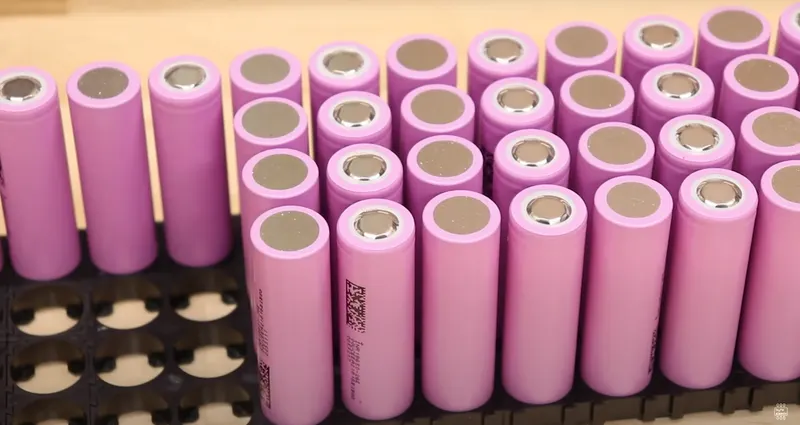
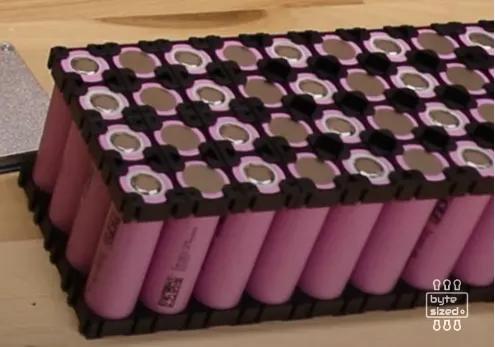
Now for the connection, we use parallel nickel strips.


Now we make a lot of pieces out of this and cut them to the right length. And when this is done, it will be time for spot-welding the pieces onto the battery pack. To do this we use Battery Handheld Spot Welder.
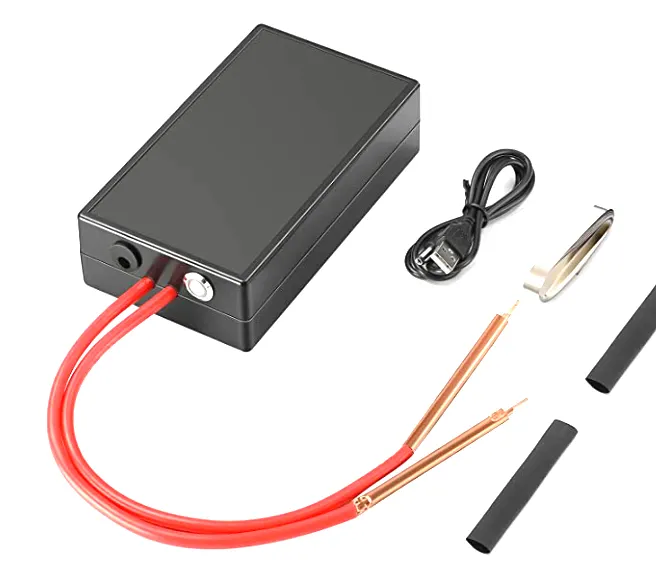
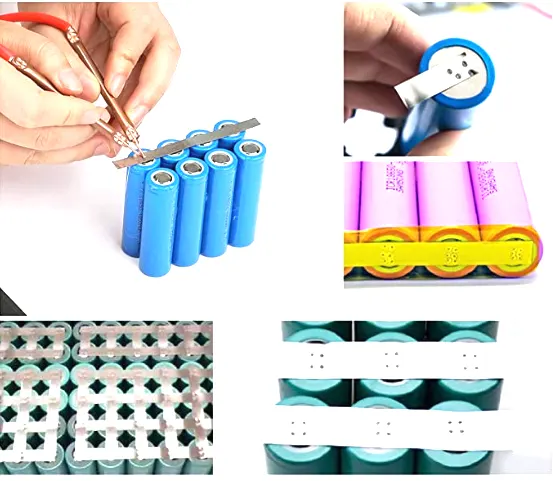
While doing the assembly of cells we can do either soldering or spot welding.
We generally avoid soldering because the heat introduced into the cells by the soldering iron is enough to permanently damage the cells. Not only that, but excessive overheating can induce a thermal runaway, likely followed by the explosion of the cell.
Spot welding can keep the battery from getting too hot, as might happen if conventional soldering were done. when spot welding is melting the two metals together, but the energy transfer is so quick and so localized that the overall temperature increase in the cell is extremely small.
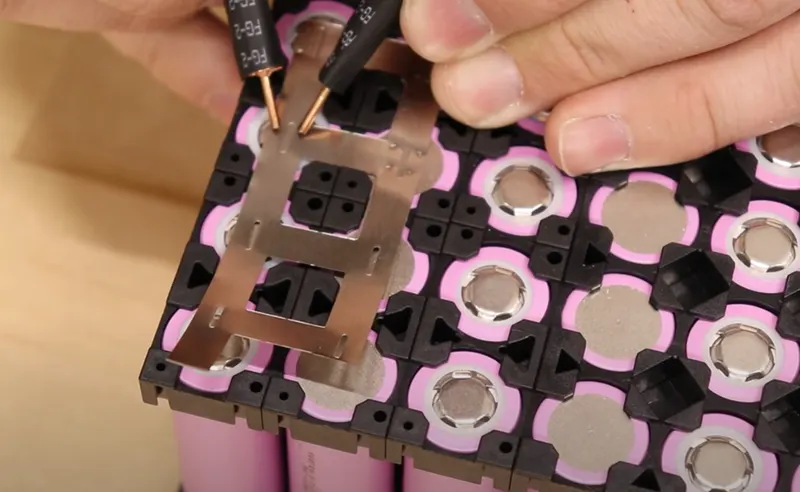
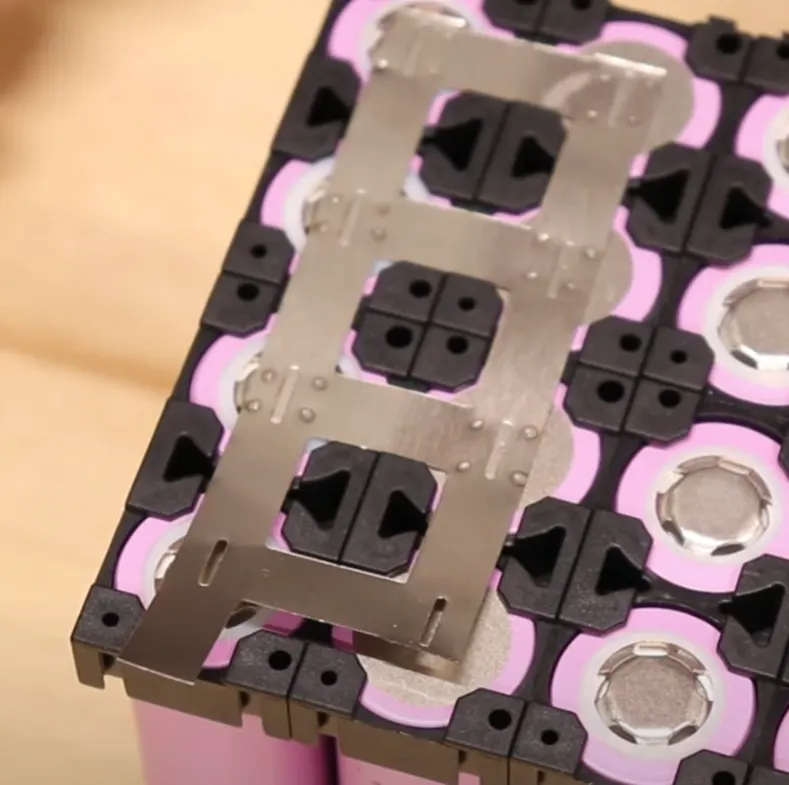
After spot-welding the nickel strips, it's time to add a Battery Management System.
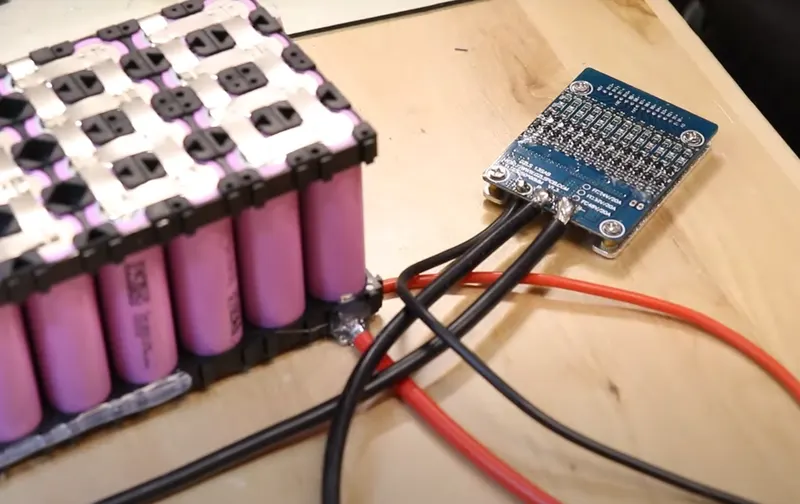
What is a BMS ?
Battery management system:
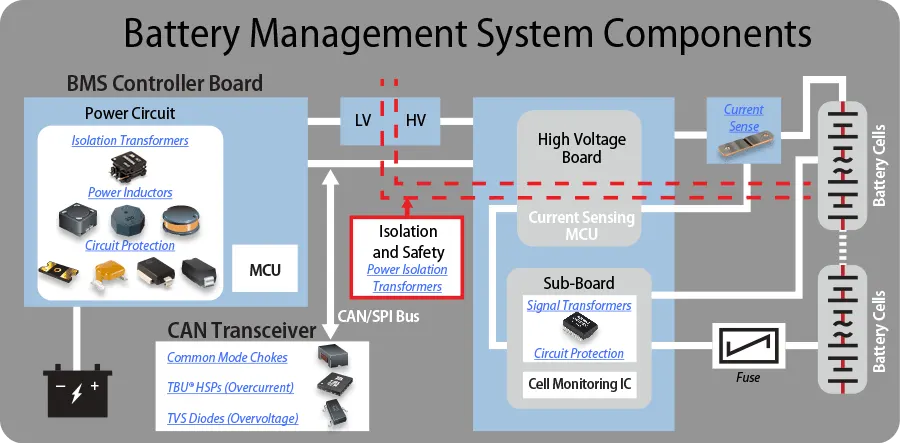
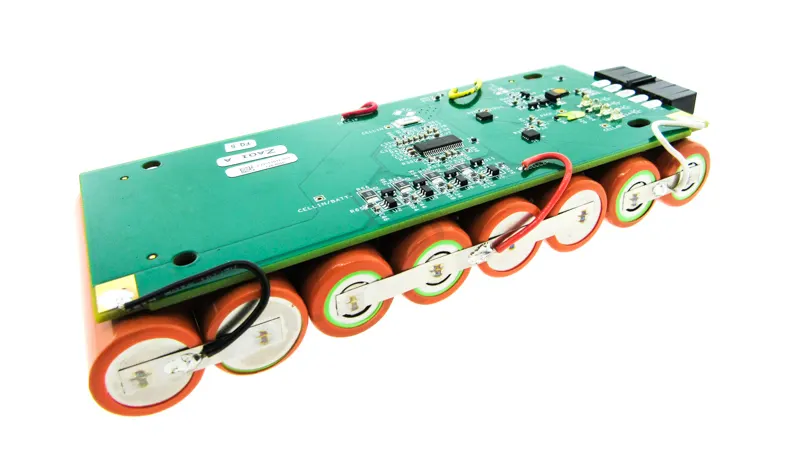
Battery management system (BMS) is technology dedicated to the oversight of a battery pack, which is an assembly of battery cells, electrically organized in a row x column matrix configuration to enable the delivery of a targeted range of voltage and current for a duration of time against expected load scenarios.
The oversight that a BMS provides usually includes:
- Monitoring the battery
- Providing battery protection
- Estimating the battery’s operational state
- Continually optimizing battery performance
- Reporting operational status to external devices
Protection venting
Why Enclosure Protection Venting Is Needed
Battery enclosures are typically sealed metal or plastic shells designed to protect the battery from dust, debris, and moisture, such as rain, snow, and car-wash sprays. Any one of those elements can damage battery cells and ancillary electronics, so an effective enclosure keeps those potentially harmful materials away from the battery. A battery pack for an electric vehicle may have hundreds of cells contained within several modules, as shown in Figure 1.
In addition to keeping out contaminants, battery enclosures need to handle pressure differentials between the enclosure interior and the surrounding atmosphere. The pressure differential can fluctuate widely during normal vehicle operation due to ambient temperature changes, heat generation in cells, and atmospheric pressure changes. Much like an automobile passenger might experience “ear popping” while traversing mountainous terrain, battery enclosures experience similar pressure fluctuation as elevation changes.
For making this enclosure, the entire battery pack is enclosed within a thick rubber sheet
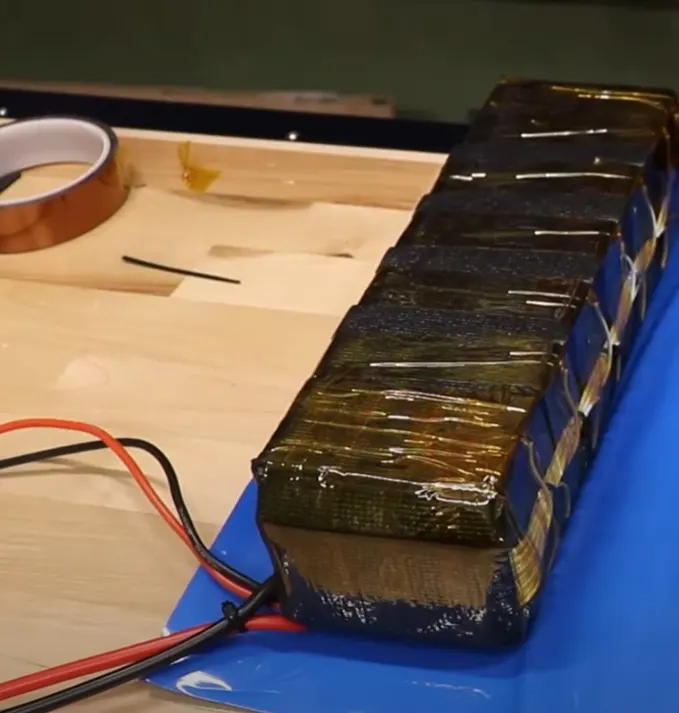
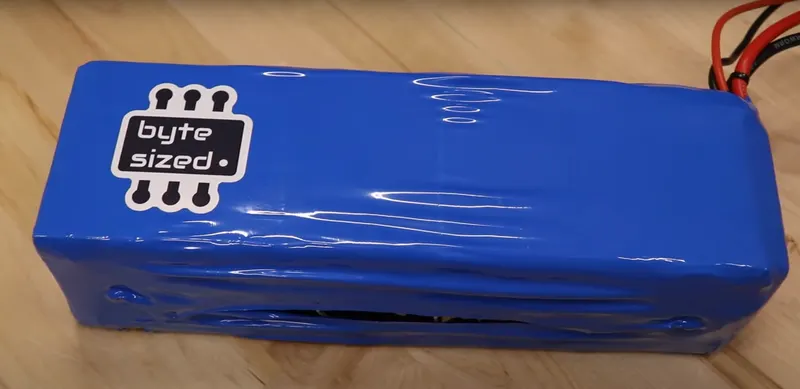
Then finally this is enclosed within a PVC heat shrink wrap
PVC Heat Shrink Tubing is an inexpensive, low-shrink temperature tubing. PVC tubing can quickly shrink to half its size and conforms around bends to form tight-fitting, flexible insulation.

Final product: