Mechanical design of battery pack
Objective:
Prepare a detailed battery pack drawing along with its enclosure. State your assumptions.
Ans:
Introduction:
A battery pack is a set of any number of (preferably) identical batteries or individual battery cells. They may be configured in a series, parallel or a mixture of both to deliver the desired voltage, capacity, or power density. The term battery pack is often used in reference to cordless tools, radio-controlled hobby toys, and battery electric vehicles.
Components of battery packs include the individual batteries or cells, and the interconnects which provide electrical conductivity between them. Rechargeable battery packs often contain a temperature sensor, which the battery charger uses to detect the end of charging. Interconnects are also found in batteries as they are the part that connects each cell, though batteries are most often only arranged in series strings.
When a pack contains groups of cells in parallel there are different wiring configurations that take into consideration the electrical balance of the circuit. Battery regulators are sometimes used to keep the voltage of each individual cell below its maximum value during charging so as to allow the weaker batteries to become fully charged, bringing the whole pack back into balance. Active balancing can also be performed by battery balancer devices which can shuttle energy from strong cells to weaker ones in real-time for better balance. A well-balanced pack lasts longer and delivers better performance.
For an inline package, cells are selected and stacked with solder in between them. The cells are pressed together and a current pulse generates heat to solder them together and to weld all connections internal to the cell.
Components of the battery pack:
- Cells (Different form factors & chemistry types)
- BMS (Electronics to manage the battery)
- Connection System (Connector, pigtail, wires)
- Housing (Plastic, sheet metal, shrink, etc.)
Cells:
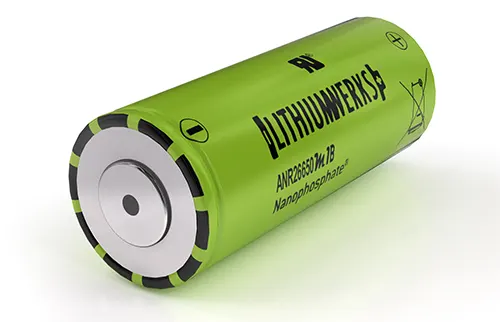
A pack can contain one cell or many cells configured to achieve higher capacity or output voltage. This is achieved by connecting cells in parallel or series, and we'll explore this much further in our next blog. The cell is considered the “fuel tank” of the battery pack system, holding the energy that will be released during discharge (when the engine is running) or replaced during a charge cycle (when the tank is refilled at a gas station). However, there are other components needed to utilize the energy stored in the cell.
BMS:
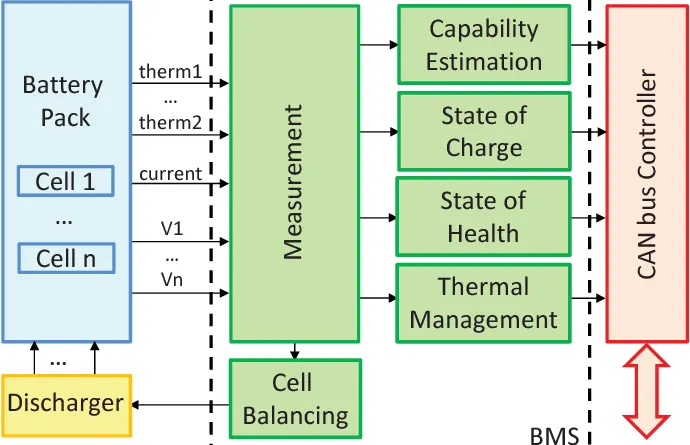
The BMS is the control system of the pack and can be simple or complex, depending on the need of the battery pack and host application. Returning to the car analogy, think of a battery pack's BMS like a car's control system. In a car, the control system shuttles fuel from the fuel tank to the engine to be utilized in a controlled and safe manner and notifies the user of any issues (i.e. low fuel). The BMS performs a similar role by safely regulating the energy carried through the cells inside a battery pack. It can also communicate information back to the end-user (i.e. low battery life).
Connection System:
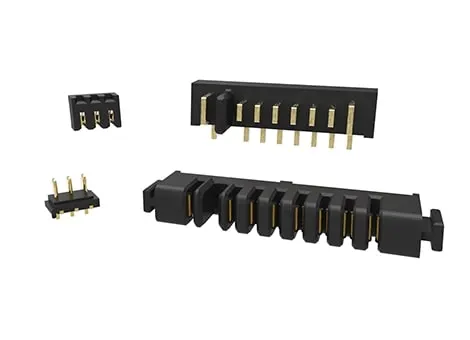
The connection system is what transforms a cell into a battery pack. There must be a connection between the cell and the BMS in order to interface with each other. Nickel strips are the preferred method of connecting a battery cell to the control system. A thin strip of nickel is capable of carrying high amounts of current, is flexible, durable, and can be attached to the cell without the use of excessive heat. These strips provide a safe means of getting the "fuel" out of the "fuel tank" to use it in a safe manner.
Housing:
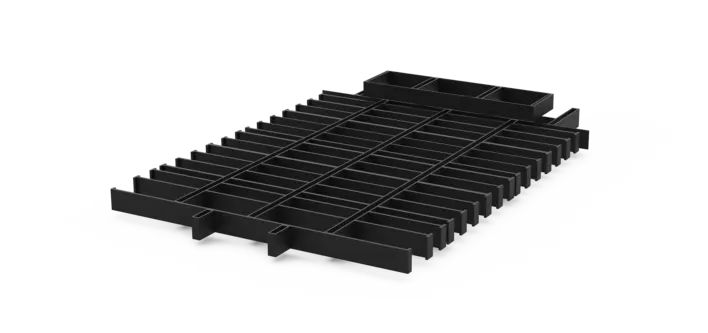
Lastly, all these components need to be packaged so that the battery pack can be installed into a device. Once all components are properly placed and connected to one another, they are sealed with either shrink wrap or a hard case. The housing ensures that the components remain safely located and provides a clean package for eventual use by an end-user. The type of housing depends on where the battery pack will be located inside the device and if it is intended to be accessed by the end-user or a technician.
Thermal management:
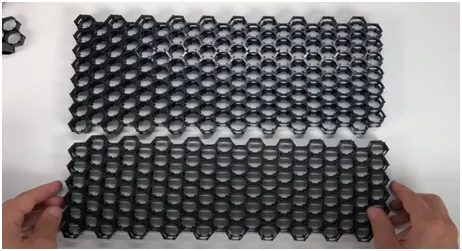
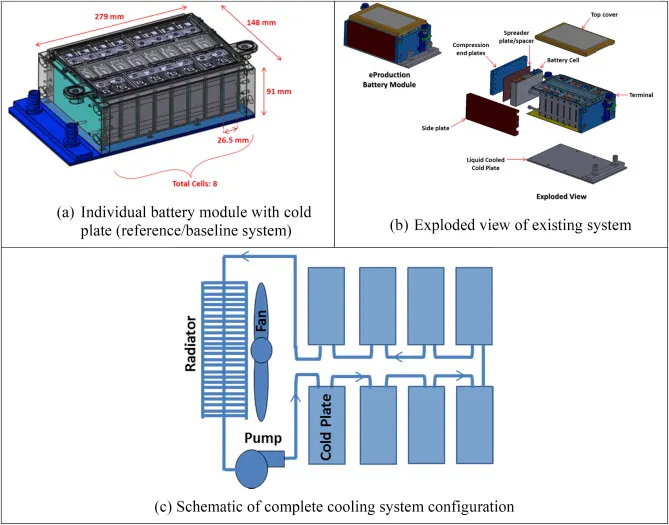
Thermal management is a major issue in high power designs, particularly for automotive applications. As part of the battery system, it may be necessary to provide air or water cooling ducts, pumps or fans and heat exchangers for high temperature working or heaters for operating in low-temperature environments. The layout of the cells should be conducive to managing heat flows within the pack.
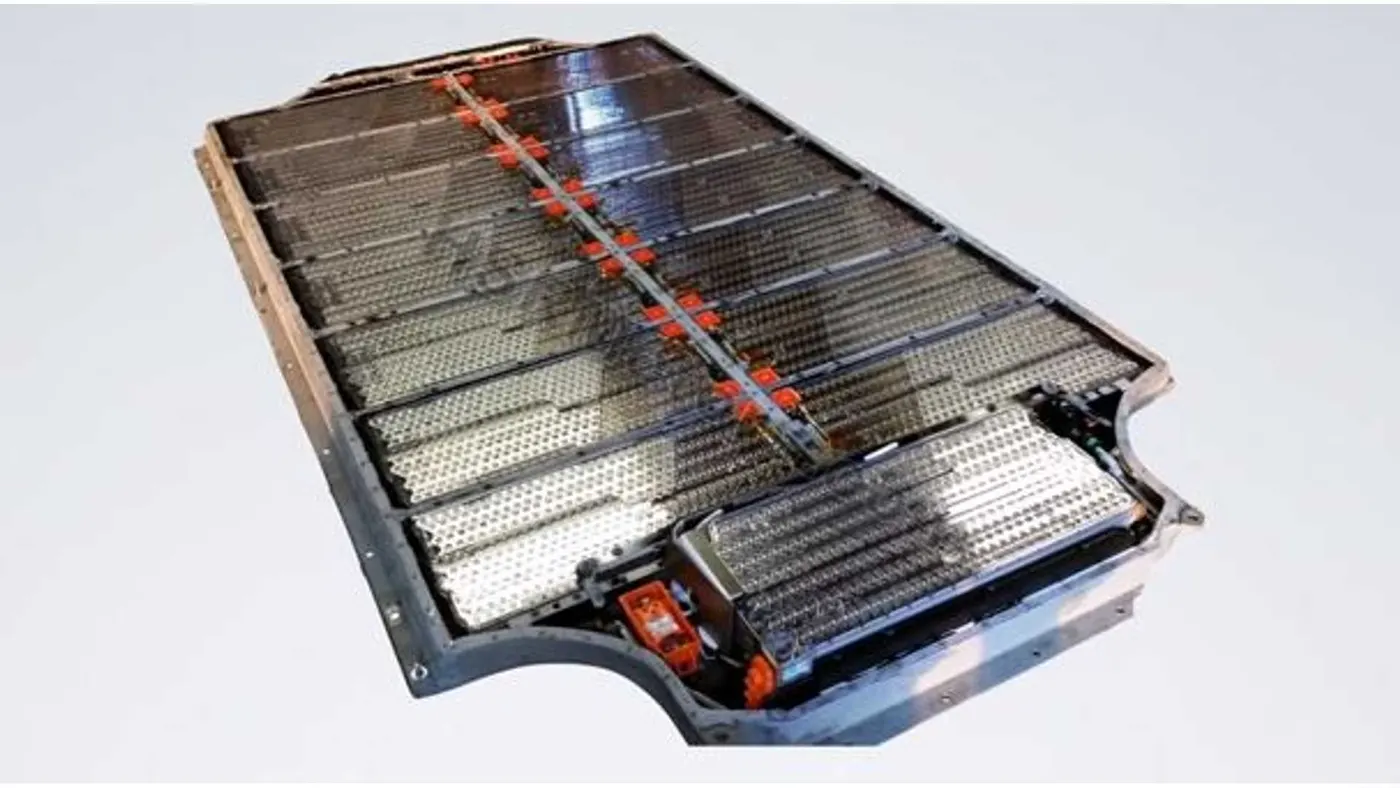
Complete battery pack:
Calculating mechanical design parameters for the battery pack of 18kWh.
Cell specifications: ANR26650M1-B
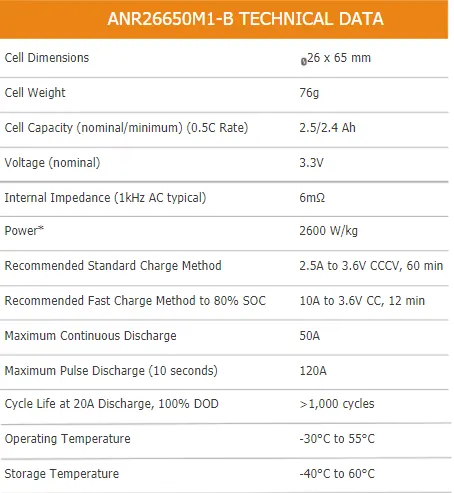
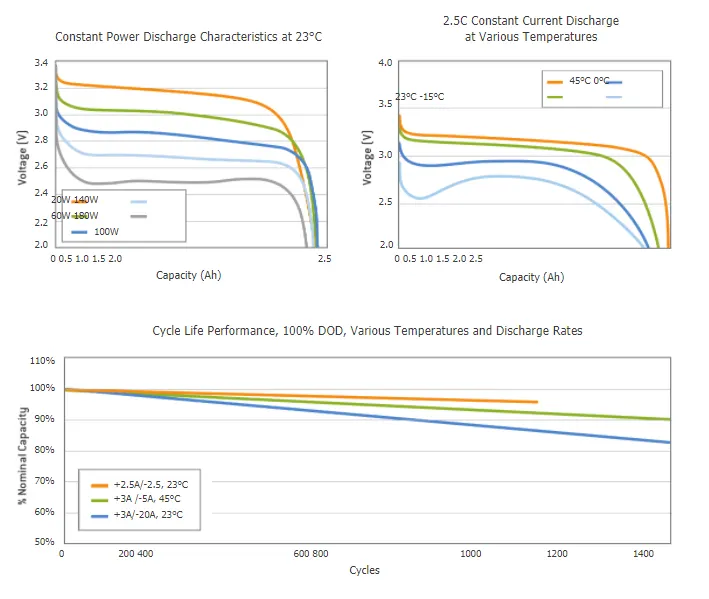
The plot of cell behaviour:
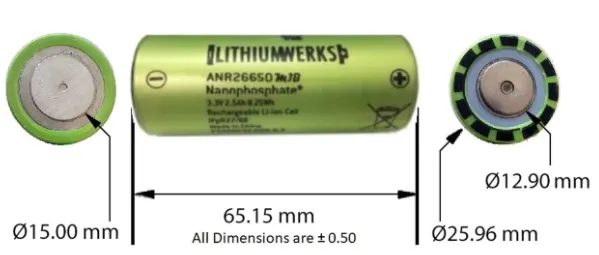
Cell dimensions:
Cell calculation:
Cell volume = `pi*r^2*h`
= `3.14*(0.013)^2*0.065`
= `0.000034 m^3`
Cell energy = Nominal voltage * Nominal cell capacity
= 3.3*2.5
= 8.25 Wh
Cell energy density = cell energy/cell volume
= 8.25/0.00034
= 24.3 kWh/m^3
Battery pack assumptions:
- There will 46 cells in series and 48 cells in parallel.
- So the pack will be 46S48P.
- All cells will be of ANR26650M1-B type.
Battery pack calculations:
Total number of cells = Cells in series * cells in parallel
= 46*48
= 2208 cells
Voltage = Nominal cell voltage * number of cells in series
= 3.3*46
= 151.8V
Capacity = Nominal cell capacity * number of cell in parallel
= 2.5*48
= 120Ah
Energy = Voltage * Capacity
= 151.8*120
= 18216 Wh
= 18.216kWh
Volume = Cell volume * Total number of cells
= 0.000034 * 2208
= 0.075m^3
Energy density = Battery pack energy/Volume
= 18.216/0.075
= 242.88 kWh/m^3
Weight = Total number of cells * Cell weight
= 2208*76
= 167.808 Kg
Steps followed in battery pack construction:
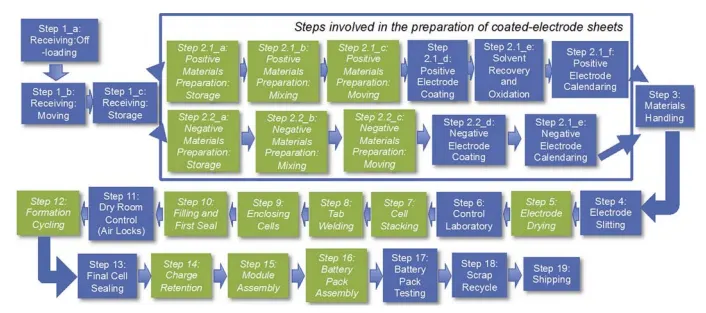
Battery pack assembly:
Conclusion:
Successfully we calculated and constructed the battery pack of 18kWh capacity.