Project 1 Mechanical design of battery pack
Battery pack capacity: 18 kWh
Cell: ANR26650M1-B
Prepare a detailed battery pack drawing along with its enclosure. State your assumptions.
Solution:
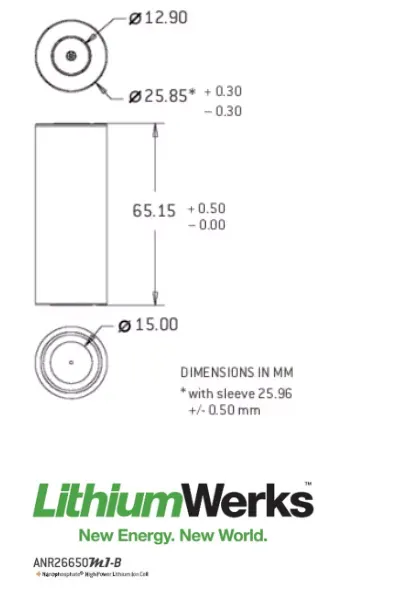
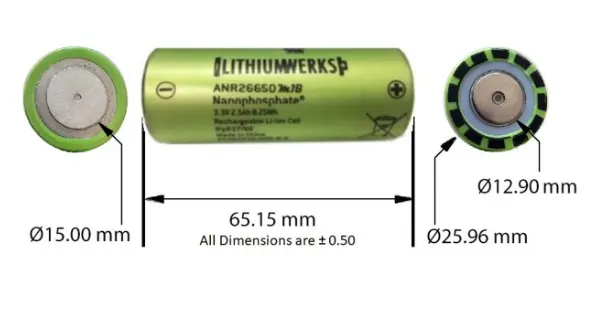
The ANR26650M1-B data sheet is downlaoded and shown below:
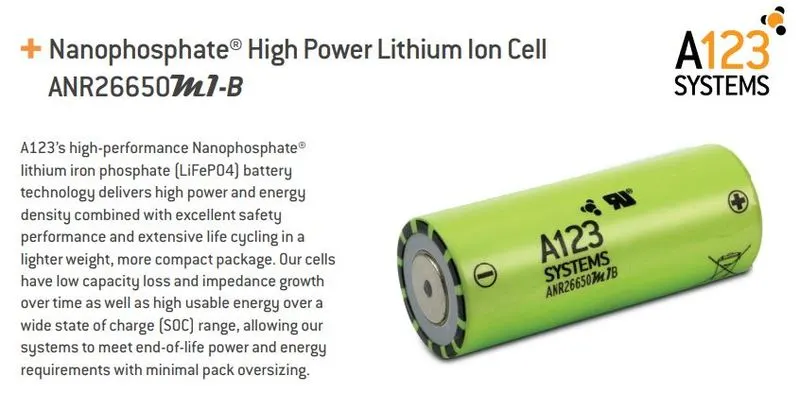
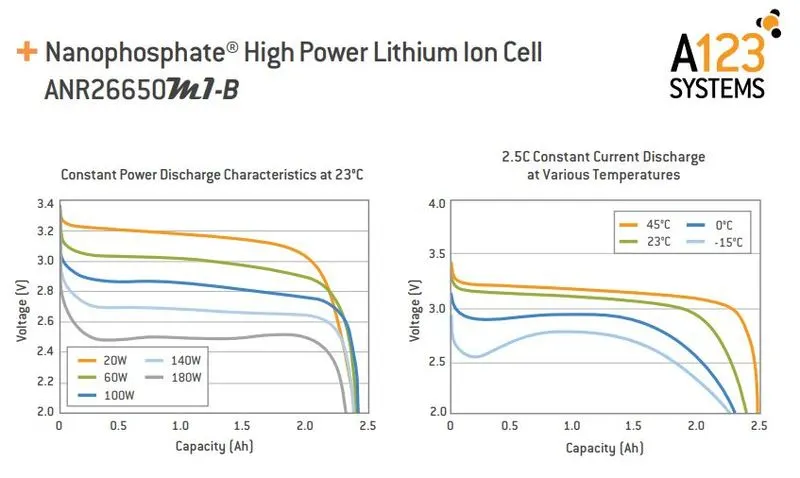
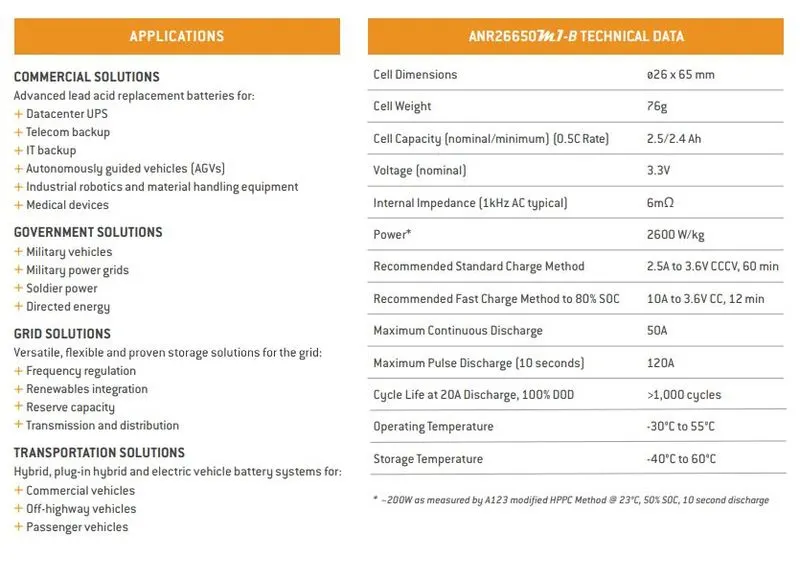
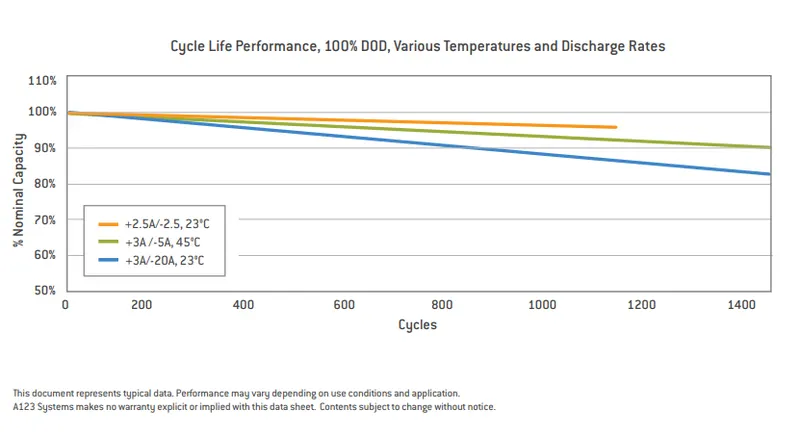
The specification of ANR26650M1-B are as follow:
Nominal Ratings
Voltage: 3.3 Volts
Capacity: 2.5 Ah
Energy: 8.25 Wh
Specific Power: 2600 W/kg
Impedance (1KHz AC Typical) 6 mΩ
Cycle Life at 1C/1C, 100% DOD: > 4000 cycles
Cell Type: 26650 Lithium Ion Power Cylindrical Cell
Discharging
Max Continuous Discharage: 50 A
Max Pulse Discharge Current >50% SOC (10s): 120 A
Minimum Voltage: 2 Volts
Temperature: -30ºC to 55ºC
Charging
Recommended Standard Charge: 2.5 Amps
Max Charge Rate: 10 Amps
Max Pulse Charge Current <50% SOC (10s): 25 A
Float Voltage: 3.45 Volts
Recommended charge V & Cut-off Current: 3.6 Volts, taper to 125mA
Temperature
(reduce charging current to 250mA when under 0ºC): 0ºC to 55ºC
Calculation:
Given: 18 kWh (Energy)
To find:
1. Number of cell in Series
2. Number of cell in Parallel
3. Volume of Battery pack.
Assume Voltage of Battery: 220V
We can find capacity of battery as Energy/Assumed Voltage
Capacity of Battery = Energy/Voltage
Capacity of Battery = 18000/220
Capacity of Battery = 81.81 = 82 Ah
As pe the given data sheet of ANR26650M1-B, Nominal voltage: 3.3 V and Cell Capacity: 2.5 Ah
With help of nominal voltage we can find number of cells in parallel.
I.e,
Number of cells in Parallel = Capacity of Battery / Cell Capacity
Number of cells in Parallel = 82 / 2.5
Number of cells in Parallel = 32.8 = 33
Number of cells in Parallel = 33
Hence, 33 cells are kept in parallel to get the capacity of 82Ah.
Number of cells in Series = Assumed Voltage / Single cell voltage
Number of cells in Series = 220 / 3.3
Number of cells in Series = 66.66 = 67
Number of cells in Parallel = 67
Total number of cells = Number of cells in Parallel x Number of cells in Series
Total number of cells = 67 x 33
Total number of cells = 2211
From the data sheet of ANR26650M1-B cell dimensions are given as
Diameter = 0.026 m
Height = 0.065 m
Now we have to find volume of Battery Pack.
We have surface area = Pi*R2
Surface Area = 3.14 * 13 * 13
Surface Area = 530.66 m2
Single Cell Volume = 530.66 * 0.065
Single Cell Volume = 34.4926 m3
Hence,
Volume of Battery Pack = Single Cell Volume * Number of cell
Volume of Battery Pack = 34.4926 * 2211
Volume of Battery Pack = 76,263.1386 m3
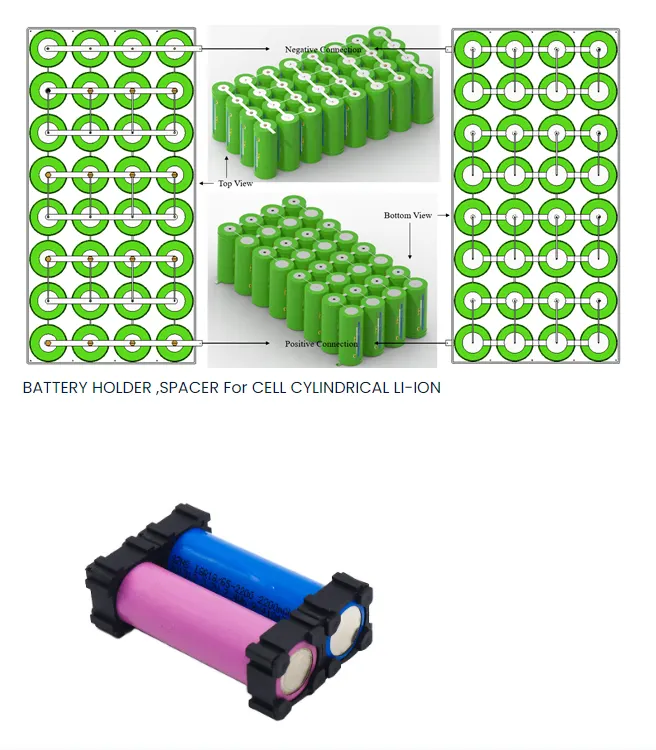
Dimension:
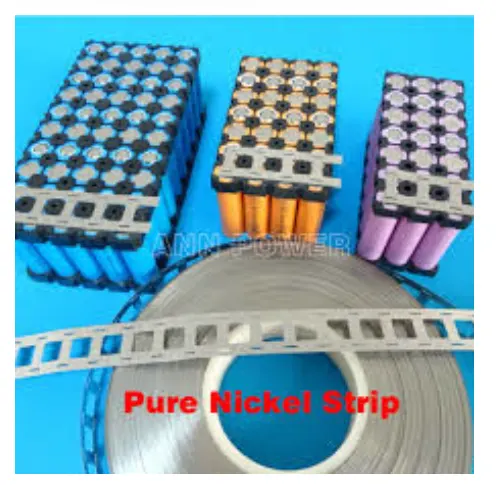
Nickel strip
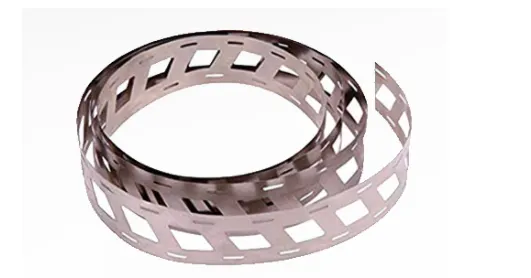
Nickel strip is generally used in battery building. Its due to its efficiency of usage in spot welding and soldering as well its high corrosion resistance over time. It has good properties and excellent resistance to many corrosive environments. The pure nickel will never get rust after it applied to battery packs. It won’t affect the current transfer between batteries.
Pure nickel strips are the material you want, but many vendors swap out it for nickel-plated steel strips, which are poorer and have greater resistance – not suitable for most battery projects.
100% pure nickel strip. verify all of our strips to assure that you are getting the high-quality pure nickel. It also solder incredibly quickly, so you can weld them onto your existing busbar connections to raise the supply of current you can pull through the busbars. The benefits are nearly limitless!
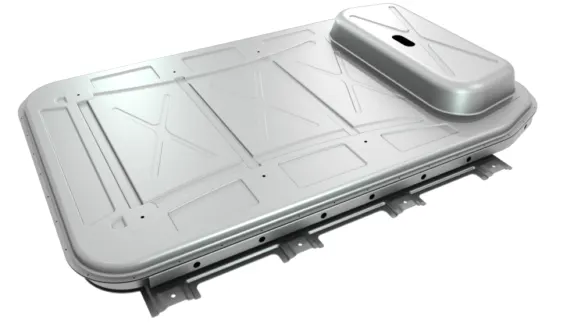
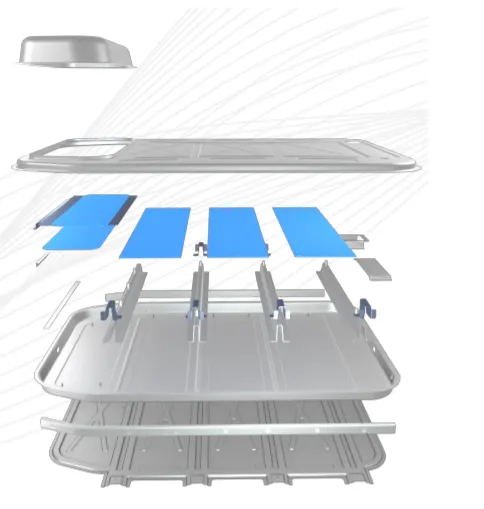
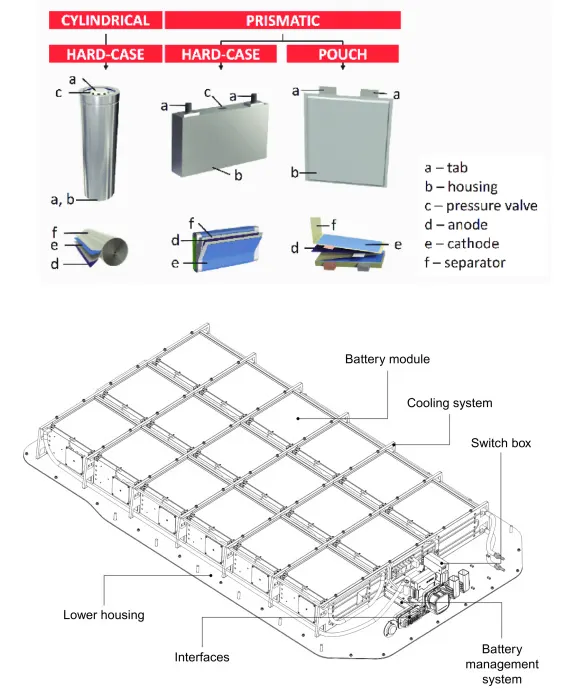
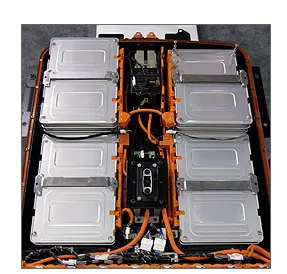
Battery enclosure
Finally:
Material:
Aluminum alloy material is used to cover batteries.
The EV power battery pack shell adopts aluminum alloy material, which has the characteristics of easy processing and forming, high temperature corrosion resistance, good heat transfer and electrical conductivity. The EV battery pack aluminum alloy shell (except for the shell cover) can be stretched and formed at one time.
Why is aluminium used in battery casing ?
At present, most of the power battery shell materials on the market are made of 3003 aluminum alloy, which can not only ensure the strength, stiffness and collision safety requirements, but also ensure the cruising range of new energy vehicles.
3003 aluminium alloy is a typical alloy of Al-Mn rust-proof aluminum. Its outstanding feature is good corrosion resistance, similar to pure aluminum. Its strength is higher than that of pure aluminum, with high plasticity and good deep-drawing performance. It is widely used in chemical equipment, civil hardware and other places that need to be processed and formed. It is also suitable for places with good corrosion resistance and medium streng
At the same time, the density of aluminum is only 1/3 of that of steel, so the weight of the aluminum shell is lighter than that of the steel shell, which is more conducive to reducing the weight of the vehicle itself, reducing the energy consumption of the vehicle, and improving the cruising range of the new energy vehicle.
At present, the global penetration rate of new energy vehicles is increasing year by year, but the overall penetration rate is not high, and there is still a very high room for growth. With the rapid development of new energy vehicles such as Tesla and BYD, electrification has become the main trend of global automobile development. Looking forward to the next few decades, the sales of new energy vehicles, mainly pure electric vehicles and hybrid vehicles, will continue to maintain a high growth rate, thus promoting the development of the battery industry.
Please find below images for your references.