Project 1 Mechanical design of battery pack
First Download the data sheet:
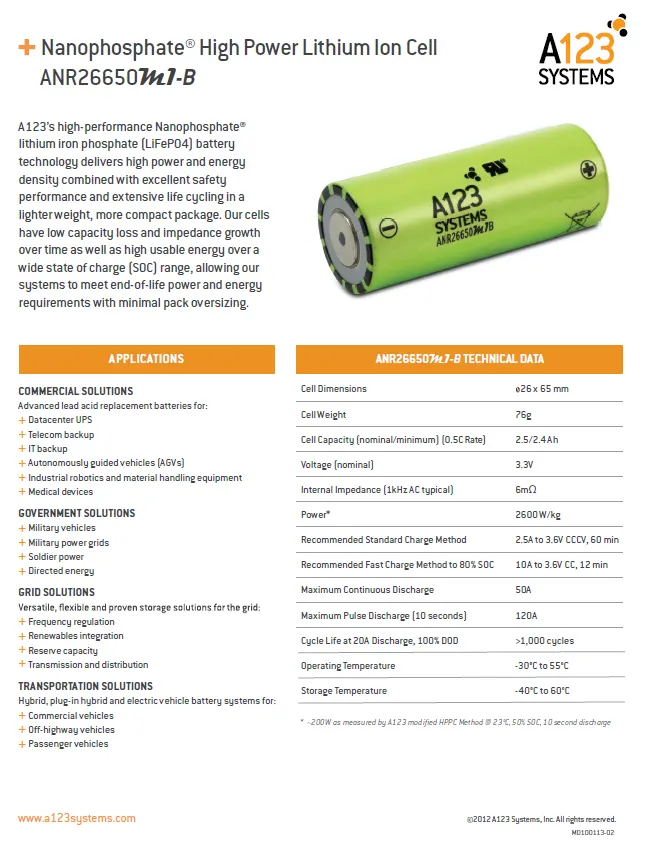
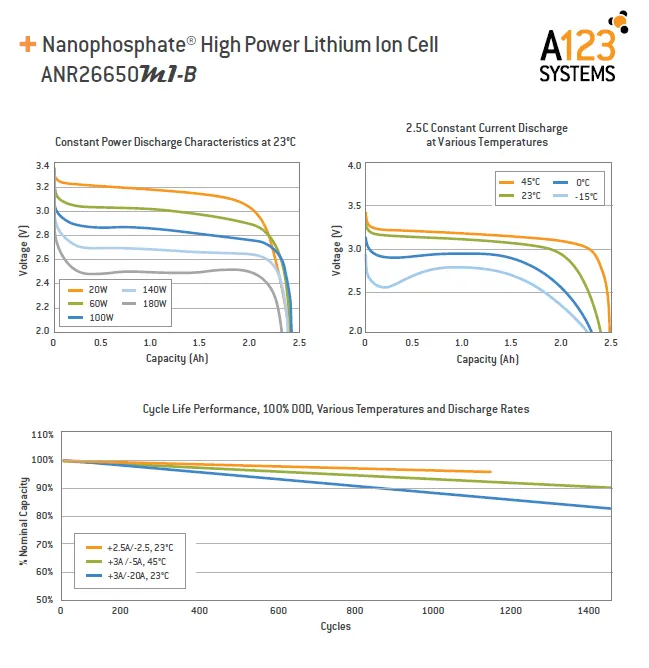
Calculation:
Battery pack capacity: 18 kWh
1)
single cell energy = cell capacity * cell voltage
= 2.5*3.3
= 8.25 Wh
2)
Volumetric energy=Single Cell Energy/Volume of each cell
= 8.25/0.03451
=239.06 Wh/m^3
3)
Gravimetric energy= Single Cell Energy / Single Cell Mass(mass converted into kg)
=8.25/0.076
=108.55 Wh/kg
Assume Nominal voltage for series connection =151.8V
4)
Number of cells connected in series=Nominal voltage of series connection / Nominal voltage of a single cel
=151.8/3.3
=46...... (46 cell connected in series)
5)
Energy for battery pack=No. of cells connected in series x Single-cell energy
=46*8.25
=379.5 Wh
6)
No.of cell connected in parallel=Battery pack total energy(Converted into kWh to Wh)/Energy for battery pack
=18000 /379.5
=47.43
=48..... (48 cell connected in parallel)
7)
Battery pack total energy= No. of cells connected in parallel x Energy for battery pack
=48*379.5
=18216 kh
=18.216 kWh
8)
Battery pack capacity= No. of cells connected in parallel x Single cell capacity
=48*2.5
=120 Ah
9)
Total number of cells for battery pack=No. of cells connected in parallel*No. of cells connected in series
=48*46
=2208.....(Total cell to make the complete battery pack)
10)
Mass of battery pack=Total no. of cells for battery pack*Mass of single cell
=2208*0.076
=167.808 Kg.....(Total Weight of Battery Pack Series+Parallel)
11)
Total volume of the battery pack=Total no. of cells for batter pack*Volume of single cell(pi*r^2*Height)
=2208*0.0345(converted into Liter)
=76.18m^3
12)
Cell peak current=C rate (Max Pulse Charge Current)*Single cell capacity
13)
Power= Voltage*Current
P = 3.3 *2.5
P =8.25 kw
Total Cells = 2208 cells
Series connection gives 46*3.3 =151.8 V
Parallel connection gives 48* 2.5 =120 A
151.8* 120 =18216 kwh energy.
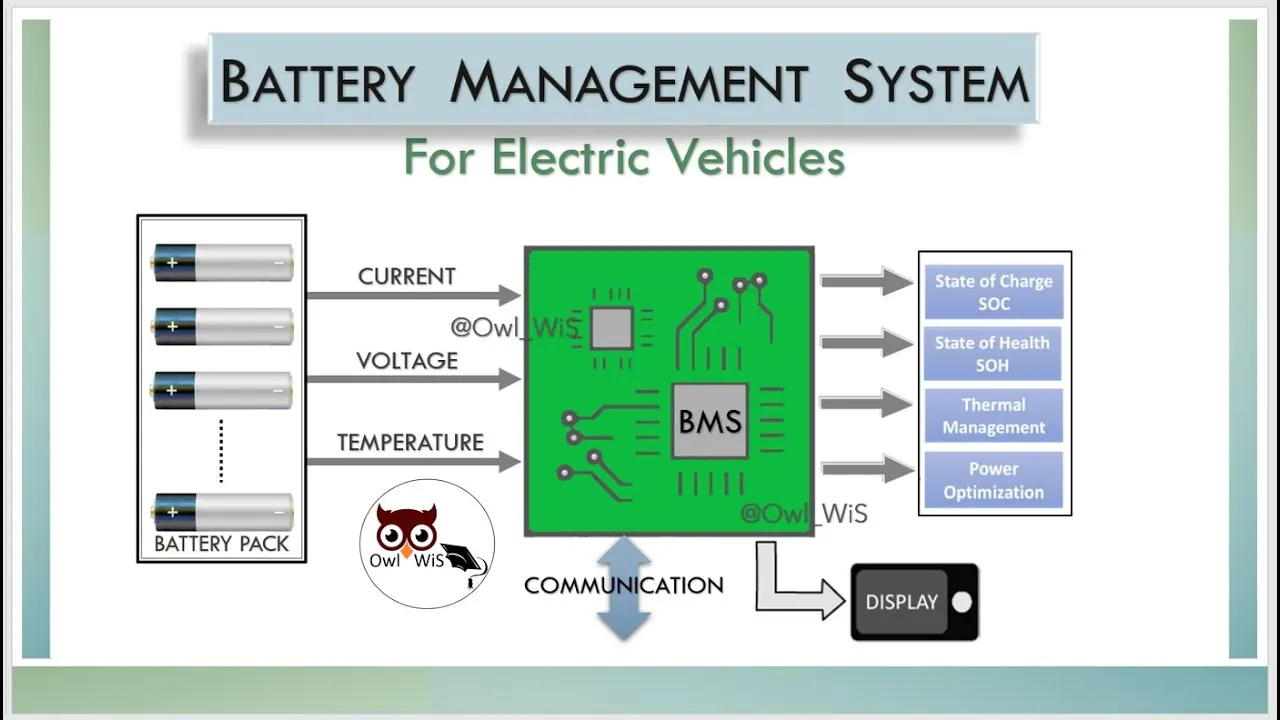
Battery management system (BMS) is technology dedicated to the oversight of a battery pack, which is an assembly of battery cells, electrically organized in a row x column matrix configuration to enable delivery of targeted range of voltage and current for a duration of time against expected load scenarios.
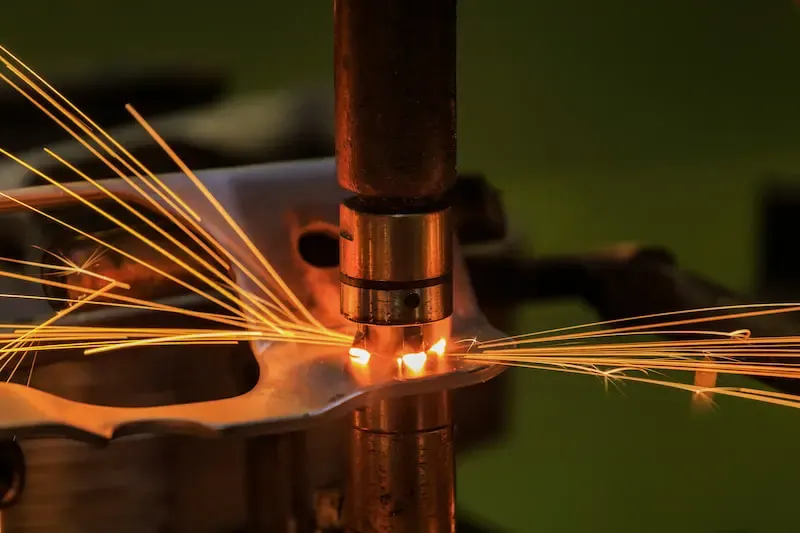
Spot welding is an electrical resistance welding process that joins overlapping metals between two electrodes. Pressure is applied by squeezing the workpieces between the electrodes and heat is generated by the passage of welding current through the resistive metals.
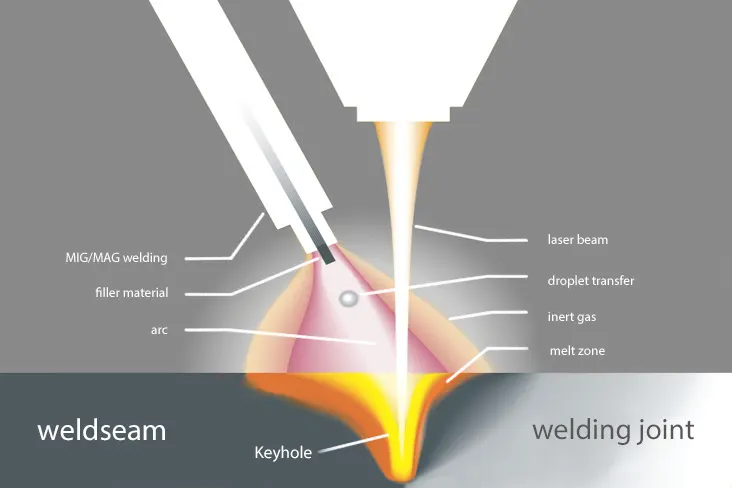
Laser beam welding (LBW) is a Welding technique used to join pieces of metal or thermoplastics through the use of a laser. The beam provides a concentrated heat source, allowing for narrow, deep welds and high welding rates. The process is frequently used in high volume and precision requiring applications using automation, as in the automotive and aeronautics industries. It is based on keyhole or penetration mode welding.