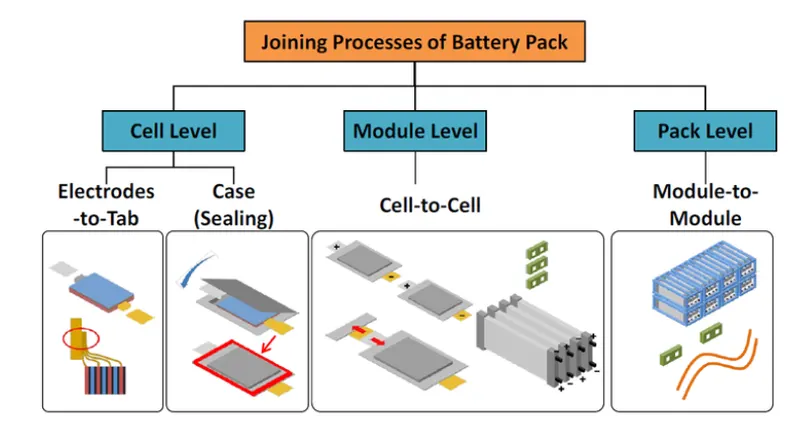
Project 1 Mechanical design of battery pack
Ans:- Li-ion Cell
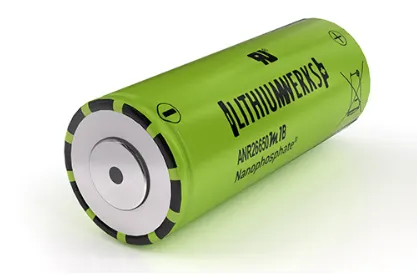
They deliver high power due to their use of nano phosphate battery technology. For good life cycle, stable float reliablity, this cell are suitable for wide variety of power application. Nanophosphate battery technoloogy offer thermal stable chemistry, fast charging, low capacity loss over time. It provides extremely safe condition for while meeting most demanding requirement. Multiple layer of protection are employed on chemistry and system level to achieve an energy storage solution.
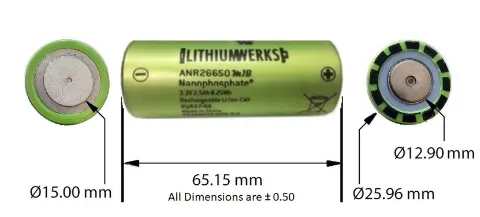
Dimension:-
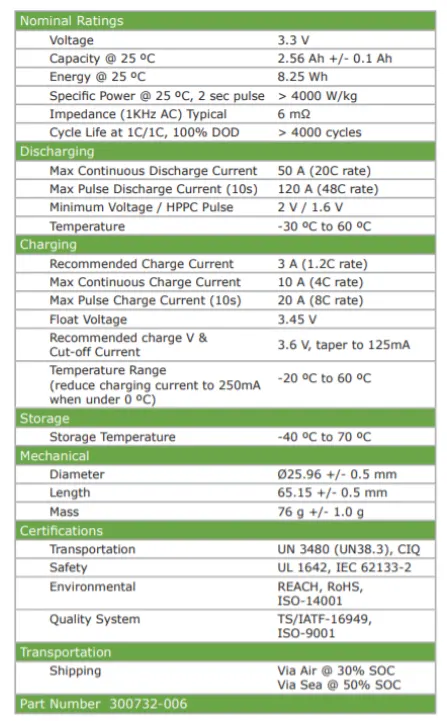
Cell Specification:-
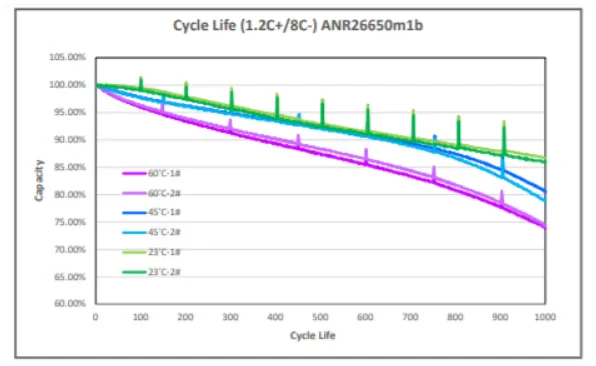
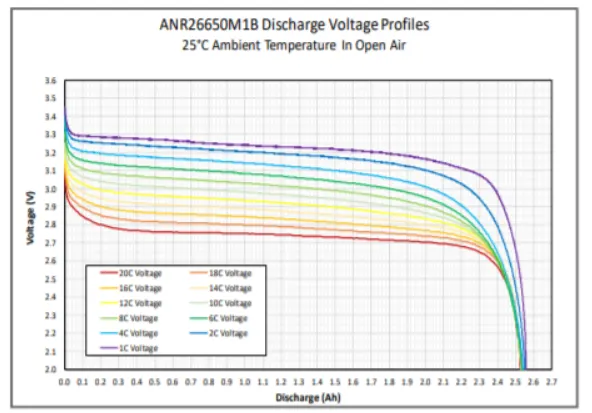
Discharge voltage and cycle life with respect to different operating temperature.
Design of 18 KWH battery pack
Assumption-
Voltage required to run motor- 400 V
i) Number of cells required- energy/(nominal voltage*capacity)
N=18000/(3.3*2.5)
N=2182
In series configuration voltages will be sum of individual voltage and capacity will remain same. In parallel configuration, capacity is increased and voltage remains same.
Number of cell required to connect in series= voltage required/nominal voltage
Ns= 400V/3.3
Ns= 122
number of cell required to connect in parallel= Total cell/Ns
Np= 2182/122
Np= 18
ii) Battery capacity
Capacity= 18*2.5Ah
Capacity= 45 Ah
iii) Range
Power train energy consumption 100 Wh/Km
Range= Capacity/ energy consumed per Km
Range= 18000/100
Range= 180 Km
iv) Internal Resistance
The entire resistance encountered by a current as it flows through a batttery from negative terminal to positive terminal is known as internal resistance battery.
vi) Battery dimension
Length of casing= 122*30+60
L= 3720mm
Breadth of casing= 18*30+60
B= 600 mm
Height= 65+35
Height= 100 mm
vii) Weight of Battery pack
W= cell weight * number of cell+ weight of accessories
W= 76*2182+ 4.5= 170.3 kg