Project 1 Mechanical design of battery pack
Battery Pack Design,
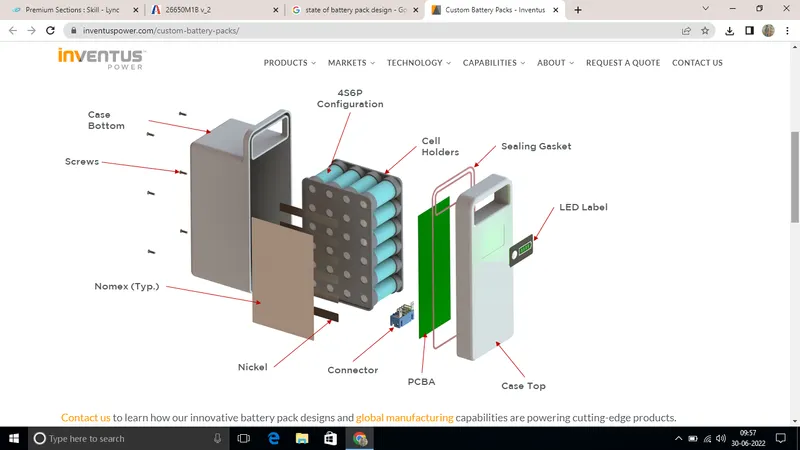
The purpose of a battery pack is to provide a convenient integrated power source for portable applications. The advantages of using custom designs are outlined in the section on benefits of custom pack. The pack may fulfil several functions.
- It enables higher voltage or higher capacity batteries to be built up from low voltage, low capacity cells.
- It houses a cell or a bank of cells together with the associated interconnections in a single convenient pack.
- It accommodates any necessary monitoring and electronic protection devices or circuits within the pack.
- It can accommodate additional circuitry such as indicator lights, heaters, cooling ducts and solar panels.
Capacity and Voltage
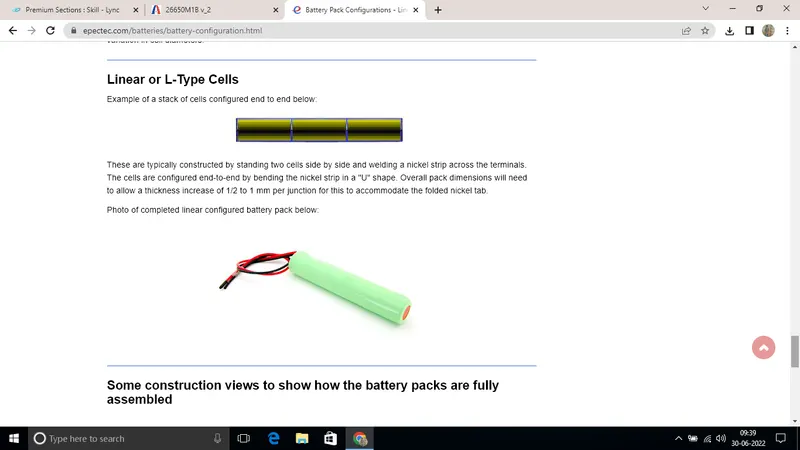
With a simple series chain of cells, the battery capacity in AmpHours is the same as the capacity of the individual cells since the current flows equally through all the cells in the chain.
High battery voltages are achieved by adding more cells in a series chain. The voltage of the battery is the voltage of a single cell multiplied by the number of cells in the chain.
Pack Design Options
The design of the outer package or housing of the battery depends to a great extent on the components it has to accommodate and the physical protection it has to provide for them. These components are not just the cells, but also protection devices, electronic circuits, interconnections and connectors
Battery Electronics
Besides the cells many battery packs now incorporate associated electronic circuits. These may be protection devices and circuits, monitoring circuits, charge controllers, fuel gauges, and indicator lights. Electronics for high power multi-cell packs also include cell balancing and communications functions.
Internal Interconnections
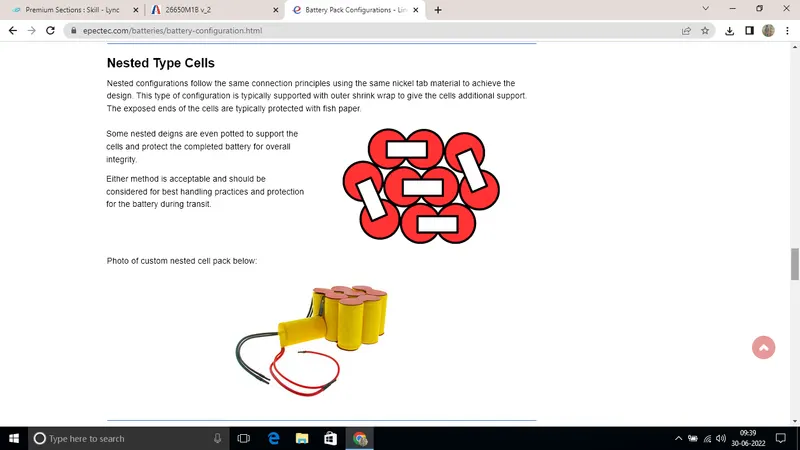
Low power cells are usually connected together using nickel strips which are welded to the cell terminals or the case. Soldering is not recommended since the soldering process is apt to apply large, uncontrolled amounts of heat to the battery components which may damage the separators or the vents which are normally made of plastic.
External Connections
The type of terminals or connections to the external circuits depend on, the current to be carried, the frequency with which the battery may be connected and disconnected and the design of the design of the circuit to which the battery will be connected.
Most lithium-ion battery pack designs involving cylindrical, pouch or prismatic automotive cell types can be realized with Bayblend®.
1. Cylindrical battery cells
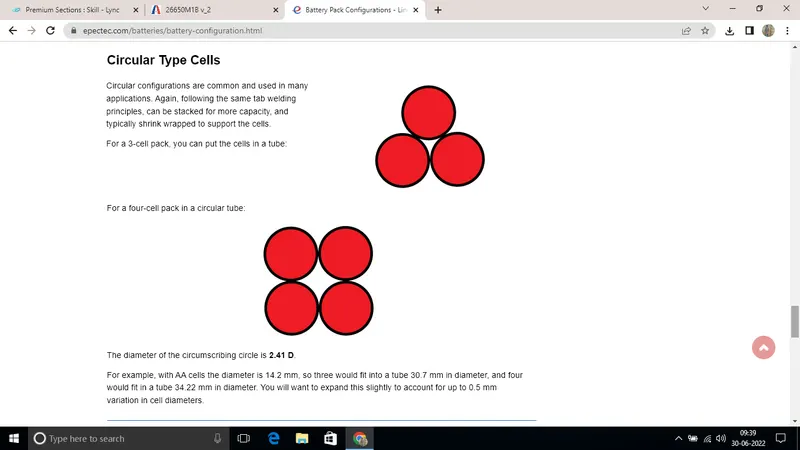
Clamshell battery designs are suitable for increased energy storage and usually involve cylindrical cell types, which are normally fixed in place using adhesives.
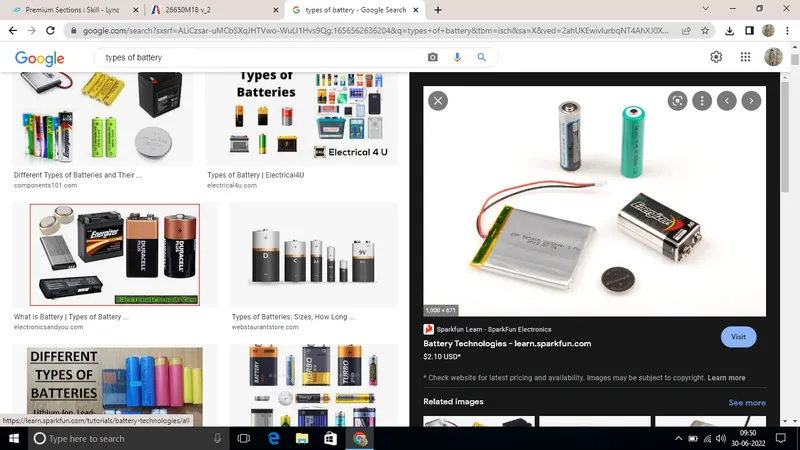
2. Prismatic battery cells
In prismatic cell types, Bayblend® is typically used for busbar holders due to its properties. This is especially suitable for heavy-duty e-vehicles such as electric buses and electric trucks. For designs requiring long-term vibration tests, the flame-retardant

3. Pouch battery cells
Due to their geometry, pouch cell types are easy to fit into tight spaces, but battery packaging designs must also account for swelling during charge and discharge cycles. Frames must also satisfy the need for precision molding.
BATTERY PACK CONFIGURATIONS
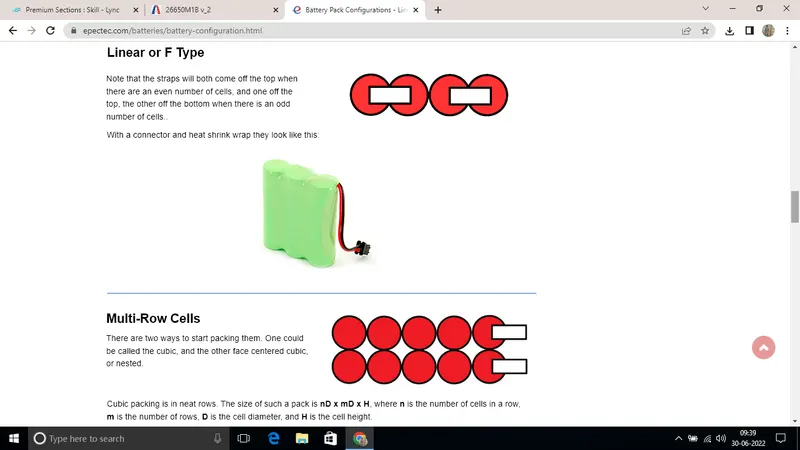
Battery pack configurations can be designed with several options, some of which are determined by the chemistry, cell type, desired voltage and capacity, and dimensional space constraints. The basic explanation is how the battery cells are physically connected in series and parallel to achieve the desired power of the pack.
Connecting in parallel will provide more capacity; connecting in series, more voltage. Cells come in fixed voltages and various capacities. If you need more voltage, you can deal with multiples of the cell voltage. Cell capacities vary, but voltages do not. All NiCad or NiMH cells are 1.2 volts nominal, lead acid is 2.0 volts nominal, and the various lithium technologies are about 3.6 volts per cell. If you need more voltage, you have to add them in series. If you need less voltage, you need some kind of voltage regulator or DC/DC converter.
|
|||||||||||||




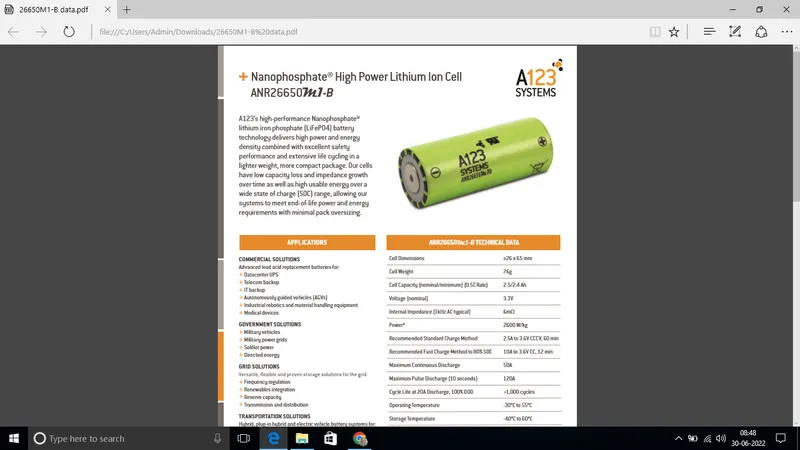
ANR26650M1-B TECHNICAL DATA,
Cell Diameter=26mm
Cell height=65mm
Cell Dimensions-26 x 65 mm
Cell Weight-76g
Cell Capacity (nominal/minimum) (0.5C Rate)-2.5/2.4 Ah
Voltage (nominal)-3.3V
Internal Impedance (1kHz AC typical)-6mΩ
Power*-2600 W/kg
Recommended Standard Charge Method-2.5A to 3.6V CCCV, 60 min
Recommended Fast Charge Method to 80% SOC-10A to 3.6V CC, 12 min
Maximum Continuous Discharge-50A
Maximum Pulse Discharge (10 seconds)-120A
Cycle Life at 20A Discharge, 100% DOD->1,000 cycles
Operating Temperature-30°C to 55°C
Storage Temperature-40°C to 60°C
Mechanical construction,
Let assume the battery pack voltage is 200V,
We know that P=VI,hence we calculate the battery capacity,
Pack capacity=Energy capacity/pack voltage,
Pack capacity=(18*10^3)/200=90Ah
no.of cells in series=Pack voltage/cell voltage=200/3.3=60cells
no.of cells in parallel=Pack capacity/cell capacity=90/2.5=36cells
Total no of cells=(no.of cells in series)*(no.of cells in parallel)
=60*36=2160cells
Weight of battery pack=Total no of cells*cell weight
=(2160*76)/1000=164.16kg=164kg
Length of battery pack=no.of cells in series*Cell Dimensions
=60*0.026=1.56m
Width of battery pack=no.of cells in parallel*Cell Dimensions
=36*0.026=0.936m
Area of battery pack=Length of battery pack*Width of battery pack
=1.56*0.936=1.460m^2
volume of battery pack=Area of battery pack*cell height
=1.460*0.065=0.0949m^3
=94.9lit
Specific energy density=Pack energy capacity/Weight of battery pack
=18000/164=109.75wh/kg
Volumetric energy density=Pack energy capacity/Volume of battery pack
=18000/94.9=189wh/l
Cost of battery pack=Total no of cells in battery pack*cost of each cell
=2160*6.55=14148$
=Rs 11,16,916.69