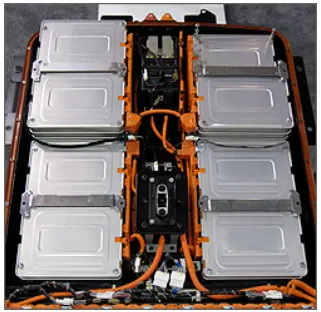
Project 1 Mechanical design of battery pack
Question :
Battery pack capacity: 18 kWh
Cell: ANR26650M1-B
Prepare a detailed battery pack drawing along with its enclosure. State your assumptions.
Answer :
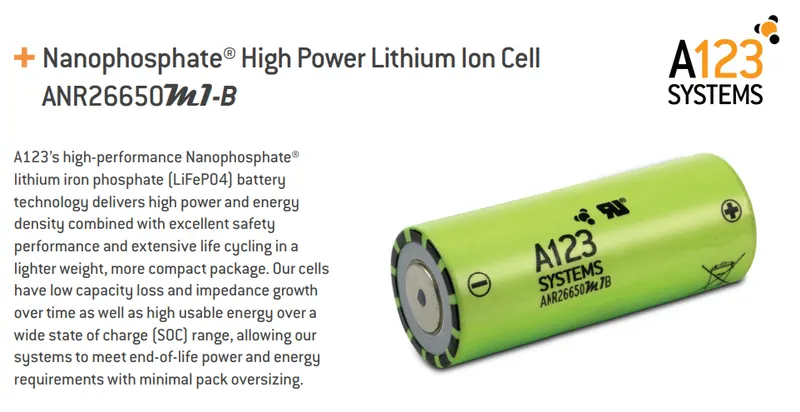
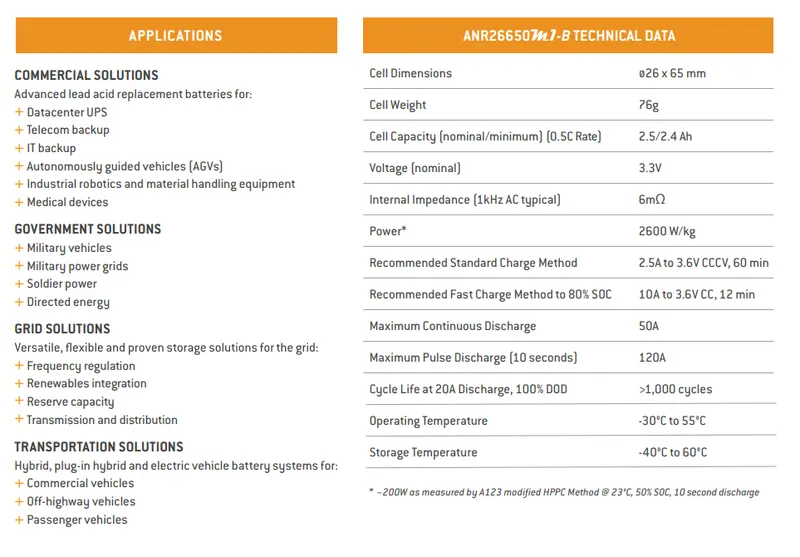
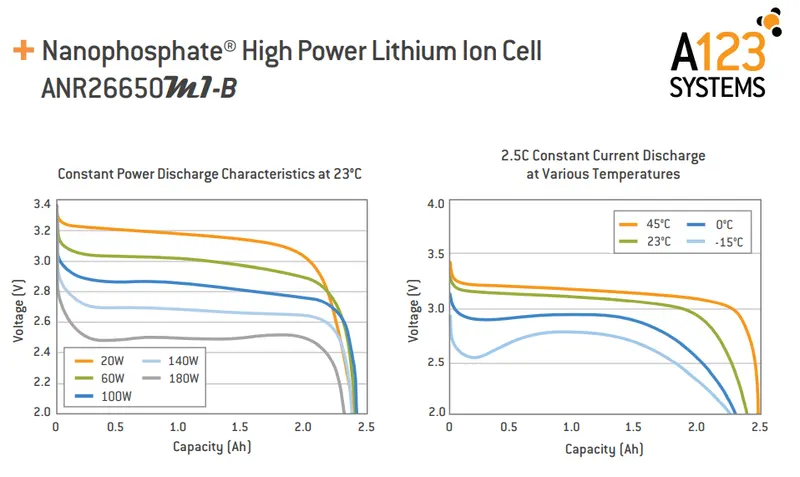
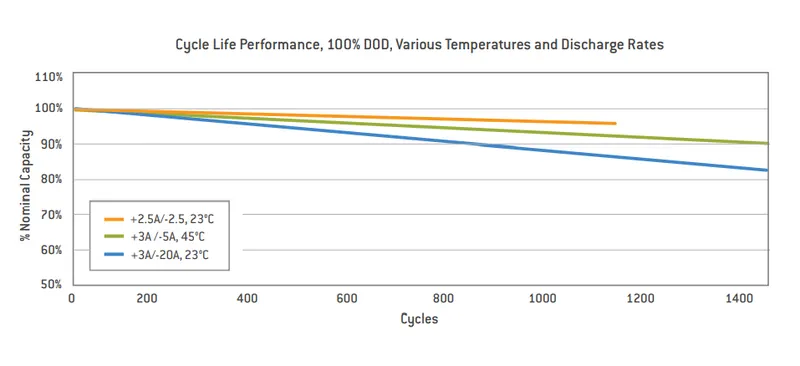
ANR26650M1-B Specifications
Nominal Ratings
Voltage: 3.3 Volts
Capacity: 2.5 Ah
Energy: 8.25 Wh
Specific Power: 2600 W/kg
Impedance (1KHz AC Typical) 6 mΩ
Cycle Life at 1C/1C, 100% DOD: > 4000 cycles
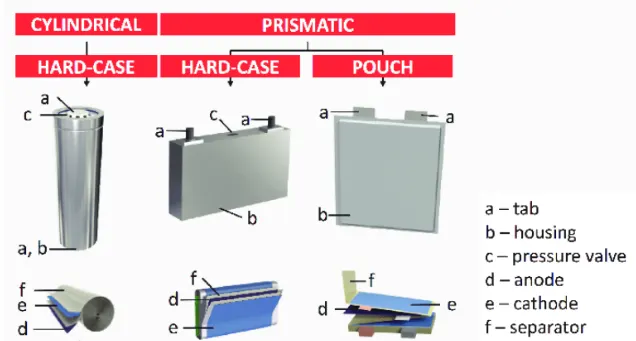
Cell Type: 26650 Lithium Ion Power Cylindrical Cell
Discharging
Max Continuous Discharage: 50 A
Max Pulse Discharge Current >50% SOC (10s): 120 A
Minimum Voltage: 2 Volts
Temperature: -30ºC to 55ºC
Charging
Recommended Standard Charge: 2.5 Amps
Max Charge Rate: 10 Amps
Max Pulse Charge Current <50% SOC (10s): 25 A
Float Voltage: 3.45 Volts
Recommended charge V & Cut-off Current: 3.6 Volts, taper to 125mA
Temperature
(reduce charging current to 250mA when under 0ºC): 0ºC to 55ºC
Mechanical
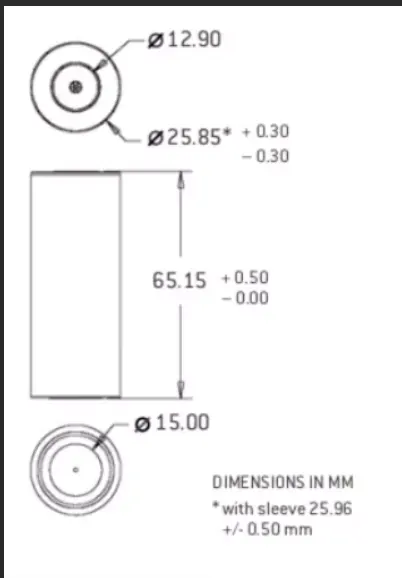
Diameter: Ø25.96 +/- 0.5 mm (1.0")
Length: 65.15 +/- 0.5 mm (2.6")
Mass: 76 g
as per assumptions:- 18kWh Battery Pack
calculation for designing an 18kWh battery pack, basically 18kWh is energy require to achieve the vehicle its proper range. It is depending upon the voltage (V) parameter and ampere-hour or capacity (Ah).
Here we design a high voltage battery pack for an electric vehicle to achieve its range up to 220 km. For this calculation, I assumed 145.2 V a nominal voltage for series connection.
Basically, the value of the volume of the cell is used to find out the total volume of the battery pack.
- Single Cell Energy (Wh)
= Cell Capacity (Ah) x Cell Voltage (V)
= 2.6 x 3.3
= 8.58 Wh
The value of a single cell is used to calculate the total energy of the battery pack
- Single Cell Energy Density
Volumetric energy (Wh/m^3) - Single Cell Energy / Volume of each cell
= 8.58 Wh / 0.03451 m^3
= 248.62 Wh/m^3
Gravimetric energy (Wh/kg) - Single Cell Energy / Single Cell Mass
= 8.58 Wh / 0.076 kg
- 112.89 Wh/kg
Calculation of High Voltage Battery Pack
For design and calculation of battery pack here, assume a vehicle to achieve 250 km in 18 kWh battery pack. Also, I assume 145.2 nominal voltage for senes connection:
Vehicle Range = 250 KM (assumed)
Battery Pack capacity= 18.121 kWh or 18120.96 Wh (For better and accurate calculation here I change kWh)
Now, We will calculate per km average energy = 18120.96 / 250
= 72.483 Wh/km.
Therefor
Battery Pack total energy Average energy x km 72.483 x 250 18120.96 Wh or 18.120 kwh 7
decide the value according to the motor.
- Number of cells connected in series
Let's assume Nominal voltage for series connection = 145.2 V. Basically, this depends upon the motor power, We can = Nominal voltage of series connection / Nominal voltage of a single cell
145,2 V/3.3 V
= 44
44 Cells will be connected in a series connection to provide a proper voltage.
- Energy for battery pack (wh)
= No. of cells connected in series x Single-cell energy
= 44 x 8.58 wh
= 377.52 wh
--Number of cells connected in parallel
= Battery pack total energy (wh) / Energy for battery pack (wh)
-18120.96/377.52
= 48
48 cells will be connected in parallel to provide a proper capacity power.
-- Battery pack total energy (wh)
= No. of cells connected in parallel x Energy for battery pack (wh)
= 48 x 377.52
= 18120.96 wh or 18.120 KWH
--Battery pack capacity
= No. of cells connected in parallel x Single cell capacity (Ah)
= 48 x 2.6 Ah
= 124,8 Ah
The value of battery pack capacity is used for the total power required by the vehicle. -- Total number of cells for battery pack
= No. of cells connected in parallel x No. of cells connected in series
=48x44
2112
2112 Cells will be used to make a complete battery pack --Mass of battery pack
= Total no. of cells for batter pack x Mass of single cell
= 2112 x 0.076 kg
=160.512 kg
it is the total weight of cells connected in parallel and series.
-- Total volume of the battery pack
= Total no. of cells for batter pack x Volume of single cell
= 2112 x 0.0345
72.89 m^3
This is the volume of2112 cells which are used in the battery pack system
--Cell peak current (A))
- C ratel Max Pulse Charge Current) x Single cell capacity
= 20 x 26
= 52 A
--Battery pack peak current (A)
Cell peak current x No. of cells connected in parallel
=52X48
=2496 A
It is used for the operation of the battery pack. By this way, a vehicle will decide how much power is required to move
- Battery pack peak power (W)
= Battery pack peak current x Voltage of series connection
= 2496 A x 145.2
= 3624192 or 362.42 W
Cell continuous current (A)
= Crate (Max Continuous Charge Current) x Single cell capacity
= 10 x 2.6
=26 A
Battery pack continuous current (A)
= Cell continuous current x No. of cells connected in parallel
= 26 x 48
1248 A
This is the power which is supply continue to the whole battery pack system,
Related Com
Combu
Execuath
enterog
--Battery pack continuous power (W)
- Battery pack continuous current x Voltage of series connection
-1248 x145.2
= 18120 95 or 18 120 kwh
detailed battery pack drawing along with its enclosure.
When it comes to designing an enclosure for your battery pack, most designers are not familiar with battery regulatory requirements which can lead to complications.
Understanding the design and management elements can help avoid production process complications.
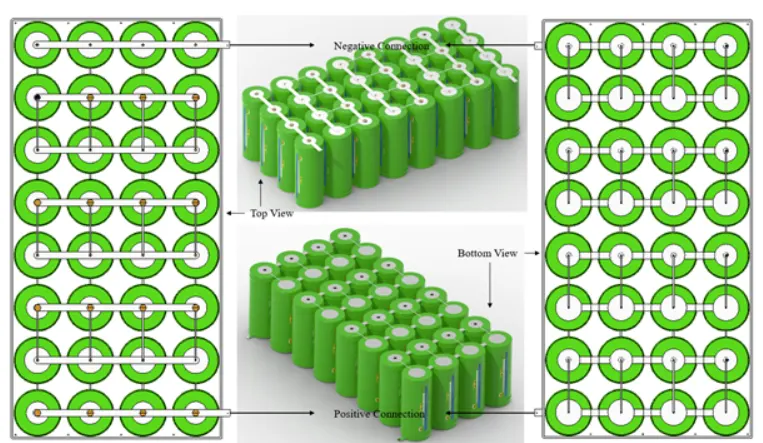
Nickel Strips
Nickel strip is generally used in battery building. Its due to its efficiency of usage in spot welding and soldering as well its high corrosion resistance over time. It has good properties and excellent resistance to many corrosive environments. The pure nickel will never get rust after it applied to battery packs. It won't affect the current transfer between batteries.
Pure nickel strips are the material you want, but many vendors swap out it for nickel-plated steel strips, which are poorer and have greater resistance - not suitable for most battery projects.
100% pure nickel strip. verify all of our strips to assure that you are getting the high-quality pure nickel. It also solder incredibly quickly, so you can weld them onto your existing busbar connections to raise the supply of current you can pull through the busbars. The benefits are nearly limitless!

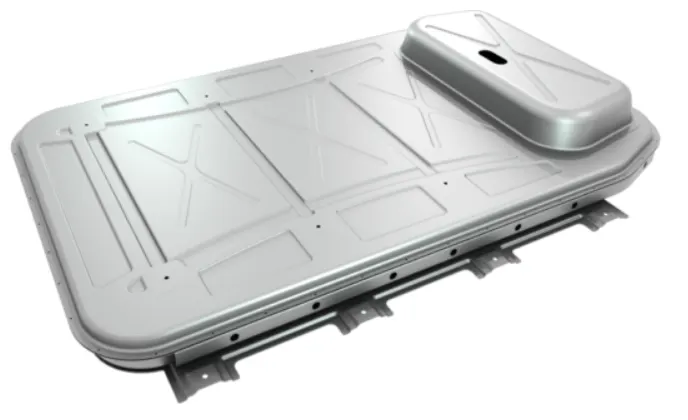
Design Benefits
• Up to 50 percent lighter than an equivalent steel design • Best-in-class mass energy density at more than 160 watt-hours per kilogram, an extremely efficient design for OEMS and Tier 1 battery pack manufacturers.
• Accommodates all battery cell types and is designed particularly for battery electric vehicles with larger power packs such as pick-up trucks, sport utility vehicles and crossovers.
Most cost-effective aluminum solution for mass production electric vehicles when compared to aluminum extrusion and casting-intense designs. • Low price premium on $/kg saved compared to equivalent steel desighs at substantially lower weight
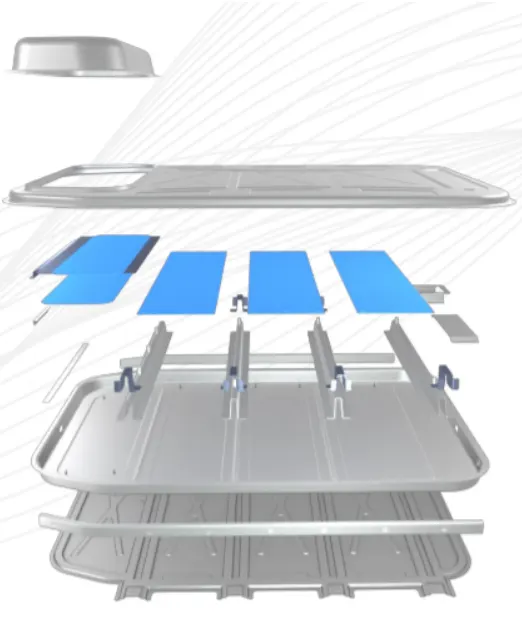
as we know now
Power (p)= Voltage (v) Current (i) kw
3.3 *2.5 8.25 kw
To get 18kwh,we are assuming 48s 48p
i.e; 48 48 2304 cells
series connection gives 48*3.3 =158.4 v parallel connection gives 48* 2.0=120 A from this we can get
158.4 120-19.008 kwh energy or capacity
we design battery pack for 48s and 48p cell along wth battery spacers to hold cells and for their connection nickel strip is used
when cells are connected by nickel strip spot welding should be used so that cell not get damage.
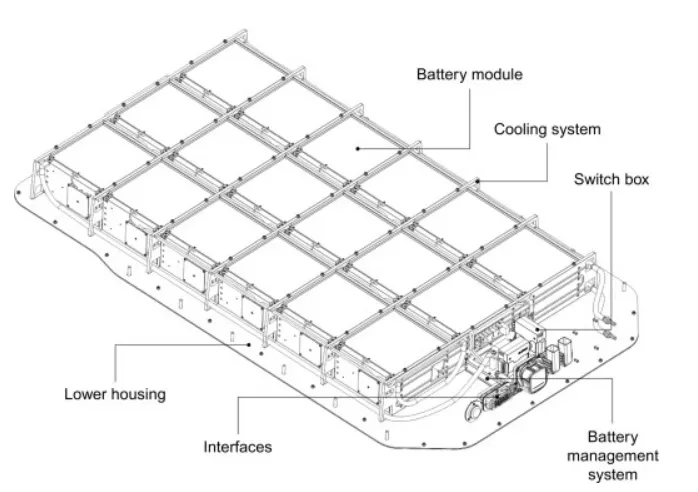
fINAL FORM: