Mechanical design of battery pack
Mechanical design of a battery pack
Aim: Mechanical design of a battery pack of 18 kWh capacity using ANR26650M1-B cell
Theory:
If you take several cells and connect their same-type electrodes in parallel, they all will act as though they are one large cell. Also, when you first connect them to each other, they must be at the same level of charge [The positive electrode is the Cathode, and the negative electrode is the Anode]. The P-count determines the capacity of the pack in Amp-hours (Ah), and it also determines the amount of current the pack will be able to produce, measured in amps. When you connect cells together in series, it doesn’t change the amps or the capacity, it only raises the voltage of the pack. Hooking them up in series means that you connect the positive end of one cell (or P-group) to the negative end of the other.
Batteries in Series
First, we will consider connecting batteries in series for greater voltage:
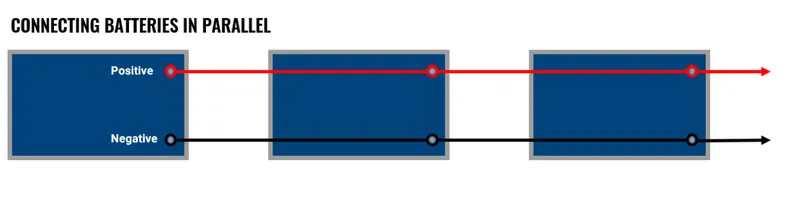
We know that the current is equal at all points in a series circuit, so whatever amount of current there is in any one of the series-connected batteries must be the same for all the others as well. For this reason, each battery must have the same amp-hour rating, or else some of the batteries will become depleted sooner than others, compromising the capacity of the whole bank. Please note that the total amp-hour capacity of this series battery bank is not affected by the number of batteries.
Batteries in Parallel
Next, we will consider connecting batteries in parallel for greater current capacity (lower internal resistance), or greater amp-hour capacity:
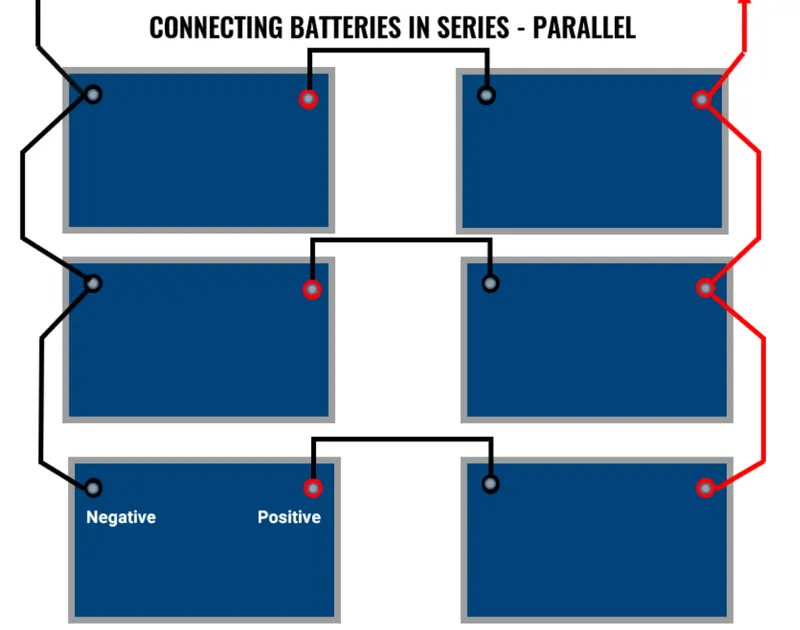
We know that the voltage is equal across all branches of a parallel circuit, so we must be sure that these batteries are of equal voltage. If not, we will have relatively large currents circulating from one battery through another, the higher-voltage batteries overpowering the lower-voltage batteries. This is not good.
About ANR26650M1-B
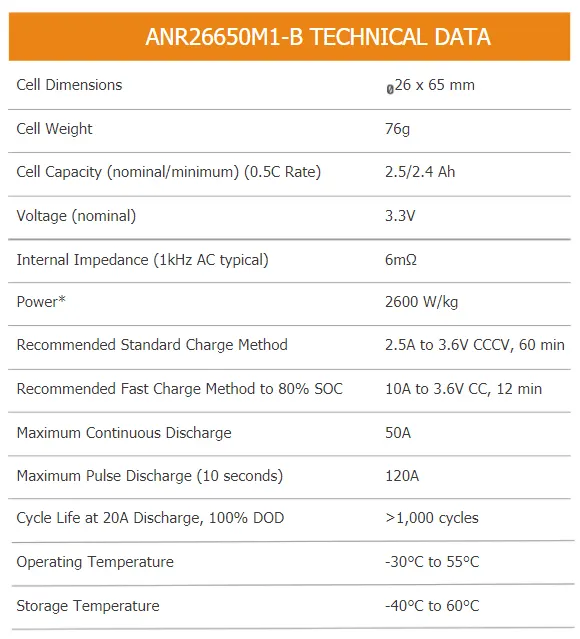
The datasheet of ANR26650M1-B is as follow
The following is the characteristic of ANR26650M1-B.
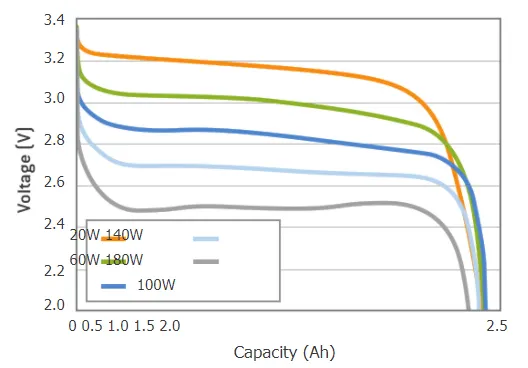
Fig: Constant Power Discharge Characteristic at `23^o C`
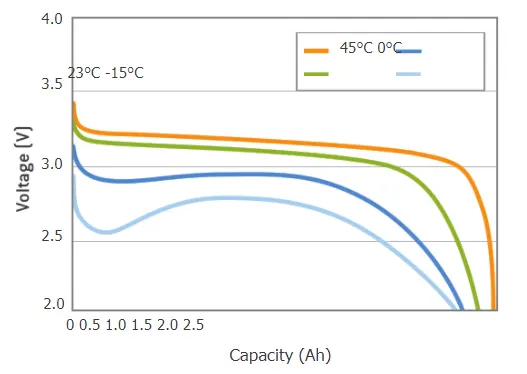
Fig: 2.5C Constant Current Discharge at Various Temperatures
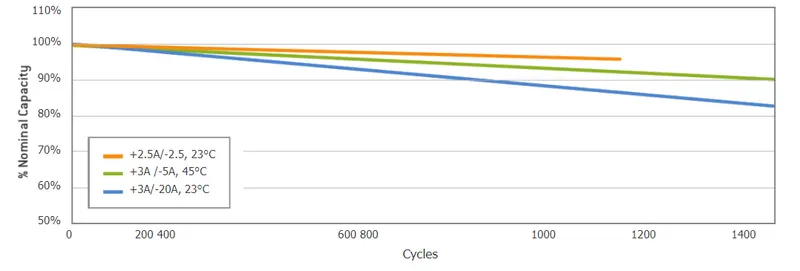
Fig: Cycle Life Performance, 100 % DOD, Various Temperatures and Discharge Rates
Procedure:
Cell
The very first step involves finding the rating of the battery.
The given cell ANR26650M1-B is of Nominal Voltage 3.3V and the current is 2.5 Ah.
Basically, one cell is of `3.3 * 2.5 = 8.25 Wh`rating
The cell dimension is 26 x 65 mm. So the model of the single cell is as follow;
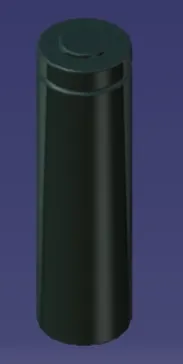
Fig: Model of Cell ANR26650M1-B
Holder
Once the cell is made, then the battery needs a holder and connecter to keep it in place. The holder is made first A battery holder is one or more compartments or chambers for holding a battery. For dry cells, the holder must also make electrical contact with the battery terminals. For wet cells, cables are often connected to the battery terminals, as is found in automobiles or emergency lighting equipment. A battery holder is either a plastic case with the shape of the housing molded as a compartment or compartments that accepts a battery or batteries, or a separate plastic holder that is mounted with screws, eyelets, glue, double-sided tape, or other means. Battery holders may have a lid to retain and protect the batteries or maybe sealed to prevent damage to circuitry and components from battery leakage. Coiled spring wire or flat tabs that press against the battery terminals are the two most common methods of making the electrical connection inside a holder. External connections on battery holders are usually made by contacts with pins, surface mount feet, solder lugs, or wire leads. Where the battery is expected to last over the life of the product, no holder is necessary, and a tab welded to the battery terminals can be directly soldered to a printed circuit board.
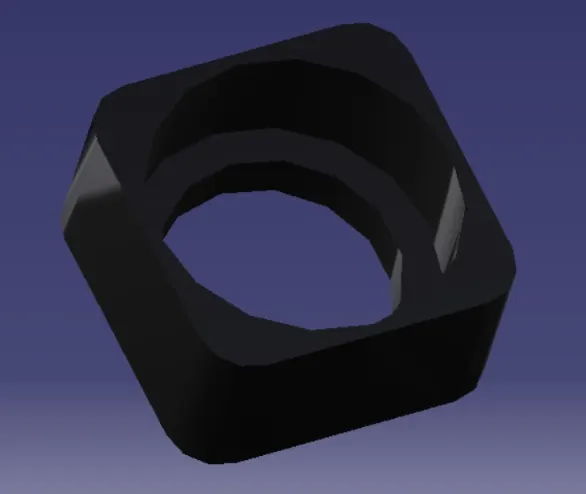
Fig: Battery Holder
Connector/Terminal
The battery needs a connecter to connect it in series or parallel connection. Battery terminals are the electrical contacts used to connect a load or charger to a single cell or multiple-cell battery. These terminals have a wide variety of designs, sizes, and features that are often not well documented. Terminals can also be both on the long or short side of the battery, or diagonally opposed, or in the middle. Purchasing the wrong configuration may prevent battery cables from reaching the battery terminals.
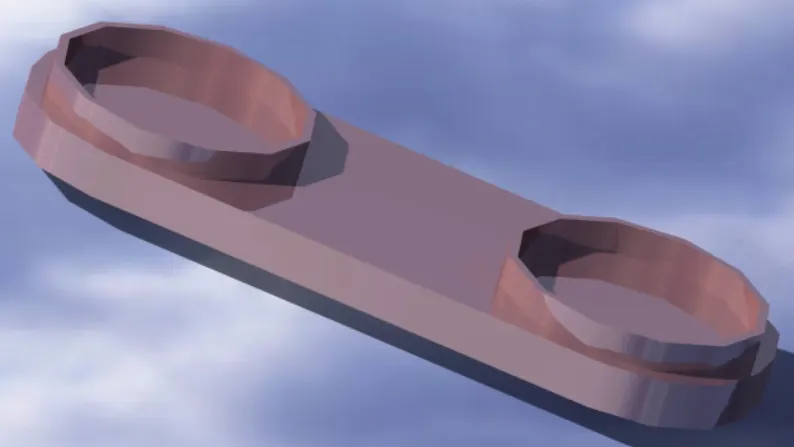
Fig: Connector
Battery
A battery is made up of many cells connected in series or parallel. The battery here has 6 series and 4 parallel connections. Hence, the total rating is `8.25 * 6 * 4 = 0.198 kWh`
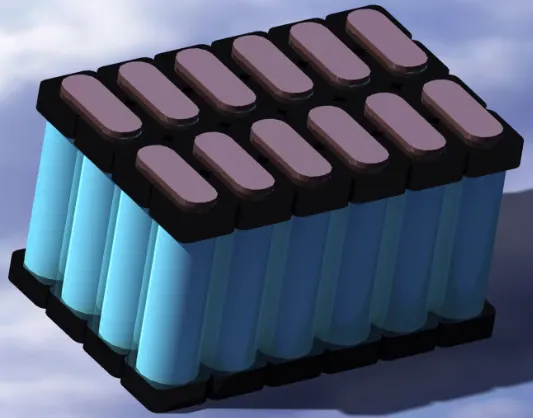
Fig: Battery
To fulfill the need of 18 kWh, we need many such batteries in series and parallel. When we connect 19 such batteries in series and 5 batteries in parallel, we get the output well above 18 kWh. The capacity is `19 * 5 * 0.198 = 18.81 kWh`
the following is one part of the pack to be connected in series to produce 18kWh Battery
The total cells used are `6 * 4 * 19 *5 = 2280 cells`
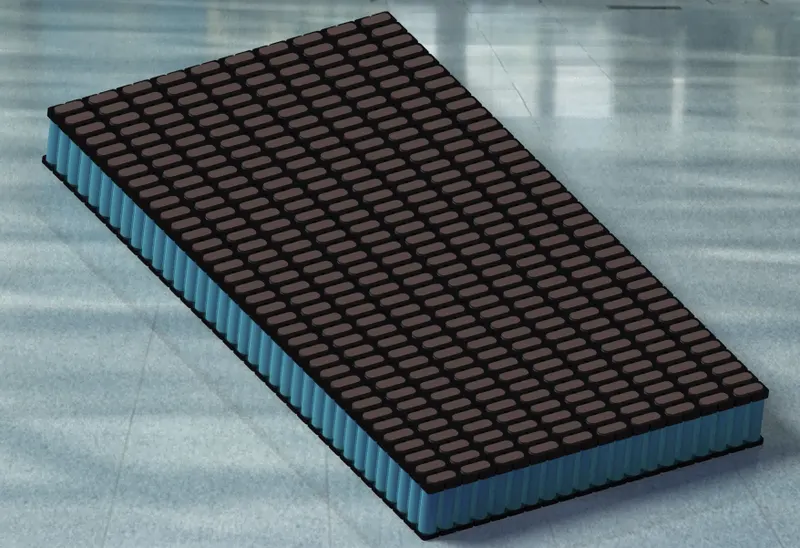
Fig: Battery Pack
Conclusion:
Created an 18.81 kWh Battery pack from ANR26650M1-B cell using CATIA. The number of cells used are 2280.
References:
https://www.allaboutcircuits.com/textbook/direct-current/chpt-11/practical-considerations-batteries/
https://www.electricbike.com/introduction-battery-design-1/
https://www.power-sonic.com/blog/how-to-connect-batteries-in-series-and-parallel/
https://datasheetspdf.com/pdf/1424845/A123Systems/ANR26650M1-B/1