Project 1 Mechanical design of battery pack
Battery pack capacity: 18 kWh
Cell: ANR26650M1-B
Aim:
Prepare a detailed battery pack drawing along with its enclosure. State your assumptions and Battery pack capacity: 18 kWh Cell: ANR26650M1-B
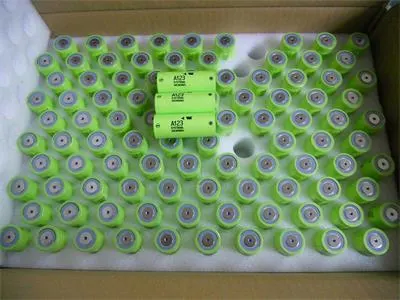
Cell Dimensions = 26 x 65 mm
Cell Weight = 76g
Cell Capacity (nominal/minimum) (0.5C Rate) = 2.5/2.4 Ah
Voltage (nominal) = 3.3V
Internal Impedance (1kHz AC typical) = 6mΩ
Power* = 2600 W/kg
Recommended Standard Charge Method = 2.5A to 3.6V CCCV, 60 min
Recommended Fast Charge Method to 80% SOC = 10A to 3.6V CC, 12 min
Maximum Continuous Discharge = 50A
Maximum Pulse Discharge (10 seconds) = 120A
Cycle Life at 20A Discharge, 100% DOD = >1,000 cycles
Operating Temperature = -30°C to 55°C
Storage Temperature = -40°C to 60°C
Nanophosphate High Power LithiumIon Cell (ANR26650M1-B)
A123’s high-performance Nanophosphate®lithium iron phosphate (LiFePO4) battery technology delivers high power and energy density combined with excellent safety performance and extensive life cycling in a lighter weight, more compact package. Our cells have a low capacity loss and impedance growth over time as well as high usable energy over a wide state of charge (SOC) range, allowing our systems to meet end-of-life power and energy requirements with minimal pack oversizing.
ANR26650M1-B Specifications:
Nominal Ratings
Voltage: 3.3 Volts
Capacity: 2.5 Ah
Energy: 8.25 Wh
Specific Power: 2600 W/kg
Impedance (1KHz AC Typical) 6 mΩ
Cycle Life at 1C/1C, 100% DOD: > 4000 cycles
Cell Type: 26650 Lithium Ion Power Cylindrical Cell
Discharging
Max Continuous Discharage: 50 A
Max Pulse Discharge Current >50% SOC (10s): 120 A
Minimum Voltage: 2 Volts
Temperature: -30ºC to 55ºC
Charging
Recommended Standard Charge: 2.5 Amps
Max Charge Rate: 10 Amps
Max Pulse Charge Current <50% SOC (10s): 25 A
Float Voltage: 3.45 Volts
Recommended charge V & Cut-off Current: 3.6 Volts, taper to 125mA
Temperature
(reduce charging current to 250mA when under 0ºC): 0ºC to 55ºC
Mechanical
Diameter: Ø25.96 +/- 0.5 mm (1.0")
Length: 65.15 +/- 0.5 mm (2.6")
Mass: 76 g
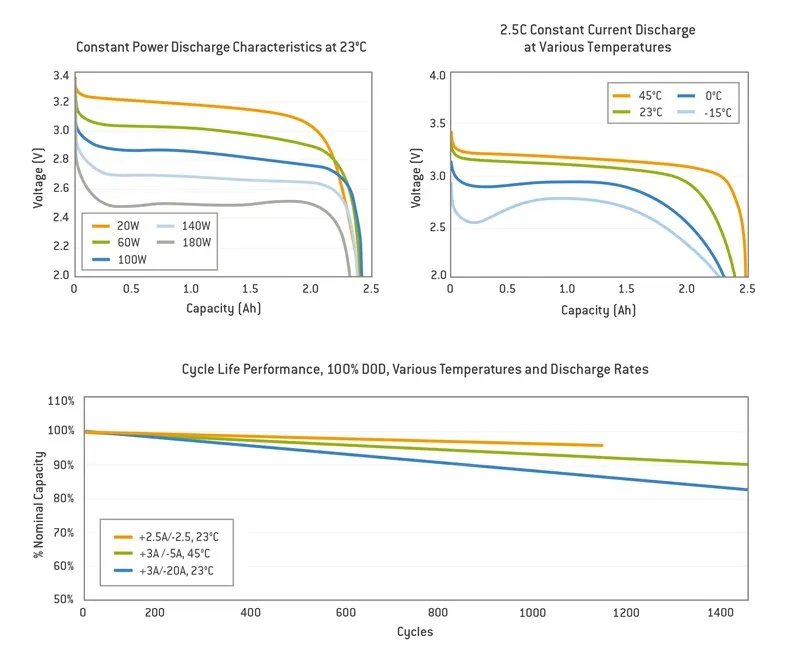
Applications:
COMMERCIAL SOLUTIONS
Advanced lead-acid replacement batteries for:
+ Datacenter UPS
+Telecom backup
+IT backup
+Autonomously guided vehicles (AGVs)
+ Industrial robotics and material handling equipment
GOVERNMENT SOLUTIONS
+ Military vehicles
+ Military power grids
+Soldier power
+ Directed energy
GRID SOLUTIONS
+ Frequency regulation
+ Renewables integration
+ Reserve capacity
+ Transmission and distribution
TRANSPORTATION SOLUTIONS
Hybrid, plug-in hybrid, and electric vehicle battery systems for:
+Commercial vehicles
+ Off-highway vehicles
+Passenger vehicles
Prepare a detailed battery pack drawing along with its enclosure