Project 1 Mechanical design of battery pack
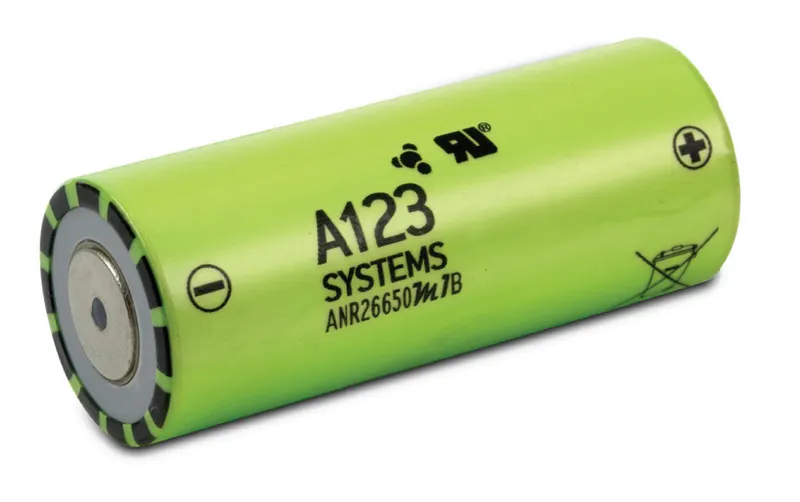
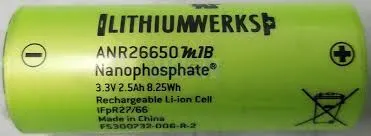
Battery pack capacity: 18 kWh ,Cell: ANR26650M1-B
Prepare a detailed battery pack drawing along with its enclosure. State your assumptions.
A123’s high-performance Nanophosphate® lithium iron phosphate (LiFePO4) battery technology delivers high power and energy density combined with excellent safety performance and extensive life cycling in a lighter weight, more compact package. Our cells have low capacity loss and impedance growth over time as well as high usable energy over a wide state of charge (SOC) range, allowing our systems to meet end-of-life power and energy requirements with minimal pack oversizing.
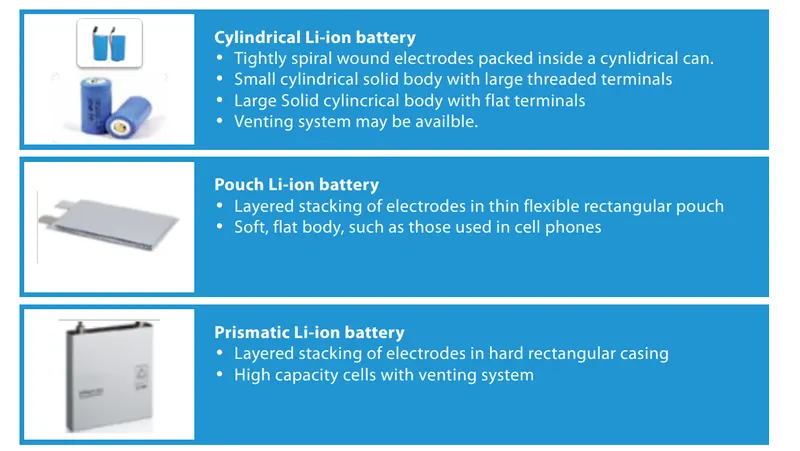
Types of lithium ion cell shapes:
1. Cylindrical:
Cylindrical lithium cells are used for high specific energy density and good mechanical stability. This shape offers good safety and a high cycle life at a low cost. The disadvantage is that it has low packaging density.
2. Pouch:
Cells in this shape have a laminated architecture in a bag. Exposure to high temperature and humidity can shorten the life of this cell, but it is light and cost effective.
3. Prismatic:
These cells are packaged in aluminum or steel for good stability. It is expensive to manufacture but is a space effective solution compared to the cylindrical cell.
Cell specifications:
| Cell Dimensions | 26 x 65 mm |
| Cell Weight | 76g |
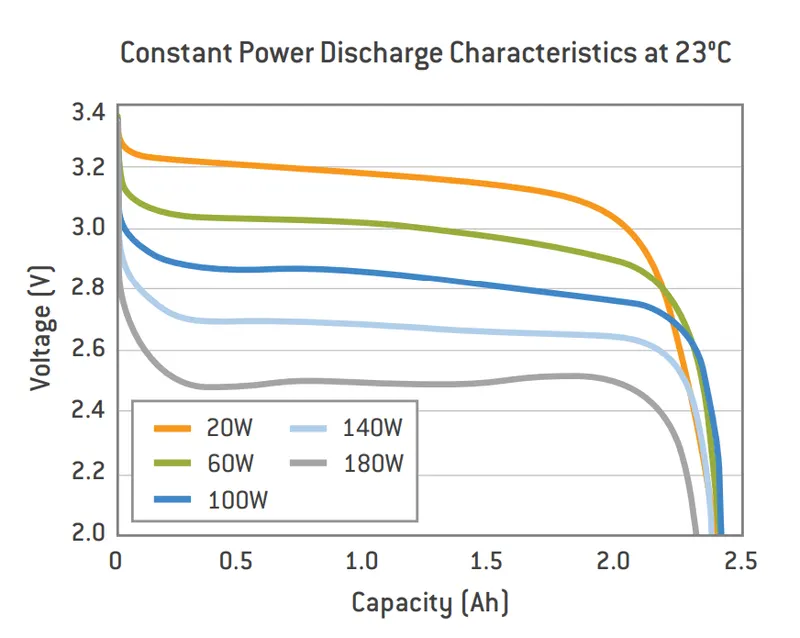
| Cell Capacity (nominal/minimum) (0.5C Rate) | 2.5/2.4 Ah |
| Voltage (nominal) | 3.3V |
| Internal Impedance (1kHz AC typical) | 6mΩ |
| Power | 2600 W/kg |
| Recommended Standard Charge Method | 2.5A to 3.6V CCCV, 60 min |
| Recommended Fast Charge Method to 80% SOC | 10A to 3.6V CC, 12 min |
| Maximum Continuous Discharge | 50A |
| Maximum Pulse Discharge (10 seconds) | 120A |
| Cycle Life at 20A Discharge, 100% DOD | >1,000 cycles |
| Operating Temperature | -30°C to 55°C |
| Storage Temperature | -40°C to 60°C |
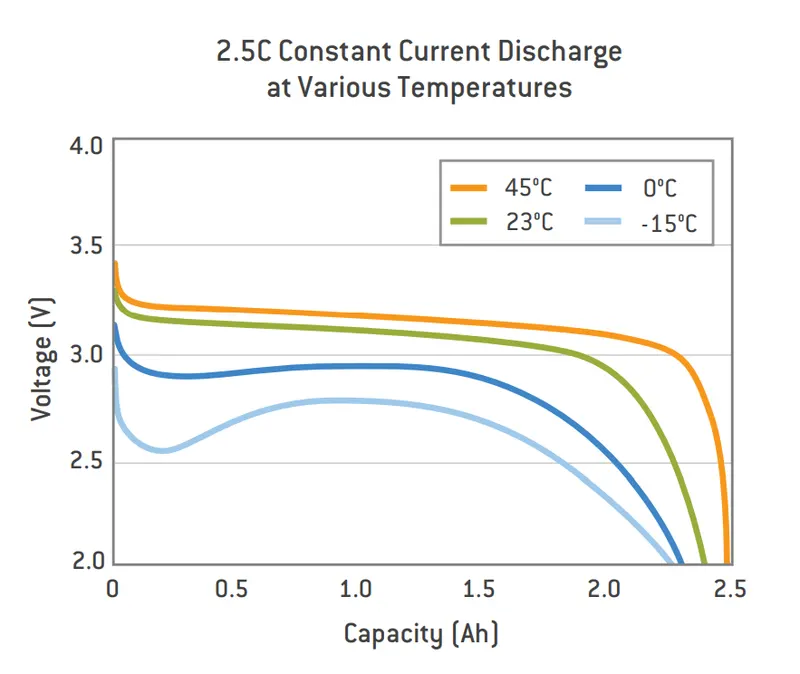
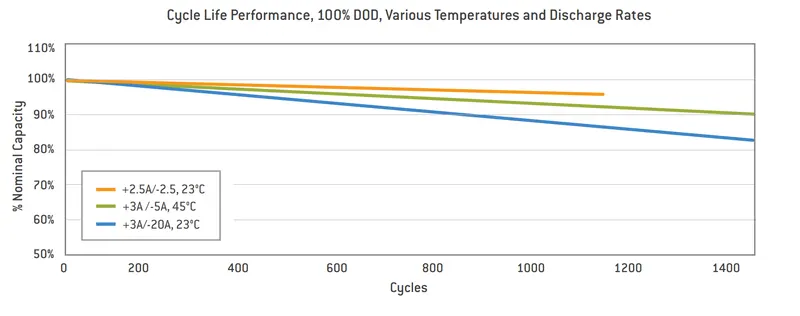
Battery design:
Total Energy = 18kWh = 18000 Wh
Total Voltage = 400V
Nominal voltage of cell = 3.3V
Battery capacity = 2.5Ah
Total battery capacity = `Energy/Voltage`
= `18000 Wh / 400 V`
= 45Ah
Minimum No. of cells required, N =Energy/(nominal voltage*Capacity)
= 18000/(3.3*2.5)
= 2182 no. of cells
So a total of 2182 no. of cells are required to produce a battery pack of 18kWh Energy.
In series configuration the voltage is multiplied and the battery capacity remains the same.
In parallel configuration the voltage remains the same and the battery capacity is multiplied.
No. of cells connected in series for producing 400V ,Ns = `400/3.3`
= 122
No. of cells connected in parallel for producing 45Ah,Np = `45/2.5`
= 18
Total no. of cells required,N = 122*18 = 2196
Cell configuration = 122s18p
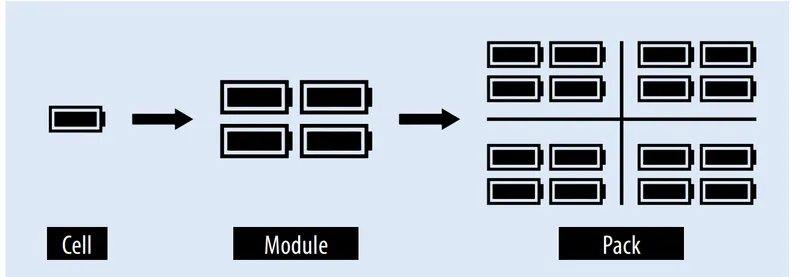
Battery pack assembling:
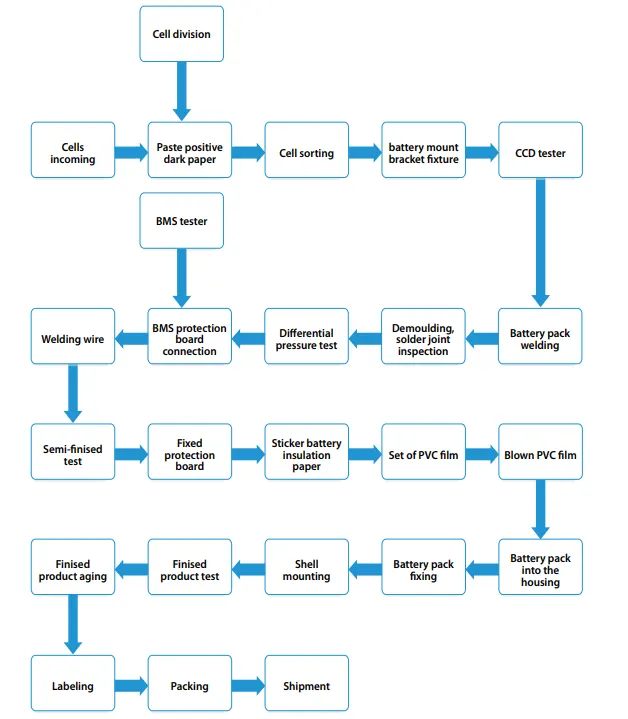
Here the battery is cylindrical,flowchart of pack assembling for cylindrical cells:
Dimensions of the cell:
The diameter of cell = 25.96mm
The length of cell = 65.15mm
The cells are in arranged this rectangular box manner:
Length of the case = Cells connected in series + margin at both side of the cell + clearance at edged cell
= (122*(26+4)) + 8
= 3668mm
Width of the case = Cells connected in parallel + margin at both side of the cell + clearance at edged cell
= (18*(26+4))+8
= 548mm
Height of the case = Cell height + margin for wiring + margin for metal strips + cell holders
= 65+35
= 100mm
Weight of the battery pack = total cell weight + weight of accessories
= 2196 * 0.076 kg + 3kg
= 170kg approx.