Project 1 Mechanical design of battery pack
Aim:
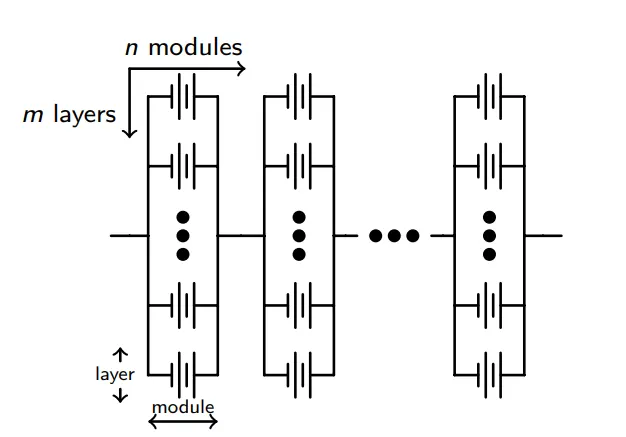
A battery pack model that consists of identical electrochemical cells is arranged in series
and parallel, as shown in Figure There are n modules arranged in series, and each
module consists of m layers arranged in parallel. The cells are arranged in such a way that
they have to satisfy the safety (voltage and current) and performance (energy and power)
constraints. In reality, the cell properties differ slightly due to manufacturing imprecisions,
causing variations in cell capacities. As such, accurate battery pack modeling requires each
cell to be treated individually [50]. Charge equalization techniques are employed to balance
the cells to enhance battery life and to maintain total capacity as well [152, 153]. Variations
in cell properties also cause additional difficulties in estimating the battery SOC.
These additional details in the battery modeling are ignored, as they are not fundamental to the design philosophy outlined in this chapter. Accounting for these issues would
increase computational burden without shedding new insights into the pack design. However, using the physics-based cell model as the foundation for the pack model would easily
allow cell-to-cell variations and accurately reflect intrinsic cell imbalance due to variations
in the amount of active materials in the cells.
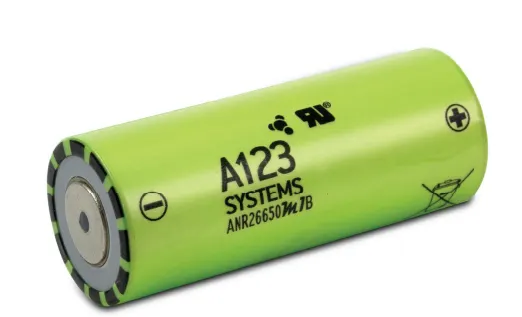
Nanophosphate® High Power LithiumIon Cell
ANR26650M1-B
www.a123systems.com ©2012 A123 Systems, Inc. All rights reserved.
MD100113-02
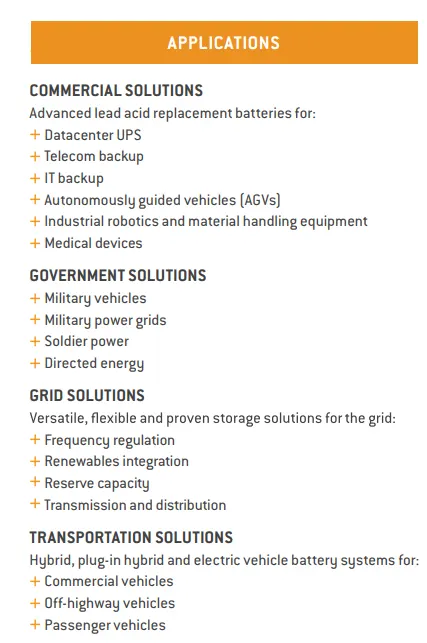
Applications
A123’s high-performance Nanophosphate®
lithium iron phosphate (LiFePO4) battery
technology delivers high power and energy
density combined with excellent safety
performance and extensive life cycling in a
lighter weight, more compact package. Our cells
have low capacity loss and impedance growth
over time as well as high usable energy over a
wide state of charge (SOC) range, allowing our
systems to meet end-of-life power and energy
requirements with minimal pack oversizing.
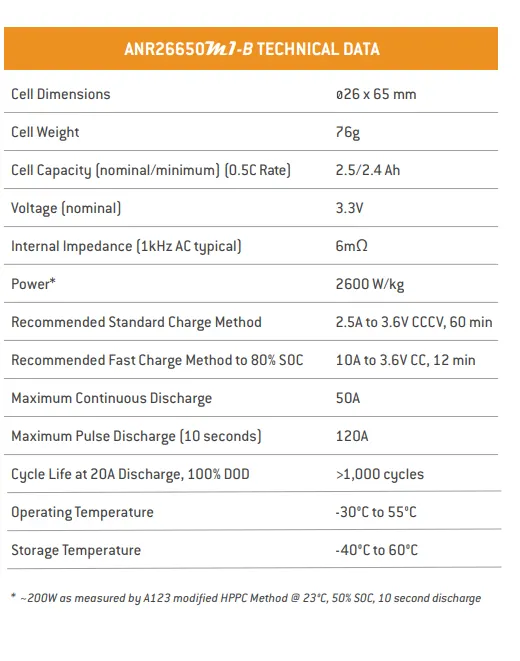
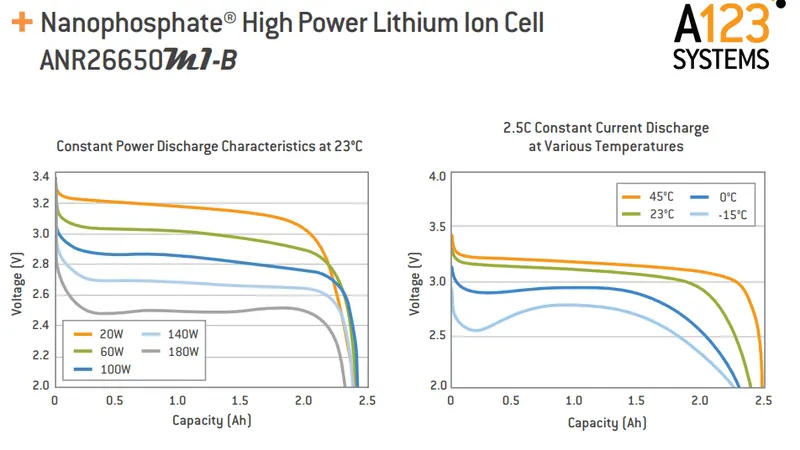
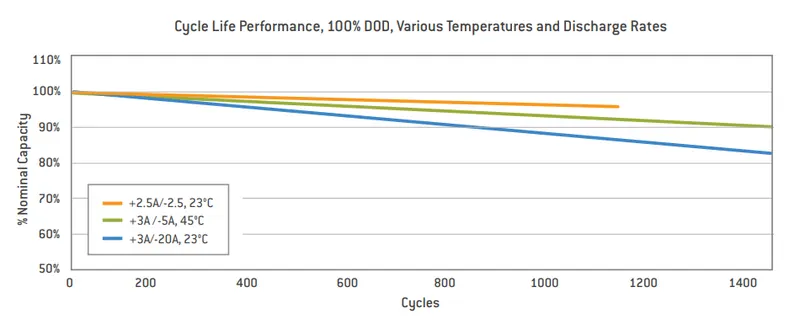
ANR26650M1-B Specifications
Nominal Ratings
Voltage: 3.3 Volts
Capacity: 2.5 Ah
Energy: 8.25 Wh
Specific Power: 2600 W/kg
Impedance (1KHz AC Typical) 6 mΩ
Cycle Life at 1C/1C, 100% DOD: > 4000 cycles
Cell Type: 26650 Lithium Ion Power Cylindrical Cell
Discharging
Max Continuous Discharage: 50 A
Max Pulse Discharge Current >50% SOC (10s): 120 A
Minimum Voltage: 2 Volts
Temperature: -30ºC to 55ºC
Charging
Recommended Standard Charge: 2.5 Amps
Max Charge Rate: 10 Amps
Max Pulse Charge Current <50% SOC (10s): 25 A
Float Voltage: 3.45 Volts
Recommended charge V & Cut-off Current: 3.6 Volts, taper to 125mA
Temperature
(reduce charging current to 250mA when under 0ºC): 0ºC to 55ºC
Mechanical
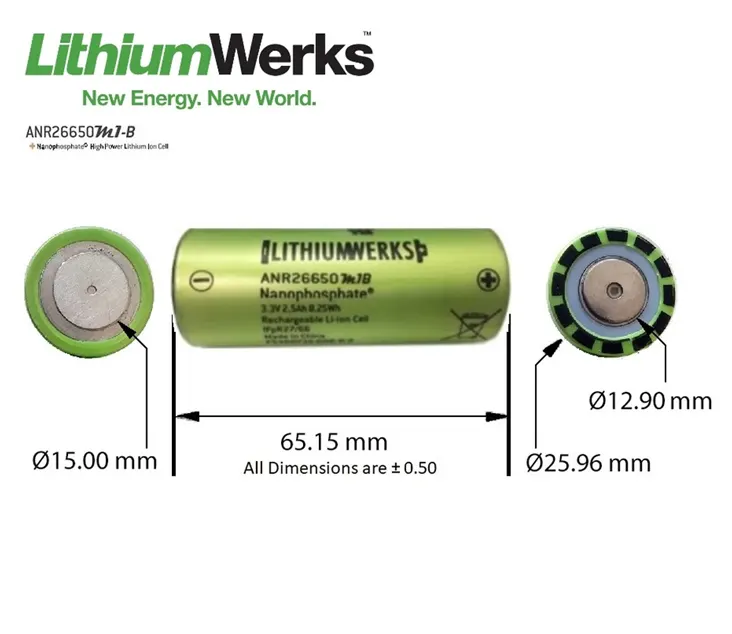
Diameter: Ø25.96 +/- 0.5 mm (1.0")
Length: 65.15 +/- 0.5 mm (2.6")
Mass: 76 g
Certifications
Transportation: UN 3480 (UN38.3), CIQ
Safety: UL 1642, IEC 62133
The LithiumWerks ANR26650M1-B is the next generation of A123 Systems’ pioneering 26650 cylindrical cell, now with greater power and energy density and lower impedance. This versatile lithium ion cell is suitable for a wide variety of applications and system designs. Proven performance in the toughest conditions, combining durability, reliability, and safety, the ANR26650 cell offers an excellent combination of price-performance.
Cylindrical Cell Primary Applications:
- Portable high power devices
- Stationary battery backup systems
- Grid stabilization energy storage systems
- Commercial truck and bus hybrid electric vehicles (HEVs)
Lithium Ion Cell Benefits:
- Power: Over 2,600 W/kg and 5,800 W/L
- Safety: Excellent abuse tolerance and environmentally friendly
- Life: Excellent calendar life, 10X cycle life vs. conventional lithium ion
calculation as per assumptions: 18 KWh battery pack.
- calculation for designing an 18 KWh battery pack basically 18 KWh is energy require to achive the vehicle it proper range.and its depend on the voltage(V) and amp-hr capacity(Ah)
1] single cell energy(Wh) [the value of a single cell energy is used to calculate the total energy of the battery pack]:
single cell energy(Wh)= cell capacity(Ah)* cell voltage(V)
= 2.5Ah *3.3V
= 8.25 Wh
2] single cell volume calculation:
single cell volume = pi(r^2)*h
= 3.14(0.013^2)*0.065
= 0.03451 m^3
3] single cell energy density:
A] volumetric energy(Wh/m^3) = single cell energy / volume of each cell
= 8.25Wh / 0.03451 m^3
= 239.0611 Wh/m^3
B] gravimetric energy(Wh/kg) = single cell energy / single cell mass
= 8.25Wh / 0.076 kg
=108.5526 Wh/Kg
calculation of high voltage battery pack
for design and calculation of battery pack here,i assume a vehicle to achive 200km in 18 KWh battery pack also i assume 145.2 nominal voltage for series connection.
sowe assume that,
vehicle range = 200 Km
battery pack capacity = 18.1210KWh
now,
4] we will calculate per Km average energy requirement = 18120.96 (Wh)/200 (Km)
= 90.60 Wh/Km
therefor,
battery pack total energy = average energy * km
= 90.60Wh * 200km
= 18120.96 Wh
let's assume nominal voltage for seres connection= 145.2 V basically this depends upon the motor power,we can decide the value according to the motor.
5] number of cell connected in series = nominal voltage of seres connection/nominal voltage of a single cell
= 145.2V/ 3.3V
= 44 cell
44 cell will be connected in a series connection to provide a proper voltage.
6] energy for battery pack(Wh) = number of cell connected in series * single cell energy
= 44* 8.25Wh
= 363 Wh
7]number of cell connected in parallel = battery pack total energy(Wh)/energy for battery pack(Wh)
= 18120.96 Wh/363 Wh
= 50 cell
50 cell will be connected in a parallel to provide a proper capacity power.
8] battery pack total energy(Wh) = no. of cell connected in parallel * energy for battery pack
= 50* 363 Wh
= 18.150 KWh
9] battery pack capacity(Ah) = no. of cell connected in parallel * single cell capacity(Ah)
= 50*2.5 Ah
= 125 Ah
the value of battery pack capacity is used for the total power required by the vehicle.
10] total number of cell for battery pack = no. of cell connected in parallel * number of cell connected in series
= 50*44
=2200 cells
2200 cells will be used to make a complete battery pack.
11] mass of battery pack = total number of cell for battery pack * mass of single cell
= 2200 * 0.076 kg
= 167.2 kg
167.2 kg its the total weight of cell connected in parallel and series
12] total volume of the battery pack = total number of cell for battery pack * volume of single cell
= 2200 * 0.0345 m^3
= 75.9 m^3
75.9 m^3 its the volume occupied by total cell used in battey pack.
13] cell peak current(A) = C rate(max pulse charge current)* single cell capacity
= 20* 2.5
= 50A
14] battery pack peak current(A) = cell peak current(A) * no. of cell connected in parallel
=50*50
= 2500A
15] battery pack peak power(W) = battery pack peak current(A) * voltage of series connection
= 2500 A * 145.2
= 363 KW
16] cell continuous current(A) = C rate(max continuous charge current)* single cell capacity
= 10* 2.5
= 25A
17] battery pack continuous current(A) = cell continuous current(A) * no. of cell connected in parallel
= 25*50
= 1250 A
18] battery pack continuous power(W) = battery pack continuous current(A) * voltage of series connection
= 1250 A * 145.2
= 181.5 KW
Details of Cell: ANR26650M1-B:
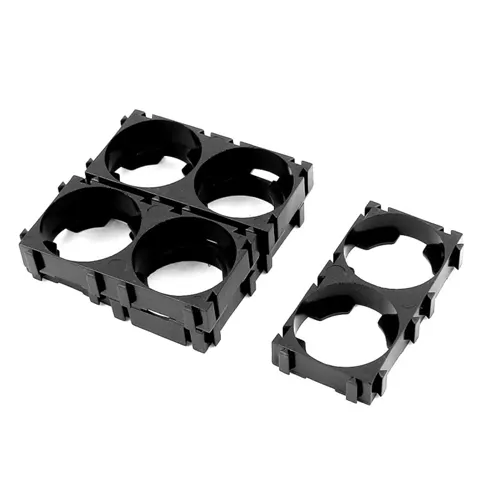
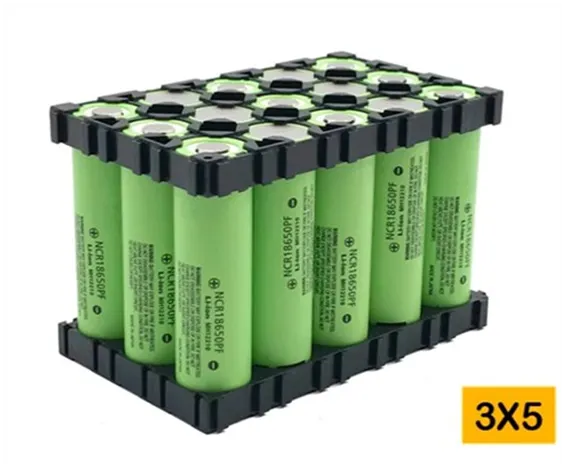
Battery holder:
Electric connection:
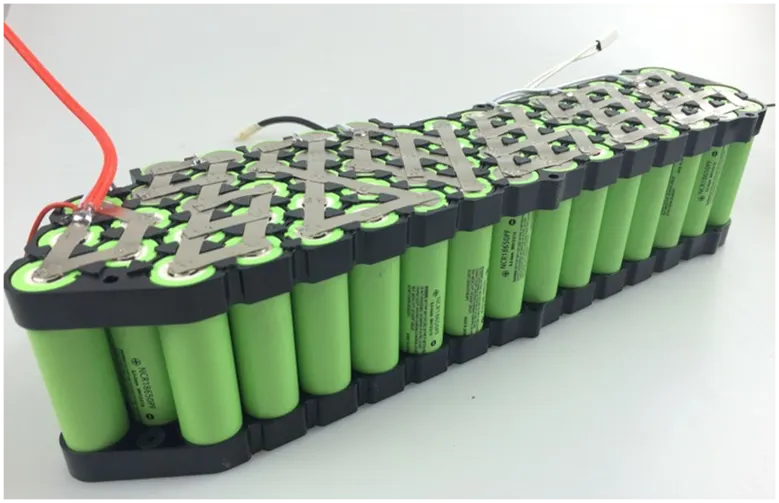
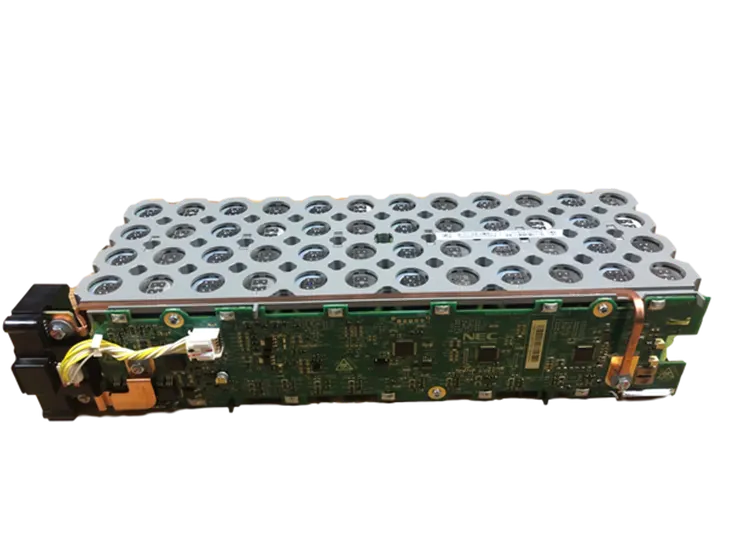
Battery pack with BMS[battery management system]: