Project 1 - COVID-19 Vaccinations Trend Analysis
Aim : Analysing Covid-19 Vaccination Trends around the world.
Introduction :
The Covid-19 pandemic has presented an unprecedented global health crisis, prompting the rapid development and deployment of vaccination programs worldwide. This report aims to analyze the trends in Covid-19 vaccination on a global scale, shedding light on the progress with Daily vaccination, People fully vaccinated & Total vaccination in different countries. The findings will contribute valuable insights into the effectiveness of vaccination campaigns, identify areas for improvement, and facilitate evidence-based decision-making to combat the pandemic effectively. Understanding the trends and patterns surrounding Covid-19 vaccinations is crucial for devising targeted strategies and ensuring equitable access to vaccines globally.
Problem Statement :
The Covid-19 pandemic has resulted in an urgent need for widespread vaccination programs to tackle the impact of the virus. However, there is a lack of comprehensive analysis regarding the trends and patterns of Covid-19 vaccination on a global scale. Without a thorough understanding of the vaccination trends, decision-makers and policymakers are unable to devise targeted strategies to optimize vaccine rollout and ensure equitable access. Therefore, there is a pressing need to analyse Covid-19 vaccination trends worldwide to inform evidence-based decision-making and improve global vaccination efforts.
Methodology :
The following are the methods that can be used to get meaningful insights from the given dataset :
- Daily vaccination conducted by countries around the world
- Daily vaccination conduction over the years
- Daily vaccinations according to vaccine type
- Total vaccinations done over the years
- Total number of vaccinations with type of vaccine
- Total number of vaccinations by countries
- Number of people fully vaccinated over the years
- Number of people vaccinated over the years
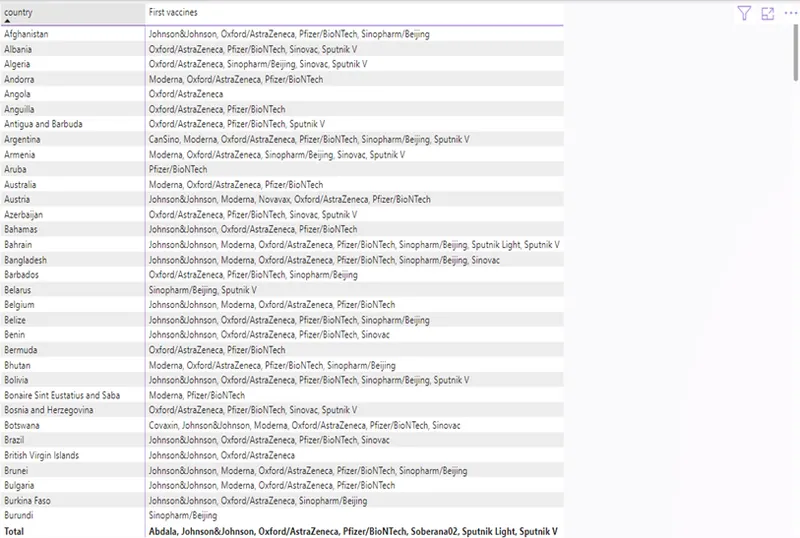
- Which vaccine is used by which countries
Analysis : The following are the key visual insights obtained from the dataset.
- Daily vaccination conducted by countries around the world
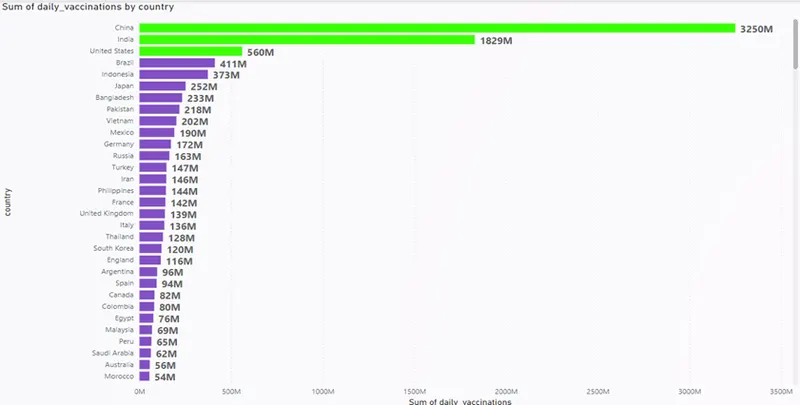
As we can observe China, India & United States are the countries which stood top when we talk about number of daily vaccinations. While the rest of the countries are showing a steady decrease from 411 million daily vaccinations.
- Daily vaccination conduction over the years and quarter
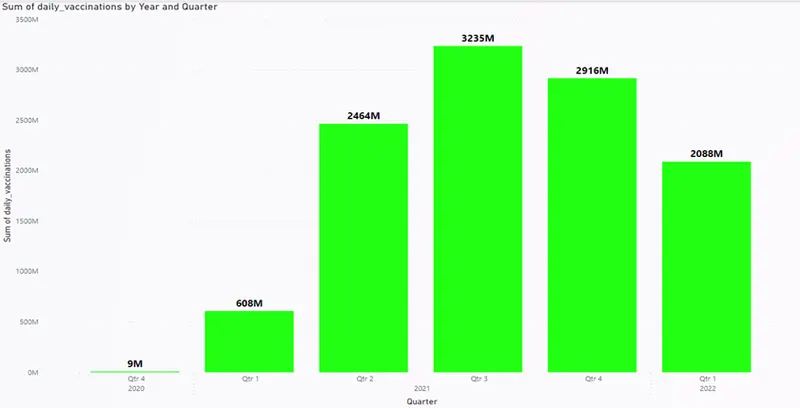
Here total number of daily vaccination was highest in the year 2021 in which the Q4 contributes the maximum, while in 2020 it was negligible.
- Daily vaccinations according to vaccine type
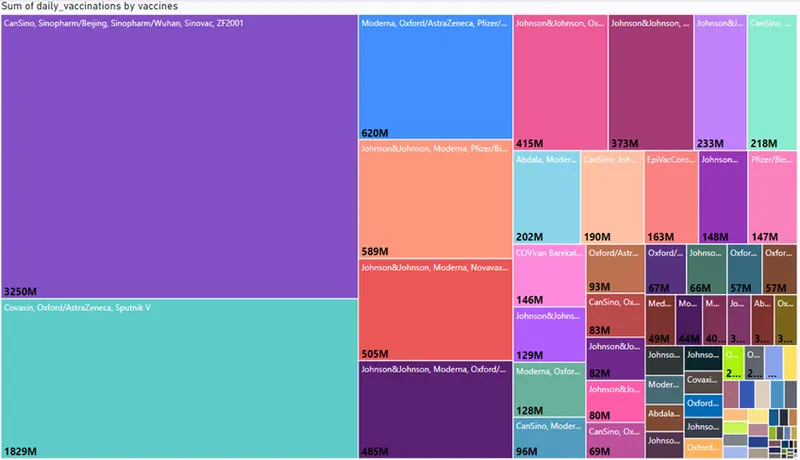
Here we can see the in terms of number of vaccinations daily CanSino top’s followed by Covaxin & Moderna (Pfizer).
- Total vaccinations done over the years
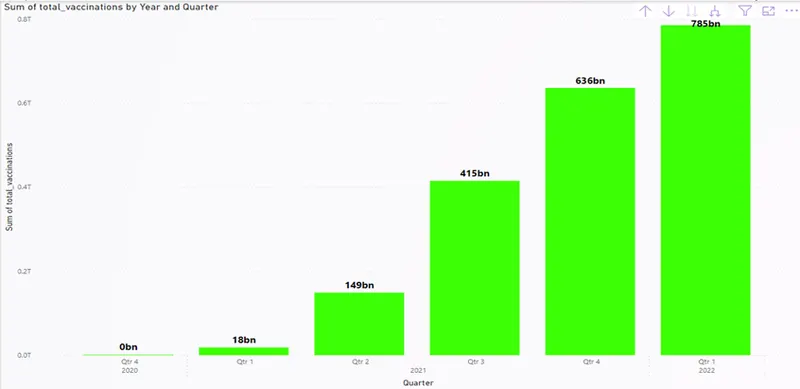
The rate of total vaccination done over the years is constantly increasing from 2020 to 2022.
- Total number of vaccinations with type of vaccine
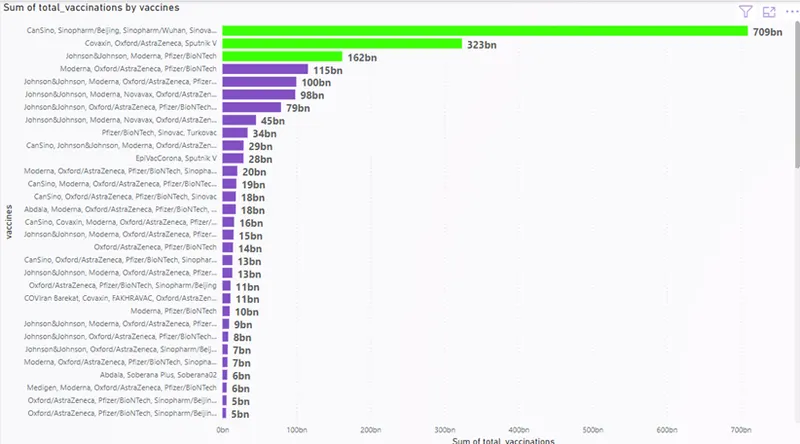
CanSino is highest type of vaccine taken according to total number of vaccinations.
- Total number of vaccinations by countries
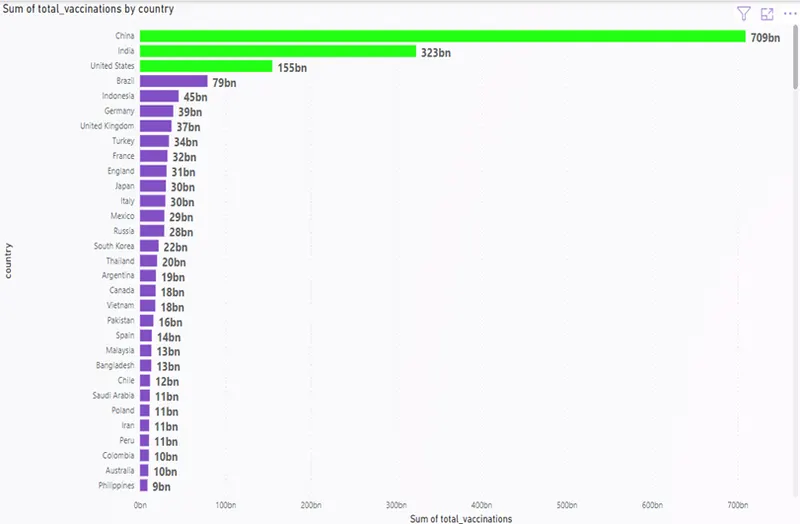
China, India & United States stands highest in total number of vaccination.
- Number of people fully vaccinated over the years
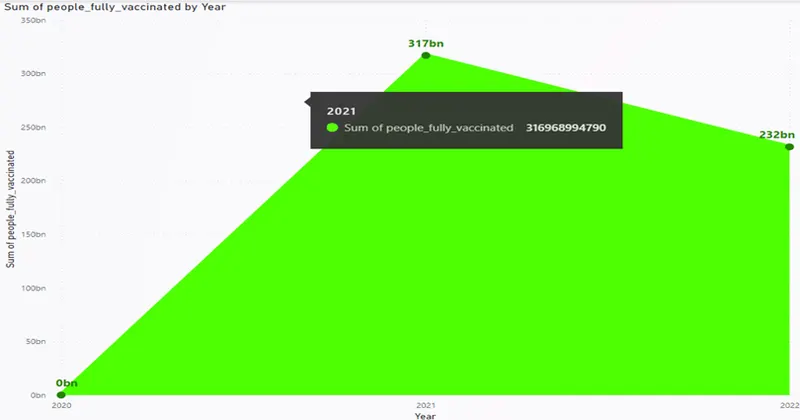
In the year 2021 the number of fully vaccinated people were the highest followed by year 2022.
- Number of people vaccinated over the years
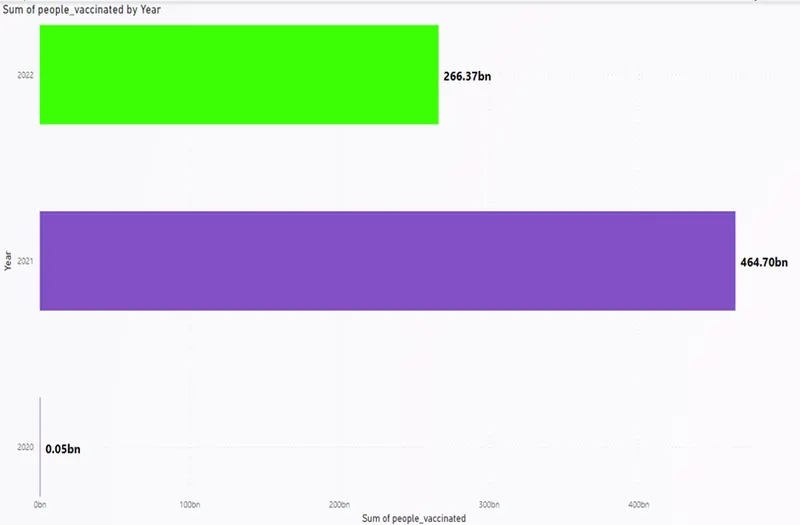
Most number of people were vaccinated in the year 2021 and the least in year 2020.
- Which vaccine is used by which countries
Insights :
Based on the analysis of Covid-19 vaccination trends, several key insights emerge. Firstly, China, India, and the United States have emerged as leaders in terms of daily vaccinations, surpassing other countries. These nations have demonstrated their ability to administer large numbers of vaccines on a daily basis, contributing significantly to the global vaccination effort.
Secondly, the total number of daily vaccinations reached its peak in 2021, with Q4 contributing the most. This indicates a concerted push towards widespread vaccination during that period. In contrast, the number of daily vaccinations in 2020 was negligible, highlighting the initial challenges faced in vaccine rollout.
Furthermore, the analysis reveals that CanSino, Covaxin, and Moderna (Pfizer) were the most prevalent vaccine types in terms of daily vaccinations. CanSino emerged as the top choice because of its widespread adoption and availability.
The rate of total vaccination has steadily increased from 2020 to 2022, indicating progress in global vaccination efforts over time. This trend signifies an expanding reach of vaccination campaigns and increased access to vaccines across different regions.
In terms of total vaccinations, China, India, and the United States stand out as the countries with the highest numbers. These nations have made significant strides in vaccinating their populations, contributing significantly to global vaccination numbers.
Additionally, the year 2021 witnessed the highest number of fully vaccinated individuals, closely followed by 2022. This indicates substantial progress in achieving full vaccination coverage during these years. Conversely, the year 2020 saw the fewest people vaccinated, likely due to the early stages of vaccine development and limited availability.
In summary, the analysis of Covid-19 vaccination trends reveals the leadership of China, India, and the United States in daily and total vaccinations. It also highlights the increasing rate of vaccination over the years, the popularity of CanSino, Covaxin, and Moderna (Pfizer) vaccines, and the variation in vaccination rates across different years. These insights provide valuable information for assessing the global vaccination landscape and identifying areas for improvement in future vaccination campaigns.
Recommendation :
Strengthen Global Collaboration : Given the leadership demonstrated by China, India, and the United States in daily and total vaccinations. Countries should establish platforms for sharing best practices, lessons learned, and strategies to optimize vaccination campaigns. This collaboration can help other nations overcome challenges, improve efficiency, and accelerate their vaccination efforts.
Address Imbalance in Vaccine Distribution : While certain countries have achieved high vaccination rates, it is essential to address imbalance in vaccine distribution across regions. Efforts should be made to ensure equitable access to vaccines, particularly in low-income and marginalized communities. International organizations, governments, and vaccine manufacturers should work together to ramp up production capacity and prioritize the distribution of vaccines to areas with lower vaccination rates.
Enhance Vaccine Education and Outreach : The analysis highlights variations in vaccine preference, with CanSino, Covaxin, and Moderna (Pfizer) being popular choices. It is crucial to provide accurate and accessible information about vaccine safety, efficacy, and benefits to increase public confidence in all vaccine options. Governments and healthcare organizations should invest in comprehensive vaccine education campaigns, leveraging multiple channels and tailored messaging to reach diverse populations.
Sustain and Expand Vaccination Efforts : The analysis reveals the progress made in increasing the rate of total vaccinations over the years. To maintain this momentum, governments and healthcare systems should prioritize sustained vaccination efforts, ensuring a continuous supply of vaccines and efficient vaccination infrastructure. Additionally, planning for future vaccination campaigns should take into account potential booster doses and emerging variants to stay ahead of the evolving pandemic landscape.