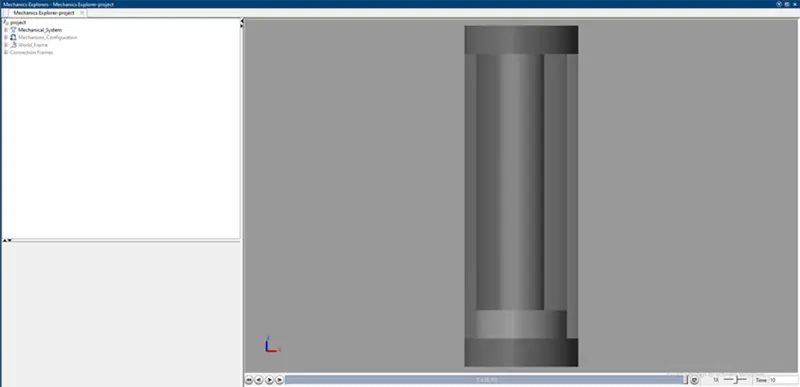
Project 1
Aim: To Develop a double-acting actuator model using Simscape Multibody and Simscape components.
Theory:
To model the cylinder and piston, blocks to be used are:
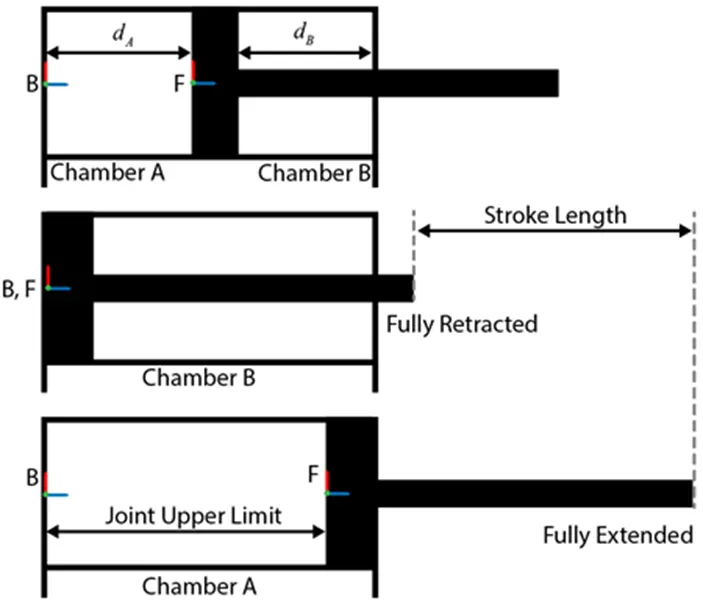
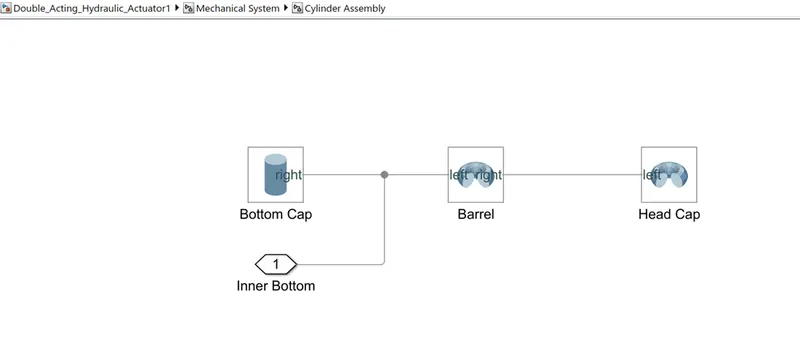
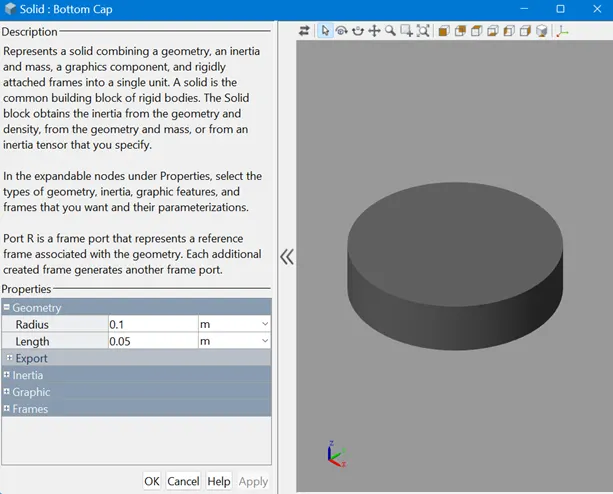
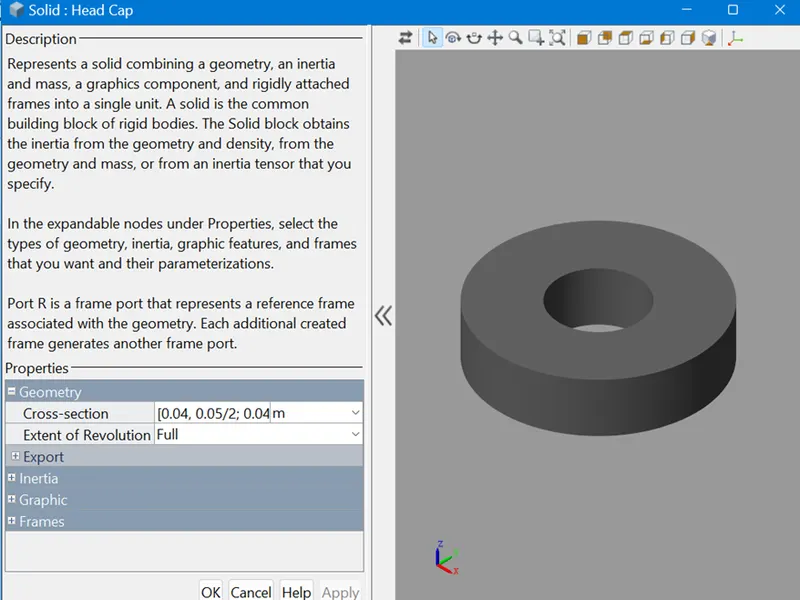
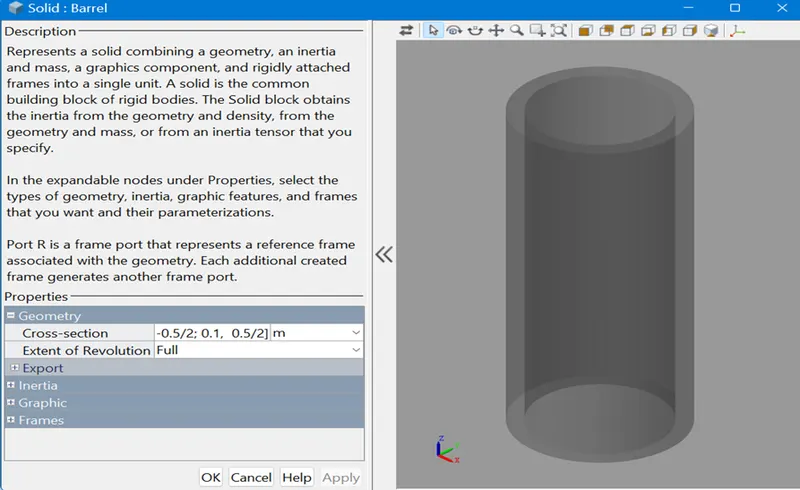
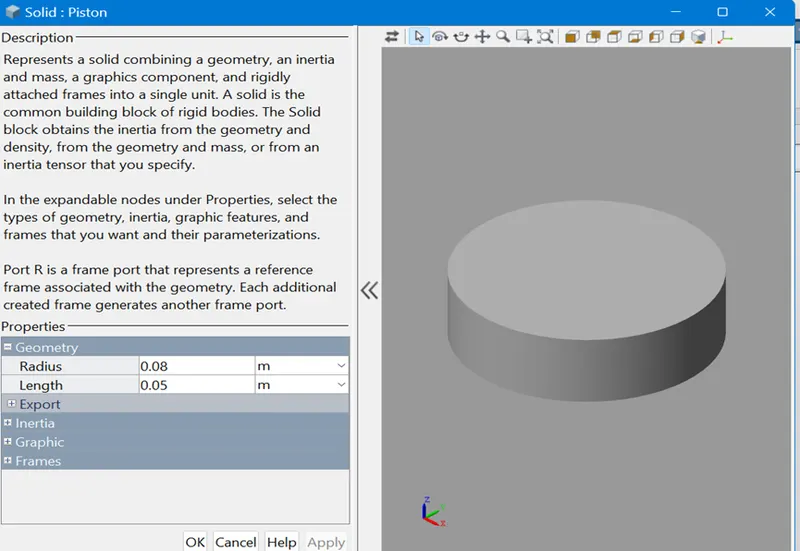
- Revolved solid (Simscape Multibody) and cylindrical solid (Simscape Multibody) blocks.
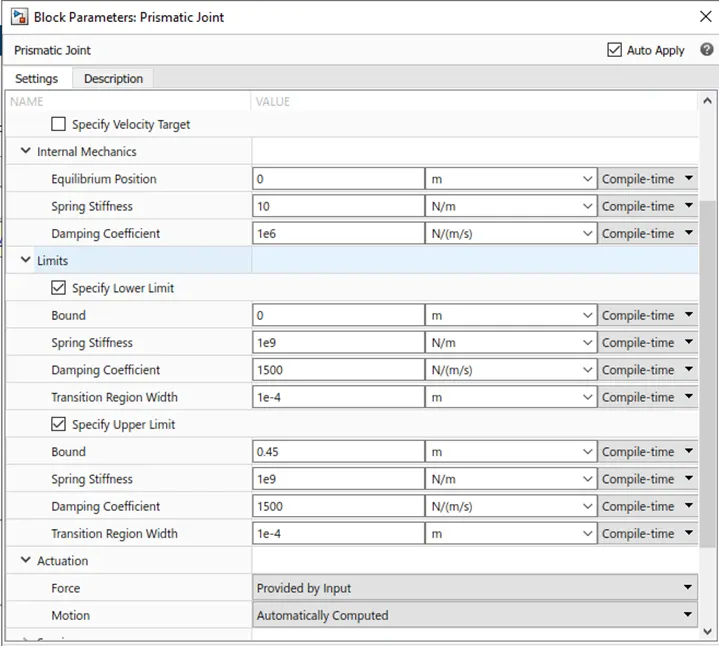
- For the translational degree of freedomfor the prismatic joint (Simscape Multibody) block.
- To easily calculate the lengths of the chambers A and B, you can attach the base frame (B) and follower frame (F) of the joint to the centres of the left inner surface of the chamber A and the left surface of the piston, respectively.
Double acting hydraulic actuator:
Double-acting hydraulic cylinders are linear hydraulic actuators that perform the movement in both directions using hydraulic pressure. The piston stroke in double-acting cylinders is much longer than in a single-acting cylinder.
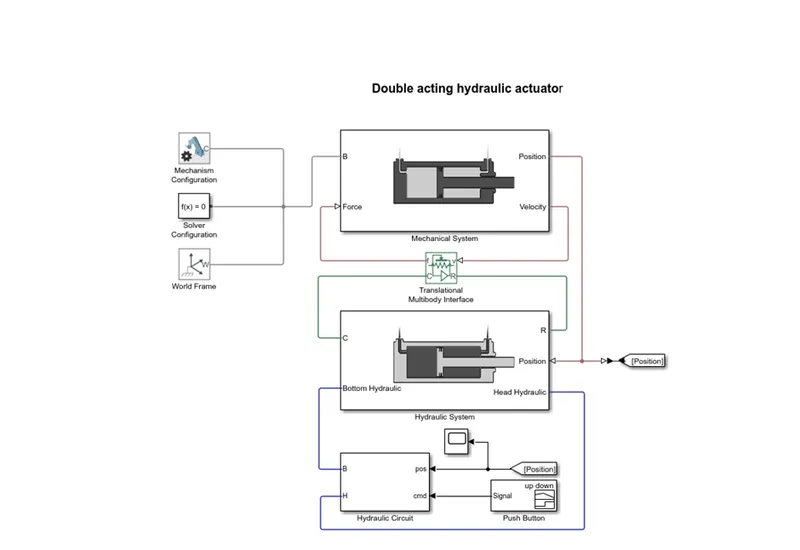
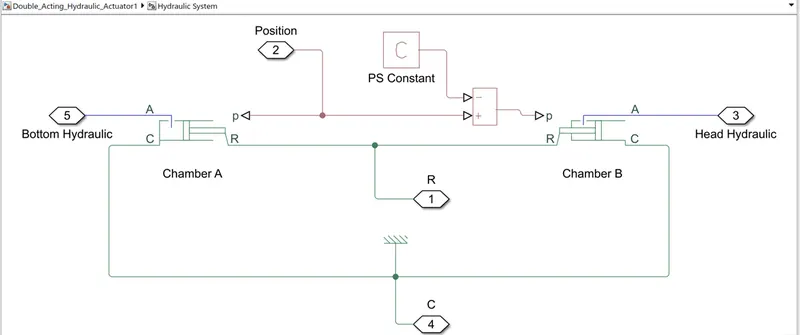
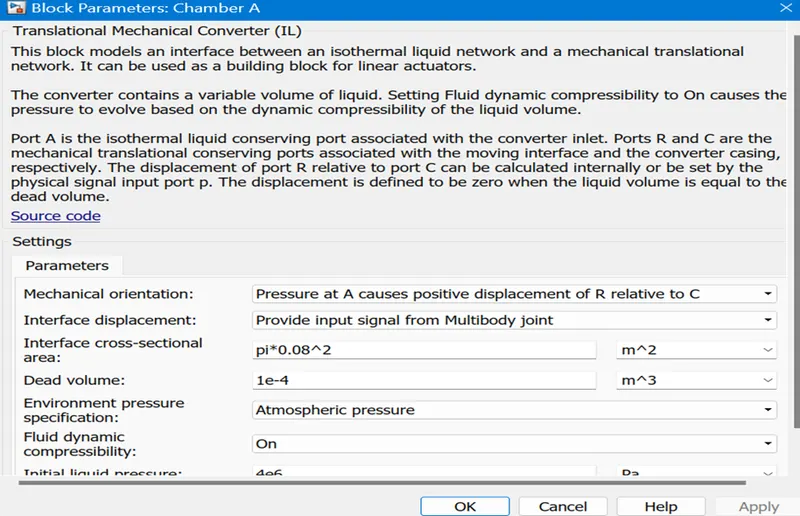
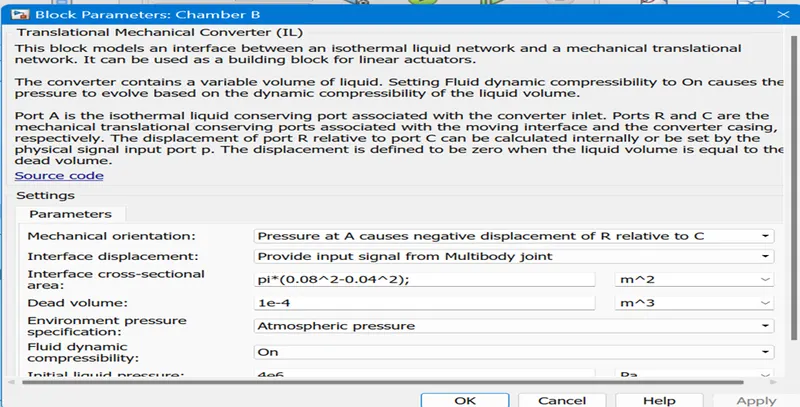
This figure shows the block diagram of the double-acting cylinder model described above. The example uses two translational mechanical converter(IL) blocks to model the chambers A and B of the cylinder. A
Translational Multibody Interface block connects the Translational Mechanical Converter (IL) blocks to the Prismatic Joint block. See connecting simscape networks to simscape multibody for details of how to use the Translational Multibody Interface block.
Working principle:
A hydraulic cylinder is a mechanical device that uses hydraulic power to create pressure. They are commonly used in various industrial applications and are also common in hydraulic pumps. They can be used in various ways, including as actuators or as lifting devices.
Double-acting hydraulic cylinder:
A double-acting hydraulic cylinder is a mechanical device that uses two chambers to regulate pressure. It has a control valve on each end that allows the user to selectively fill each chamber with pressurized fluid. This makes it possible to actuate the cylinder in two different ways: by pushing or pulling the lever in one direction (resembling the first action of a simple hydraulic cylinder), or by pushing or pulling the lever in the opposite direction (resembling the second act of a simple hydraulic cylinder).
In case of a hydraulic failure, the cylinder will retain the pressure in one of the chambers until the supply of oil is restored, thereby preventing any damage or injury. There are two types of double-acting cylinders:
- Double-acting cylinder with a piston rod on one side.
- Double-acting cylinder with a piston rod on both sides.
Double-acting hydraulic cylinder applications:
- Double-acting hydraulic cylinders are typically used in industrial processes that require a quick force.
- Double-acting cylinders are used for power steering and the more powerful the car the more power you need to be able to steer it.
- This type of cylinder is widely used in industrial equipment, such as cranes, forklifts, lifts, and other heavy-duty machines.
- Double-acting cylinders are used in hydraulic systems that raise and lower things such as landing gear, door hinges, etc.
- A very common use for a double-acting hydraulic cylinder is to open or close some kind of “flap” on an aircraft wing.
How does a double-acting hydraulic cylinder work:
A double-acting hydraulic cylinder has two distinct chambers: One chamber is filled with oil, and the other is empty. When the piston rod is retracted into the cylinder, the oil is forced into the empty chamber, and thus creates pressure. This pressure pushes the piston rod out, resulting in the extension of the cylinder. On the other hand, when the piston rod is pushed into the cylinder, the oil is forced into the chamber filled with oil, thus creating a vacuum. This vacuum pulls the piston rod into the cylinder, and thus retracts it. This action is reversed when you remove the force (that is when you let go of the rod). In this manner, you can use double-acting hydraulic cylinders to create the force necessary to push or pull something.
Mechanical system:
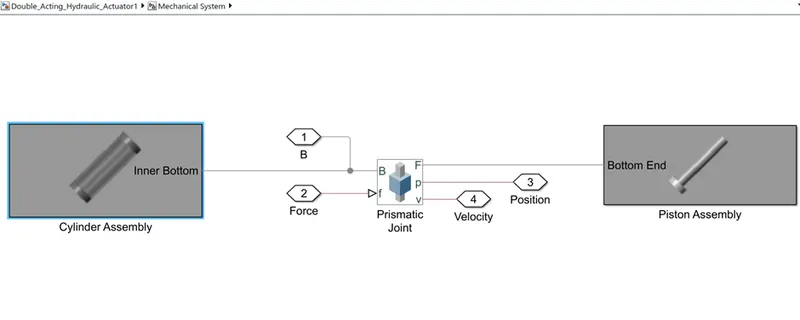
Cylinder assembly:
Bottom cap:
Head cap:
Barrel:
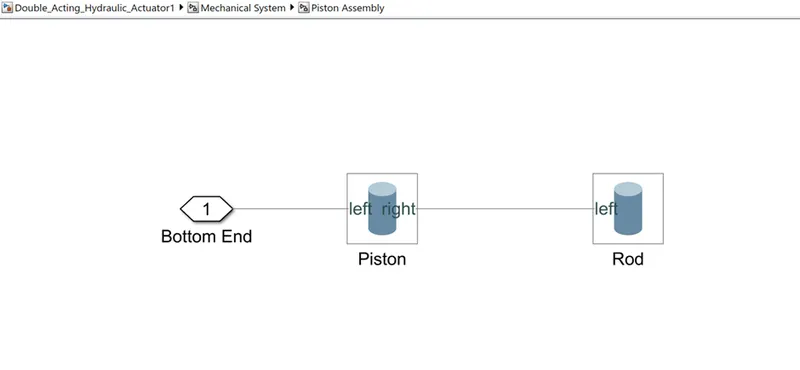
Piston assembly:
Piston:
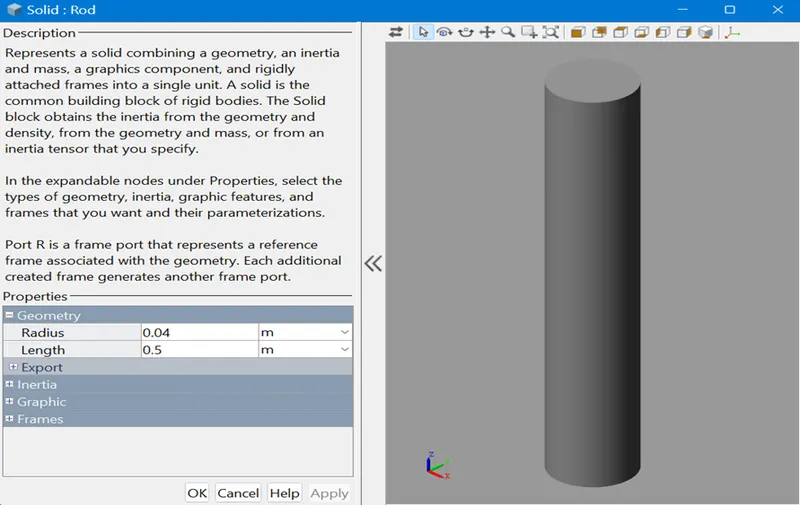
Rod:
Hydraulic system:
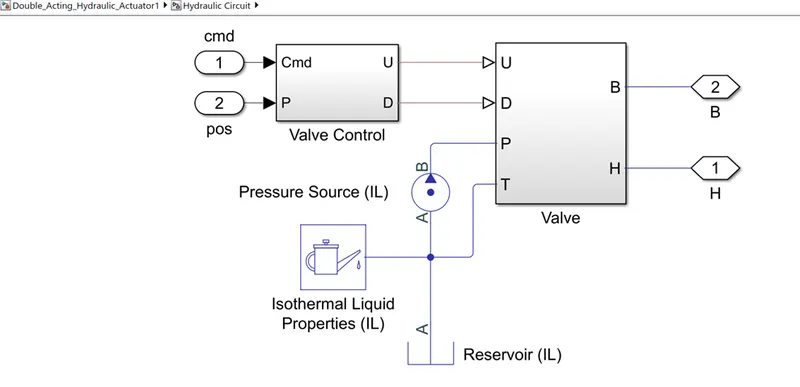
Hydraulic circuit:
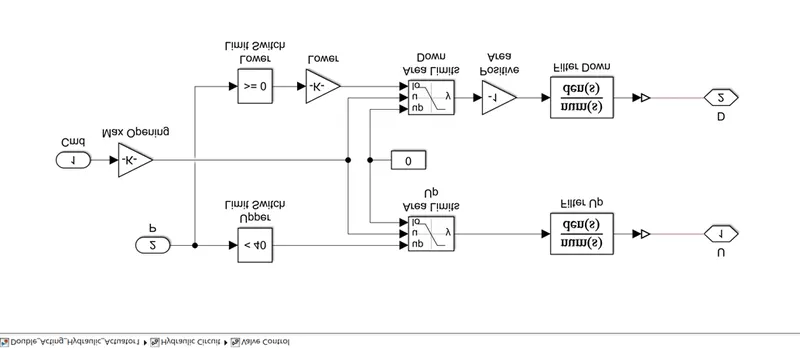
Valve control:
Valve:
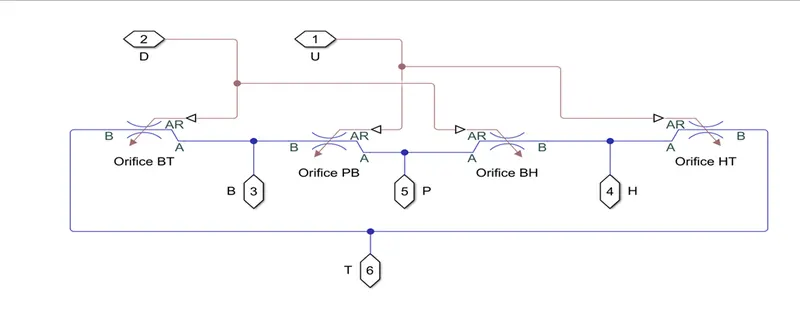
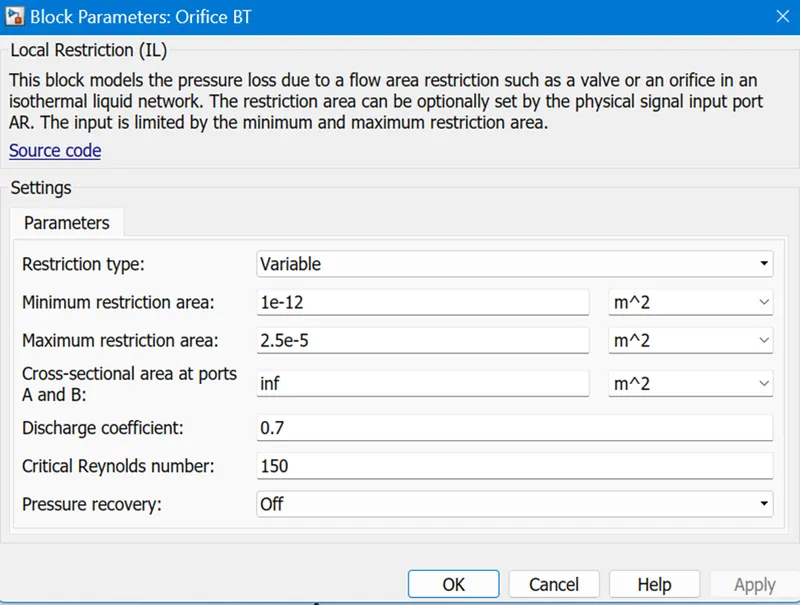
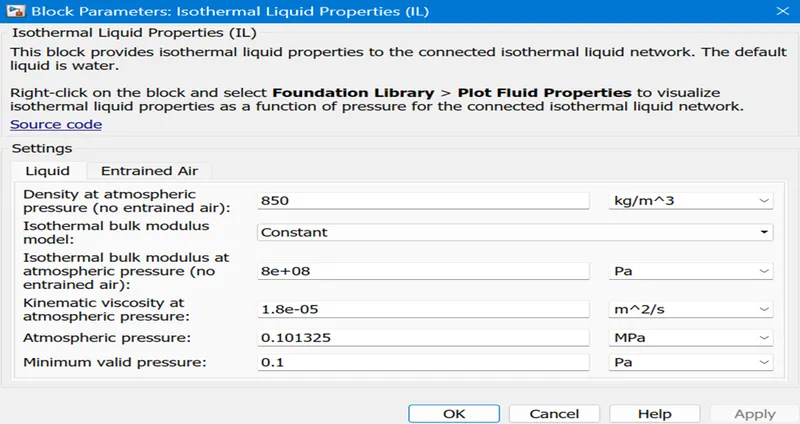
The values for all the orifice are same.
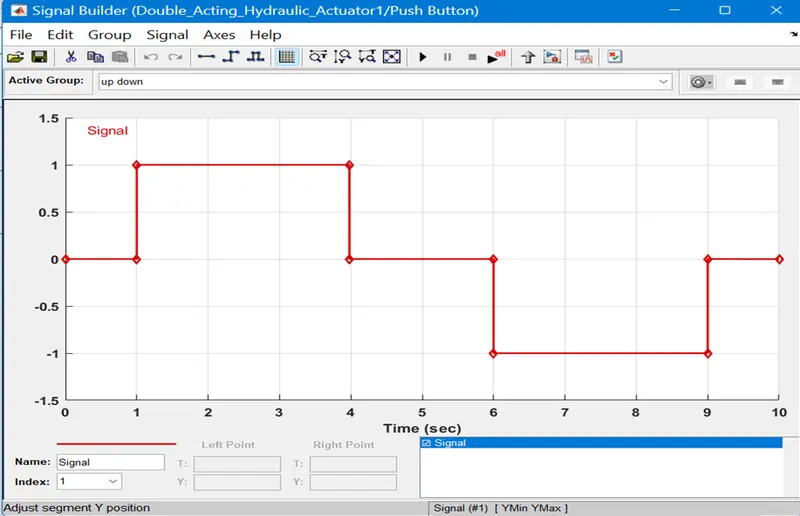
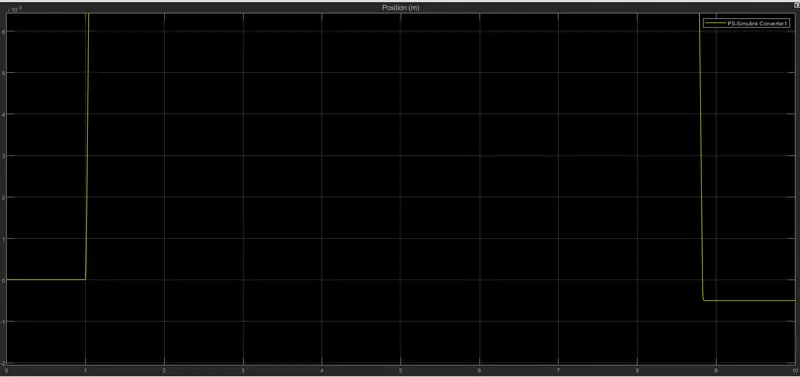
The output of the double acting hydraulic is as shown: