Project 1
- Aim : Design and simulate a PWM controlled DC motor with fan load.
- Workflow : The model design and basic working of model is as follows :
- So the DC motor will be centric compnent of the model which we need to feed with controlled PWM power so to rotate it as specific rpm.
- We use the controlled PWM voltage source which allow us create required averaged PWM voltage at its output but we need a motor driver to feed the DC motor so we use H-bridge which will output rated voltage at its output according to the input PWM signal.
- Now this is till where we feed the DC motor, now we need create the fan load which we create using the ideal torque source applying torque at the mechanical port of DC motor. As we know load will be according to the rpm of fan so we do the unit propagation from the squaring the angular velocity and multiplying it with a constant and then feeding it to the ideal torque source.
- Model and Explanation :
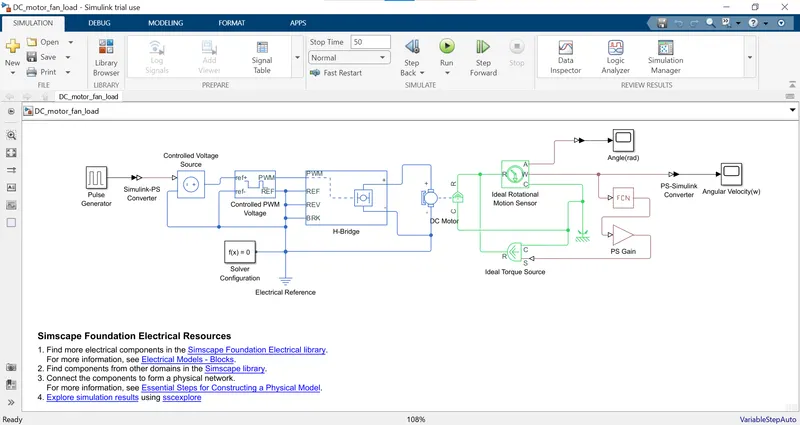
- The whole idea is to run DC motor with fan load, feeding PWM input to the motor. The DC motor will need a H-Bridge which will suppy the required voltage at its terminal and to control the H-Bridge we will need a PWM signal which comes from the controlled PWM voltage.
- We can have the PWM signal in proper form and also can get the average value for the specific duty cycle but in our model we will be using the average mode for faster simulation.
- So now talking about the controlled PWM voltage block, the block takes electrical input signal according to which the averaged PWM voltage will be given at the output. To feed control electrical signal we take another block controlled voltage source that can be controlled by physical singal which we can create using the pulse generator.
- The duty cycle and the frequency is configured from the pulse generator block that will given to the controlled PWM voltage after converting to electrical voltage signal using the controlled voltage source.
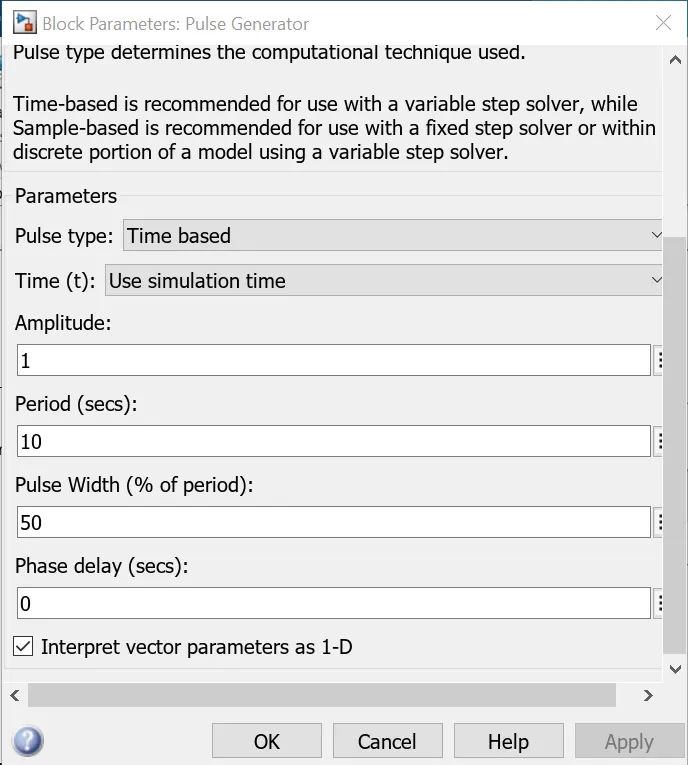
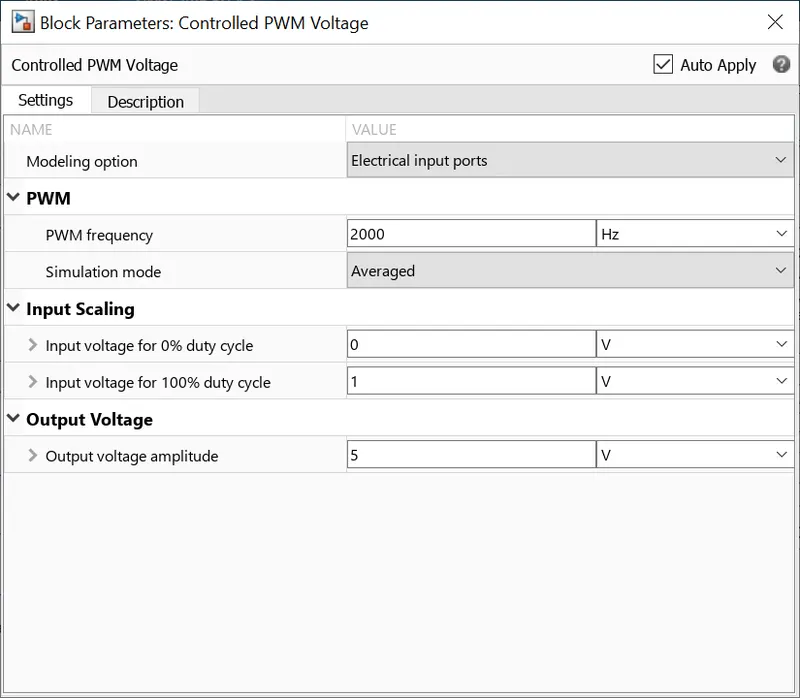
- Now at the controlled PWM block the input signal is compared to the input scaling parameter, then according to the ratio of input reference voltage and input scaling parameter the output signal will vary from zero to the maximum value. In our case we are controlling all this in the pulse generator block itself and taking the maximum value at the output.
- The signal is now fed to the H-bridge which will supply the required voltage to the motor. In this there is a threshold voltage which will enable the bridge, set as 0.5V. This block also behaves like controlled PWM in a way where it compared the input PWM signal with the PWM signal amplitude parameter and according to that the output voltage is given.
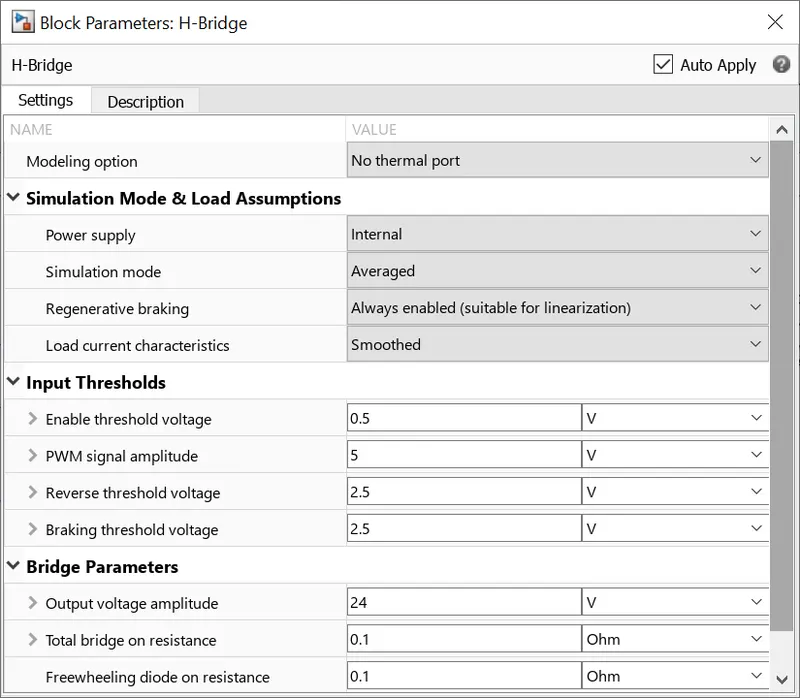
- The output voltage is set to 24V according to the rated DC motor voltage we have used and configured.
- The DC motor is configured as follows :
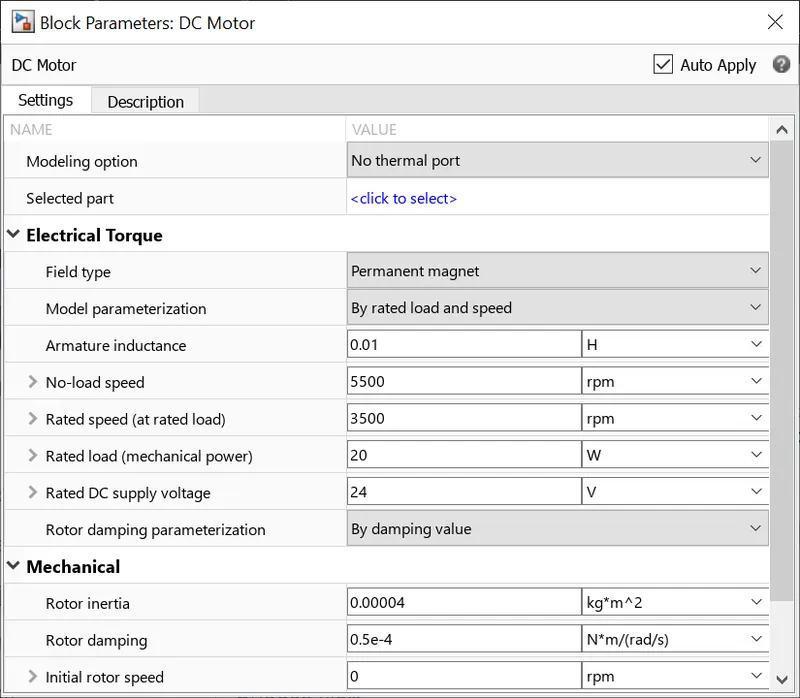
- We choose the rated load and speed method to characterize the motor parameters. The rated DC supply must be same with the H-bridge output. The rotor interia and damping are critical for the motor to work so the values are kept low and then through simulation we can see their impact on the rpm.
- Now using the rotational motion sensor we find the angular velocity and angle in rad/s and rad respectively. So to create the fan load we need to square the angular velocity using the PS Math function block after which using the PS gain block we do the unit propagation to N*m.
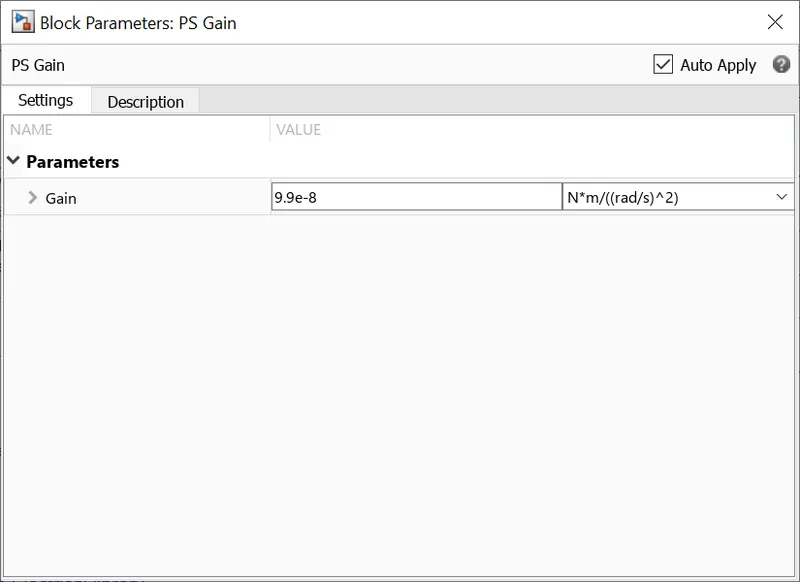
- Now this will be given to the ideal torque source which will create torque according to the input signal. This torque is applies on the DC motor to act as an fan load.
- Results :
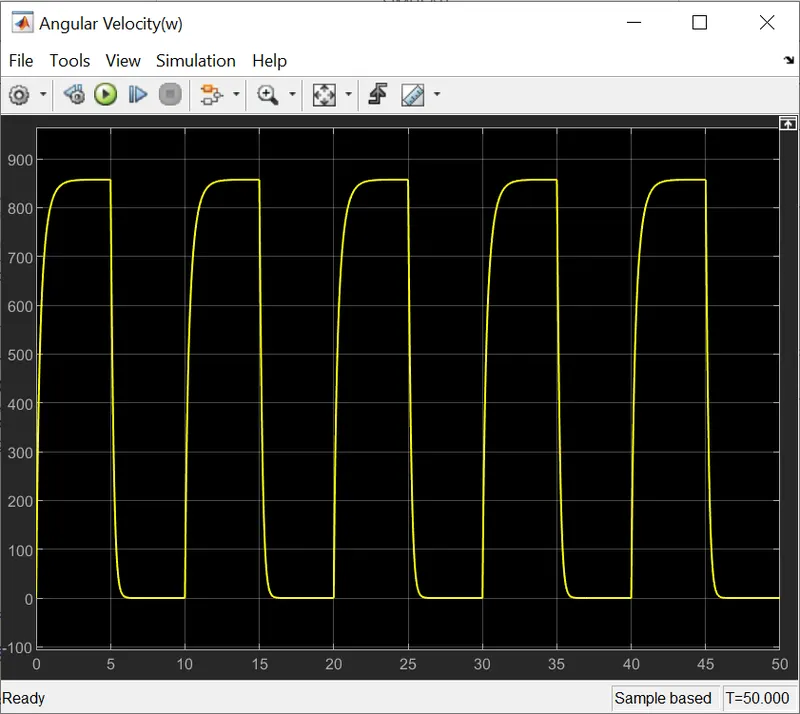
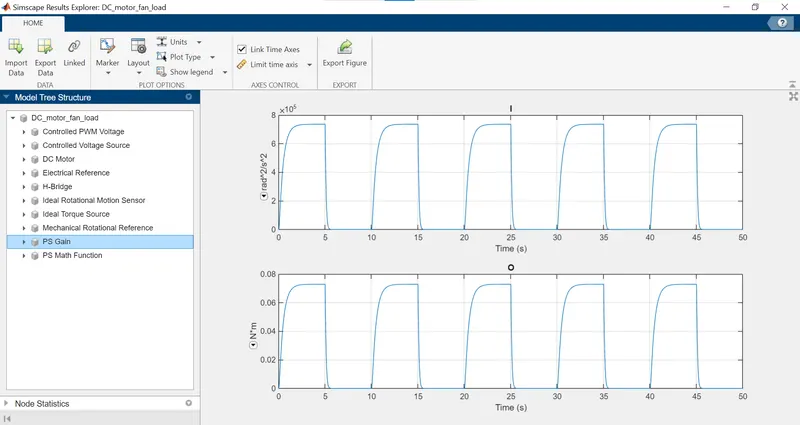
- As we can see we have the 50% duty cycle with the time period of 10 seconds, the motor is rotating at specific rpm under fan load conditions. The rotor inertia affects the speed curve while it reaches the max. rpm and the rotor damping kept small enough so that it doesn't stop the rotation.
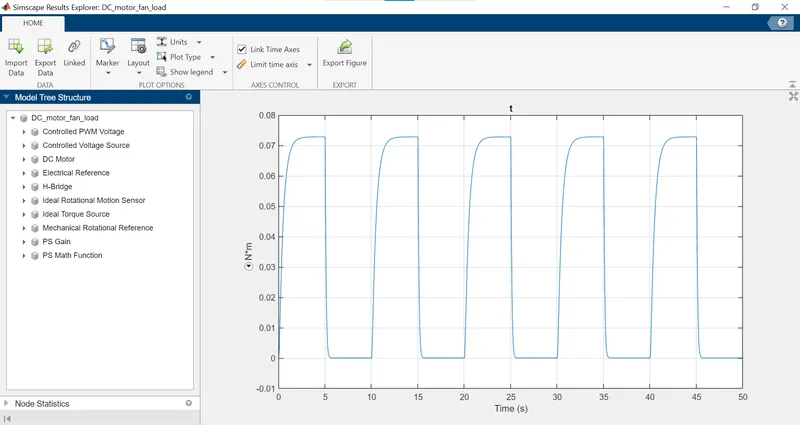
- The torque is as follows :
Simulink Model Link :
https://drive.google.com/file/d/1vlNGgrmdI1E9sMjgZmtjutIYjovD8SXP/view?usp=sharing