Project 1
1. Try to draw different shapes and assume the light, material and shade areas.
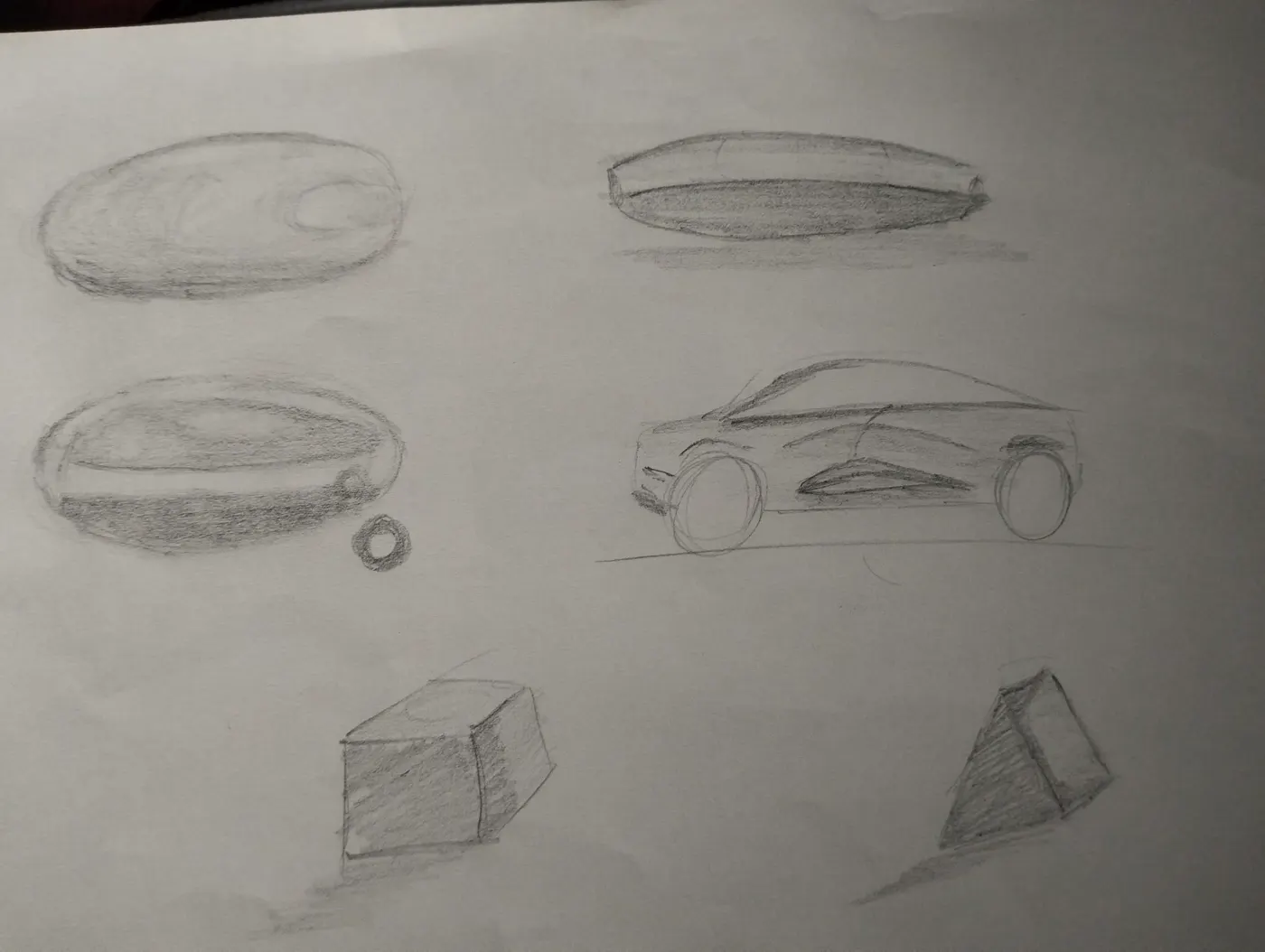
2. Trying photorealistic Rendering and submit one.
3. Try the Reflection techniques with pencil and markers
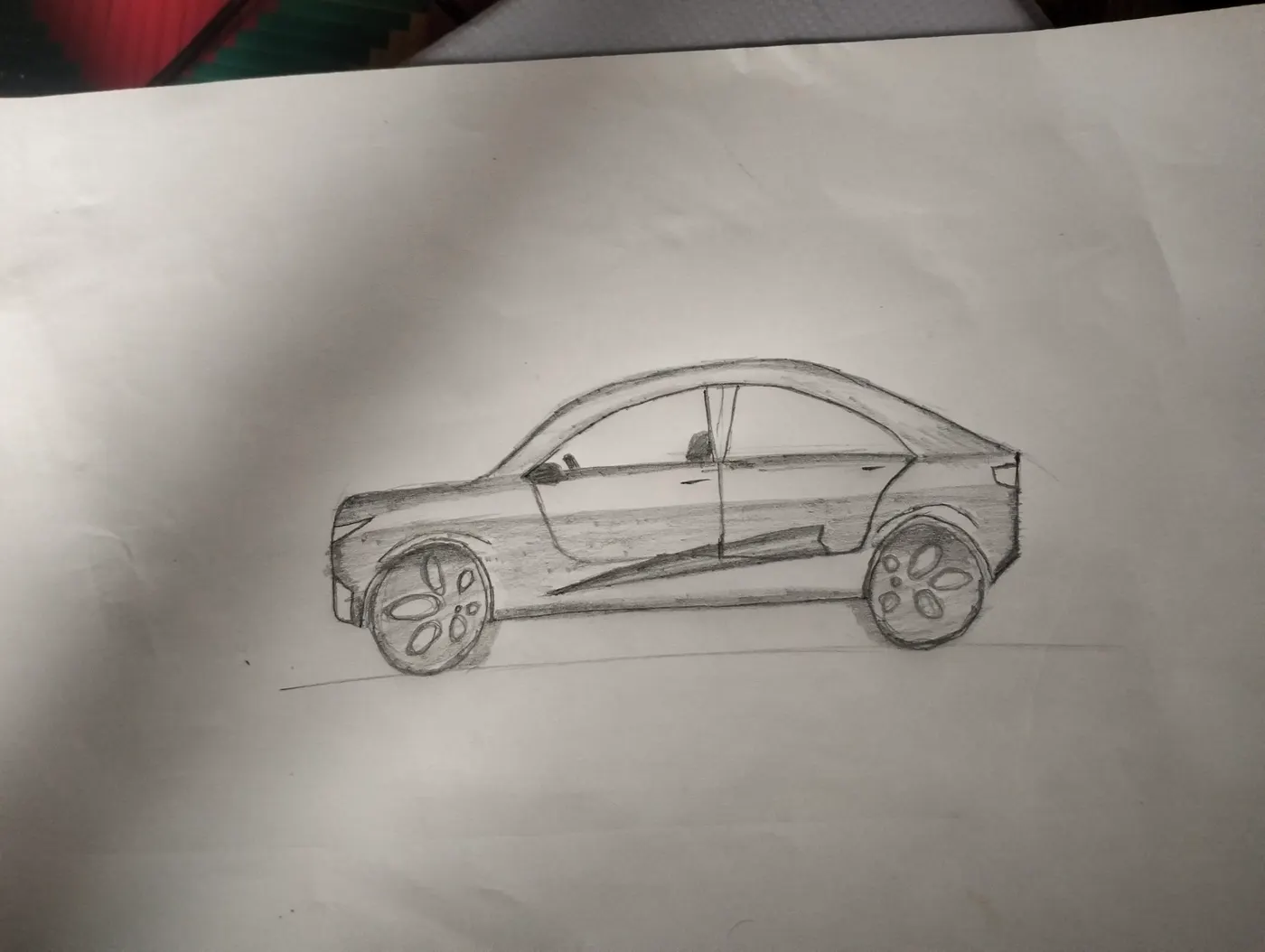
4. Complete the entire Design project with all the views with pencil shading. Try to explore your options.
1.Side view
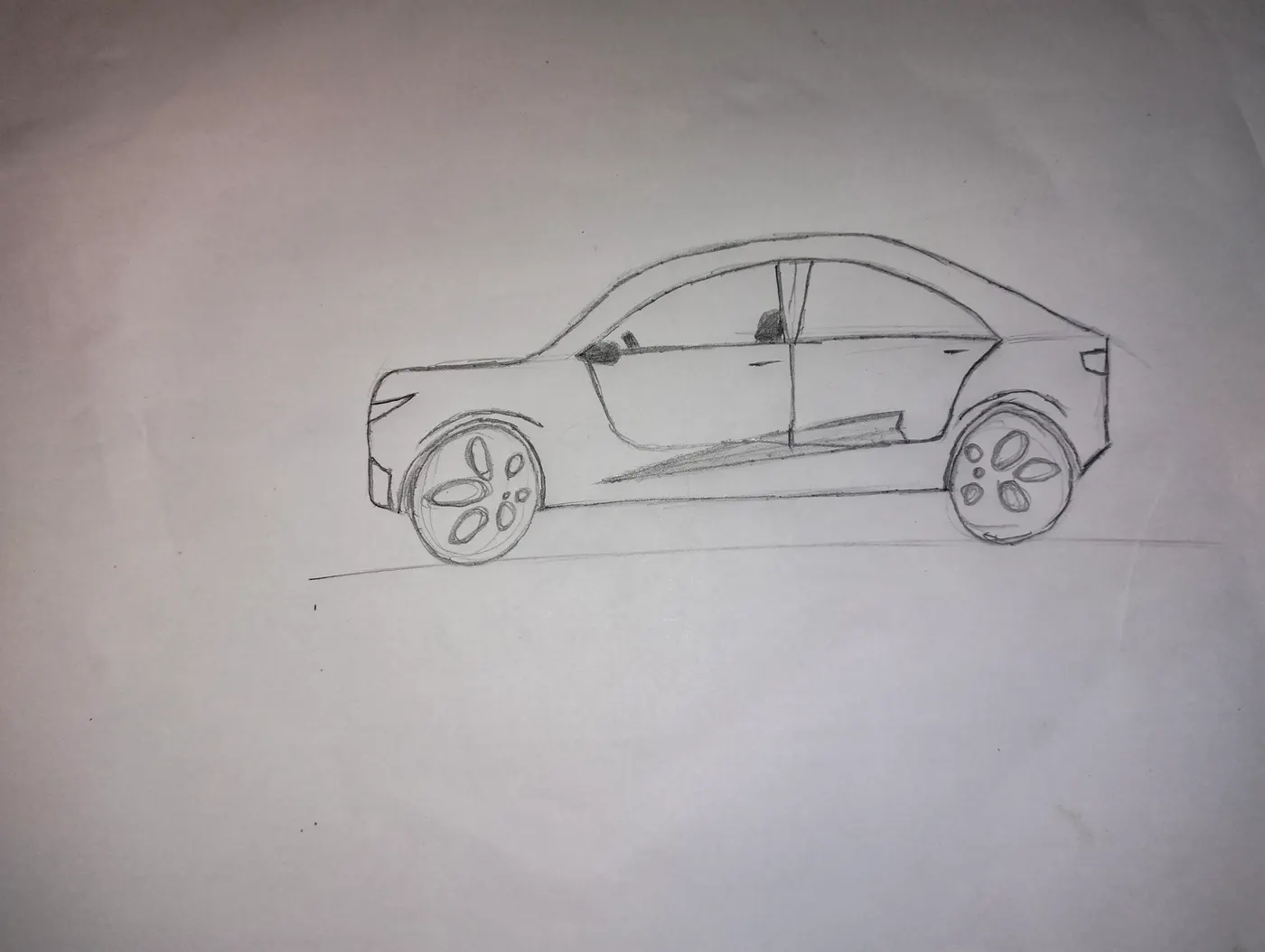
2. 3/4th view front

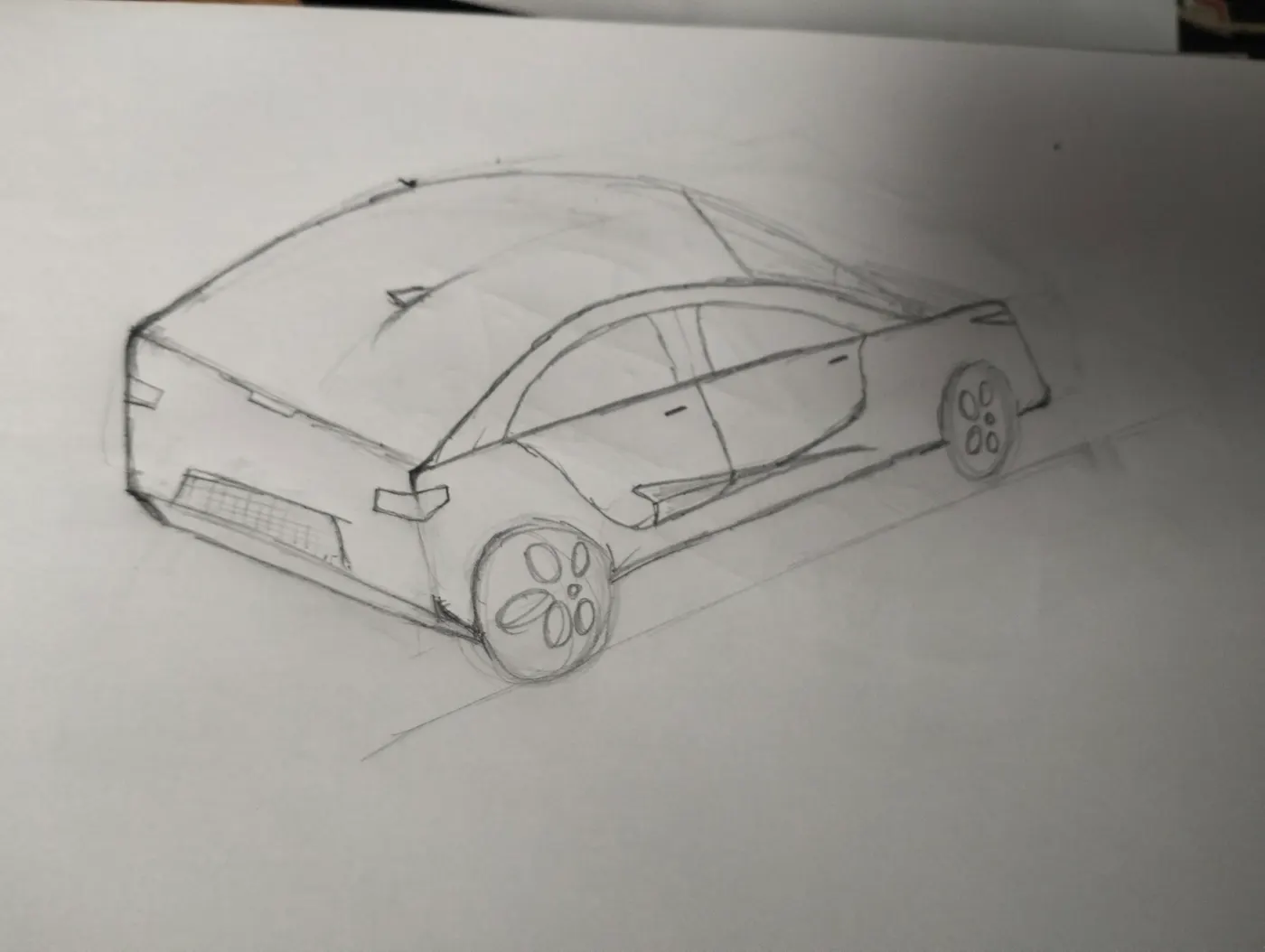
3. 3/4th view rear
Basic Beginner rules for sketching & Practice
1. Start with Basic Shapes:
- Begin your sketches by breaking down the subject into basic shapes like circles, rectangles, and triangles. This helps in establishing the overall structure.
2. Loosen Up:
- Don't worry about making perfect lines from the start. Sketch lightly and allow yourself to make mistakes. You can always refine and darken your lines later.
3. Practice Contour Drawing:
- Focus on outlining the edges of your subject. This helps improve your hand-eye coordination and observational skills.
4. Experiment with Line Weight:
- Vary the thickness and darkness of your lines. Thicker lines can be used for outlining and emphasizing, while lighter lines can indicate softer areas.
5. Use Reference Images:
- Study real-life objects or use reference images. This helps you understand the details and proportions of different subjects.
6. Try Still Life Sketching:
- Set up simple objects in good lighting and sketch them. This helps you practice seeing and capturing the details of real-life subjects.
7. Explore Different Textures:
- Practice creating different textures such as wood, metal, fabric, etc. This can add depth and realism to your sketches.
8. Pay Attention to Proportions:
- Take note of the relative sizes and positions of different elements in your sketches. This is crucial for creating realistic representations.
9. Experiment with Shading:
- Learn how to add shading to your sketches to create depth. Understand where light and shadows fall on your subject.
10. Draw Regularly:
- Consistency is key. Set aside time regularly for sketching. The more you practice, the more you'll improve.
11. Learn from Others:
- Study the work of artists you admire. Analyze their techniques and styles, and incorporate what you like into your own sketches.
12. Keep a Sketchbook:
- Carry a sketchbook with you to capture ideas and observations wherever you go. This helps develop a habit of constant practice.
13. Don't Fear Mistakes:
- Mistakes are a natural part of the learning process. Embrace them, learn from them, and use them to improve your skills.