Understanding Boolean Operations in Part Design Work bench CATIA v5
OBJECTIVE:
The Aim of this project is to design Plastic Product in Part Modeling Workbench in CATIA using Boolean Operations, Sketch Based Features and Dress-up Features.
DESCRIPTION
CATIA is a multi-platform 3D Design Software suite developed by Dassault Systems. It offers highly intuitive tools to design validate various mechanical shapes.
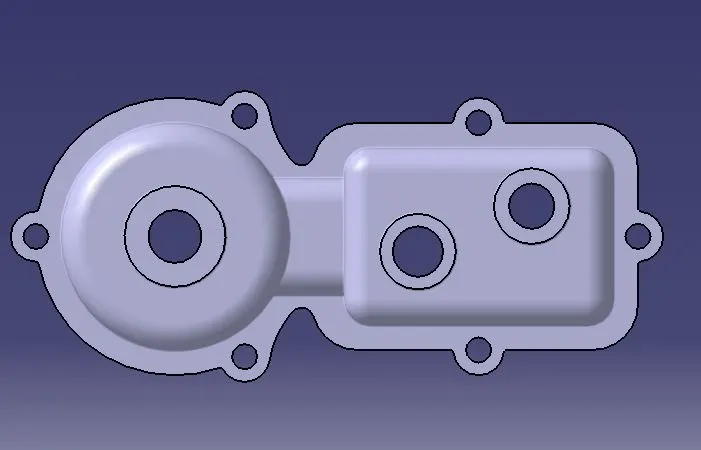
The Model to be designed is a Bush Holder which is Plastic part modeled in Part Design Workbench. The project mainly focuses on creating this model through Boolean Operation using sketch based features.
The model consist of five parts namely,
- Circular boss,
- Rectangular Boss
- Passage
- Bushes
- Base Flange with Screw Holes.
The thickness of the part is designed as 5mm and default unit system is 'mm'
PROCEDURES FOLLOWED
Position Sketches
The modeling starts with 2D sketch. The first step to be followed in part designing is to create a Projection point at default origin. The sketches will be positioned sketches and projected through this point.
This allows translation and modification of the sketches easy.
GEOMETRIC SETS
The Geometric Sets allows classifying and grouping various operations and elements when the model becomes complex and long part structure.
FULLY CONSTARINED:
All the Geometry elements sketched are fully constrained by restricting the degrees of freedom. The fully constrained sketches are green in color.
OPERATIONS USED
Sketch Based Features
This allows defining the 2D geometry into 3D model . The commonly used features are
- Pad
- Shaft
- Groove
- Rib
- Hole
- Solid Combine
DRESS UP FEATURES
this is used to achieve the model according to our needs and the common operations used here are
- Edge Fillet
- Thickness
- Shell
Boolean Operations
The Boolean operations in CATIA associates and integrate different parts in to one model
The Boolean operations used are
- Add
- Remove
- Union Trim
- Intersect
- Assemble
PARTS
CIRCULAR BASE:
The first part modeled is circular base.
The Feature used here is Shaft Revolved around center axis
RECATANGULAR BASE
The next part modeled is rectangular base
The Feature used here is Pad extruded to desired length
PASSAGE
The passage is designed with specified dimensions and then Pad is applied to extrude alon the length
FLANGE BASE
The Flange base is the support structure for the above parts
The Flange base sketch designed is shown ( green colour)below along with the sketch solving status as iso-constrained
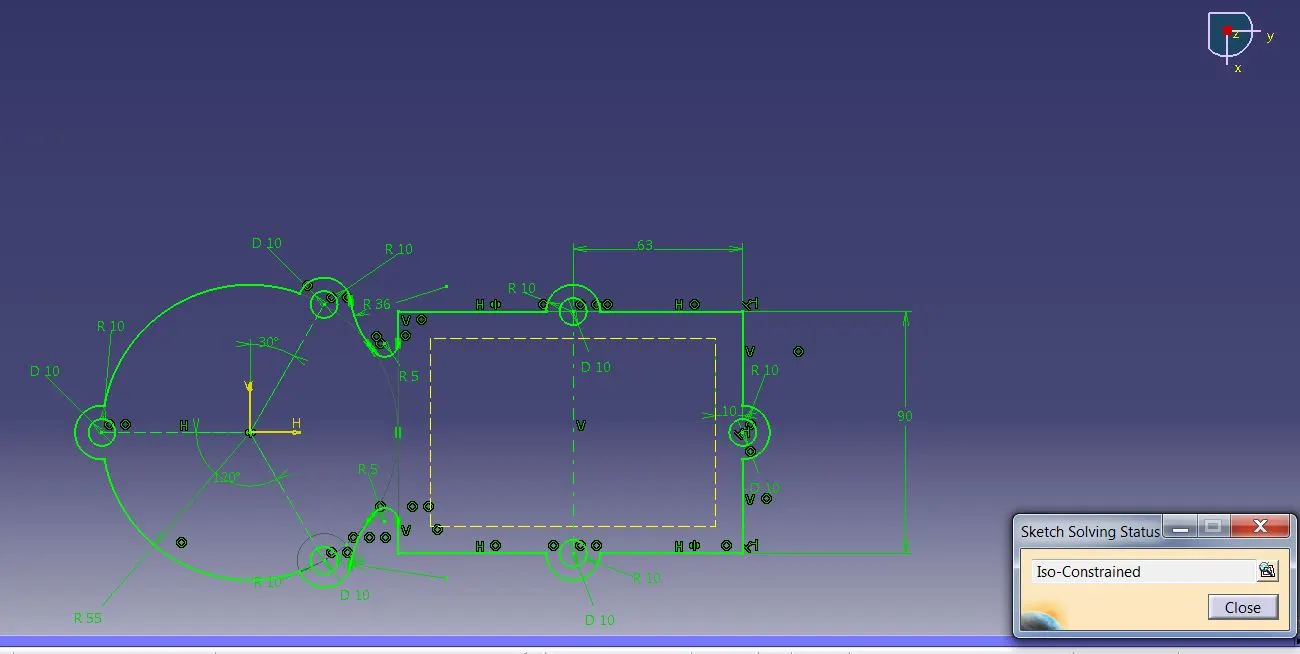
The Flange is then Padded to desired length
BUSHES
The bushes for circular base and rectangular base are done using Shaft operations revolved around the center axis
BOOLEAN OPERATIONS
The parts are classified into different body sets and the parts renamed to create a clean specification tree.
The Boolean operations allows to combine, remove and trim two parts
Add
The Circular Base, Rectangular base and Passage are combined into single body.
The Edges are filleted to desired dimensions
The Next step is to apply Shell that creates a cavity along faces selected
Trim
Then the combined body is union trimmed with Flange base.
Union Trim allows combining part using trim element by adding or removing the extra faces beyond the trim element.
Hence the combined model is applied with thickness to create small protrusion that can be used to remove during union trim operation
The Bushes created also union trimmed with the main part
The Final part is further refined with Fillets along the sharp edges
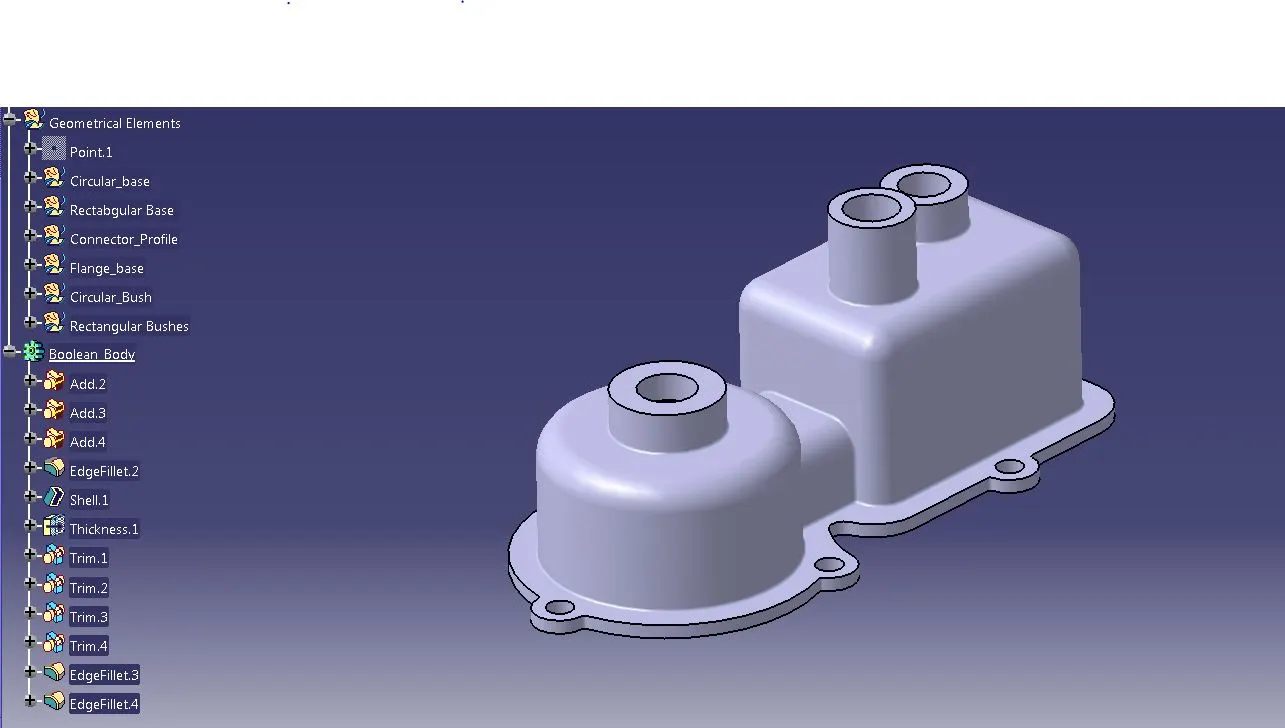
Specification Tree
- Ensured Proper Tree Structure with geometrical set and Solid Renamed.
- Splited CAD into simpler area and rename the Geometrical set with that name.
- Ensured only Solid features are in the Part Body.
The image attached below shows the classified tree structure with different Boolean operations
The 3D CAD Model view is attached below
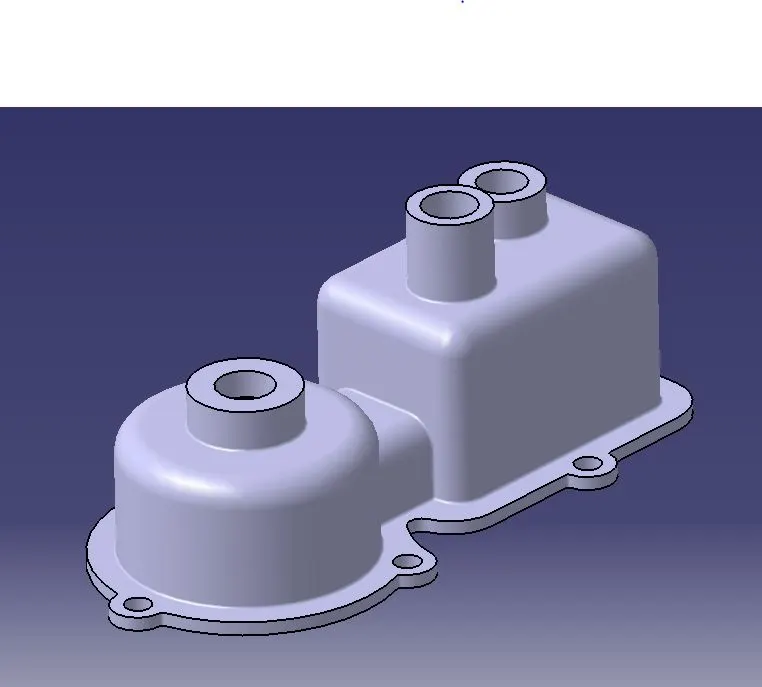
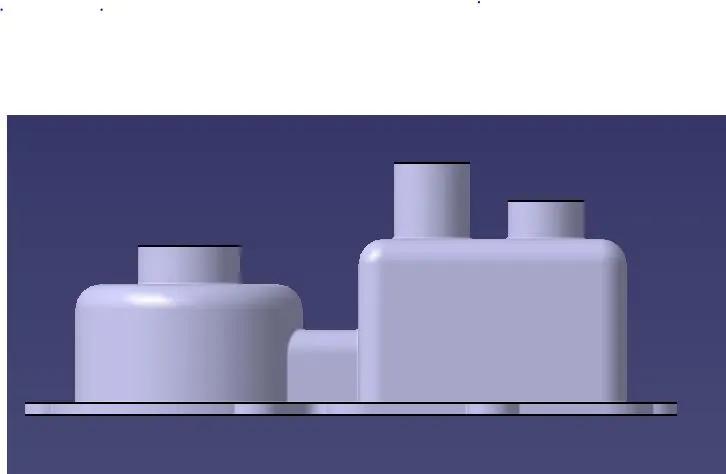
CONCLUSION:
Thus the Boolean operations in CATIA grasped through a simple part model and also understood the importance of classification of specification tree with Geometric sets which come in handy while working on complex modes
This hands on approach allows to understand various sketch based features and dress up features