Project 1
Project 1
Aim:-
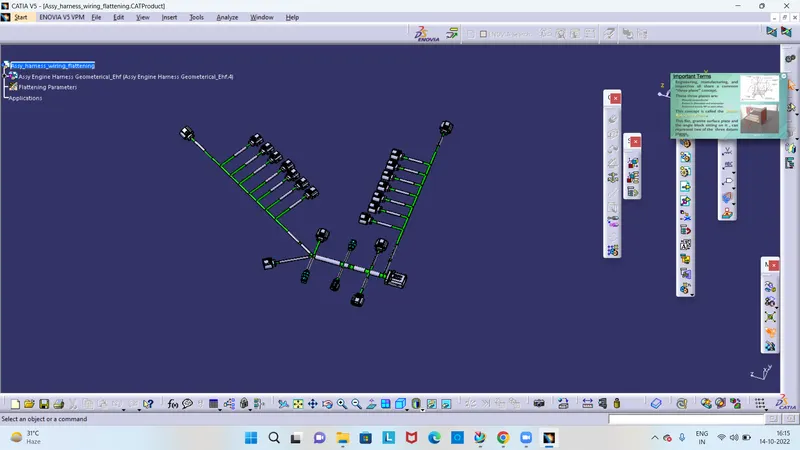
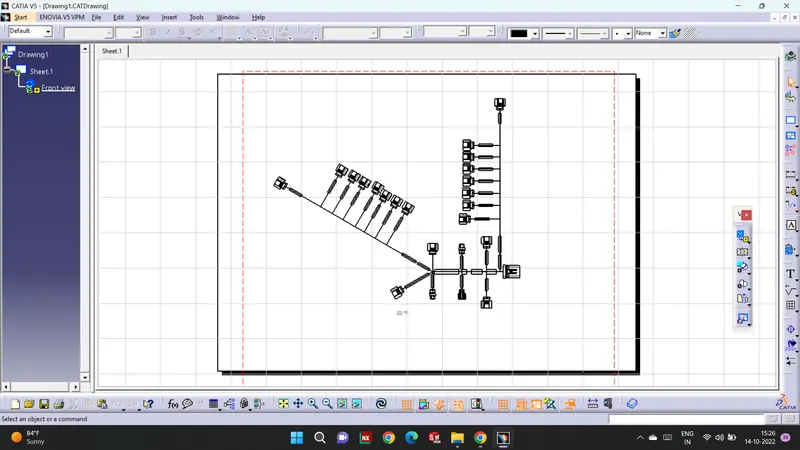
Route the Wiring harness on Given Engine and Prepare flatten view drawing in CATIA V5. Application of all Packaging rules, Industry best practices studied in this course shall be demonstrated in design. Apply Protection coverings as required.
Sol:-
What is Wiring Harness ?
A wire harness, often referred to as a cable harness or wiring assembly, is a systematic and integrated arrangement of cables within an insulated material. The purpose of the assembly is to transmit signal or electrical power. Cables are bound together with straps, cable ties, cable lacing, sleeves, electrical tape, conduit, or a combination thereof. The wire harness simplifies the connection to larger components by integrating the wiring into a single unit for “drop-in” installation.
Diff b/w Wire Harness & Cable Assemblies:-
Wire harnesses are often confused with cable assemblies however, the two are quite different. The main difference is that a cable assembly normally has only two ends, whereas a wire harness contains multiple breakouts (ends) that run in many different directions with multiple terminations on each breakout.
Wire assemblies are most commonly used in the transportation industry, including automobiles, buses, trucks, and planes. Construction machinery, industrial equipment, electronics and white goods (household appliances) will also be constructed using wire harnesses.
Benefits of Wiring Harness:-
Decreased installation time: Many vehicles require miles of wiring in order to operate. A wire harness assembly process greatly simplifies the manufacturing of these vehicles by integrating all the wires and cables needed into a single apparatus. The installation then becomes a simple matter of “dropping in” the harness, rather than running all of the wires individually.
Security and safety: When wires and cables are bound within a single harness, the individual components are more secure against the adverse effects of vibrations, abrasions and moisture. Space is optimized and the risk of an electrical short is reduced because the wires have been constructed into a non-flexing bundle. The risk of electrical fire is also reduced when the wires are bound within a flame-retardant sleeve.
What is Connectors?
Connectors are the electro-mechanical devices used to form a continuous electronic signal to connect wire harnesses to a power source or circuit. On a basic level, connectors consist of male-ended plugs and female-ended jacks that can be joined together to relay an electronic signal.
We ues connectors in this assemblies.
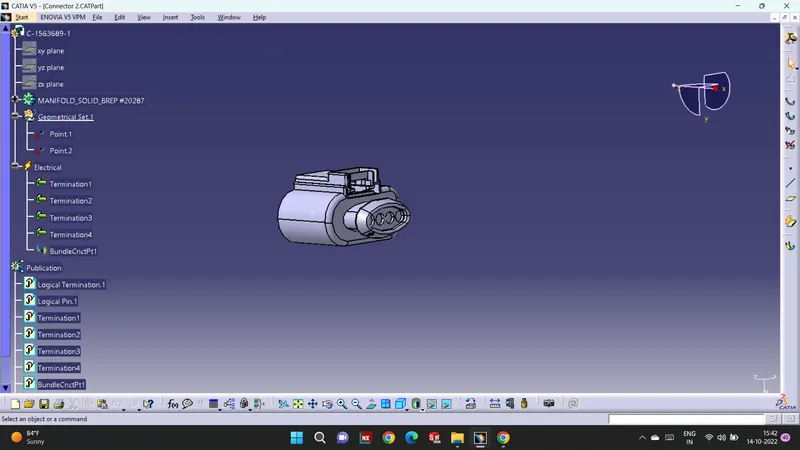
- DT06-2S
TE Internal #: DT06-2S
Connector & Housing Type : Housing for Female Terminals
Mating Pin Diameter : 1.59 mm [ .063 in ]
Connector System : Wire-to-Wire
Number of Positions : 2
Centerline (Pitch) : 5.46 mm [ .215 in ]
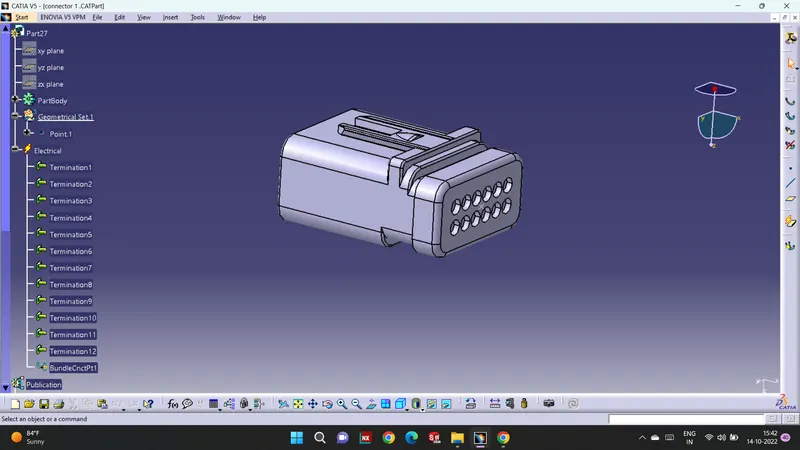
- 776438-4
TE Internal #: 776438-4
TE Internal Description: AS 16, 12P CAP ASSY, KEY, 4
Connector & Housing Type: Housing for Male Terminals
Mating Pin Diameter: 1.5 mm [ .059 in]
Connector System: Wire-to-Wire
Number of Positions: 12
Centreline (Pitch): 4.5 mm [ .177 in]
What is Protective Covering?
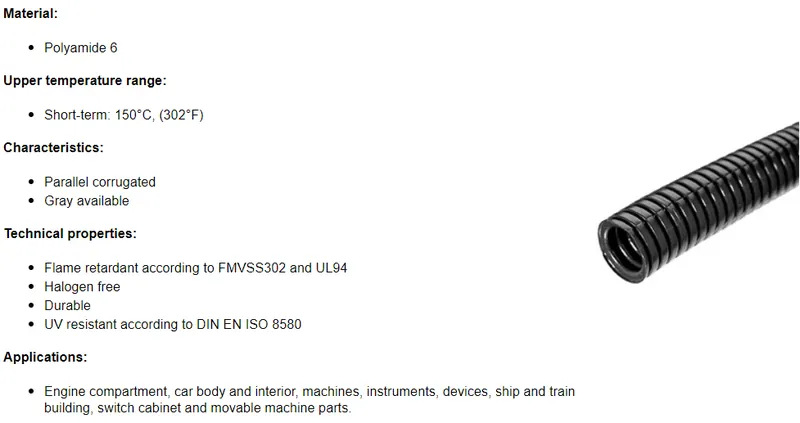
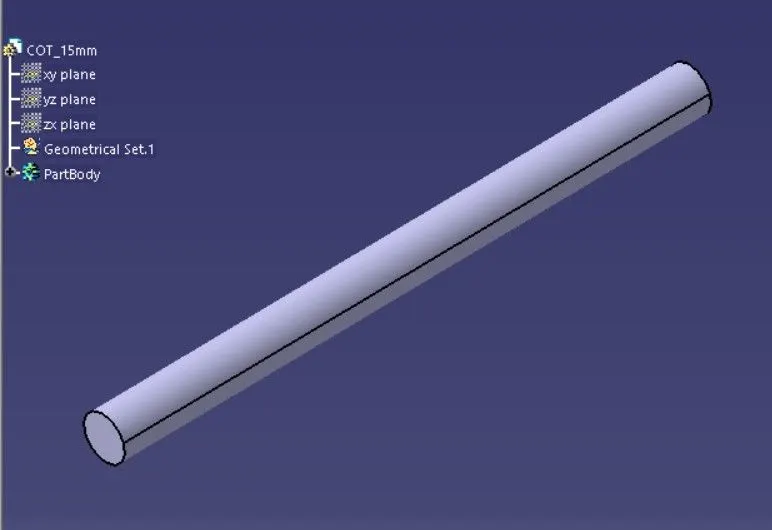
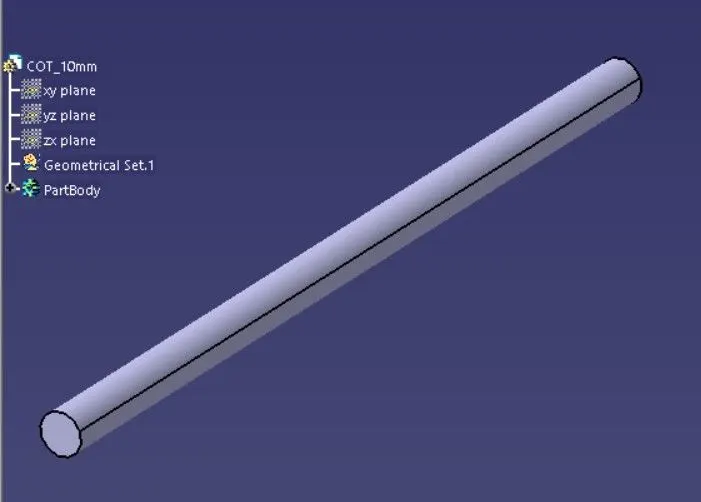
Popular cable and wire harness coverings include: Heat shrink tubing—wraps snugly around wires and smooths out rough surfaces, providing thermal and electrical insulation. Adhesive-backed tubing provides a strong seal against moisture and chemicals that can corrode harness components.
|
Name |
ID (mm) |
OD (mm) |
Thickness (mm) |
|
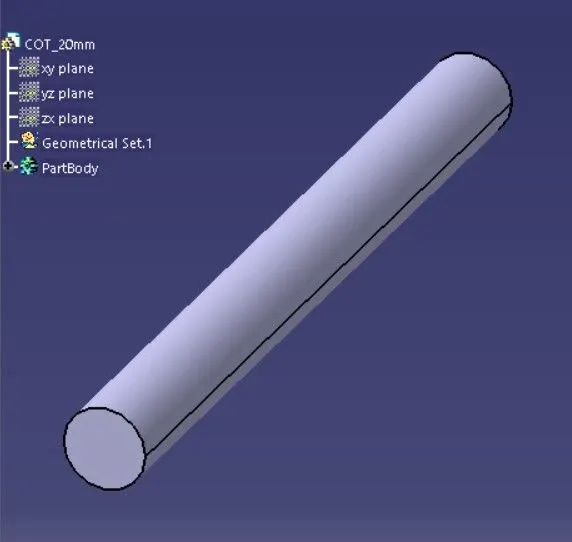
15mm COT |
12 |
15 |
1.5 |
|
20mm COT |
17 |
20 |
1.5 |
|
10mm COT |
7 |
10 |
1.5 |
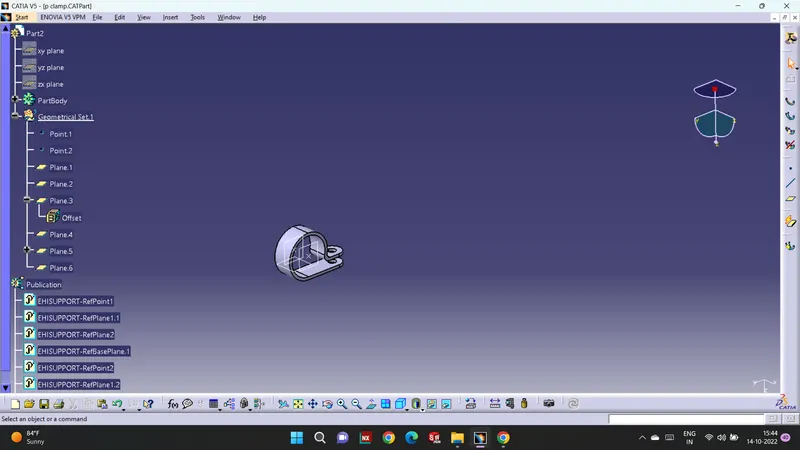
P-Clamp:-
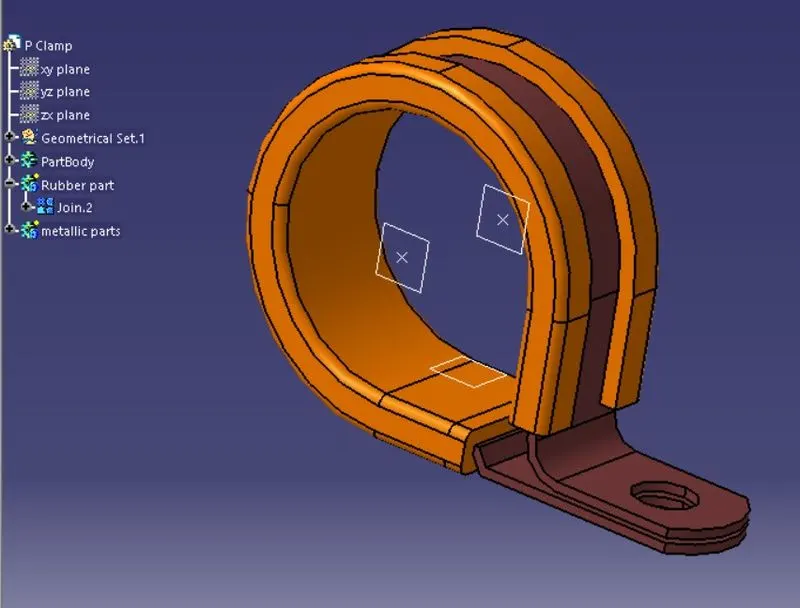
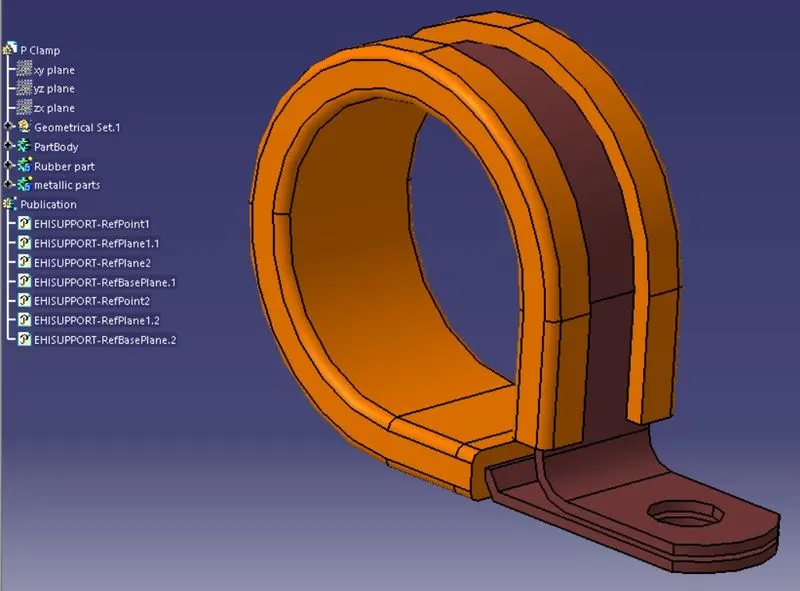
P-clamp can be made available as per customer enquiry in stainless steel as well as carbon steel material with customized Diameter & mounting hole. Rubber cushion on surface of band prevents damage to pipe or cable which is being holded by clamp.
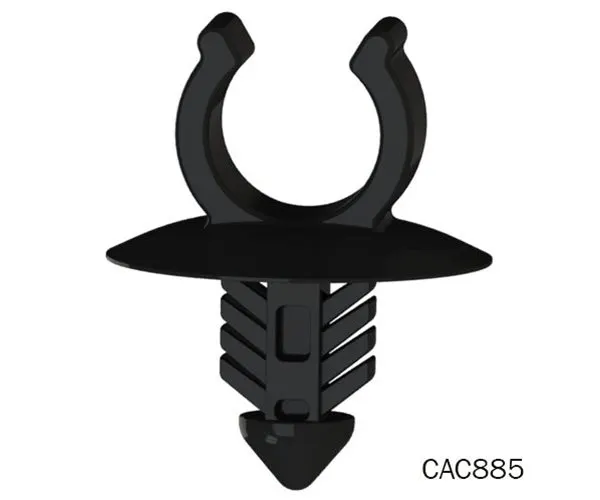
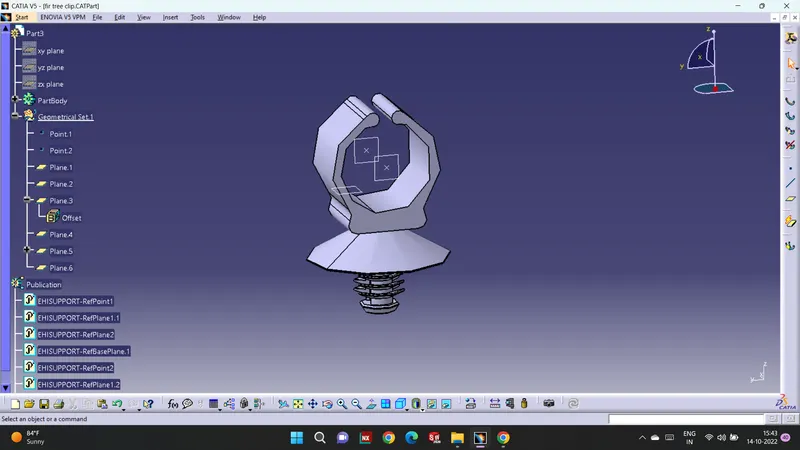
Firtree Clip:-
Push-in Fir Tree Fasteners & Fir Tree Clips for secure attaching. For applications such as fixing material over wood (such as upholstery), Fir Tree Fasteners, also known as Fir Tree Clips are a tried-and-trusted solution.
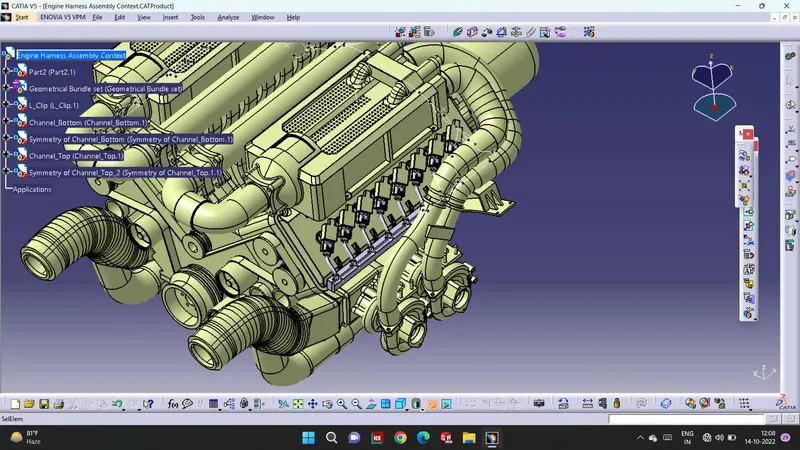
Catia Workbanch:-
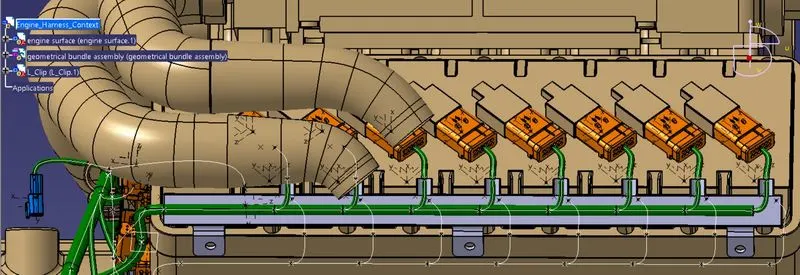
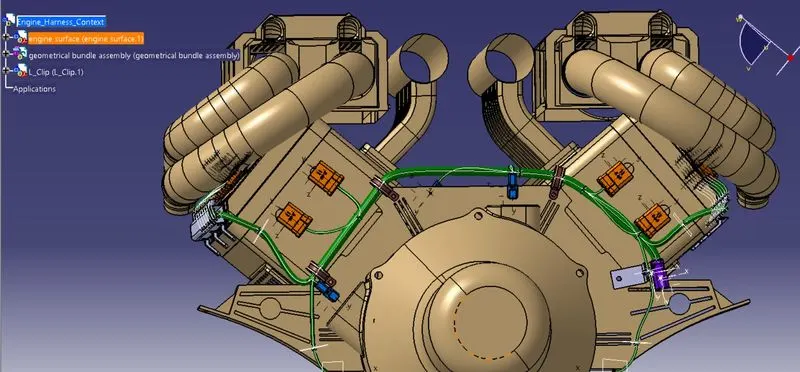
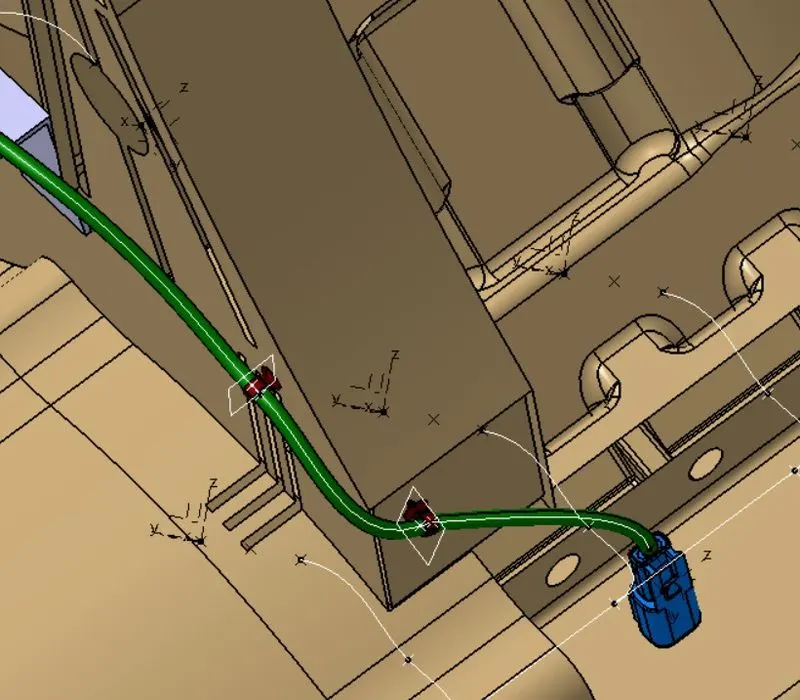
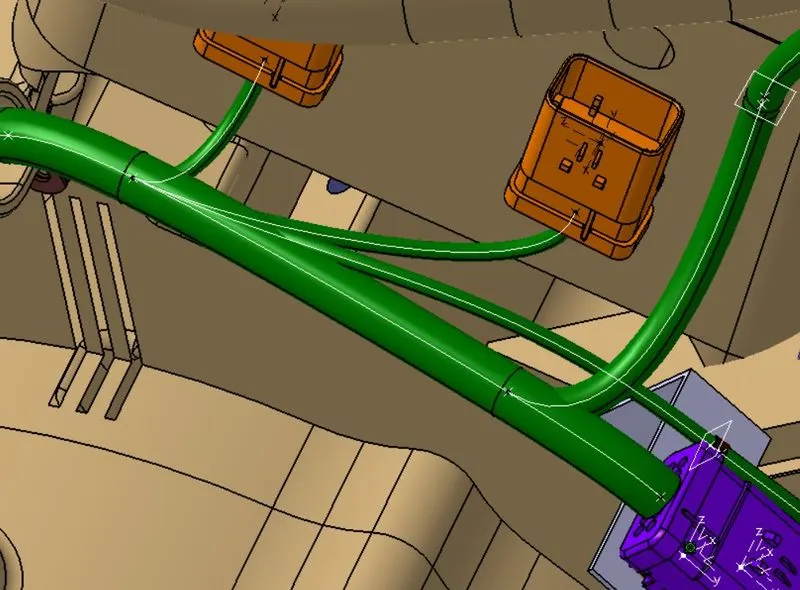
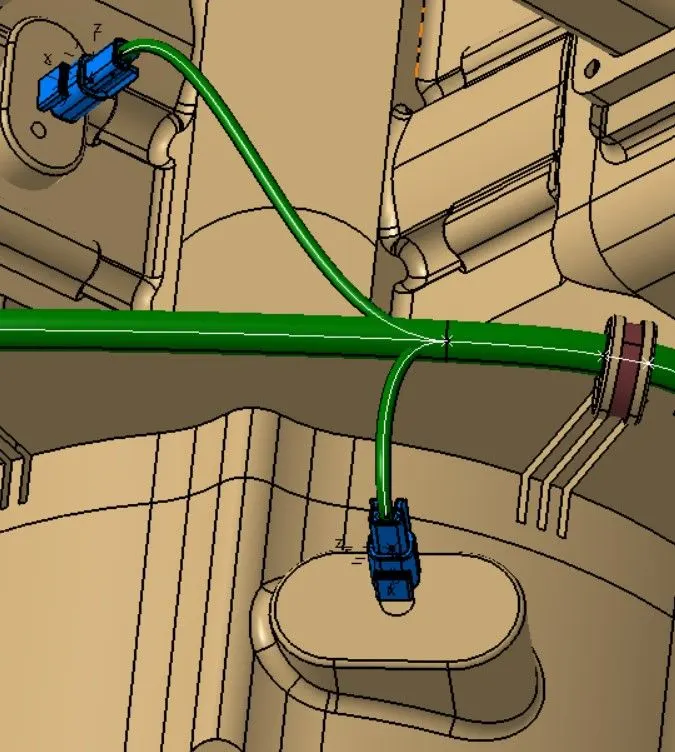
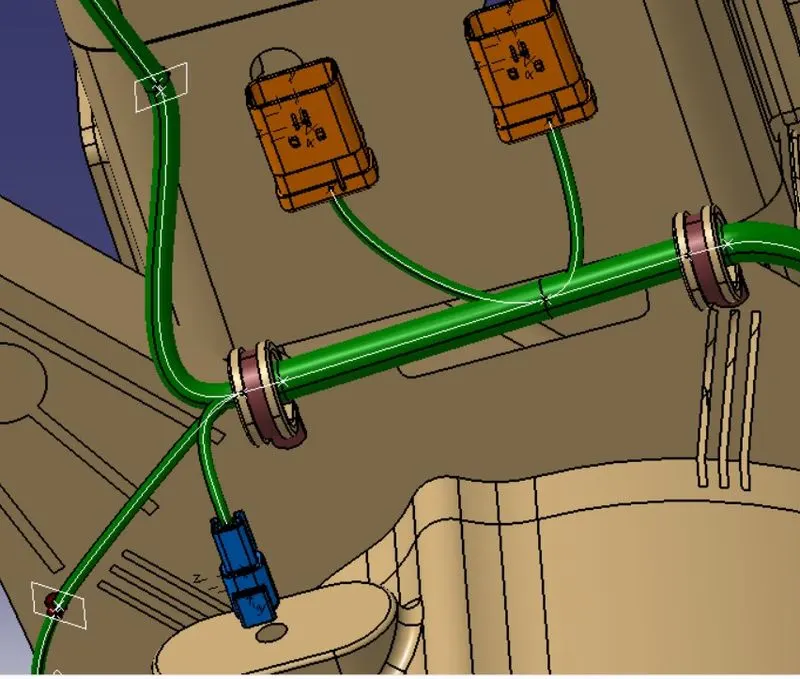
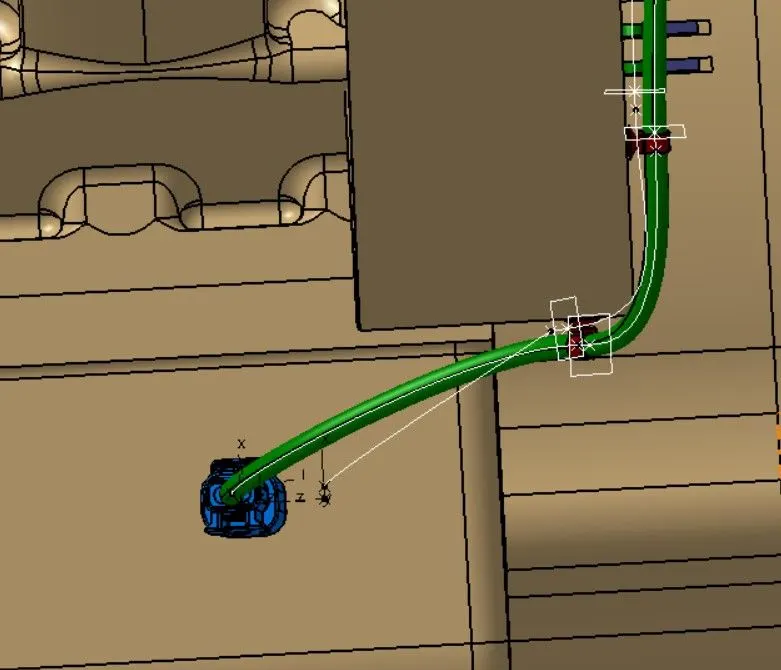
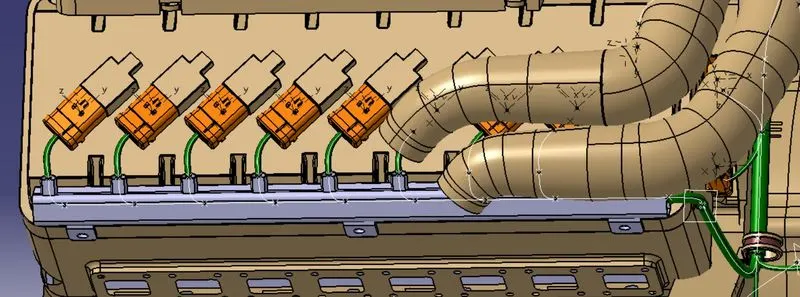
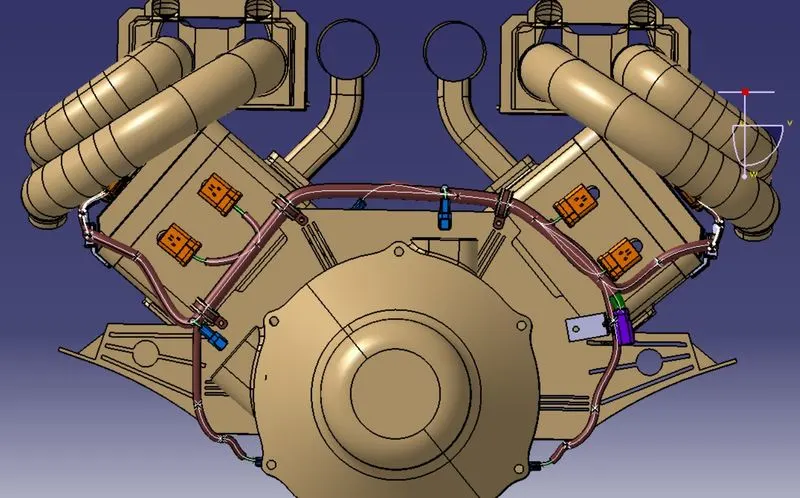
Iso View:-
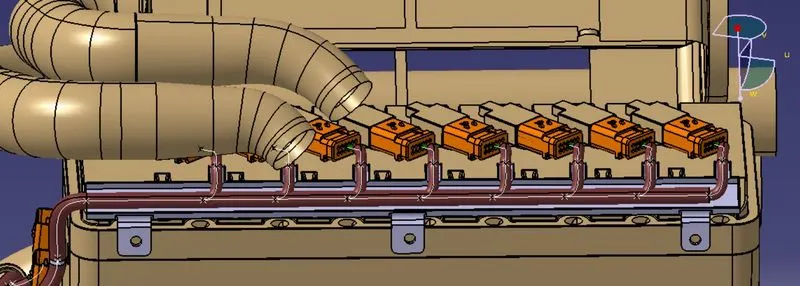
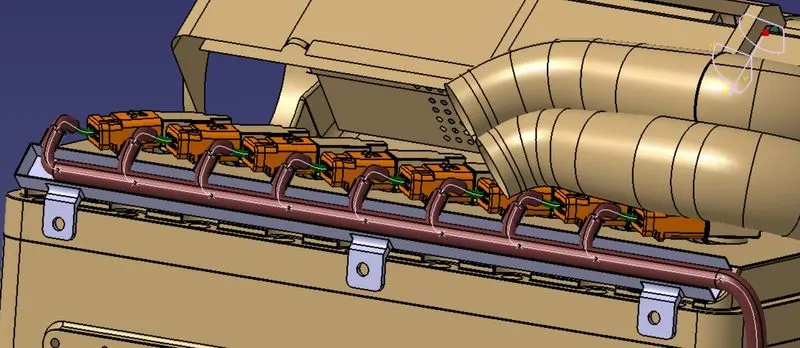
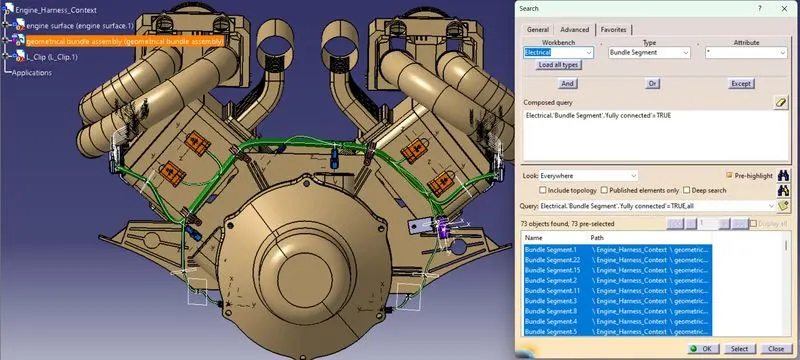
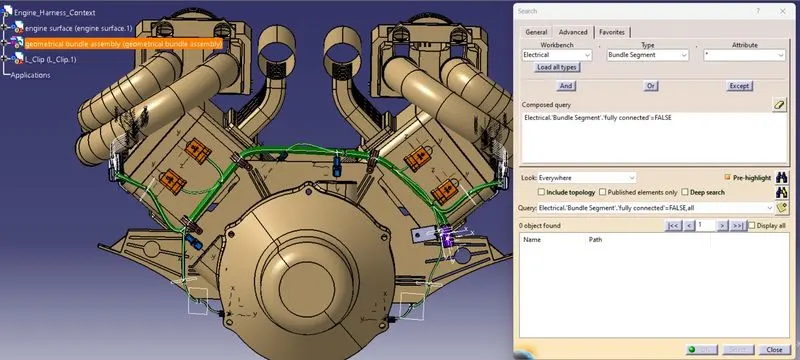
Harness Connectivity:-
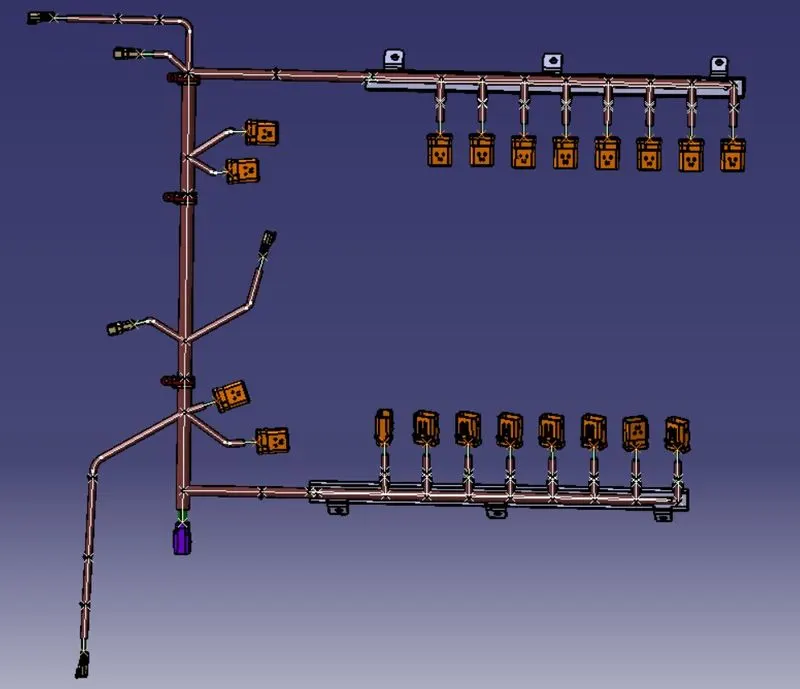
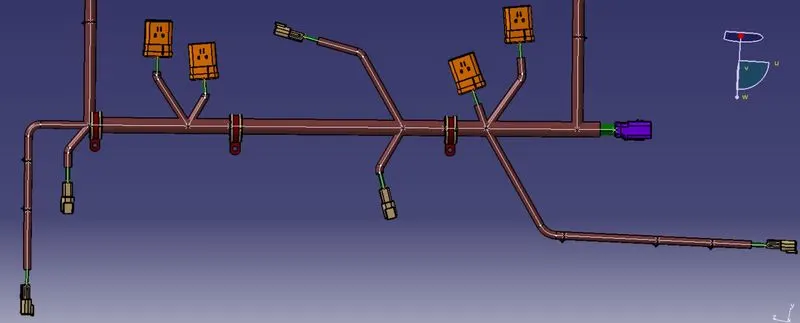
Flattening Workbanch:-
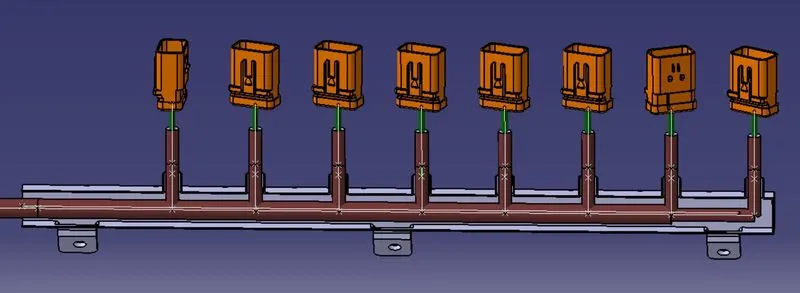
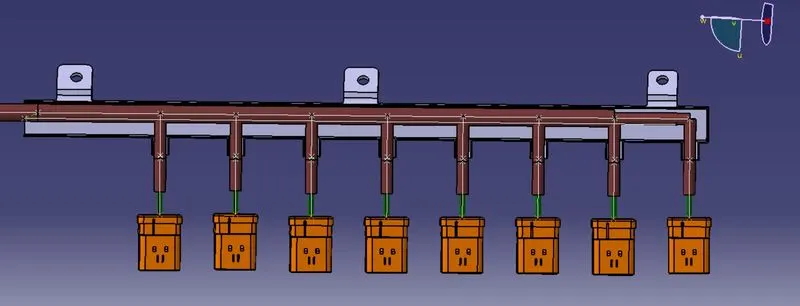
WIRING HARNESS OR CABLE HARNESS:
A cable harness, also known as a wire harness, wiring harness, cable assembly, wiring assembly, or wiring loom, is an assembly of electrical cables or wires which transmit signals or electrical power. The cables are bound together by a durable material such as rubber, vinyl, electrical tape, conduit, a weave of extruded string, or a combination thereof.
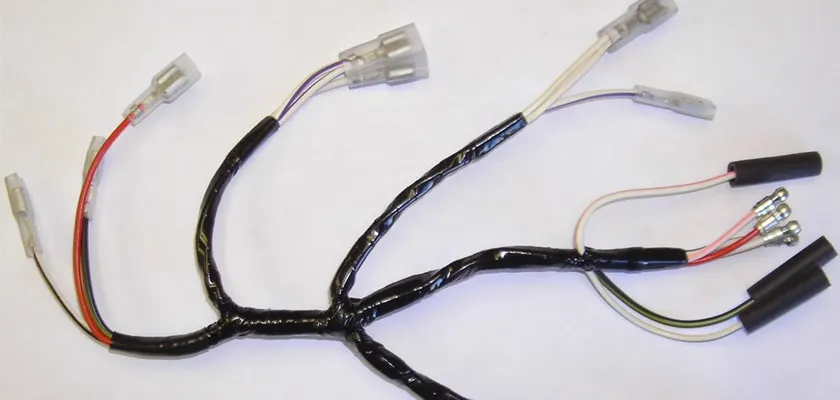
1. Wiring Harness
Cable harnesses are usually designed according to geometric and electrical requirements. A diagram is then provided (either on paper or on a monitor) for the assembly preparation and assembly.
The wires are first cut to the desired length, usually using a special wire-cutting machine. The wires may also be printed on by a special machine during the cutting process or on a separate machine. After this, the ends of the wires are stripped to expose the metal (or core) of the wires, which are fitted with any required terminals or connector housings. The cables are assembled and clamped together on a special workbench, or onto a pinboard (assembly board), according to design specifications, to form the cable harness. After fitting any protective sleeves, conduit, or extruded yarn, the harness is either fitted directly in the vehicle or shipped.
PACKAGING RULES:
- Wiring harness routing shall provide ease in manufacturing, accessibility, easy removal, and easy maintenance of attached equipment and wiring harnesses.
- Routing through small structural holes and openings shall be avoided, minimizing chaffing and handling of the wiring harness during installation.
- Avoid the harness routing and clipping in the Blind zone of the Operator during harness assembly or in service.
- Routing shall offer protection against possible damage through common misuses such as being handheld and temporary support for test equipment.
- Provide additional slack to the harness according to the surroundings and harness bending requirements.
- Ensure the routing meets the clearance requirements with different surrounding parts.
- Avoid routing over the bolts, near the bolted joints. It may damage the harness or puncture the harness. Keep harnesses away from panel mounting screws.
- Avoid harness routing near sharp edges, if not possible provide protection to the harness.
- The maximum distance between two clips on a straight branch is 200mm.
- Provide Clips and clamps if the harness is going to bend at multiple locations.
- The use of too many sheet-metal brackets should be avoided.
- The branch length should be more than 50 mm.
- Min distance between the clip and the branching point is to be 25 mm.
- Min distance between two branch breakouts should be 50 mm.
Assumptions-
- Provide clips/clamps as per requirement.
- Make sure that there is no falling case while designing the wire harness. Additional clips/clamps may be used to avoid falling cases.
- Give additional slack if needed. 5-10% slack is sufficient.
- Avoid routing over the bolt and bolted joints to avoid harness puncture.
- Avoid routing on sharp edges or else provide protection over the harness.
- Follow the clearance distance and keep away the harness from heat generation components.
- Protection should be provided as needed according to the surrounding temperature.
- Avoid direct support for harnesses on fuel lines routed in the engine.
- Use plastic guiding channels if needed.
- The branch length should be greater than 50mm.
- The minimum distance between two branch points should be at least 50mm.
- The minimum distance between the clip and the branch point should be at least 25mm.
- Avoid too many sheet metal brackets on the engine. Try to use available threaded bosses on the engine or demand for it.
- The wiring harness should be easy to assemble and easy to access.
- While using dummy connectors, ensure that whatever positions you are defining is practical. Bundle diameters and other placements can be defined properly for the wire harness routing.
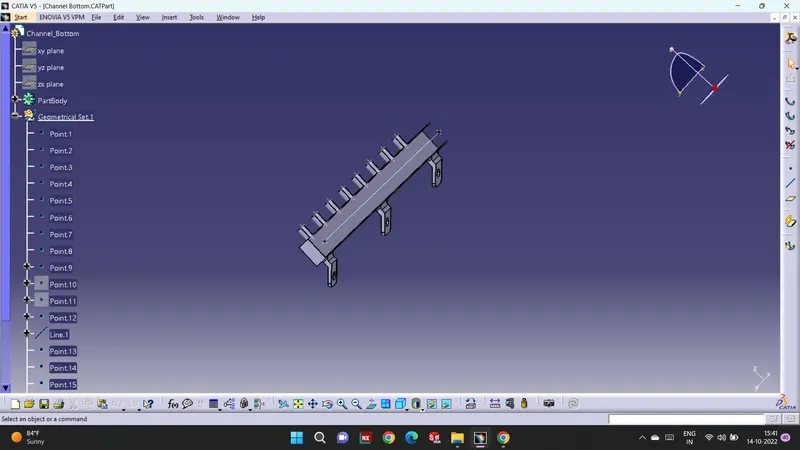
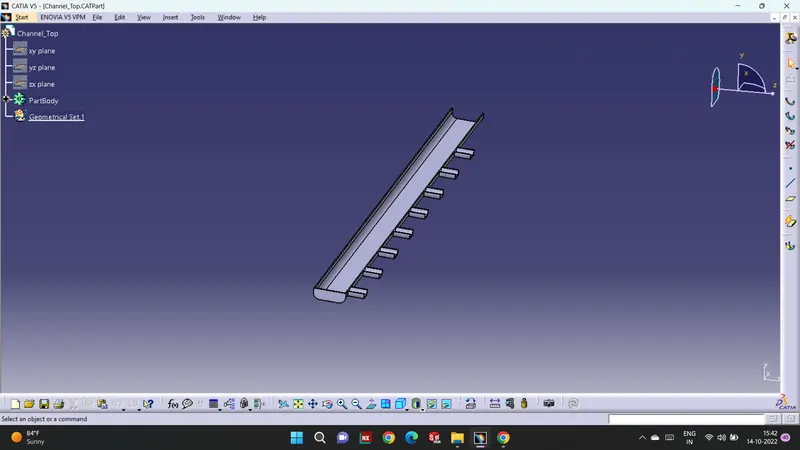
- If the packaging area is too tight and there are many packaging constraints then we can think of creating a harness channel that can be used to route and protect the wire harness effectively.
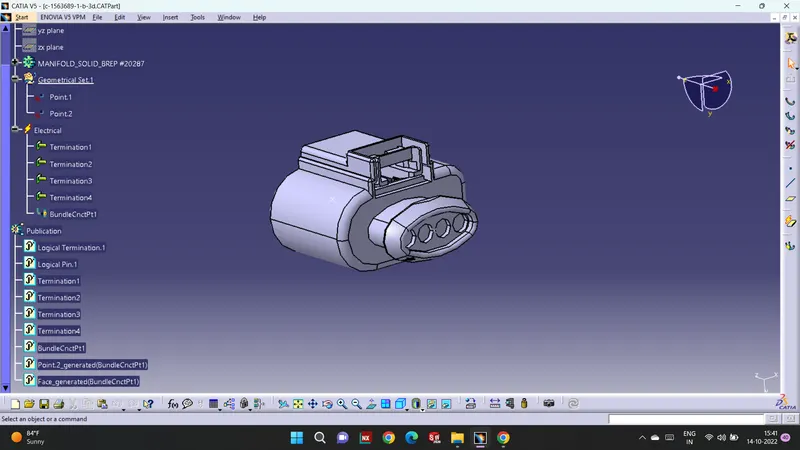
Channel Bottom Plate
Channel Top Plate
Fir tree Clip
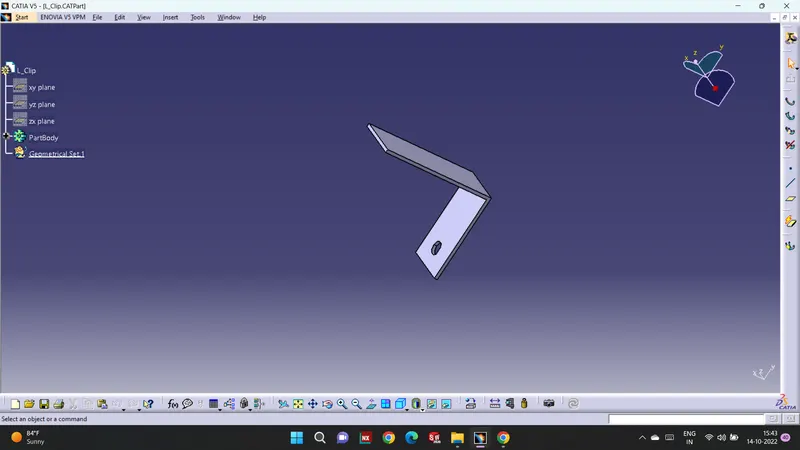
L Section Joint
P- Clip
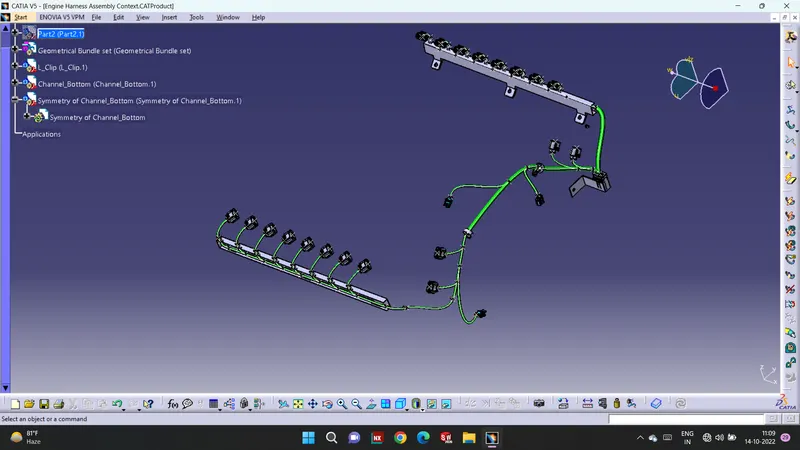
Multiple Branching
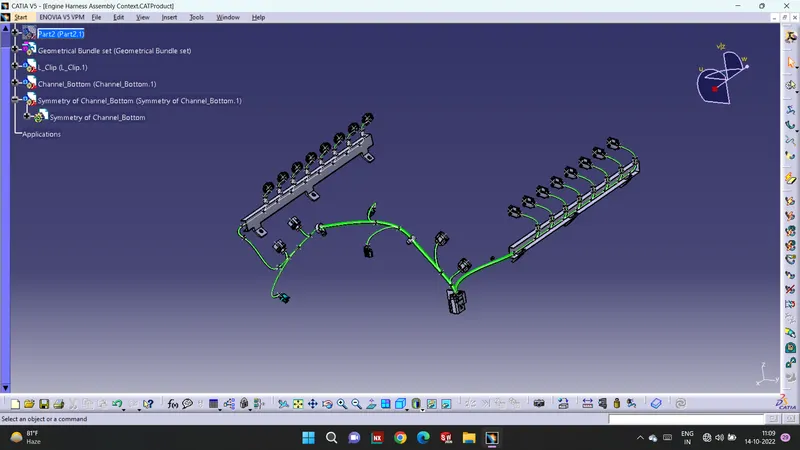
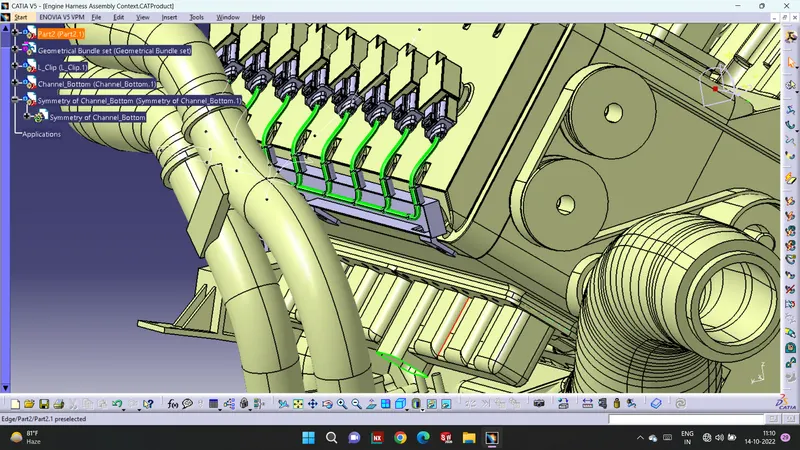
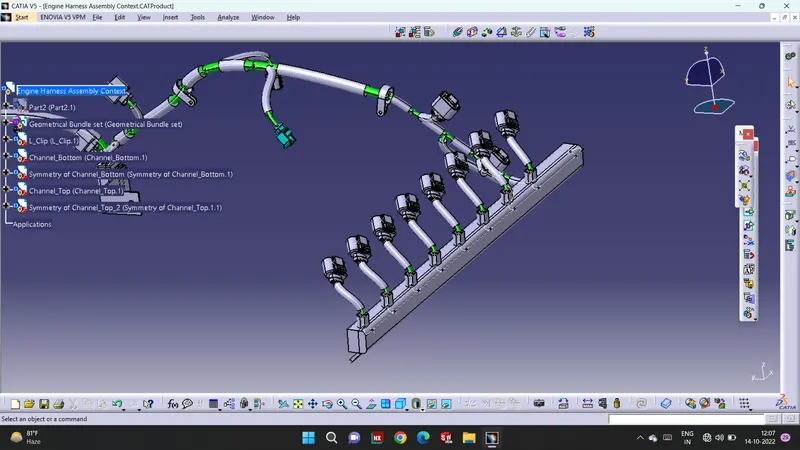
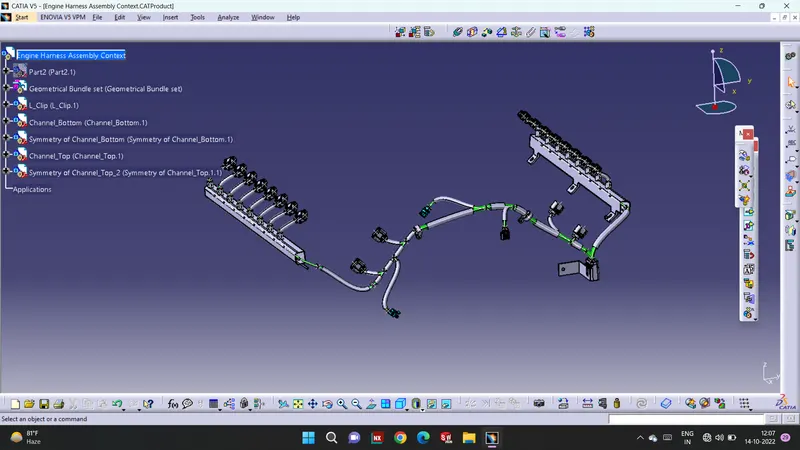
Flattning