Project 1
Aim
To design mold for table fan outer casing.
Introduction
A mold is a hollowed out block that sets the shape of the product being made. It can be made of different materials, the most common of which are aluminum, steel, alloys and copper
Procedure
If there is no sufficient draft given for the part, it will damage the mold hence it is necessary to modify. Me considering as a Mold Engineer it must be reported to the product design team to modify the part. once it is revised, we can move forward to design the mold.
Procedure to followed are
1) Draft Analysis- to check if sufficient draft is given.
2) Scaling - considering material as ABS (shrinkage - 0.6%).
3) Parting line- it will be used to create a line at the intersection of the core and cavity.
4) Shut off surface - to shut of all the hole in the model.
5) designing the core and cavity block.
6) designing sliders to solve the problems of undercut.
7) designing the ejector pin- this is required for the ejection of the part from the core.
Here are the tools used
a) mold tools
draft analysis, parting line, shut off surface, split line and core.
b) direct editing
move copy bodies, move face, delete body, split, combine and fillet.
c) surfaces command
Surface trim, Planar surface, offset surface, surface knit, surface cut.
d) under features
Extrude boss, extrude cut, hole wizard, sketch driven pattern.
e) others
float ,mate, move component- Rotate component ,weldment
Given plastic component for which the mold has to to be designed
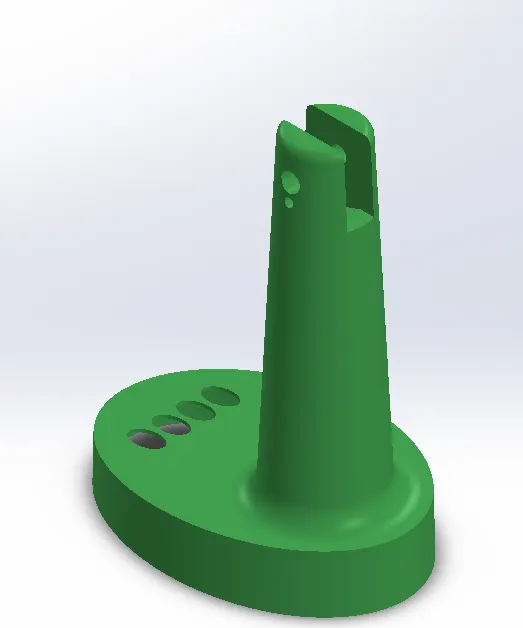
screenshots of the mold designed
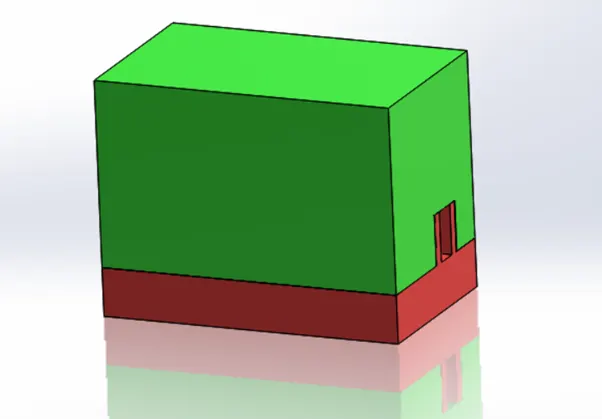
Cavity
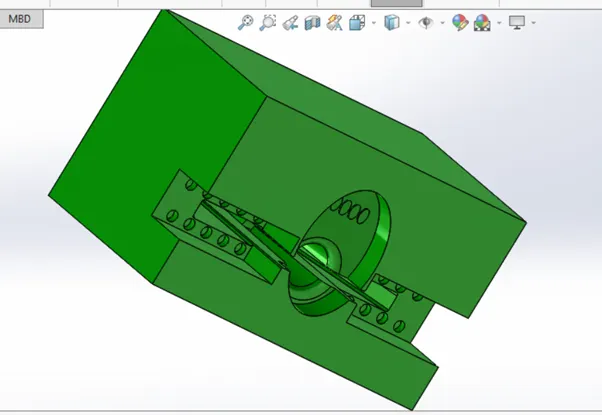
Cavity-The cavity is the female part which forms external shape of molding.
core and the Ejecter Pin
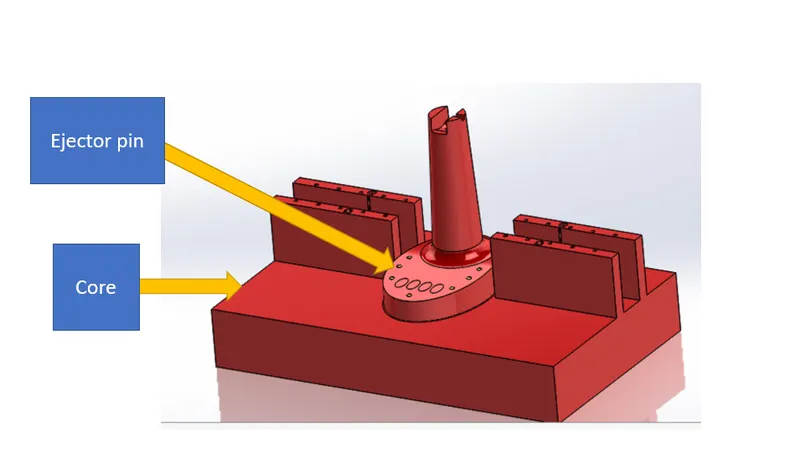
core-The core is the male part which forms the internal shape of molding.
Ejector Pin- They apply a force to eject a part from the mold, and in some cases can leave marks. Once the mold is opened, the pins extend into the mold cavity, push the part out, and then retract, allowing the mold to close and be refilled.
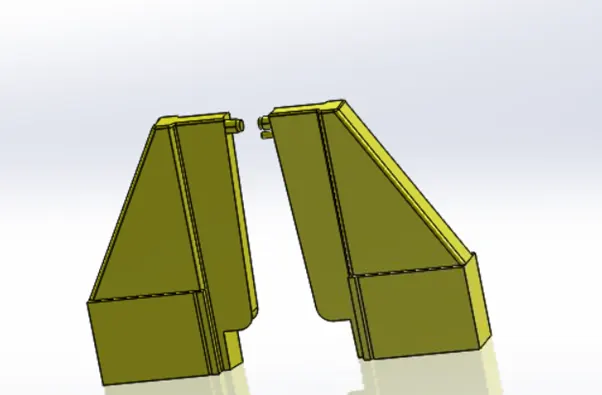
Sliders
Sliders-sliders are designed when there is presence of undercut in the plastic component.
Conclusion
The mold for the given plastic component was designed successfully