Mixing efficiency
AIM :
To setup steady state simulation and to identify Mixing effectiveness of Air at outlet of a T Junction combining two inlet air flow at different air temperatures and velocities.
INTRODUCTION :
In this Challenge, we will study the mixing effectiveness of a Hot air and cold air in a T joint using ANSYS Fluent CFD study. The simulation is done by providing the hot air and cold air at different inlet velocities and analyzing the results of it. The study also shows the result variation by varying the Mesh size and by changing the viscous models between K – Epsilon and K –Omega.
The reference formula : T mix = Tcold * M cold + T hot * M hot / M hot + m cold
Mass flow rate of fluid : Density * Volumetric flow rate
The calculated mass flow rate : 31 degree Celcius.
T – PIPES :
T- Pipe joints are pipe joints resembling T structure mostly having 2 inlets and 1 outlet. The two inlets are placed perpendicular to each other.
T- Join pipes are commonly used in all sort of Applications such as Industrial applications, Household applications, Marine purposes, HVAC systems, etc.
Solving and Modeling Approach :
Geometry Importing :
The geometry file given is uploaded in the Spaceclaim and the fluid volume extraction is done in space claim.
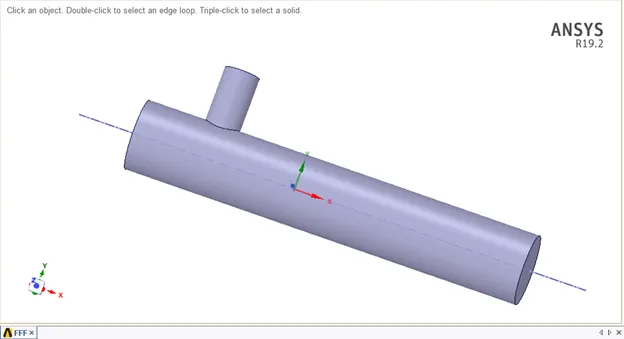
The analysis is being done for two different T joints :
- Long T Joint
- Short t joint
and the results were compared.
Meshing :
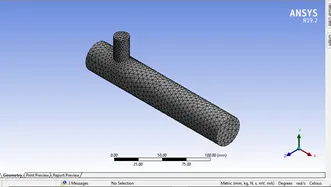
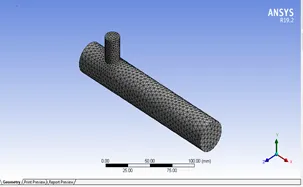
The Meshing process involves the splitting the entire volume to discrete elements for solving the simulation purposes. We need to find the optimum size of mesh to provide an perfect result.
Naming of each faces is given based on their respective conditons.
- Inlet X – Hot Air Inlet
- Inlet Y – Cold Air Inlet
- Outlet – Mixing Outlet
- Wall – Material surrounding the volume
In our case, Initially the mesh size is to default and the simulation is proceeded, and for short tee, the mesh size is refined to 5 mm and the simulation is again done.
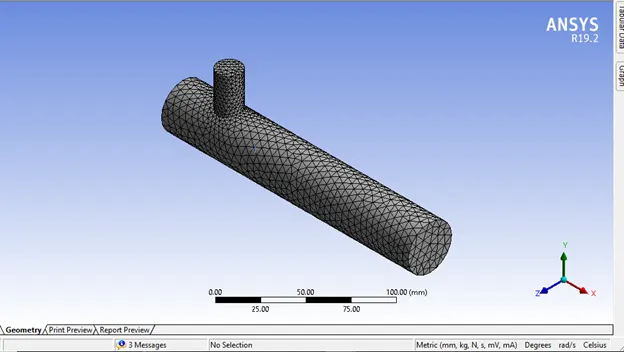
Short Tee with default mesh size.
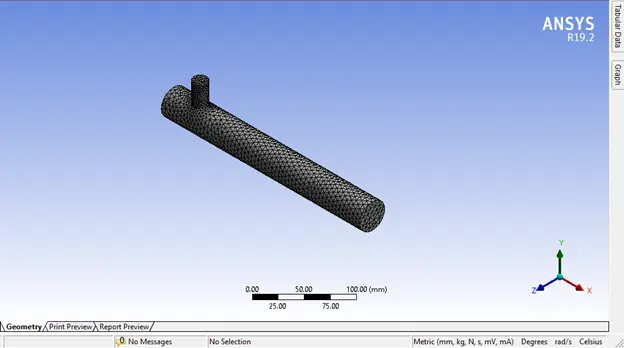
Long Tee with Default mesh size
Fluent :
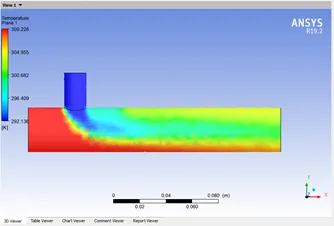
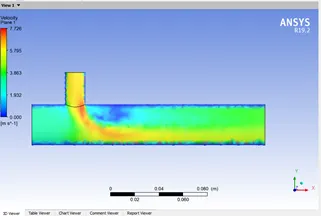
After Meshing is completed, the model is set for a steady state simulation and for Short Tee and K – Epsilon and K omega model is used for simulating the Short tee.
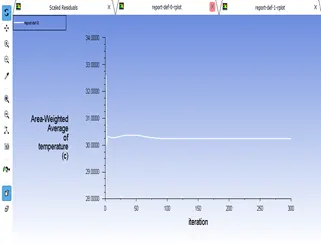
The number of Iterations are made 300 and the results are calculated.
Case I:
Short TEE
Hot velocity Inlet: 3 m/s
Momentum ratio: 2
Hot Air Temperature: 36 C
Cold Air temperature: 19 C
|
K - EPSILON |
K- OMEGA |
 |
 |
 |
 |
 |
 |
 |
|
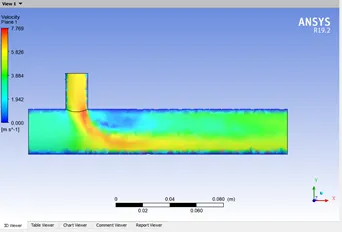
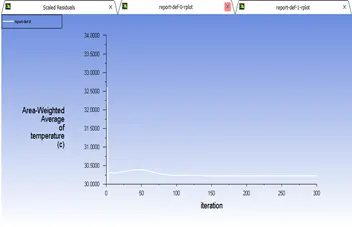
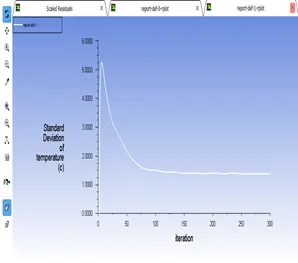
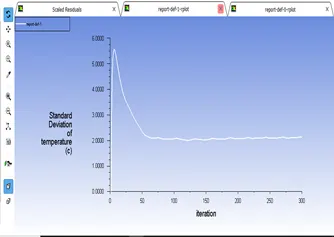
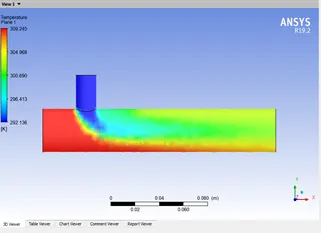
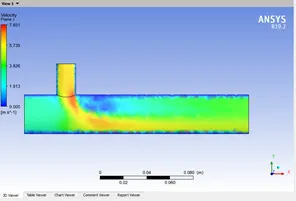
From The Above observations between the K Epsilon and the K omega model, The standard deviation seems less in the K Epsilon model and the results were seem to be fine. So, The K epsilon Model has been used to proceed for Long tee.
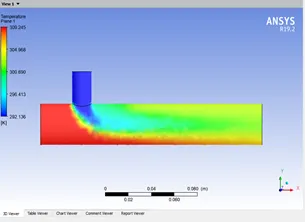
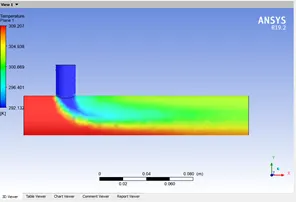
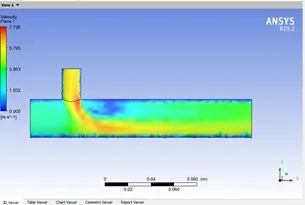
The same Short TEE with K Epsilon model has been used with default mesh size and 5 mm mesh size and the results were compared.
When the mesh size is increased the Solver solves the more number of Equations and takes longtime and improves the quality of result.
|
Default Mesh Size |
5 mm Mesh size |
 |
 |
 |
 |
 |
 |
The larger the number of equations solved, the more accurate the results will be.
Results :
Comparison of Case I and Case II :
- Case 1
- Short mixing tee with a hot inlet velocity of 3m/s.
- Momentum ratio of 2, 4.
- Case 2
- Long mixing tee with a hot inlet velocity of 3m/s.
- Momentum ratio of 2, 4.
Short TEE :
|
CASE I |
||
|
Momentum ratio 2 |
Momentum ratio 4 |
|
|
Number of Iterations for Convergence |
300 |
300 |
|
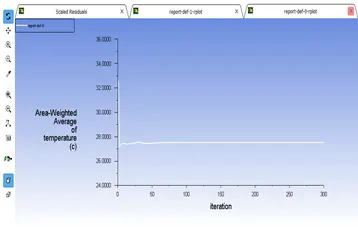
Area Weighted Average Temperature |
|
 |
|
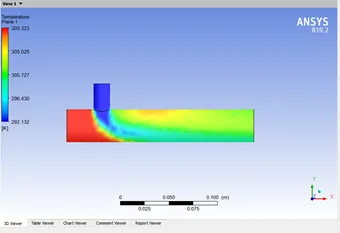
Temperature Contour Plane |
|
 |
|
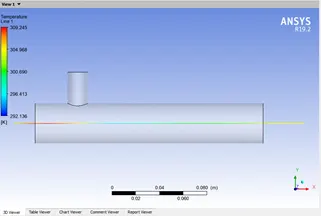
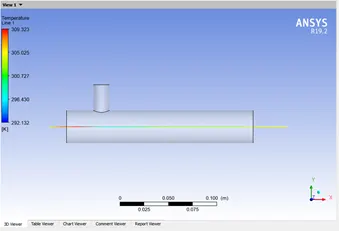
Temperature Contour Line |
 |
 |
|
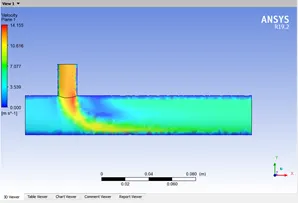
Velocity Contour Plane |
|
 |
|
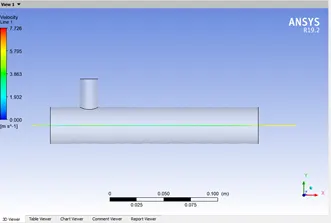
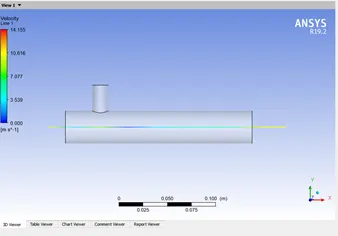
Velocity Contour Line |
 |
 |
LONG TEE :
|
CASE II |
||
|
Momentum ratio 2 |
Momentum ratio 4 |
|
|
Number of Iterations for Convergence |
300 |
300 |
|
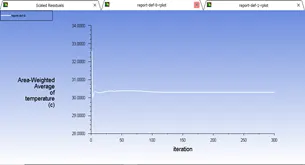
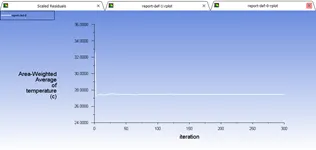
Area Weighted Average Temperature |
 |
 |
|
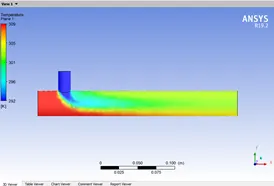
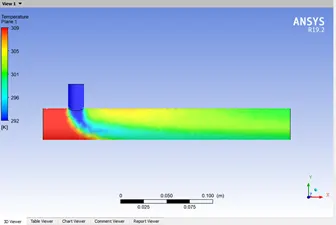
Temperature Contour Plane |
 |
 |
|
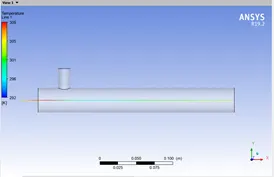
Temperature Contour Line |
 |
 |
|
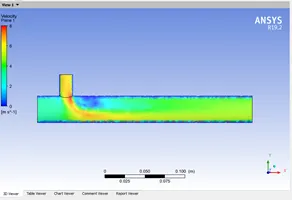
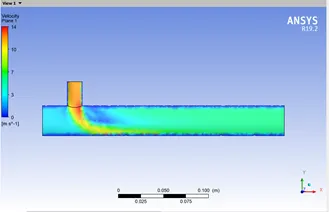
Velocity Contour Plane |
 |
 |
|
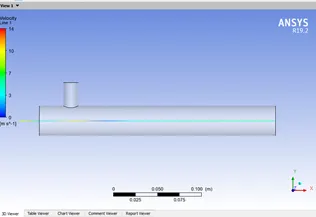
Velocity Contour Line |
 |
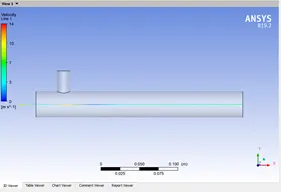 |
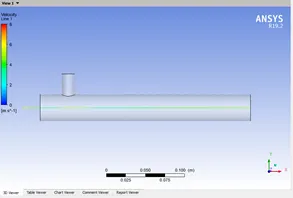
The results from the simulation for Momentum ratio 2 in Short and long tee Doesnt seem to vary much .
The temperature absorbed was found to be 30.25 degree Celcius.
Conclusion:
The Study has been done with different momentum ratio and different length.
It has been observed as the momentum ratio increases, the velocity increases and the outlet temperature decreases.
It has also been observed as the temperature does not vary much as the length increases in this case.