MBD Simulation on IC Engine Valve Train
AIM
To carry out MBD simulation on the IC engine valve train for given conditions
OBJECTIVES
Obtain the
- Valve Lift.
- The contact force between
- Cam and Push Rod
- Pushrod and Rocker Arm
- Rocker Arm and Valve
- Explain why the contact force between the Rocker arm and valve varies while measuring with respect to the X direction and measuring with respect to magnitude
THEORY
A valvetrain is a component that is designed to open and close the intake and exhaust valves so that air/fuel mixture can enter and leave the combustion chamber as gases. Nowadays, engines are designed with overhead cam assemblies which are known as an overhead camshaft. It is located near the top of the engine. Unlike the ones that locate the camshaft lower in the engine and use push rods to move the valve assemblies. This valvetrain layout is called Cam-in-block.
In the working of a valvetrain, camshaft plays a very important role as its rotational movement aid the opening and closing of the valves using the cam lobes. Although there are various parts that help the valve train to work.
Components of a valvetrain
Below are the different components that aid the working of a valve train:
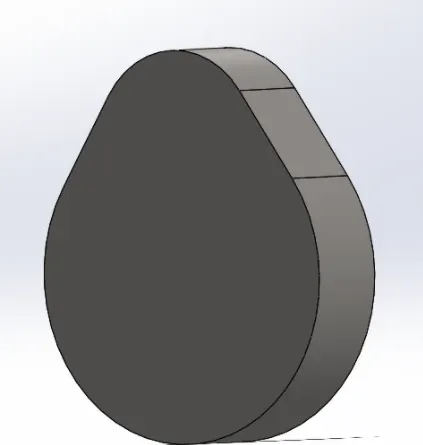
Cam:
The function of the cam is to control the timing and lift the profile of the valve opening. This is achieved with the cam lobe on the rotating shaft.
A cams is driven by the crankshaft and it rotates at half speed of the crankshaft in case of a four-stroke engine.
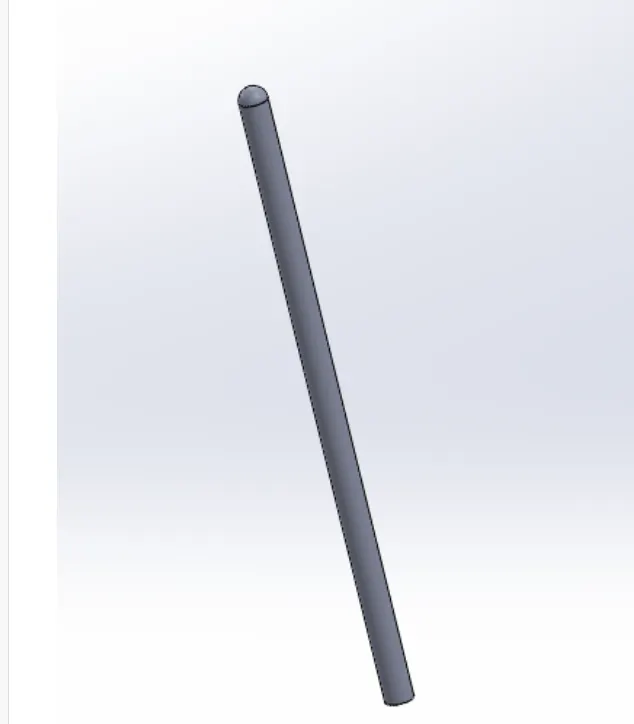
Pushrod:
A pushrod is a long, slender metal rod that is used in overhead valve engines. It’s also used to transfer motion from the camshaft in the engine block to the valves in the cylinder head.
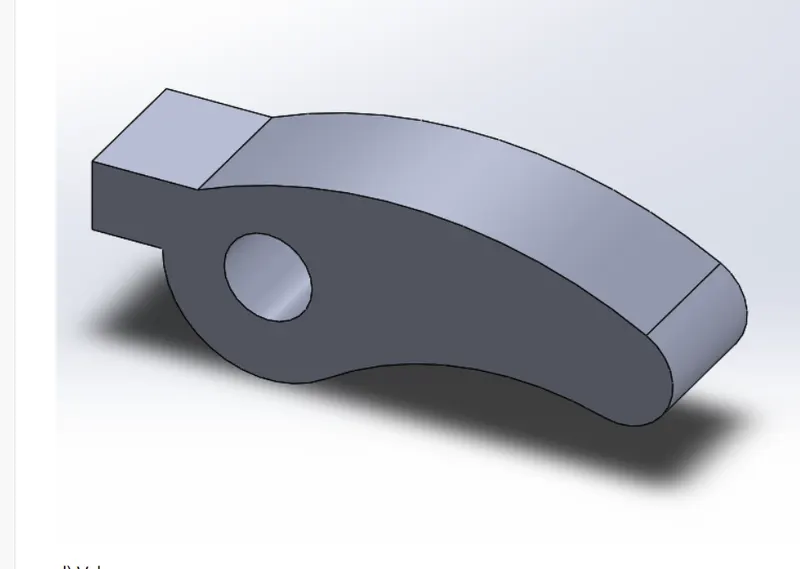
Rocker arm/bucket tappet:
The engine design determines the ways the valve will be actuated, either by a rocker arm, finger or bucket tappet. In an overhead camshaft engines bucket tappets or fingers are used, upon which the cam lobes contact.
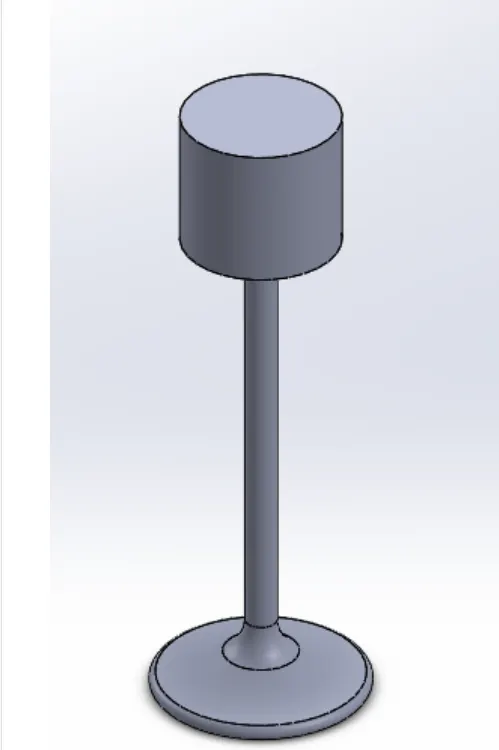
Valve:
The valve used in most modern engines is called a poppet valve. Some valves like sleeve valve, slide valves and rotary valves are also considered at times.
Valve mount
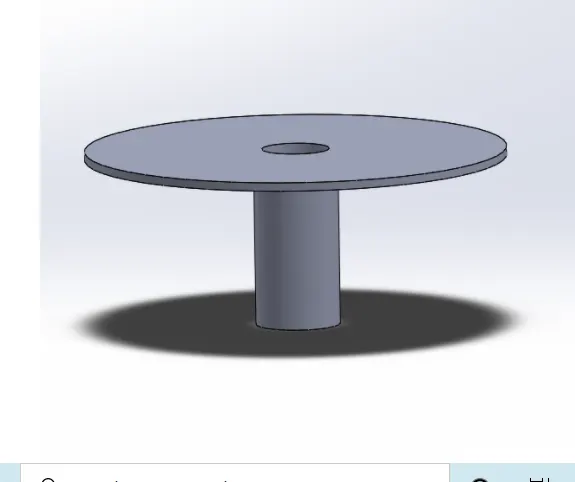
Creating an assembly by using all the parts above with suitable constrains
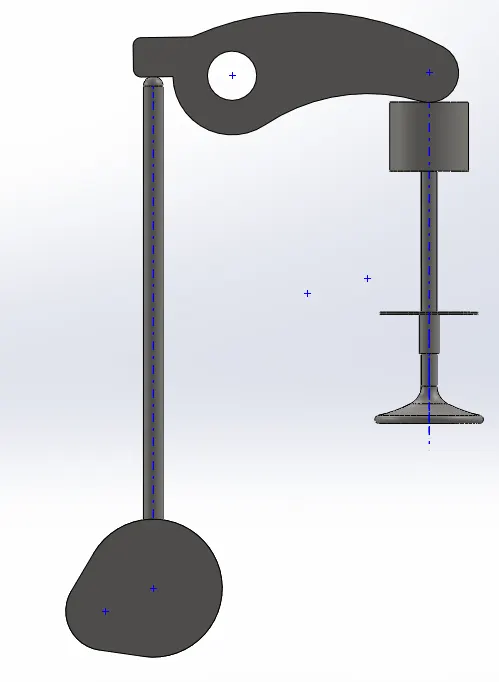
- After assembly of the parts perform motion analysis for different cam shift
- While performing give motor input as 1500rpm
- Set all the conntacts and apply given material for all the parts
- Then insert the spring between rocker arm to valve mount by giving appropriate stiffness value
- Now conduct motion analysis for different assembly
Given conditions,
| Sl.No | CAM Lift (mm) | Speed (RPM) | Material |
| 1 | 3.5 | 1500 | Cast Carbon Steel |
| 2 | 6 | 1500 |
Cast Carbon Steel |
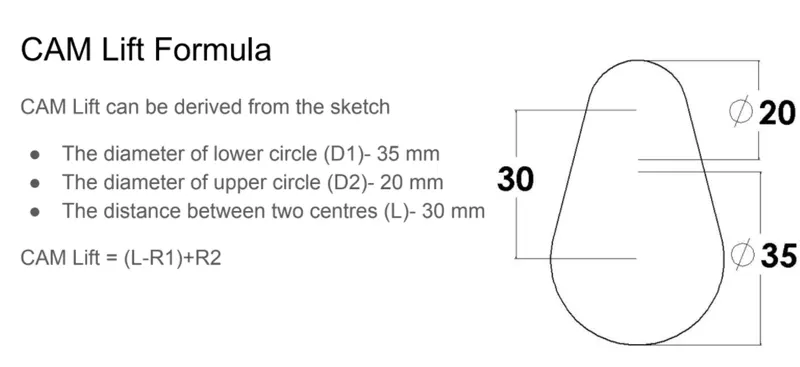
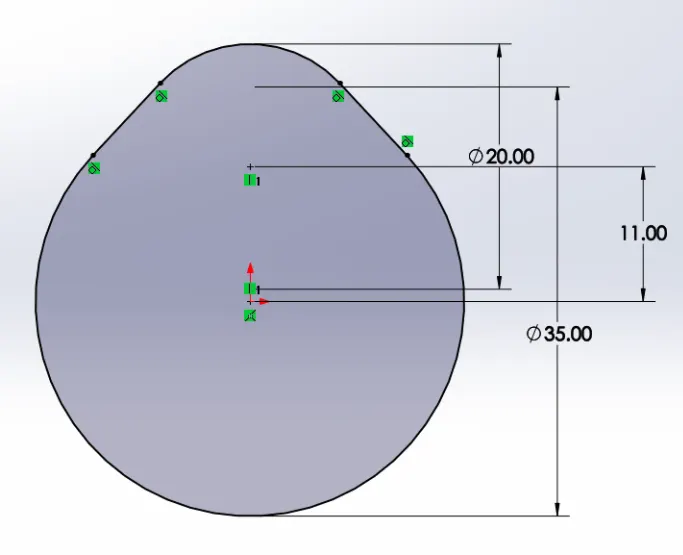
CASE 1
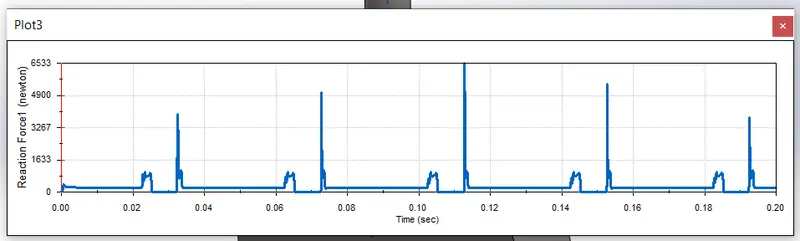
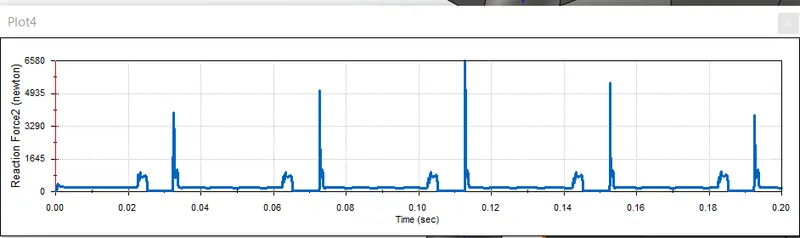
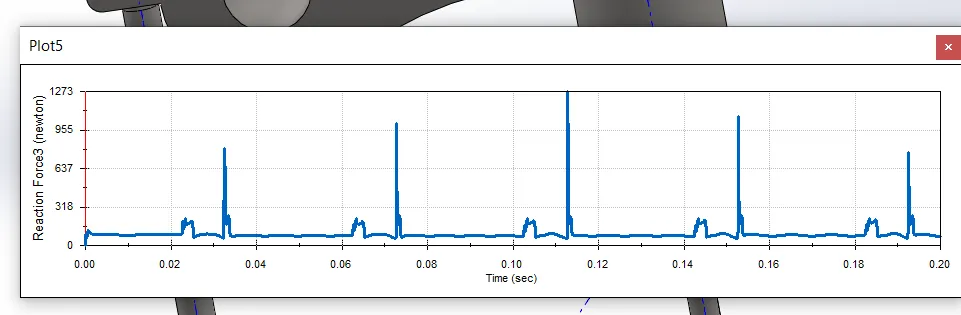
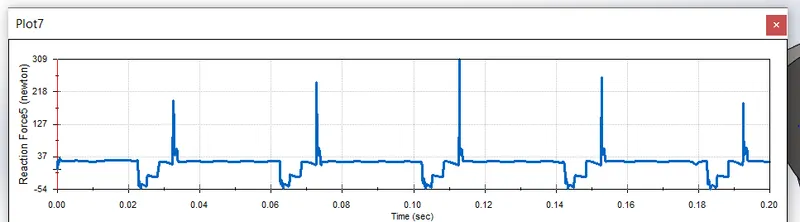
- Cam lift is 3.5 mm and motor speed is 1500rpm
- R1 = 17.5 mm
- R2 = 10 mm
- Then, L = Cam lift - R2 + R1 = 3.5 - 10 + 17.5 = 11 mm
https://drive.google.com/file/d/1vXo9fGsVAQpaZdm5dU1OW4gLqvyirnP5/view?usp=sharing
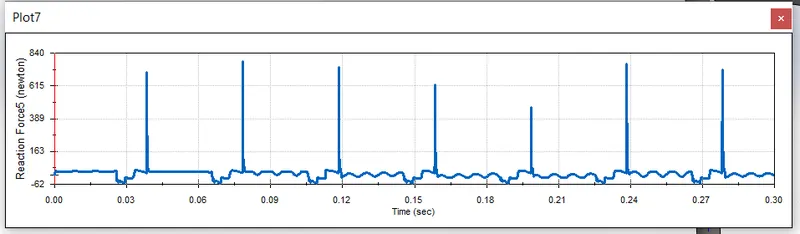
Contact forceses
1) Contact force between Cam and push rod
2) Contact force between Rocker arm and push rod
3) Contact force between Rocker arm and Valve(Magnitude)
4) Contact force between Rocker arm and Valve(X-axis)
CASE 2
- Cam lift is 6 mm and motor speed is 1500rpm
- R1 = 17.5 mm
- R2 = 10 mm
- Then, L = Cam lift - R2 + R1 = 6 - 10 + 17.5 = 13.5 mm
https://drive.google.com/file/d/1nf11Ybb-1E3RQE39FWA71ufrJLLHsd2c/view?usp=sharing
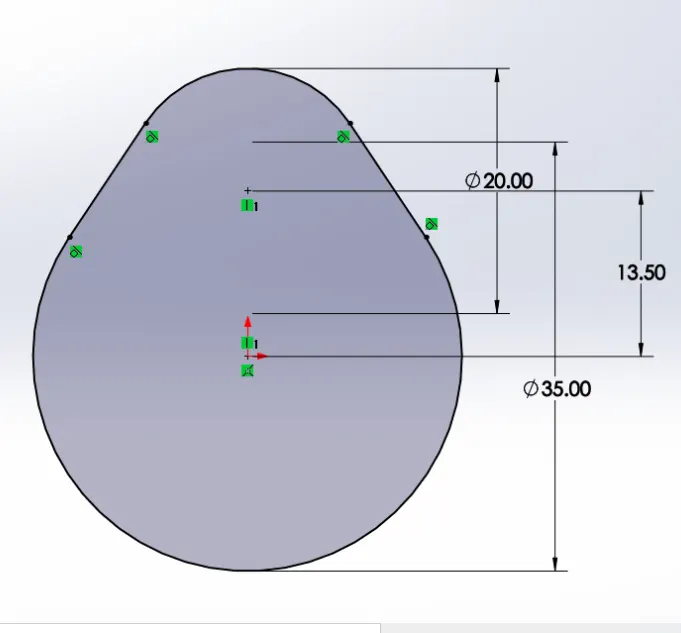
Contact forceses
1) Contact force between Cam and push rod
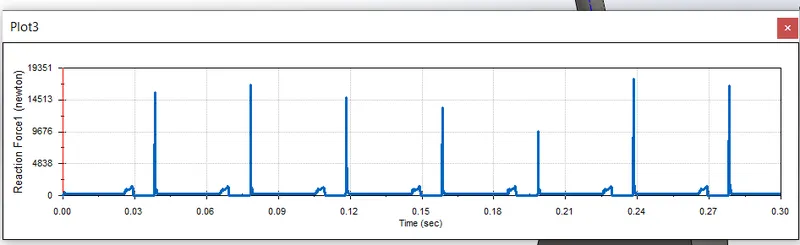
2) Contact force between Rocker arm and push rod
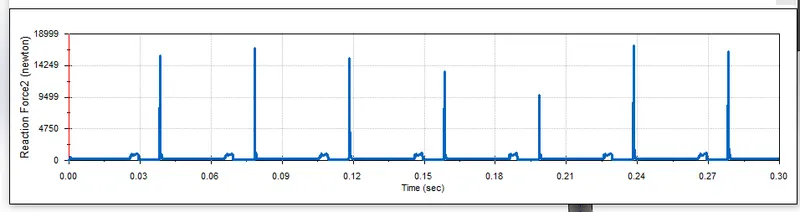
3) Contact force between Rocker arm and Valve(Magnitude)
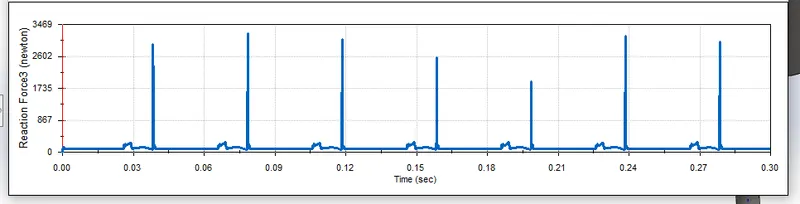
4) Contact force between Rocker arm and Valve(X-axis)
RESULT AND CONCLUSION
- The magnitude represent the total contact force between two parts while the contact force in x-direction is the frictional force as the rocker arm is sliding over the valve
- The magnitude of the conrtact force is more in the sece ond case when the cam lift is 6. this is because the cam pushes pushrod more due to increase in cam lift. also, spring is more compressed in this case, therefore, the contact force is large