Identification of Cracks
1.What is the mode of failure or damage of the beams in the figure above? Are the damages repairable? Elaborate
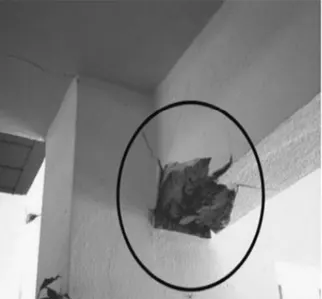
A) What the first image shows is its a Beam coloumn joint failure and we clearly observed that the damage mainly occured in the beam
It is caused mainly due to less clear cover to the beam from the reinforcement and due to insufficient vibration of concrete as there will be hinderence of the reinforcement while vibration.
Retrofittting will be done by providing the clear cover at the joint where failure occurs.
During earthquakes, the failure of beam column joints by the bond and shear failure mechanisms which are usually brittle. In such cases, the reinforcement bars slip inside the joint region, and beams lose their load capacity.
In some of the cases the failure mode is in brittle nature and in another cases the failure is in ductility which takes some time to fail.
B)
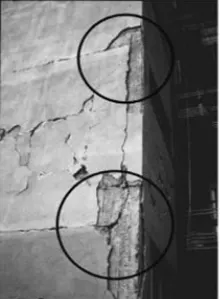
The image shows damage of the plastering due to improper shotcrete plaster material .
This can be repaired first by removing the damage plastring pieces and surrounding damaged material and shotcreting and again apply the good plastring
c)
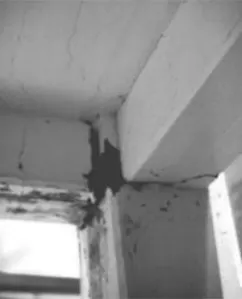
It is a Beam column joint failure.
This failure occurs at joint which high shear forces will develop.
We can go this by retrofitting option that damaged part can be temporarily repaired during long run and damage may cause and harm it also fail
2)
A)
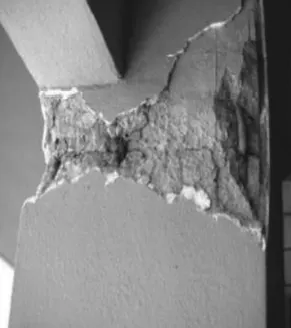
This failure is column buckling
This type of failure occurs in columns due to heavy load or less steel percentage.
The beams are provided at the intermediate levels and column shouls not resists the buckling load.
In columns buckling occurs at mid span of the column.
For this we have to increase the steel percentage so that the alternate bars are provided for lapping of the joints.
B)
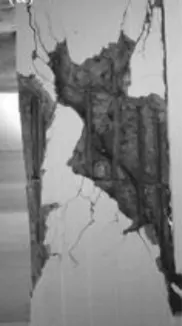
This failure cause fue to shear.
The shear will fails in 45 degrees. In short columns attract high shear forces
In this the mode of deformation mainly observed during earthquakes which generally occu at the open ground floor levels.
The shear failure caused by the development of diagonal cracks predominates in higher reinforced concrete beams without transverse reinforcement.
The microcracking appears in the tip of the inclined crack, but strain softening of tensile concrete is not the only mechanism of carrying shear stresses
C)
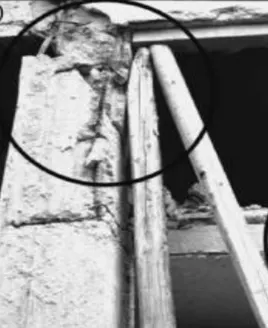
It is a beam column joint failure exactly the column fails at connection of beam
In that image the column reinforcement bars are not placed correctly got misplaced affter concrete which concrete was unable to set for the required dimension
The bars are placed uneven and clear cover is also not setted properly it exposed.
so that it will fail due to corossion also.