Hood design-Week 2
HOOD DESIGN
Here, we'll analyse and standardise the idea of a hood for an engine that is situated up front. The motor vehicle's hood, often known as the bonnet or hood, is a hinged cover that provides access to the engine compartment or trunk for maintenance and repair.
The hood of front-mounted engine vehicles may be hinged at the front or rear edge, or in earlier models, it may be divided into two parts, one on each side, with a hinge along the centerline. Another variation allows the entire front bodywork to tilt forward around a pivot located close to the front of the vehicle while combining the bonnet and wheel arches into a single segment.
Materials:-
Hoods are frequently constructed from the same material as the bodywork. Steel, aluminium, fibreglass, and carbon fibre may all be examples of this. To make the vehicle lighter, various aftermarket businesses provide fibreglass or carbon fibre replacements for steel hoods.
Let's first have a basic understanding of the guidelines and requirements for constructing the hood.
A proper hood should be positioned outside the automobile to have an excellent impact distribution.
Regulations that impose a cap on the severity of a pedestrian's head damage when struck by a moving vehicle are now in effect in Japan and Europe. Multicore hood inner panel designs are proof that this is leading to more sophisticated hood designs.
The European New Vehicle Safety Committee(ENVSC) and European New Car Assessment Program (euro NCAP).
Parts of a hood:-
The hood usually comprises an inner panel, an outer panel, reinforcement (which adds strength), and an emboss.
The hood can be opened and shut anytime necessary using the latch and striker system. For strength, latches and hinges require some reinforcement.
Design specifications for the automotive hood component:-
Master section data was already provided by the support instructors of the course.
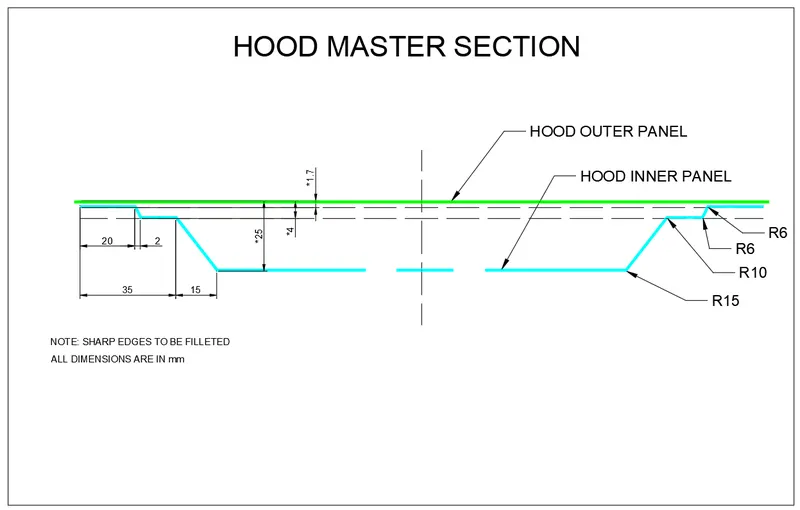
Hood Thickness Information
- Outer Panel Thickness = 0.75mm
- Inner Panel Thickness = 0.75mm
- Reinforcement Thickness = 1.5mm
The process involved in designing hood as a sheet metal operation is
- Blanking
- hemming
- Punch cutting or piercing
- Deep drawing
- Embossing
Design of Hood:-
INNER PANNEL
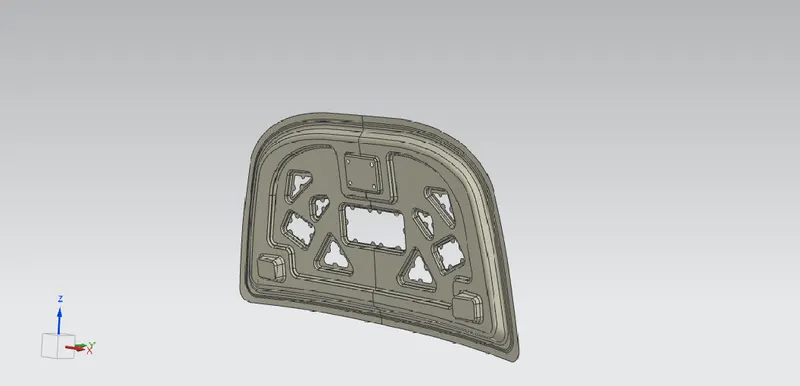
- To increase the hood's capacity for absorbing energy, the inner panel of the hood must have a strong initial reaction force against the force applied to the hood. In addition, the hood is necessary to reduce the amount that a collision's deformation can reduce a response force.
- The purpose of the current invention is to create a hood inner panel that may reduce its response force even when the deflection of a vehicle's hood grows while maintaining an adequate energy absorption capacity.
- Only inside the inner panel are we able to conduct research and put pedestrian and motorist safety into practise.
Only in this panel can the reinforcing, embossing, mastic points, etc. be attached.
EMBOSSES
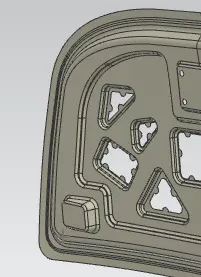
- Depending on the type of embossing required, the metal sheet embossing procedure is frequently carried out using a combination of heat and pressure on the sheet metal. Any of these processes might theoretically alter the composition of the metal's thickness.
- A pattern or design is created on a metal sheet by drawing it through the male and female roller dies. Different designs can be created on the metal sheet depending on the roller dies used.
- In order to smooth the picture, pressure and heat are combined to "iron" the image to a level higher than the substrate. An image that is dropped into the surface of a material is considered "impressive," as opposed to an image that is elevated out of the surface.
MASTIC DATA
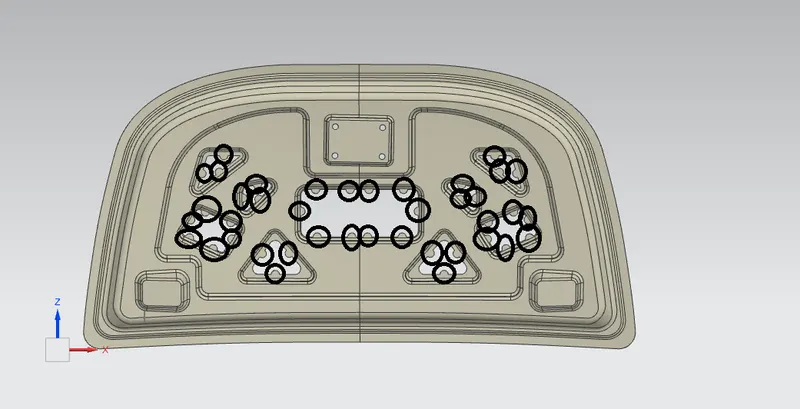
The hood outer panel and hood inner panel are fixed or combined using a mastic sealant.
They may act as fire barriers in addition to providing thermal and acoustic insulation. They might also possess electrical characteristics. Sealants can also be used for straightforward filling or smoothing. They are frequently asked to handle many of these tasks at once.
A sealant serves three basic purposes: to fill gaps between two or more substrates; to create a barrier through its own physical characteristics and through adhesion to the substrate; and to maintain its sealing qualities throughout its expected lifetime, under normal service conditions, and in environmental factors. By using the suitable formulation, the sealant accomplishes these tasks and achieves particular application and performance attributes.
Manufacturing process:-
Deep drawing:-
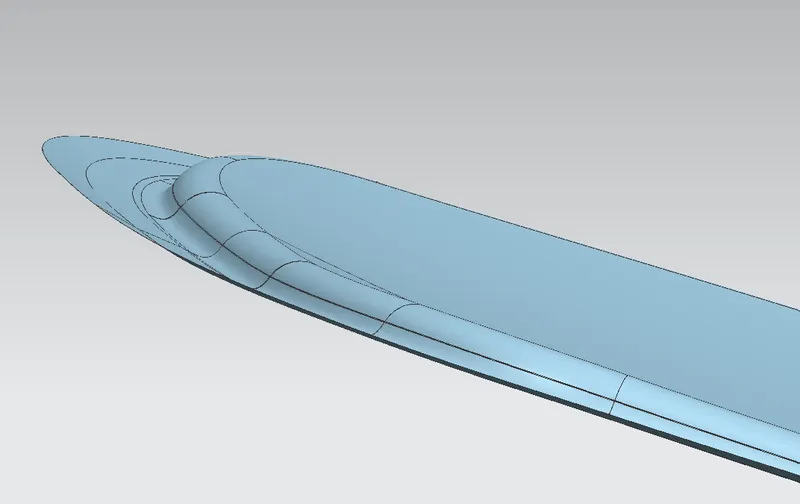
- Deep drawing is a manufacturing technique that is frequently used to shape sheet metal into forms that resemble cups or boxes. Cooking utensils, containers, sinks, and car parts like panels and gas tanks are just a few of the things that sheet metal deep drawing is used to create.
- Utilizing a punch and die, deep drawing of sheet metal is accomplished. Once drawn, the punch takes on the required shape of the part's base. To accommodate the punch's passage and clearance, the die cavity is somewhat broader and sized to match the punch. The thickness of the sheet metal is taken for granted in many computations. The forces at play, however, cause changes in thickness in some places.
Hemming:-
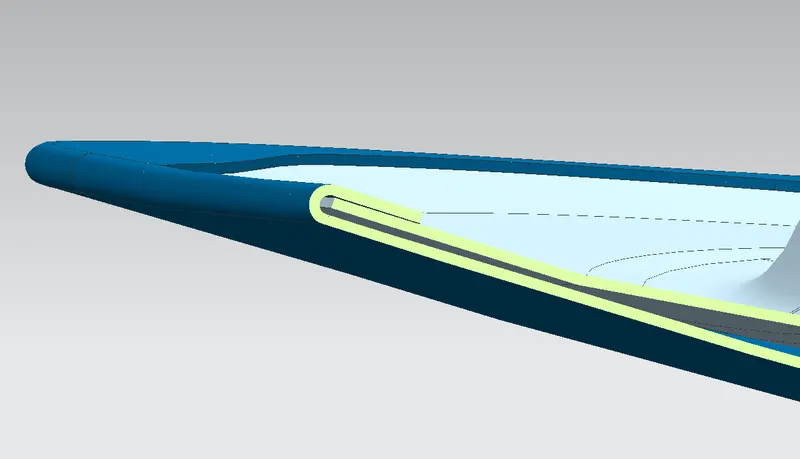
- Hemming is the technique of joining sheets of metal by bending them, often to a 180° bend. Hemming procedures are used to create automotive body panels and pieces like decklids, trunklids, doors, hoods, and tailgates.
- Mass manufacturing is ideal for traditional die hemming. In die hemming, a hemming tool is used to fold the flange over the entire length. After the drawing and trimming activities are finished, the flange is created with a hemming tool, which usually results in the actual hemming.
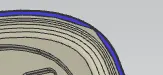

A hemming roller is used to hem rolls progressively. The flange is formed and the hemming roller is guided by an industrial robot. Additionally, there are different pre-hemming and final hemming processes for roll hemming.
HOOD COMPONENTS:-
Latch:-
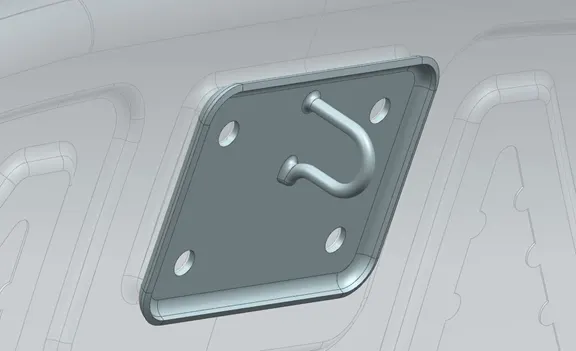
A hood latch is a pretty straightforward part. It functions essentially as the clasp that holds your hood closed. This latch makes sure that your hood is safely fastened to your car and won't suddenly pop open.
The secondary latch pivots when stress is applied to the cable from the hood release handle, and it pulls away from a retaining seat under the hood. The secondary latch should release the hood a few inches later by design before the safety latch takes control.
Hinge:-
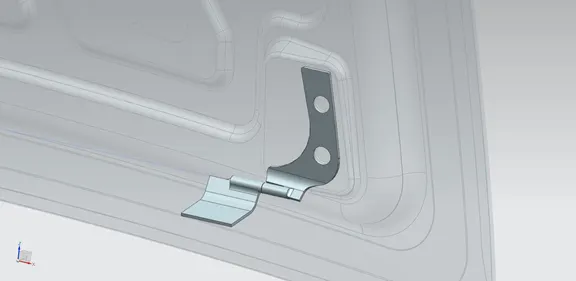
A hinge is a part that holds the car's hood to its fenders. To ensure that the hood opens and shuts correctly, the latch must be positioned perpendicular to the axis of the hinge.
Latch Trajectory Motion:-
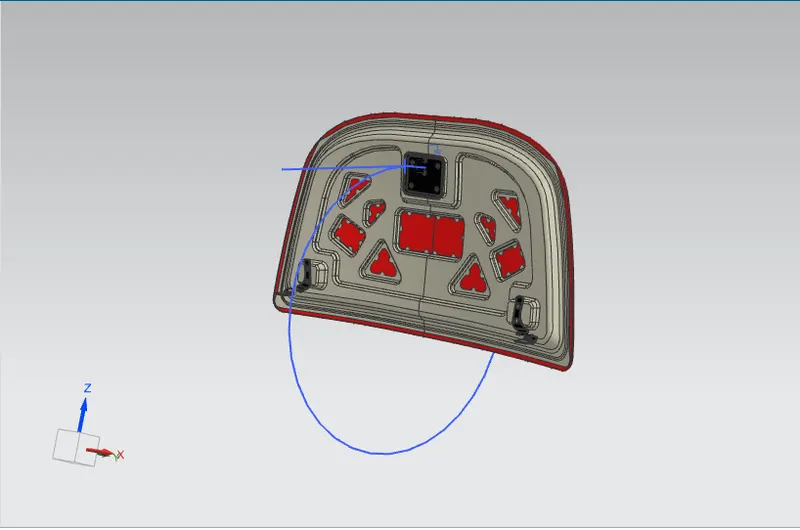
The latch must be correctly positioned in relation to the fastening or striking point while raising or lowering the hood. For such, the trajectory of the latches must be parallel to the axis of the hinge.
Design for Impact Force Distribution in the Hood:-
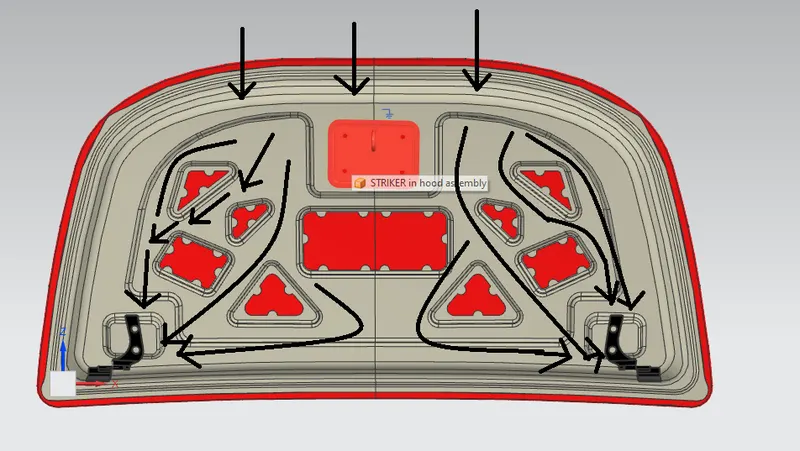
When a force is applied to the front of the hood, the hood must be designed so that all of the force is directed away from the vehicle. Along with the hood, the distribution of the force must be adjusted.
Draft Analysys:-
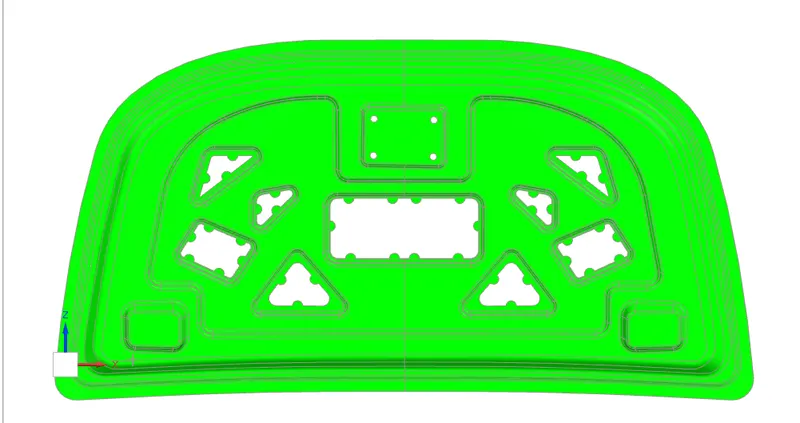
- To detect any bad draught, the inner panel is subjected to a five-degree draught analysis. We are going through this procedure because we need to create and present manufacturers with a successful design.
- We can observe that the inner panel has no negative draughts, hence the design is good and ready for manufacturing.
HOOD DESIGN:-
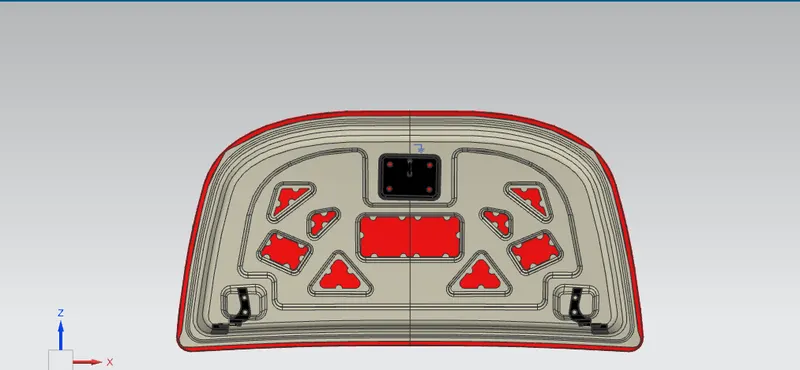
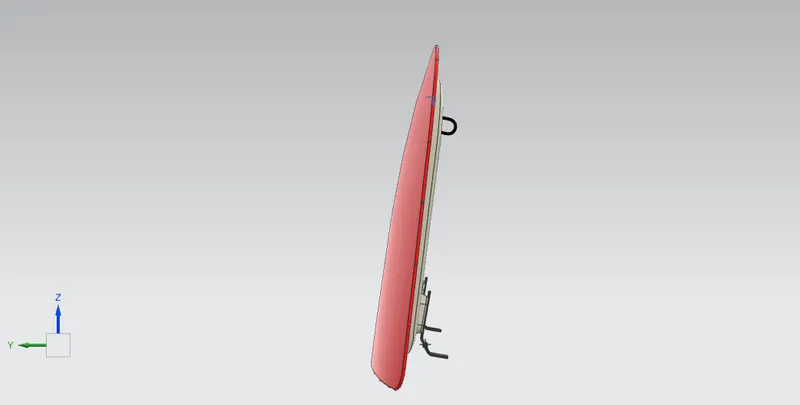
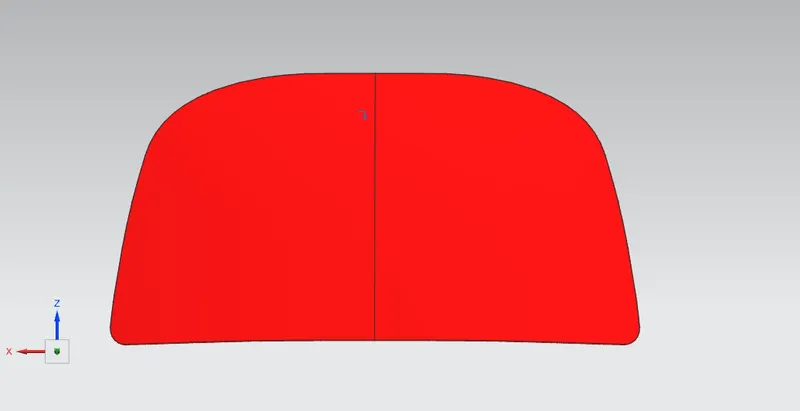
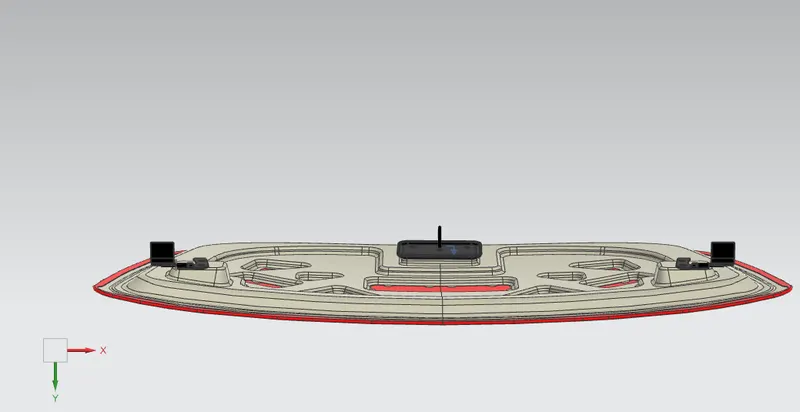
As a result, we created a hood that complies with the specifications set forth by the manufacturer.